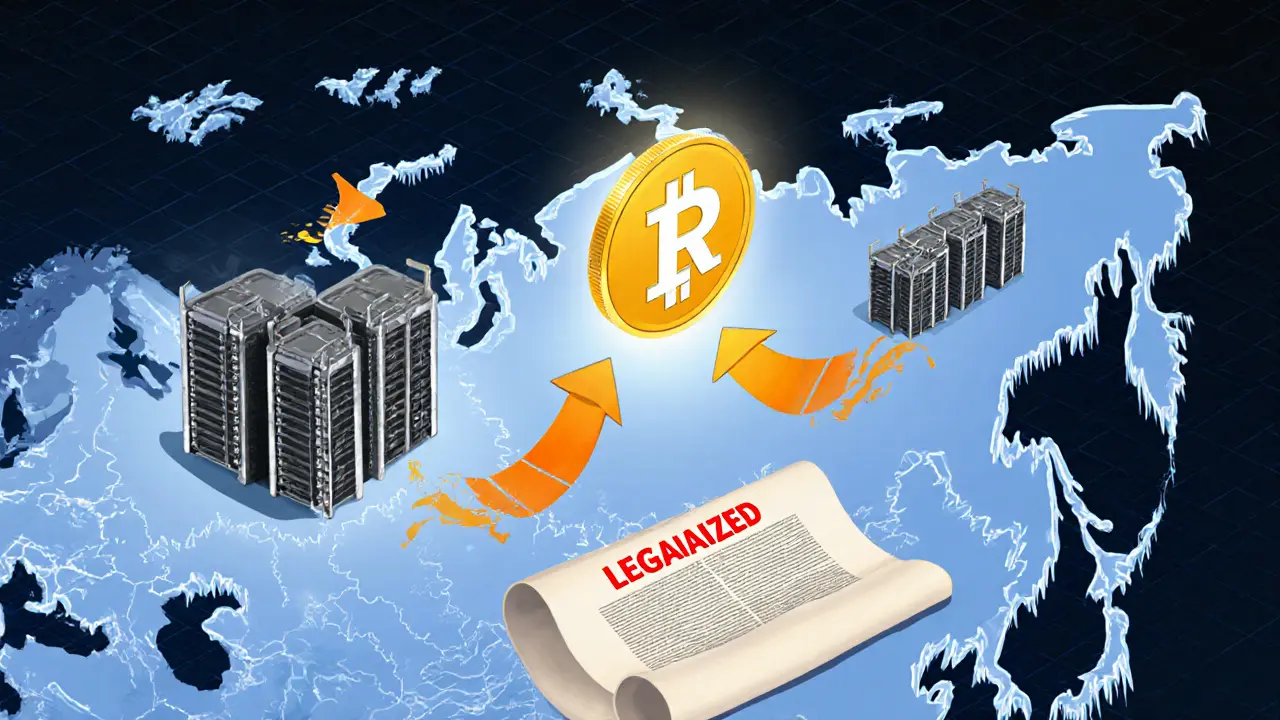
Russia Crypto Mining: Regulations, Energy Use, and Market Impact
When talking about Russia crypto mining, the operation of cryptocurrency mining farms inside the Russian Federation, often powered by the country’s vast energy reserves. Also known as Russian Bitcoin mining, it feeds a sizable portion of the global hash‑rate and attracts both local and foreign investors. This activity is tightly linked to energy consumption, the electricity needed to keep ASICs and GPUs running 24/7, which in turn shapes government regulation, the legal framework that determines licensing, tax rates and environmental compliance. The combination of cheap power, evolving policy, and advanced mining hardware, high‑efficiency ASICs and GPU rigs designed for maximum hash‑rate per watt creates a unique ecosystem that influences Russia’s position in the global crypto mining race.
Key Factors Shaping Russia's Crypto Mining Landscape
First, the sheer scale of the country’s electricity grid gives miners a competitive edge. Regions like Siberia and the Urals host hydro‑ and thermal‑powered farms that can run at low cost, directly boosting the nation’s overall hash‑rate contribution. Second, regulatory moves matter: recent drafts from the Ministry of Finance propose a tiered tax on mining profits and stricter reporting on power usage, which could either legitimize large operators or push smaller players underground. Third, hardware availability drives efficiency; Russian‑based import channels for the latest ASIC models have shortened supply chains, letting farms upgrade faster than many Western counterparts. Finally, environmental concerns are rising, with NGOs monitoring carbon footprints and urging the government to incentivize renewable‑energy‑only mining. These elements interplay: policy affects energy pricing, which influences hardware investment, which in turn impacts the hash‑rate and global market share.
Understanding these dynamics helps you gauge where opportunities lie—whether you’re looking to invest in a Russian mining pool, assess the risk of policy shifts, or simply track how regional power costs affect Bitcoin’s price. Below you’ll find a curated set of articles that break down each of these topics, from deep‑dive regulatory analyses to practical guides on choosing the right mining rigs for Russian conditions. Use them to build a clear picture of the current landscape and to stay ahead of the next wave of changes in Russia’s crypto mining sector.
Russia's new crypto mining law lets the state generate digital currency revenue, supporting sanctions evasion via the A7A5 stablecoin and a network of sanctioned exchanges. Western sanctions target miners, exchanges, and the financial bridges enabling the scheme.
Read More