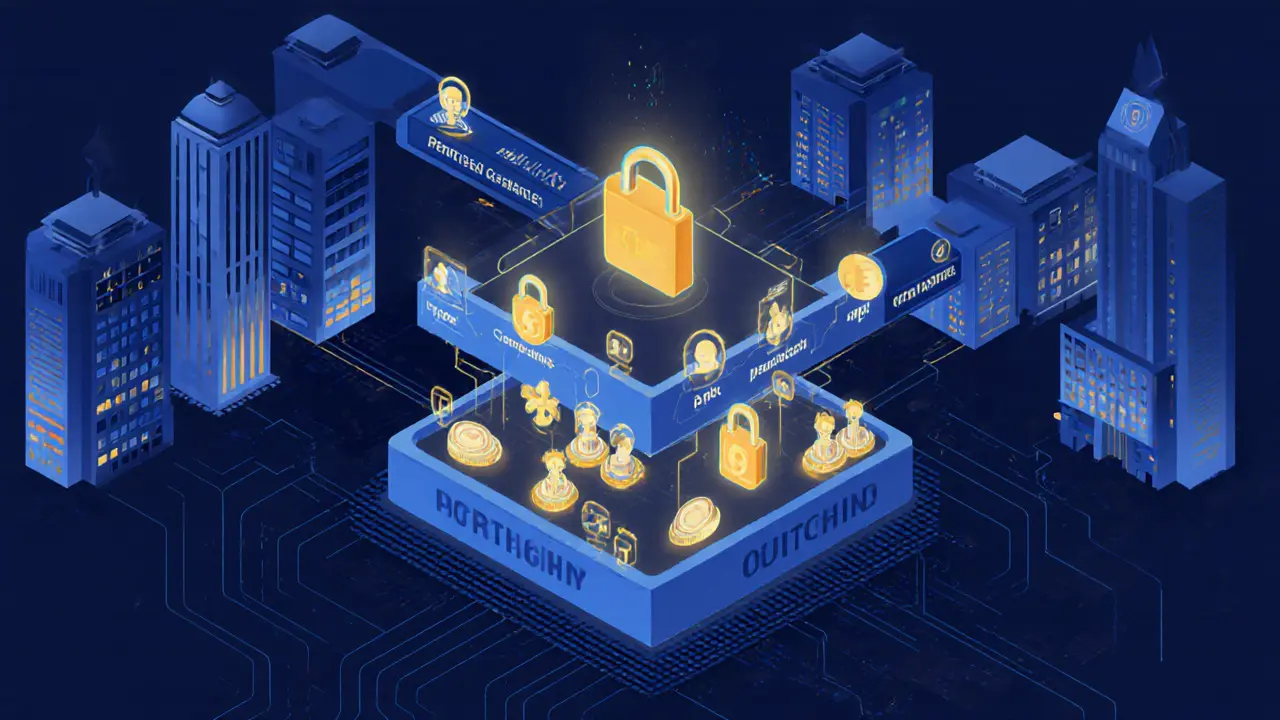
Private Blockchain: What It Is, Who Uses It, and Why It Matters
When you hear private blockchain, a restricted network where only approved participants can join and validate transactions. Also known as permissioned blockchain, it works behind the scenes in banks, hospitals, and government systems—not out in the open like Bitcoin. Unlike public blockchains where anyone can mine or verify data, private blockchains lock access. Only organizations or people granted permission can write to the chain. That’s not a flaw—it’s the whole point.
These networks are built for control. A enterprise blockchain, a private blockchain designed for business use cases like supply chain tracking or internal recordkeeping doesn’t need thousands of strangers validating every transaction. It needs speed, privacy, and accountability. That’s why companies like JPMorgan and Walmart use them. They don’t want their trade data exposed to the public. They don’t want random nodes slowing things down. They want a system where every participant is known, verified, and accountable.
Private blockchains also power blockchain identity, a system where users own their digital credentials using cryptographic keys instead of relying on central databases. Also known as decentralized identity, it lets you prove who you are without handing over your full name, address, or Social Security number to every website. Hospitals use it to share patient records securely. Governments use it to issue digital IDs. Banks use it to verify customers without storing sensitive data on vulnerable servers. This isn’t theory—it’s happening right now, quietly, in systems most people never see.
But here’s the catch: private blockchains aren’t for everyone. If you’re looking for censorship resistance or anonymous trading, you’re looking at the wrong tool. They’re not meant to be open or decentralized in the crypto sense. They’re tools for organizations that need trust without transparency. That’s why you won’t find them on CoinMarketCap. You’ll find them in internal audits, compliance reports, and enterprise software contracts.
What you’ll find below are real-world examples of how private blockchains are used—and how they’re not. Some posts expose fake platforms pretending to be enterprise solutions. Others show how real institutions use blockchain identity to protect data. You’ll see which exchanges hide behind the term "private blockchain" to sound legit, and which ones actually deliver. No hype. No buzzwords. Just what’s working, what’s broken, and what you need to watch out for.
Hybrid blockchain combines private data control with public transparency, offering enterprises speed, lower costs, and regulatory compliance. It's the fastest-growing blockchain model for real-world business use.
Read More