
What is MTG Token (MTG) Crypto Coin? Complete Guide
A concise guide explaining what MTG Token (MagnetGold) is, its tech on Binance Smart Chain, tokenomics, price trends, how to buy, and key risks.
Read MoreWhen you start looking at MagnetGold, a blockchain‑based token that blends mining rewards with a loyalty program. Also known as MG Token, it shares a slice of transaction fees and runs regular airdrops. In plain terms, MagnetGold is not just another meme coin; it tries to give holders a steady stream of utility‑driven income. The token’s design pairs a fixed‑supply model with dynamic fee redistribution, so every trade on supported platforms sends a tiny amount back to the community. That core idea creates a feedback loop: the more people trade, the larger the pool that gets split among token holders. This loop is the heart of MagnetGold’s value proposition and sets the stage for the other pieces we’ll cover below.
To turn the fee‑sharing promise into real money, MagnetGold requires integration with crypto exchanges that can route a portion of each trade to the token’s smart contract. When you hear the term crypto exchange, a platform where users buy, sell, or trade digital assets, think of places like Binance, Coinbase or the niche DEXes that support custom token contracts. MagnetGold’s presence on multiple exchanges expands its reach, which in turn fuels higher transaction volume and bigger fee pools. At the same time, the project runs periodic airdrop, a free distribution of tokens to eligible wallets to attract new users and reward loyal participants. An airdrop spikes interest, brings fresh addresses onto supported exchanges, and boosts the overall liquidity that MagnetGold relies on. The result is a three‑way relationship: exchanges enable trading, trading fuels fee sharing, and airdrops draw more traders – all of which reinforce each other.
Underpinning this ecosystem is MagnetGold’s tokenomics, the set of economic rules that govern supply, distribution and incentives. The tokenomics blueprint defines a capped supply of 21 million MG, a 2 % transaction tax split between a liquidity pool, a development fund, and holder rewards, and a quarterly vesting schedule for ecosystem partners. By clearly stating how fees are allocated, the tokenomics model gives investors a predictable income stream, which is rare in the volatile crypto world. Moreover, the model interacts with DeFi protocols – for example, staking MG on approved farms can earn extra yield, while borrowing against MG on lending platforms opens up liquidity without selling. These interactions illustrate a classic semantic triple: MagnetGold encompasses tokenomics, tokenomics enables DeFi integration, and DeFi amplifies MagnetGold’s utility. If you’re planning to dip your toes into MagnetGold, start by checking which exchanges list the token, claim any active airdrop, and read the tokenomics sheet to see how the fee distribution matches your risk appetite. The articles below dive deeper into each of these facets, from exchange reviews to airdrop claim guides, giving you a full toolbox to evaluate and use MagnetGold effectively.
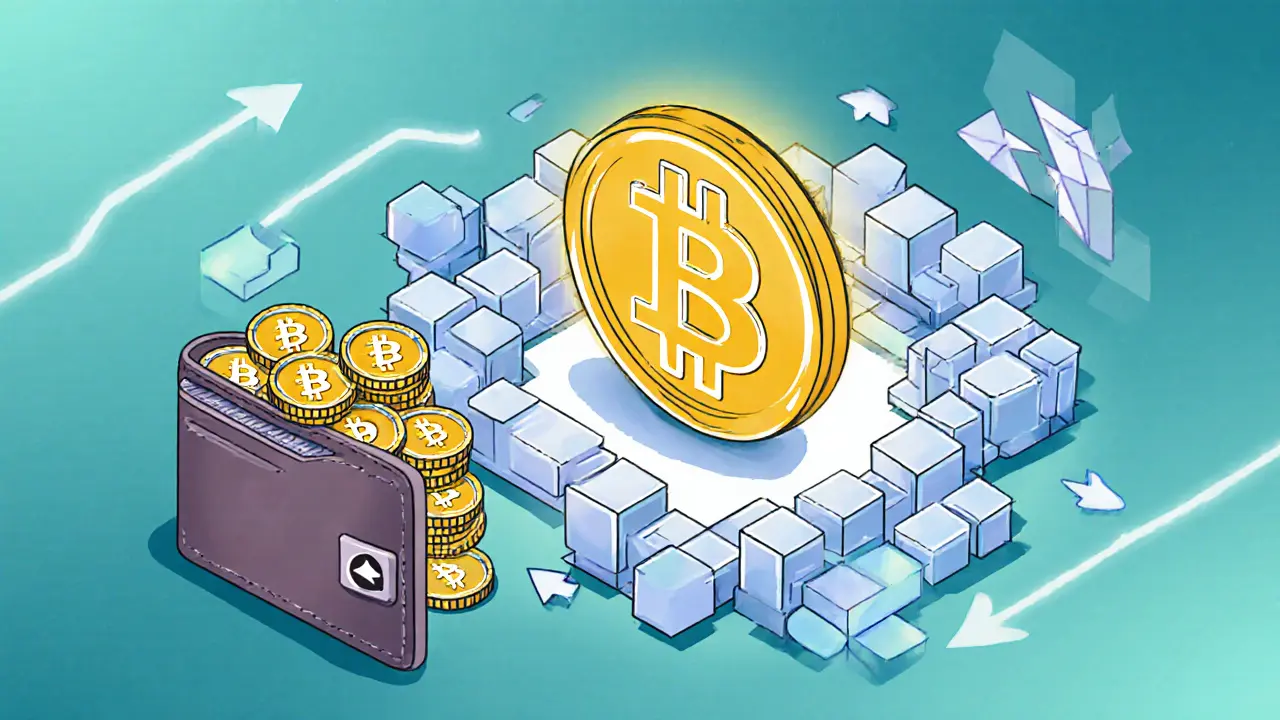
A concise guide explaining what MTG Token (MagnetGold) is, its tech on Binance Smart Chain, tokenomics, price trends, how to buy, and key risks.
Read More