
How Bitcoin Powers Iran’s Import Trade Amid Sanctions
Explore how Iran uses Bitcoin to bypass sanctions for imports, the regulatory maze, mining boom, and the challenges facing crypto-enabled trade.
Read MoreWhen analyzing Iran imports, the flow of goods, services and digital assets into the country. Also known as Iranian import activity, it reveals how external factors steer the local economy. One major factor is sanctions, government-imposed restrictions that limit trade and financial services, which directly impact which crypto platforms can operate in Iran. Iran imports therefore act as a barometer for how political pressure reshapes digital finance.
Because sanctions tighten the gateway for traditional banks, many users turn to crypto exchanges, online venues that let people buy, sell and trade cryptocurrencies. These platforms often skirt restricted banking routes, offering peer‑to‑peer or decentralized options. Yet the same sanctions that push users toward these services also force exchanges to restrict Iranian IP addresses, creating a paradox where demand rises while access falls.
The underlying tech that makes this work is blockchain, a distributed ledger that records transactions without a central authority. Blockchain’s transparency lets traders verify transfers across borders, even when official channels are blocked. At the same time, the immutable record helps regulators track illicit flows, influencing how sanctions are applied and enforced.
Beyond trade, the influx of imported crypto assets fuels financial inclusion, the extension of affordable financial services to unbanked or underbanked populations. In many Iranian cities, smartphones are more common than bank accounts, so digital wallets become the primary way to store value. When imports include low‑cost hardware wallets or mobile payment apps, everyday people gain a foothold in the global economy.
Another piece of the puzzle is the rise of airdrops—free token distributions that many projects use to attract users in restricted markets. Recent airdrop campaigns have targeted regions facing heavy sanctions, offering a way to bypass traditional fiat channels. While airdrops can boost adoption, they also raise regulatory eyebrows, prompting exchanges to tighten KYC checks for Iranian participants.
All of these forces—sanctions, exchange accessibility, blockchain resilience, and inclusion efforts—interact to shape the unique landscape of Iran imports. The following collection of articles breaks down each angle: from detailed exchange reviews and airdrop guides to deep dives on how sanctions affect crypto mining and trading. Dive in to see how each element fits together and what it means for anyone watching Iran’s digital asset flow.
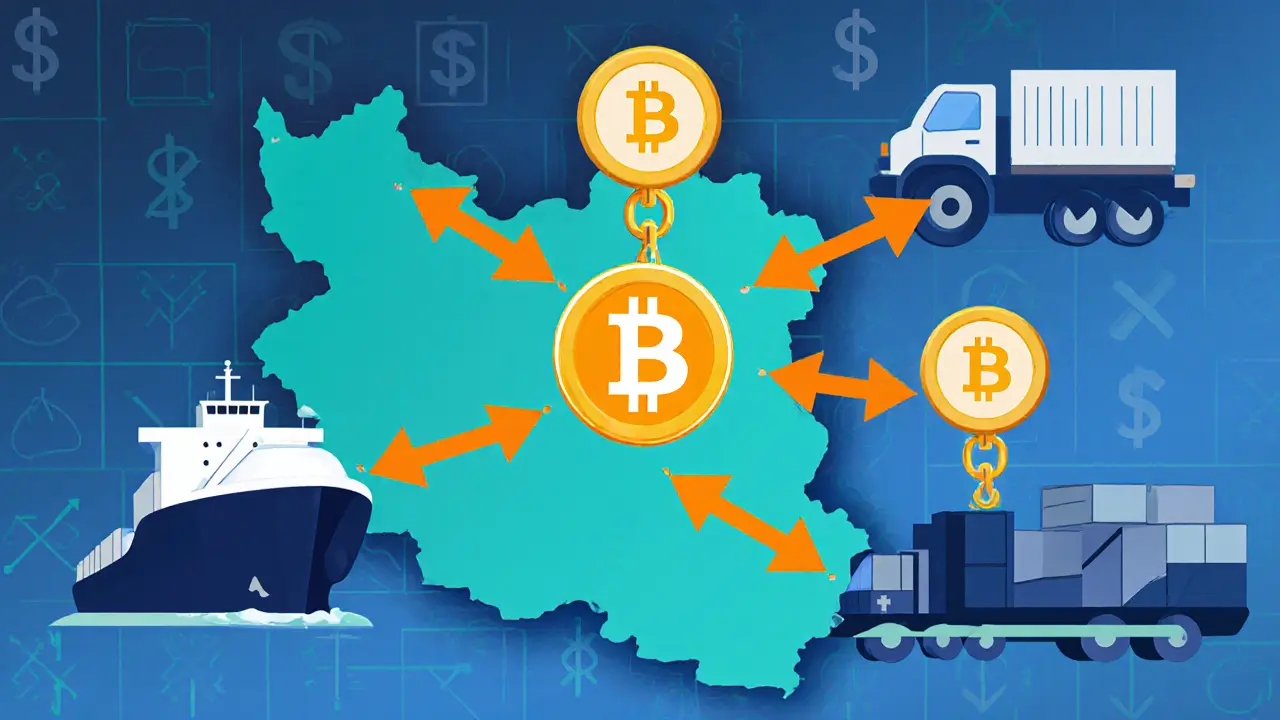
Explore how Iran uses Bitcoin to bypass sanctions for imports, the regulatory maze, mining boom, and the challenges facing crypto-enabled trade.
Read More