
How Futures Markets Shape Spot Prices: Insight for Crypto Traders
Explore how futures markets drive spot price movements, affect volatility, and influence crypto trading-plus practical tips and a FAQ.
Read MoreWhen talking about Futures Market Impact, the way futures contracts influence price trends, liquidity, and trader behavior across crypto and traditional markets. Also known as futures effect, it reflects how the promise of future delivery reshapes today’s buying and selling decisions. This impact isn’t limited to a single asset class; it ripples through Bitcoin, altcoins, equities, and commodities, creating a feedback loop that amplifies moves in both directions.
One of the biggest levers behind this phenomenon is Leverage, the practice of borrowing capital to control a larger position than the trader’s own funds would allow. Leverage lets a trader magnify exposure to a futures contract, meaning a small price swing can produce outsized gains—or losses. When many participants stack high leverage, any shift in sentiment can trigger rapid liquidations, which in turn push the underlying spot price further in the same direction.
Another core element is Margin Trading, the system that requires traders to post collateral to open leveraged futures positions. Margin requirements set the safety net; tight margins raise the chance of forced exits, while loose margins encourage deeper forays into the market. The interaction between margin levels and leverage creates a cascade effect: as prices move, margin calls surface, forcing traders to sell or buy, which then fuels additional price movement.
Crypto Derivatives, instruments like perpetual swaps, options, and futures built on digital assets extend the impact beyond simple spot trades. Because crypto derivatives often trade 24/7, they carry market sentiment around the clock, spilling over into spot markets even when traditional exchanges are closed. This constant flow of information can make crypto price swings look more volatile than those of stocks, where futures settle at specific times.
Speaking of volatility, Market Volatility, the speed and magnitude of price changes over a given period acts both as a cause and a consequence of futures activity. High volatility attracts more speculative futures traders seeking quick profits, which raises open interest and deepens order books. Conversely, a surge in open interest can amplify volatility when large positions unwind, creating a self‑reinforcing cycle.
Lastly, the structure of Futures Contracts, legal agreements to buy or sell an asset at a predetermined price on a set future date determines how the impact unfolds. Contracts with near‑term expirations tend to concentrate trading activity, leading to sharp price bumps around settlement dates. Longer‑dated contracts spread the effect over time, but still influence spot markets through price discovery and arbitrage.
Understanding these interlinked pieces helps you read the market like a story. When you see a spike in open interest on a Bitcoin perpetual swap, ask yourself: Are traders loading up on leverage? Is margin tight enough to trigger liquidations? How might that ripple into the spot Bitcoin price I’m watching? The answers form a practical roadmap for navigating both crypto and traditional futures landscapes.
Below you’ll find a curated set of articles that break down each of these elements. From deep dives into margin‑trading tactics to real‑world case studies of crypto derivatives shaping price action, the collection gives you actionable insight into how the futures market impact plays out day after day. Dive in, and you’ll walk away with a clearer picture of why futures move markets and how to position yourself accordingly.
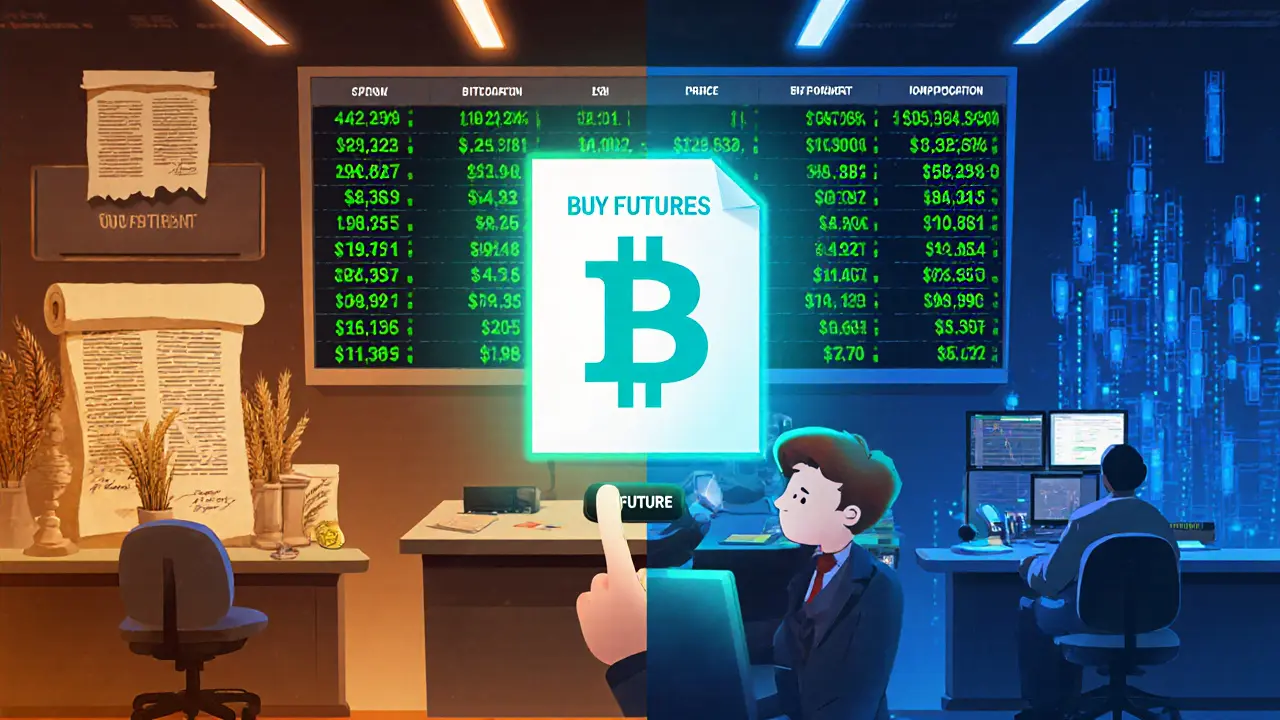
Explore how futures markets drive spot price movements, affect volatility, and influence crypto trading-plus practical tips and a FAQ.
Read More