
Understanding Cryptocurrency Futures: How They Work, Benefits & Risks
Learn what cryptocurrency futures are, how they work, their benefits, risks, and how to start trading them with real‑world examples and practical tips.
Read MoreWhen working with futures contracts, standardized agreements to buy or sell an asset at a set price on a future date. Also known as futures, they belong to the world of derivatives, financial products that derive value from an underlying asset and are a key tool in margin trading, trading with borrowed funds to increase exposure. Most platforms also offer leverage, the ability to control a larger position with a smaller capital outlay, which amplifies both profit and loss.
First, every futures contract specifies the underlying asset—could be a cryptocurrency like Bitcoin, a stock index, or a commodity such as gold. It also defines the contract size, expiration date, and settlement method (cash‑settled or physical delivery). The contract size tells you how much of the asset you control, while the expiration date tells you when the contract ends. Cash settlement is common for crypto futures because delivering the actual coin is cumbersome; instead, profit and loss are paid in the base currency.
Second, margin requirements are set by the exchange and can vary by asset volatility. A higher margin means you lock up more capital, reducing the chance of a liquidation during sharp price moves. Conversely, lower margin boosts your buying power but raises the risk of a margin call. Understanding the margin‑to‑equity ratio is essential before you open a position.
Third, leverage directly links to margin. If an exchange offers 10× leverage, you only need 10% of the contract value as margin. This relationship can be expressed as: Leverage = Contract Value ÷ Margin. Traders often use leverage to magnify small price movements, but they must also monitor their Position‑Margin Ratio (PMR) to avoid forced liquidation.
Fourth, risk management tools like stop‑loss orders and take‑profit levels help keep losses in check. Because futures can swing wildly, setting a stop‑loss at a reasonable distance—often a percentage of your entry price—prevents a small mistake from wiping out your account. Many platforms also provide “liquidation alerts” that warn you when your margin is getting thin.
Fifth, the choice of exchange matters. Traditional venues like CME and ICE offer regulated futures with deep liquidity, while crypto‑focused platforms such as Binance Futures, Bybit, and dYdX provide near‑24‑hour trading and higher leverage options. Each exchange has its own fee structure, settlement rules, and security protocols, so matching the platform to your strategy is a must.
Sixth, market analysis drives your trading decisions. Technical analysis—reading price charts, trend lines, and volume—helps spot entry points, while fundamental analysis looks at news, network upgrades, or macro events that could move the underlying asset. Combining both gives a fuller picture and improves the odds of a successful trade.
Seventh, tax implications can’t be ignored. In many jurisdictions, futures profits are taxed differently from spot trading gains. Some regions treat them as capital gains; others as ordinary income. Consulting a tax professional ensures you stay compliant and don’t lose a chunk of your earnings to unexpected bills.
Finally, education and practice are non‑negotiable. Start with a demo account, experiment with small positions, and gradually increase exposure as you become comfortable with contract specifications, margin calls, and leverage effects. The learning curve is steep, but disciplined practice pays off.
All these pieces—contract specs, margin, leverage, risk tools, exchange choice, analysis, and tax considerations—fit together like a puzzle. When you understand how each part interacts, you can design strategies that match your risk tolerance and profit goals. Below, you’ll find a curated list of articles that dive deeper into each of these topics, from exchange reviews to advanced margin strategies, so you can sharpen your futures‑trading edge.
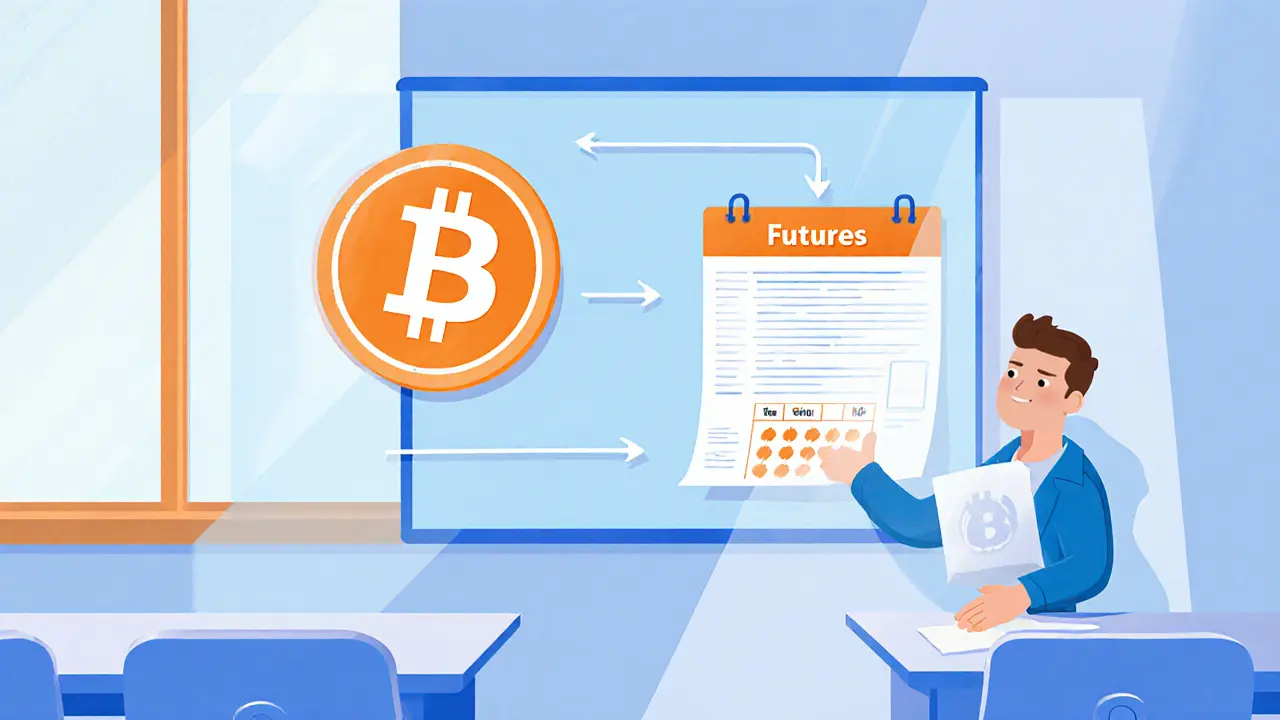
Learn what cryptocurrency futures are, how they work, their benefits, risks, and how to start trading them with real‑world examples and practical tips.
Read More