
Blockchain Voting Security Concerns: Risks, Reality, and the Road Ahead
Explore the security risks of blockchain voting, from silent vote tampering to privacy breaches, and learn what experts, pilots, and regulators recommend.
Read MoreWhen working with decentralized voting, a system that lets participants cast votes directly on a blockchain without a central authority. Also known as on‑chain voting, it aims for transparency, immutability, and global access. This method relies on blockchain, a distributed ledger that records every vote as a tamper‑proof entry and often runs inside a DAO (Decentralized Autonomous Organization), a community‑run entity where token holders govern rules via smart contracts. Those three entities create a secure, trustless environment for community decisions.
Because votes are encoded in smart contracts, self‑executing code that enforces voting outcomes automatically, the process eliminates manual tallying and reduces the risk of fraud. Token‑based governance ties voting power to holdings, so projects like cryptocurrency exchanges or airdrop platforms can let users influence protocol upgrades, fee structures, or new product launches. For example, holders of a governance token may decide whether to list a new coin, adjust trading fees, or allocate funds for community grants. This link between token economics and voting incentives drives active participation across the ecosystem.
decentralized voting is reshaping how communities make decisions, from blockchain startups to large DeFi protocols. Below you’ll find guides, reviews, and analyses that show how the technology works, why security matters, and what real‑world projects are doing with on‑chain votes. Dive into the collection to see practical examples, learn about the tools that power secure polls, and discover how you can take part in the next wave of democratic finance.
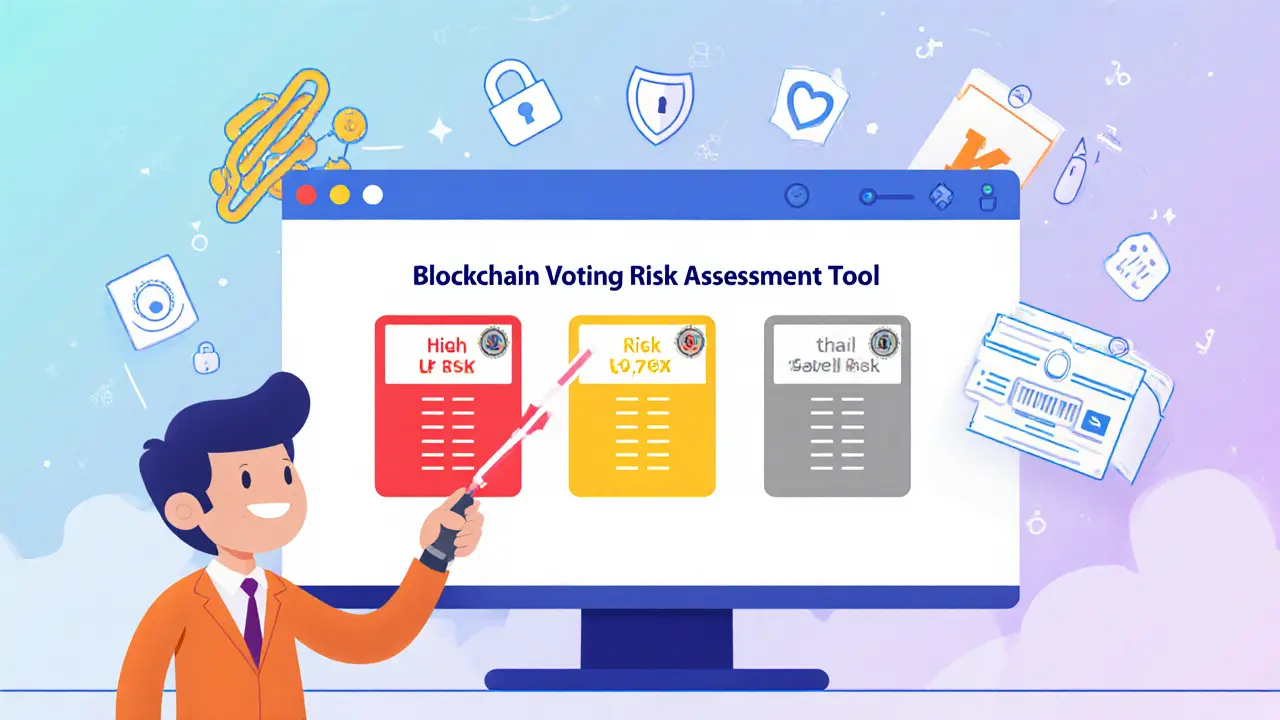
Explore the security risks of blockchain voting, from silent vote tampering to privacy breaches, and learn what experts, pilots, and regulators recommend.
Read More