
Cyprus Crypto Banking Rules 2025: What You Need to Know
Explore Cyprus' crypto banking restrictions: key regulations, compliance steps, and future outlook for banks and crypto firms in 2025.
Read MoreWhen working with Cyprus MiCA, the EU’s Markets in Crypto‑Assets Regulation as implemented in Cyprus, shaping how crypto firms operate on the island. Also known as MiCA, it sets licensing, disclosure, and consumer‑protection standards for digital‑asset businesses. In plain English, it means any company that wants to issue tokens, run a exchange, or provide custody services must follow a single rulebook that the EU created to bring clarity to a wildly innovative market. If you’re a trader, a founder, or just someone curious about why your crypto wallet looks different in Nicosia, this intro will put the pieces together before you dive into the articles below.
The broader European Union, a political and economic union of 27 member states crafted MiCA to replace a patchwork of national rules with one harmonized framework. Cyprus MiCA is the local expression of that framework, so it inherits the EU’s core objectives: market integrity, investor protection, and financial stability. Because the EU treats digital assets like securities, consumers get the same safeguards they enjoy with stocks or bonds – prospectus disclosure, capital‑raising limits, and anti‑money‑laundering checks. The result? A clearer path for firms that want to launch a token on an island known for its favorable tax regime.
Implementation in Cyprus falls under the CySEC, the Cyprus Securities and Exchange Commission, which acts as the national regulator for MiCA compliance. CySEC reviews applications, issues licences, and monitors ongoing reporting. If a company wants to offer a stablecoin, it must prove that the backing assets are secure and that redemption rights are enforceable. This is a direct example of the semantic triple: Cyprus MiCA requires crypto service providers to register with CySEC. The regulator also coordinates with EU authorities, ensuring that a breach in Cyprus triggers cross‑border enforcement under the EU’s supervisory network.
Another crucial entity is Digital Asset Custody, the practice of securely storing cryptocurrencies and tokens for clients. MiCA imposes strict segregation rules: custodians must keep client assets separate from their own, undergo regular audits, and maintain adequate capital buffers. For investors, this translates into less risk of losing funds if a custodian goes bust. The relationship can be summed up as: MiCA influences digital‑asset custody standards to protect investors. Whether you’re a retail user or an institutional player, understanding these custody requirements helps you assess which platforms truly meet regulatory expectations.
Token issuance, often called Crypto Asset Offering, the process of raising capital by selling digital tokens, is another pillar of the MiCA framework. Under Cyprus MiCA, issuers must publish a detailed prospectus, outline the rights attached to the token, and disclose any lock‑up periods. This semantic triple: Cyprus MiCA encompasses token‑issuance rules reflects the EU’s aim to bring the same transparency you see in an IPO to the crypto world. The prospectus requirement also means that investors can compare offerings more easily, reducing the chance of being caught in a fraudulent scheme.
Compliance isn’t just paperwork; it reshapes business models. A crypto exchange, for example, now needs a MiCA licence to operate legally, and that licence is only granted if the platform meets AML/KYC standards, has a solid governance structure, and can demonstrate resilience to cyber attacks. Companies that ignore these rules risk hefty fines or being barred from the EU market entirely. This creates a natural incentive for firms to upgrade security, adopt clearer governance, and engage with regulators early. In practice, you’ll see more “regulated” badges on exchange homepages, and that’s a direct result of the regulatory push.
So why does all this matter to you? Whether you’re scouting for an exchange to trade Bitcoin, evaluating a DeFi project that promises high yields, or thinking about launching your own token, understanding Cyprus MiCA gives you a shortcut to assess risk. The articles below break down each angle – from Nepal’s asset forfeiture rules that contrast sharply with EU standards, to cross‑chain NFT marketplaces that must now consider custody rules, and even regional cases like Australia’s consumer protection rules that echo MiCA’s goals. By the time you finish the list, you’ll have a pretty solid mental map of how EU crypto regulation shapes the market in Cyprus and beyond.
Ready to see how these concepts play out across real‑world examples? Below you’ll find a curated collection of guides, reviews, and deep‑dives that connect the dots between regulation, technology, and everyday crypto decisions.
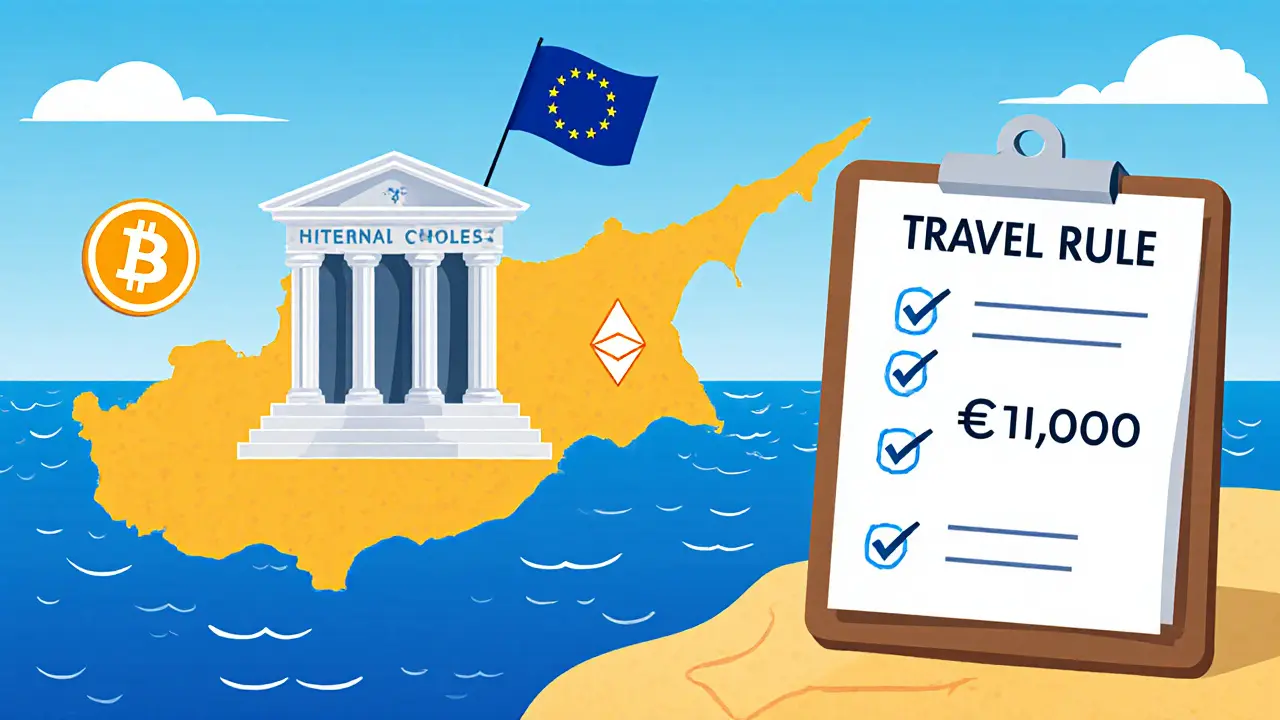
Explore Cyprus' crypto banking restrictions: key regulations, compliance steps, and future outlook for banks and crypto firms in 2025.
Read More