
TEMBTC Crypto Exchange Review: Is TEMBTC a Real Crypto Platform?
TEMBTC is not a real crypto exchange - it's a scam name used to trick people into sending crypto. Learn why it doesn't exist and which real platforms to use instead.
Read MoreWhen you trade crypto, you’re not buying Bitcoin or Ethereum alone—you’re swapping one asset for another. That swap is called a crypto trading pair, a market pair that shows how much of one cryptocurrency you can get for another. Also known as trading pair, it’s the foundation of every trade on every exchange, from Binance.US to Sushiswap v3. Without trading pairs, there’s no market. No price. No way to move value.
Most pairs you’ll see are built around stablecoins like USDT or USDC, or major coins like BTC and ETH. For example, BTC/USDT means you’re trading Bitcoin for Tether. If the price is 65,000, you need 65,000 USDT to buy one BTC. These pairs exist because most people don’t want to trade directly between two volatile altcoins. They use stablecoins as a bridge. That’s why you’ll find over 80% of all trading volume on exchanges like Kyrrex or Persistence DEX tied to USDT, USDC, or BTC. Even niche platforms like BitBegin in Georgia or 99Ex (which, by the way, is a scam) still rely on these same pair structures. The pair isn’t just a symbol—it’s a decision. It tells you what you’re risking, what you’re gaining, and how liquid your trade will be.
But not all pairs are created equal. A pair like XPRT/BTC on Persistence DEX might have low volume and high slippage, meaning your trade gets filled at a worse price than expected. Meanwhile, ETH/USD on Binance.US has deep liquidity, tight spreads, and fast execution. The difference? Liquidity. And liquidity comes from demand. The more people trade a pair, the smoother it runs. That’s why you’ll see traders avoid obscure pairs like ICG/USDT or PNDR/BTC—those tokens have zero volume and are often just ghosts on the blockchain. Trading pairs with real activity means you can enter and exit without dragging the price down. It also means you’re less likely to get caught in a front-running attack, where bots sneak in ahead of your trade on Ethereum-based DEXes like Sushiswap.
And don’t forget regulation. In places like Nigeria or the UAE, the pairs you can trade depend on local laws. Some exchanges block certain pairs if they’re classified as securities. Others, like Kyrrex, follow MiCA rules to stay compliant. Even in countries where crypto is banned, like Bangladesh, underground traders still use BTC/USDT pairs—because it’s the only way to move value across borders when banks won’t help. The pair becomes your lifeline.
What you’ll find below isn’t just a list of articles. It’s a real-world guide to how trading pairs shape your experience—whether you’re swapping tokens on a decentralized exchange, avoiding fake airdrops tied to dead pairs like CSHIP or FAN8, or trying to understand why your trade on BitForex vanished after the exchange collapsed. These posts show you which pairs are safe, which are traps, and how to read the market through the lens of actual trading pairs—not hype.
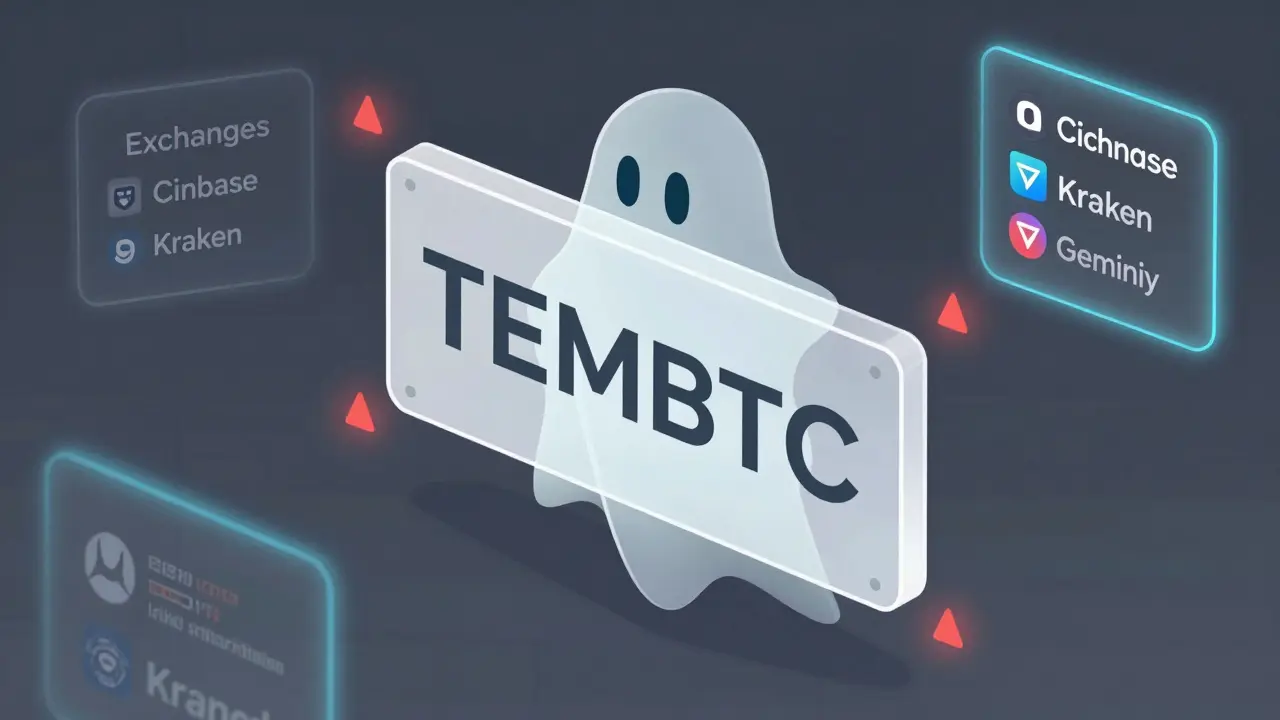
TEMBTC is not a real crypto exchange - it's a scam name used to trick people into sending crypto. Learn why it doesn't exist and which real platforms to use instead.
Read More