
How Bitcoin Powers Iran’s Import Trade Amid Sanctions
Explore how Iran uses Bitcoin to bypass sanctions for imports, the regulatory maze, mining boom, and the challenges facing crypto-enabled trade.
Read MoreWhen talking about crypto mining, the process of using computer power to solve cryptographic puzzles and add new blocks to a blockchain. Also known as digital currency mining, it fuels networks like Bitcoin, the first and most valuable cryptocurrency and underpins many newer tokens. The activity depends on a blockchain, a decentralized ledger that records transactions securely and requires specialized mining hardware, devices such as ASICs or GPUs designed to perform SHA‑256 or Ethash calculations efficiently. These three entities—crypto mining, blockchain, and hardware—are tightly linked: crypto mining secures a blockchain and hardware makes the process possible.
One of the biggest talking points is energy use. Crypto mining consumes electricity at a scale comparable to small countries, which raises concerns about energy consumption, the amount of power required to run mining rigs 24/7. Operators often chase cheap power sources, from hydroelectric plants in Scandinavia to surplus energy in oil‑rich regions. This creates a direct connection: higher energy costs push miners to relocate, influencing mining regulations, government rules that can limit or incentivize mining activities in various jurisdictions.
Governments are stepping in because the sector affects both the environment and the economy. Some countries, like Russia, have legalized mining to generate revenue, while others, such as Kosovo, imposed bans to protect their power grids. These regulatory moves directly impact hardware manufacturers and investors: stricter rules can raise operational costs, whereas favorable policies attract new players. In short, mining regulations influence where hardware is deployed, how much energy is consumed, and ultimately the profitability of the venture.
Beyond policy, the choice of hardware matters for profitability. ASICs dominate Bitcoin mining with high hash rates but come at a steep price, while GPUs offer flexibility for newer proof‑of‑work coins. The decision hinges on three attributes: initial cost, energy efficiency, and algorithm compatibility. For instance, a miner targeting Bitcoin will look at TH/s (tera‑hashes per second) and watts per TH, whereas an Ethereum‑focused operator cares about MH/s (mega‑hashes per second) and memory bandwidth. Understanding these specs helps you compare devices and estimate break‑even points.
Another layer involves the market dynamics of the mined coin itself. When Bitcoin prices surge, mining becomes more lucrative, prompting a wave of new rigs and higher network difficulty. Conversely, a price slump can push marginal miners out of the game, reducing hash power and potentially stabilizing the network. This feedback loop ties the financial health of a cryptocurrency directly to its mining ecosystem.
All these pieces—hardware, energy, regulation, and coin price—combine to shape the real‑world experience of crypto mining. Below you’ll find a curated set of articles that dive deeper into each aspect, from detailed hardware reviews to country‑by‑country regulatory breakdowns and practical tips for managing electricity costs. Use them as a roadmap to decide whether mining fits your goals and how to navigate the ever‑changing landscape.
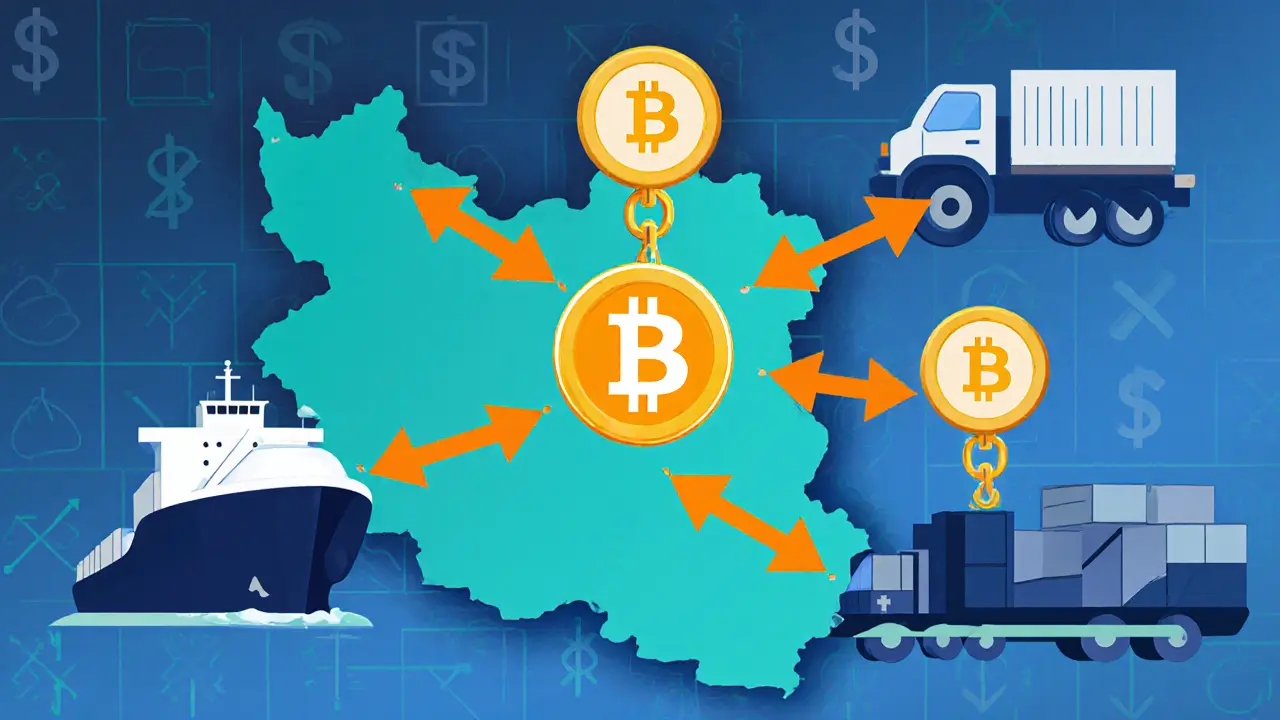
Explore how Iran uses Bitcoin to bypass sanctions for imports, the regulatory maze, mining boom, and the challenges facing crypto-enabled trade.
Read More