
Blockchain Voting Security Concerns: Risks, Reality, and the Road Ahead
Explore the security risks of blockchain voting, from silent vote tampering to privacy breaches, and learn what experts, pilots, and regulators recommend.
Read MoreWhen dealing with blockchain vulnerabilities, weaknesses in distributed ledger systems that can be exploited by attackers. Also called crypto security flaws, they affect everything from simple token transfers to complex DeFi protocols. Common examples include smart contract bugs, coding errors that let malicious actors drain funds, crypto exchange hacks, security breaches that compromise user wallets and data, and DeFi scams, fraudulent projects that lure investors with fake yields. Understanding these risks is the first step toward staying safe.
These weaknesses don’t exist in a vacuum. blockchain vulnerabilities often arise from poor code review, rushed launches, or missing security testing. That’s why a thorough security audit is the cornerstone of any safe blockchain project. Audits examine the byte‑code, check for re‑entrancy loops, and verify that access controls work as intended. When an audit catches a flaw early, developers can patch it before funds ever move, dramatically lowering the attack surface.
Exchange security is another big piece of the puzzle. Even if a blockchain’s core protocol is solid, a compromised exchange can hand over user assets in minutes. Weak authentication, centralized hot wallets, and inadequate monitoring turn an exchange into a soft target. Regulations that force exchanges to adopt multi‑factor authentication and cold‑storage policies directly reduce the likelihood of large‑scale thefts, showing how compliance influences blockchain vulnerabilities.
DeFi scams exploit the same trust gaps but add a social twist. Pump‑and‑dump token launches, fake yield farms, and impersonated projects all rely on users not digging deep enough. Understanding tokenomics, checking contract source codes, and using reputable analytics platforms help spot red flags before you invest. In short, the more transparent a project is, the fewer hidden vulnerabilities it carries.
History provides plenty of concrete lessons. The DAO hack, the Poly Network breach, and the recent Wormhole exploit each showed a different failure mode—smart contract bugs, cross‑chain bridge flaws, and inadequate firewalls. These incidents proved that a single vulnerability can drain millions, ripple through markets, and erode confidence in the entire ecosystem.
To protect yourself, start with a layered approach. Use hardware wallets for long‑term storage, enable MFA on every exchange account, and keep software updated. Follow reputable security researchers on platforms like Twitter or Discord; they often flag emerging exploits before they hit the mainstream. Finally, allocate only what you can afford to lose—no amount of due diligence can eliminate risk entirely.
Smart contract bugs, exchange hacks, and DeFi scams together form the triad of major threat vectors. Each vector demands its own defenses: static analysis tools for code, cold‑storage solutions for exchanges, and community‑driven vetting for DeFi projects. By treating them as interconnected pieces, you build a resilient defense that adapts as new attack patterns appear.
Looking ahead, you’ll see a collection of articles that dive deeper into each of these areas. From detailed exchange reviews that expose security gaps, to guides on spotting fake airdrops, the posts below give actionable insights you can apply right away. Explore the list to sharpen your understanding and fortify your crypto journey.
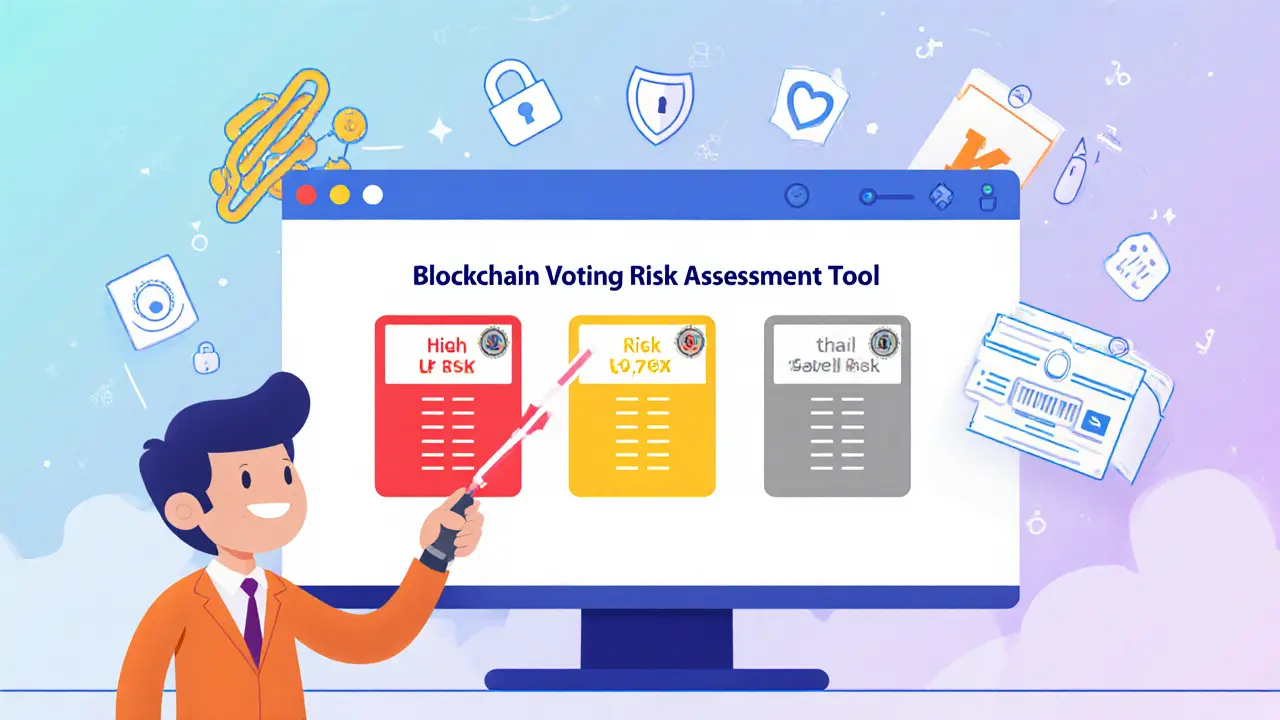
Explore the security risks of blockchain voting, from silent vote tampering to privacy breaches, and learn what experts, pilots, and regulators recommend.
Read More