
Switzerland Crypto Valley Regulations in Zug: Rules, Taxes & Limits
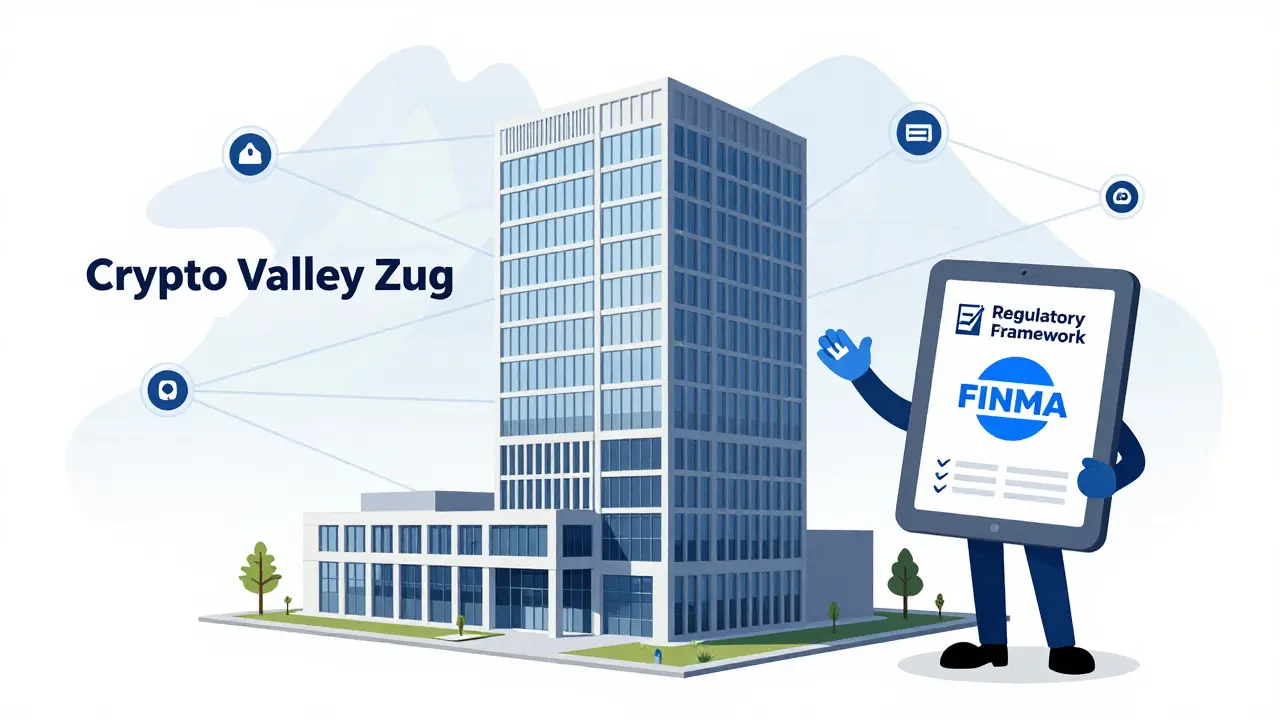
Living in the shadow of the Alps, you might think Switzerland is all about chocolate and neutrality. But if you are building a blockchain startup or holding digital assets, Zug is where the real action happens. Known globally as the "Crypto Valley," this canton isn't just a marketing buzzword; it’s a fully functional regulatory ecosystem that has attracted billions in venture capital since its inception. However, "crypto-friendly" does not mean "lawless." There are strict boundaries, licensing requirements, and tax obligations that every resident and business must navigate.
If you are looking for a place to launch your token sale or simply want to understand how your Bitcoin holdings are treated under Swiss law, you need to look beyond the hype. The reality is a sophisticated framework overseen by federal authorities but implemented with local flexibility. This guide breaks down exactly what is allowed, what is restricted, and how to stay compliant in one of the world’s most progressive jurisdictions.
The Foundation: FINMA and the 'Same Risks, Same Rules' Principle
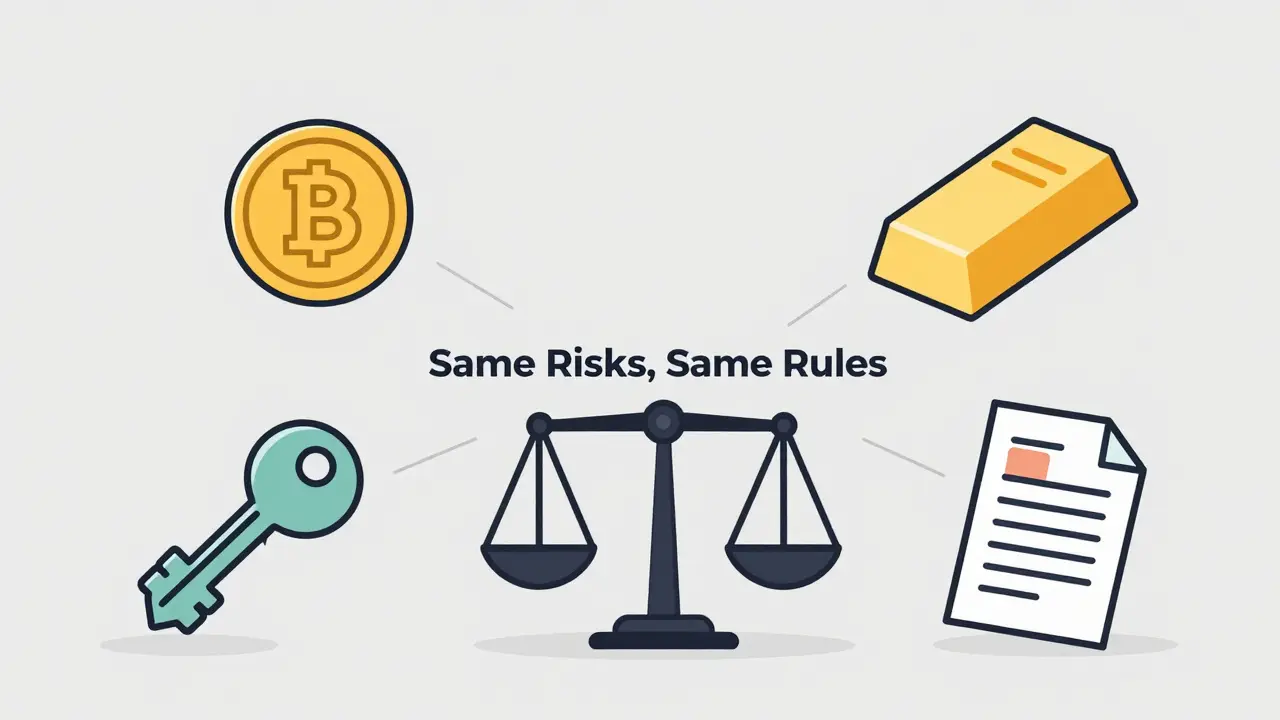
To understand Zug’s regulations, you first have to understand who is actually pulling the strings. While Zug provides the infrastructure and culture, the ultimate authority lies with FINMA, the Swiss Financial Market Supervisory Authority. FINMA does not create separate laws for cryptocurrency. Instead, they apply a pragmatic principle known as "same risks, same rules."
This means that if your crypto activity carries the same financial risk as traditional banking or securities trading, it falls under existing financial regulations. For example, if you issue a token that functions like a share in a company, it is treated as a security. If you run an exchange, you are subject to banking-style oversight. This approach eliminates the regulatory gray areas that plague other countries. You know exactly which license you need because the classification is based on the economic function of the asset, not its technology.
- Payment Tokens: Assets used primarily for payment (like Bitcoin) are not considered securities but require AML compliance.
- Asset Tokens: Digital representations of physical or financial assets (like gold-backed tokens) fall under specific financial market laws.
- Utility Tokens: Tokens providing access to a service may be exempt from certain securities regulations if they do not promise financial returns.
- Security Tokens: Tokens representing equity or debt must comply with full securities prospectus requirements.
The Game Changer: The DLT Act and Trading Venues
For years, the biggest hurdle for crypto businesses was the lack of a clear legal status for distributed ledger technology itself. That changed with the introduction of the DLT Act, which became effective on August 1, 2021. This legislation created a specific legal framework for tokenized assets and DLT-based trading venues, allowing them to operate within the Swiss legal system without needing complex workarounds.
The true test of this law came recently. On March 25, 2025, BX Digital received the first-ever DLT trading venue license from FINMA. This wasn’t just a paper exercise; it enabled multilateral trading of DLT securities, significantly enhancing liquidity for digital assets. Before this, trading tokenized stocks or bonds often required bridging to traditional exchanges. Now, native blockchain trading is legally recognized and regulated.
This development is crucial for anyone considering launching a security token offering (STO) in Zug. It means there is now a compliant, liquid marketplace for these assets. The success of BX Digital signals that FINMA is ready to authorize more such venues, expanding the infrastructure available to startups and investors alike.
Taxation: What You Keep vs. What You Pay
One of the primary reasons founders choose Zug is the favorable tax environment. But let’s be clear: it is not a tax haven in the traditional sense. The Swiss Federal Tax Administration (SFTA) has provided transparent guidance that removes ambiguity, but you still owe your fair share.
Here is the breakdown for individuals and businesses:
| Activity | Tax Treatment | Notes |
|---|---|---|
| Capital Gains (Private Investors) | No Tax | Selling Bitcoin or Ethereum for profit is tax-free for private individuals. |
| Mining & Staking Income | Income Tax | Rewards from mining or staking are treated as regular income and taxed accordingly. |
| Wealth Holdings | Wealth Tax | All crypto holdings are added to your total net worth and taxed annually at the cantonal level. |
| Business Profits | Corporate Tax | Companies pay standard corporate taxes on profits generated from crypto activities. |
Note that as of April 2025, there is no specific "digital service tax" or blockchain-focused levy. This stability allows businesses to plan long-term strategies without fearing sudden regulatory tax hikes. However, the wealth tax can add up for large holders. If you hold significant amounts of crypto, ensure your annual wealth declaration includes these assets to avoid penalties.
Stablecoins and Banking Integration
Stablecoins like Tether (USDT) or USDC are integral to the crypto economy, but they also carry systemic risks. FINMA takes a "substance-over-form" approach here. They don’t ban stablecoins; instead, they assess whether the issuer needs a banking license or falls under collective investment schemes.
This regulatory clarity has encouraged major banks to engage with the sector. PostFinance, a systemically important Swiss bank, became the first to offer customers storage and savings plans for 11 different cryptocurrencies. Furthermore, collaborations between BX Swiss and major banks like Credit Suisse, Pictet, and Vontobel have successfully tested blockchain-based settlement systems. These tests involved issuing tokenized securities on Ethereum and settling directly in Swiss francs via the Swiss Interbank Clearing system.
For users, this means increased legitimacy. Your crypto is no longer siloed away from the traditional financial system; it is increasingly integrated into it, backed by robust legal frameworks.
Real-World Adoption: Beyond Speculation
Regulations matter little if the community doesn’t adopt the technology. Zug leads by example. Since 2016, the municipality has accepted Bitcoin and Ether for tax payments up to CHF 100,000 annually. This wasn’t a stunt; it was a signal that digital assets are viable mediums of exchange.
This trend has spread. Lugano announced plans to make Bitcoin, Tether, and its own LVGA Points token legal tender for city transactions, including tax payments. Even the Swiss Federal Railways (SBB) expanded adoption by enabling Bitcoin purchases at over 1,000 ticketing machines nationwide for transactions between 20 and 500 Swiss francs.
These initiatives demonstrate that the regulatory framework supports practical usage. You aren’t just buying crypto to sell it later; you can use it for everyday services, albeit with some limits on transaction sizes for consumer convenience.

Compliance and International Transparency
A common misconception is that crypto-friendly means secretive. In reality, Switzerland is doubling down on transparency. On June 6, 2025, the Federal Council approved the automatic exchange of crypto asset information (AEOI) with 74 partner countries. Implementation begins in January 2026, with the first data exchanges scheduled for 2027.
This move combats cross-border tax evasion while maintaining a pro-innovation stance. For businesses, this means you cannot use Zug as a shield for illicit activities. All crypto service providers must comply with strict Anti-Money Laundering (AML) laws. Making payments with cryptocurrencies requires no specific reporting for individuals, but businesses handling customer funds must undergo rigorous due diligence.
Summary of Restrictions and Requirements
While Zug is welcoming, it is not permissive. Here are the key restrictions you must respect:
- Licensing is Mandatory: Operating an exchange, wallet provider, or lending platform requires a FINMA license. Unlicensed operation is illegal.
- AML Compliance: All virtual asset service providers (VASPs) must implement robust KYC (Know Your Customer) and AML procedures.
- Prospectus for Securities: Issuing security tokens requires a published prospectus approved by FINMA, unless an exemption applies.
- No Anonymity for Businesses: Corporate structures must disclose beneficial ownership to combat money laundering.
The goal is to protect investors and maintain the integrity of the financial system. By adhering to these rules, businesses gain credibility and access to institutional capital.
Is it legal to mine cryptocurrency in Zug?
Yes, mining is legal. However, the rewards you receive are considered taxable income. You must declare this income to the Swiss Federal Tax Administration (SFTA) and pay applicable income taxes. Additionally, the hardware and electricity costs can be deducted as business expenses if registered as a commercial entity.
Do I need a license to trade crypto personally?
No, individual investors do not need a license to buy, sell, or hold cryptocurrency. Licenses are only required for businesses that provide services to others, such as exchanges, custodians, or advisors. Private sales and transfers are generally exempt from regulatory reporting.
How does the DLT Act affect my startup?
The DLT Act provides legal certainty for tokenized assets and trading venues. If your startup issues utility tokens or operates a decentralized exchange, the act clarifies your legal standing. It allows you to structure your business model with confidence, knowing that tokenized shares and bonds are recognized under Swiss law.
Will my crypto data be shared with other countries?
Starting in 2026, Switzerland will automatically exchange crypto asset information with 74 partner countries. This means your holdings may be reported to foreign tax authorities if you are a non-resident. Residents should ensure their declarations are accurate to avoid double taxation or penalties.
Can I pay taxes with Bitcoin in Zug?
Yes, Zug accepts Bitcoin and Ether for tax payments up to CHF 100,000 per year. Other municipalities like Lugano are also expanding acceptance to include stablecoins and local tokens. Check with your local tax office for current limits and accepted currencies.