
Swapzone Crypto Exchange Review: Is It Safe to Use in 2026?
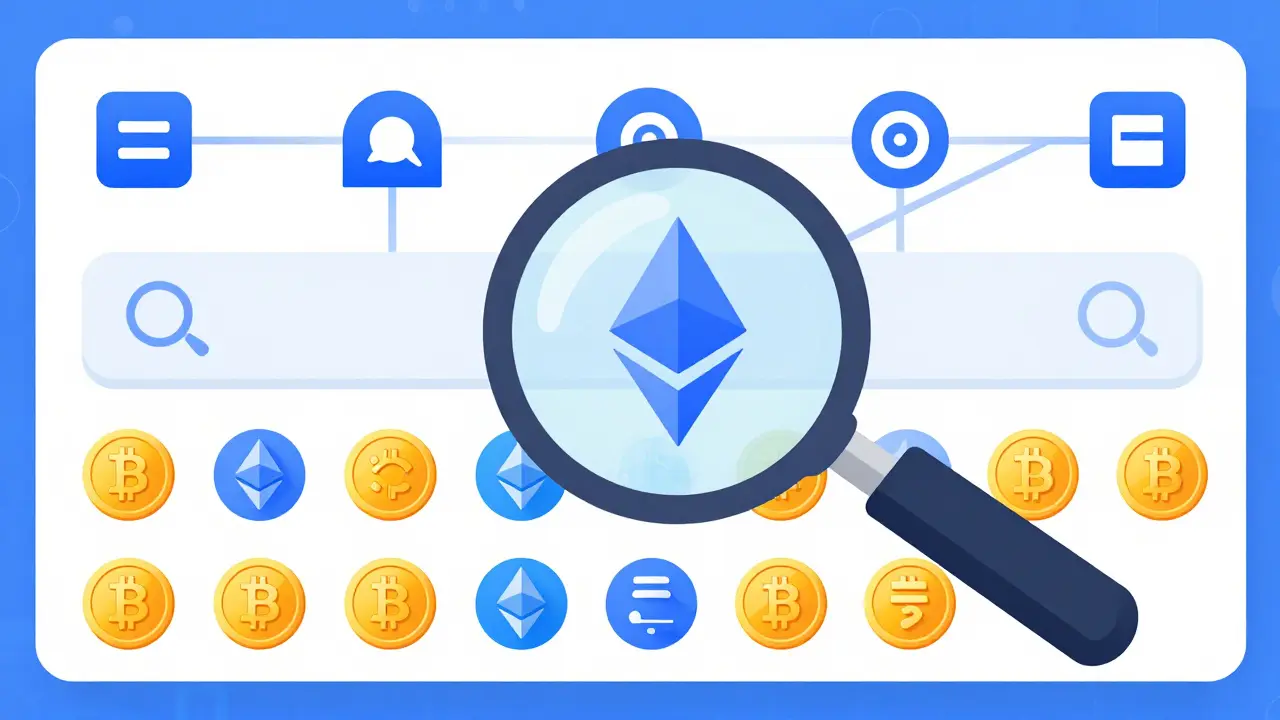
Have you ever tried swapping Bitcoin for Ethereum, only to find that the rate on your favorite exchange is slightly worse than what you saw five minutes ago? You aren't alone. The crypto market moves fast, and finding the absolute best price for a trade can feel like chasing a moving target. This is exactly why Swapzone is a non-custodial cryptocurrency exchange aggregator that compares real-time rates across multiple partner services to find the best deal for users without requiring account registration has gained so much traction since its launch in 2020.
But here is the catch: Swapzone isn't an exchange itself. It doesn't hold your money. It doesn't process the transaction directly. Instead, it acts as a search engine for crypto swaps. Before you send any funds, you need to understand how this model works, whether it's safe, and if those "best rates" are actually worth your time. Let's break down everything you need to know about using Swapzone in 2026.
How Swapzone Actually Works
To get comfortable with Swapzone, you first have to unlearn how traditional exchanges work. When you use a platform like Binance or Coinbase, you deposit funds into their system, they hold them, and then they execute the trade from their own liquidity pool. With Swapzone, none of that happens.
Think of Swapzone as Skyscanner or Kayak, but for cryptocurrency. Just as those travel sites don't sell plane tickets themselves but instead show you prices from Delta, United, and JetBlue, Swapzone scans over 18 partner exchanges-including big names like ChangeNOW, SimpleSwap, Changelly, and LetsExchange-to find the most competitive rate for your specific pair.
Here is the step-by-step flow:
- You enter the amount of crypto you want to send (e.g., 0.5 BTC).
- You select the crypto you want to receive (e.g., ETH).
- Swapzone queries its partners instantly and displays a list of offers, sorted by the amount you will receive.
- You pick the best offer. Swapzone redirects you to that partner’s interface (or keeps you on their page while connecting to the partner via API).
- You enter your destination wallet address.
- You send your source funds to the address provided by the partner.
- The partner processes the swap and sends the new crypto to your wallet.
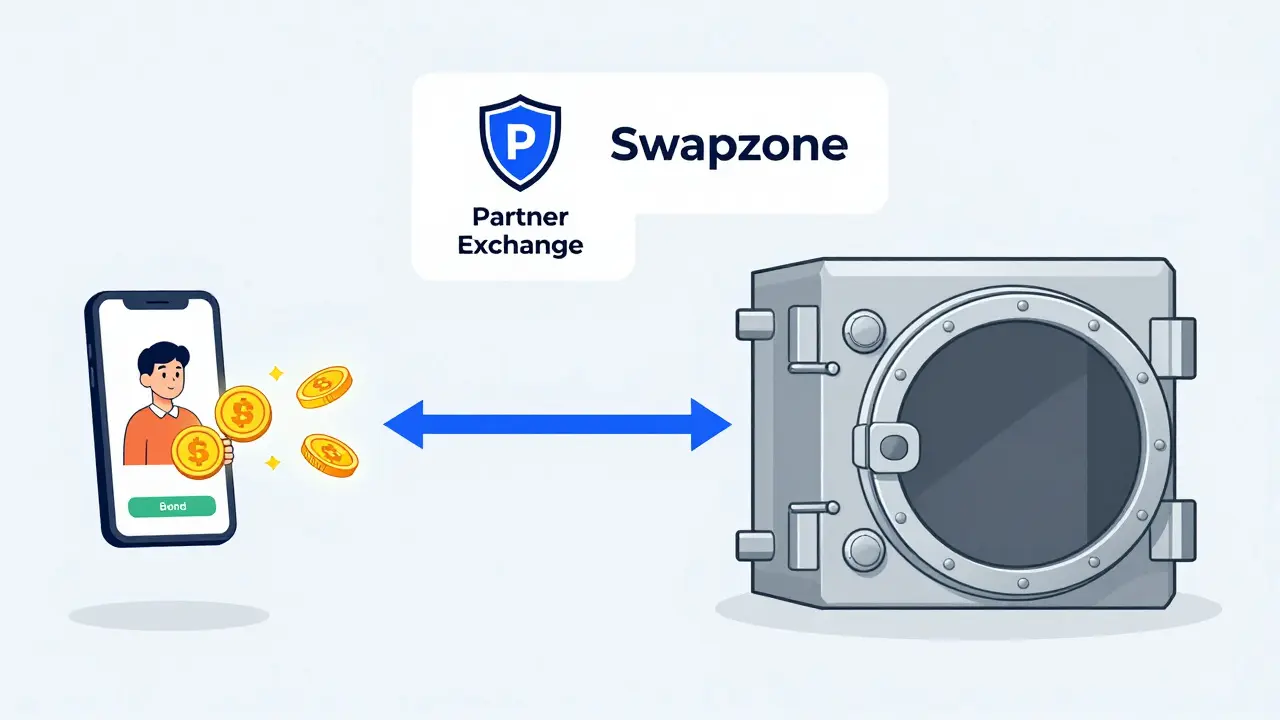
Crucially, at no point does Swapzone touch your funds. They never sit in a Swapzone wallet. This makes the service non-custodial. If Swapzone went offline tomorrow, your funds wouldn't be trapped there because they were never there to begin with. However, this also means that if something goes wrong during the swap, you are dealing with the partner exchange's support team, not Swapzone's.
Fees, Rates, and Hidden Costs
One of the biggest selling points of aggregators is transparency. On many direct exchanges, fees are buried in small print or hidden within the spread (the difference between the buy and sell price). Swapzone aims to make these costs visible upfront.
Swapzone itself charges zero markup. They make money through affiliate commissions from the partner exchanges when you complete a trade through their link. So, where do the fees come from?
The fees come from the partner exchanges. According to data from early 2026, average service fees across Swapzone's network range from 0.25% to 0.8%, depending on which partner provides the best rate. Some partners might charge a flat fee, while others use a percentage-based model. The good news? Swapzone displays the exact output amount you will receive before you confirm the transaction. If you see you'll get 4.99 ETH for your BTC, that 4.99 ETH already accounts for all network fees and partner margins.
There are two types of rates you'll encounter:
- Fixed Rate: The rate is locked for a specific window, usually 15 to 30 minutes. This protects you from market volatility during the time it takes you to send your funds. Most major pairs offer fixed rates.
- Floating Rate: The rate changes until the transaction is confirmed on the blockchain. This is common for obscure altcoins or highly volatile assets. You accept the risk that the price might drop slightly while your transaction is processing.
Pro tip: Always check if the rate is fixed or floating. For large transactions, a fixed rate is almost always safer, even if the initial quote is slightly lower, because it eliminates slippage risk.
Security: Who Is Really Protecting Your Money?
Security is the elephant in the room for any crypto tool. Since Swapzone doesn't hold your funds, you might think it's inherently safer. In some ways, it is. There is no central database of user balances for hackers to steal. But there are nuances.
Your security depends entirely on the partner exchange handling your swap. Swapzone inherits the security posture of its weakest partner. If you choose a partner with poor security practices, you are exposed to those risks. That said, Swapzone curates its list of partners carefully. They work with established, audited platforms like ChangeNOW and SimpleSwap, which have strong track records.
However, there are still risks you need to manage yourself:
- Wallet Address Errors: This is the #1 cause of lost funds. If you type your destination address wrong, or if you paste an Ethereum address when sending Litecoin, your money could vanish forever. Swapzone has added validation tools, but the final responsibility is yours.
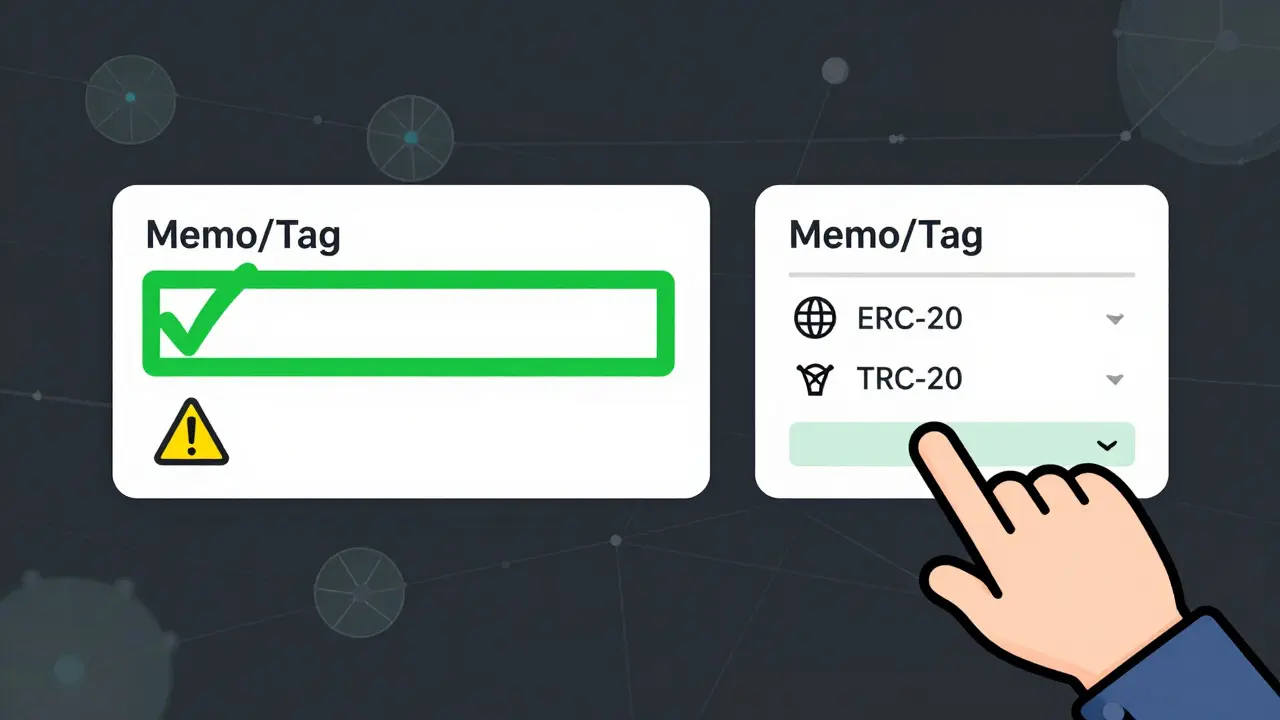
- Memo/Tag Fields: Some coins like XRP (Ripple), XLM (Stellar), and EOS require a memo or tag in addition to the address. If you miss this, the exchange won't know who to credit. In late 2025, Swapzone updated its interface to highlight these fields more clearly, reducing errors significantly, but you must still double-check.
- Phishing Links: Always ensure you are on
swapzone.io. Scammers often create lookalike sites. Bookmark the official site to avoid typosquatting attacks.
According to a security assessment by Trail of Bits in January 2026, aggregators like Swapzone create a "fragmented attack surface" because users interact with multiple third-party APIs. While Swapzone's front-end is secure, the reliability of the backend partners varies. Stick to the top-rated partners shown in the results list to minimize risk.
User Experience and Interface
If you've used a modern web app, you'll find Swapzone intuitive. The design is clean, clutter-free, and focused on one task: getting you the best rate. You don't need to create an account, verify your identity (KYC), or remember a password. This anonymity is a huge plus for privacy-focused users.
That said, the experience isn't perfect. As of mid-2026, Swapzone does not have a dedicated mobile app. You access it through your mobile browser. While the site is responsive and works well on phones, it lacks the convenience of a native app with push notifications for transaction updates. Competitors like CoinSwitch have invested heavily in mobile apps, giving them a slight edge in user retention.
The interface also simplifies complex choices. For example, when swapping between different blockchains (like sending Bitcoin to an Ethereum wallet via a wrapped token), Swapzone handles the technical routing behind the scenes. You just see "BTC to WETH." This is great for beginners but can be confusing for advanced users who want to control every aspect of the bridge process.
Swapzone vs. Direct Exchanges and Other Aggregators
Should you just use Binance or Coinbase instead? Or should you try another aggregator like ChangeNow or BestRate? Here is how Swapzone stacks up.
| Feature | Swapzone | Direct Exchange (e.g., Binance) | Competitor (e.g., ChangeNow) |
|---|---|---|---|
| Account Required | No | Yes (usually) | No |
| KYC (Identity Verification) | No (unless partner requires it for large amounts) | Yes | No (mostly) |
| Custody of Funds | Non-custodial (Partner holds temporarily) | Custodial (Exchange holds) | Non-custodial |
| Asset Coverage | 1,000+ coins | Varies (Binance has 350+) | ~500 coins |
| Best For | Comparing rates across many providers | High-volume trading, holding assets long-term | Quick, single-provider swaps |
| Mobile App | No (Web-only) | Yes | Yes |
Swapzone shines when you are swapping less common tokens or when you want to ensure you're getting the mathematically best rate across the entire market. If you are trading Bitcoin or Ethereum daily, a centralized exchange might offer better liquidity and lower fees due to volume discounts. But for occasional swaps, especially involving altcoins, Stablecoins, or privacy coins like Monero, Swapzone's aggregation power is hard to beat.
Compared to other aggregators, Swapzone holds the #3 spot in the market share among comparison services in 2026, trailing CoinSwitch and ChangeNow. Its main advantage is its sheer number of partners (18+) and extensive asset coverage (1,000+ cryptocurrencies). If you can't find a pair on Swapzone, it likely doesn't exist anywhere else easily accessible.
Who Should Use Swapzone?
Not every crypto user needs an aggregator. Here is who benefits most:
- Privacy Advocates: Since no account is needed, you can swap anonymously (within legal limits). No name, email, or ID required for most transactions.
- Altcoin Traders: If you hold niche tokens that aren't listed on major exchanges, Swapzone connects you to smaller partners who do support them.
- Cost-Conscious Swappers: Even a 0.5% difference matters on large trades. Comparing rates saves real money.
- Beginners: The simple interface removes the complexity of managing multiple exchange accounts.
Who should avoid it? High-frequency traders who need instant execution and deep liquidity should stick to centralized exchanges. Also, if you are in a restricted jurisdiction (like the US, China, or Iran), Swapzone blocks access due to regulatory compliance. Check their geo-blocking list before attempting to use the service.
Common Pitfalls and How to Avoid Them
Even with a smooth interface, mistakes happen. Based on user reports and Swapzone's transparency data, here are the most common issues:
1. Ignoring Network Fees
When sending Bitcoin or Ethereum, you pay a network gas fee to your wallet provider. This is separate from the swap fee. Ensure you have enough extra crypto in your wallet to cover this. If you send the exact amount you want to swap, the transaction might fail due to insufficient gas.
2. Wrong Network Selection
This is critical. If you are sending USDT, you must choose the correct network (ERC-20, TRC-20, BEP-20, etc.). Sending USDT on the Ethereum network to a Tron address will result in total loss. Swapzone prompts you to select the network, but you must verify it matches your receiving wallet.
3. Assuming Instant Confirmation
Crypto isn't instant. Depending on blockchain congestion, a swap can take 5 to 30 minutes. Don't panic if your funds disappear from your sending wallet and haven't appeared in your receiving wallet yet. Wait for the blockchain confirmations. Swapzone provides a transaction ID you can track on a block explorer.
Future Outlook: What's Next for Swapzone?
The crypto aggregator space is evolving rapidly. In 2026, Swapzone is actively working on several upgrades. Their roadmap includes launching a native mobile app by Q3 2026, which would address one of its biggest weaknesses. They are also integrating deeper with DeFi protocols, aiming to connect with over 100 decentralized exchanges (DEXs) by the end of the year. This would allow users to compare rates not just between centralized services, but also against automated market makers like Uniswap or PancakeSwap.
Regulatory pressure is increasing globally. As governments tighten rules around anonymous transactions, we may see stricter KYC requirements trickle down to aggregators. Swapzone currently maintains a balance by relying on partners to handle compliance, but this model could face scrutiny in the coming years. For now, it remains a robust, transparent, and efficient tool for everyday crypto swaps.
Is Swapzone legit and safe to use?
Yes, Swapzone is a legitimate and widely used service. It is non-custodial, meaning it never holds your funds. However, safety depends on the partner exchange you choose. Stick to top-rated partners displayed on the platform, double-check all wallet addresses, and ensure you are on the official swapzone.io domain to avoid phishing scams.
Does Swapzone require KYC (identity verification)?
No, Swapzone itself does not require KYC. You do not need to create an account or provide personal documents. However, some partner exchanges may require verification for large transactions (typically over $1,000-$10,000 depending on the partner and local laws). For most standard swaps, you can remain anonymous.
How much does Swapzone charge in fees?
Swapzone charges no additional markup. The fees you see are set by the partner exchanges, typically ranging from 0.25% to 0.8%. The final amount you receive is displayed clearly before you confirm the transaction, so there are no hidden surprises. You also pay standard blockchain network fees (gas) separately.
Can I use Swapzone in the United States?
No. Swapzone implements geo-blocking for users in certain jurisdictions, including the United States, China, Iran, and others, due to varying cryptocurrency regulations. If you are located in a restricted country, you will not be able to access the service.
What happens if my swap fails?
If a swap fails due to a technical error on the partner's side, your funds are usually refunded automatically after a set period (often 24-48 hours). If the failure is due to user error (wrong address, missing memo), recovery is unlikely. Always keep your transaction ID handy and contact the specific partner exchange's support team for assistance, as Swapzone acts only as an intermediary.
Does Swapzone have a mobile app?
As of mid-2026, Swapzone does not have a dedicated mobile app. It is accessed exclusively through web browsers on both desktop and mobile devices. A native mobile application is planned for release in Q3 2026 according to their public roadmap.