
Sologenic DEX Review: Is the XRP Ledger Exchange Right for Your Crypto Portfolio?
XRP Reserve Calculator
Sologenic DEX requires a minimum XRP reserve to activate your wallet and maintain assets. Calculate the total XRP you'll need to keep in your account.
Your total XRP reserve requirement is:
0 XRP
If you’ve been chasing fast, cheap trades on a decentralized platform, you’ve probably heard the buzz around Sologenic DEX. Built on the XRP Ledger, it promises everything from crypto swaps to tokenized stocks and NFT drops-all under a single self‑custody umbrella. But does the platform live up to the hype, or is it another flash‑in‑the‑pan DEX that looks good on paper?
What Is Sologenic DEX?
Sologenic DEX is a decentralized exchange that runs on the XRP Ledger. It acts as an interface to the ledger’s native order‑book DEX, letting users trade XRP‑based tokens, tokenized equities, ETFs, and NFTs without handing over private keys to a middleman. The platform touts "self‑custody made easy" and markets itself as a one‑stop shop for on‑demand tokenized assets.
Technical Architecture: Speed, Low Fees, and New Features
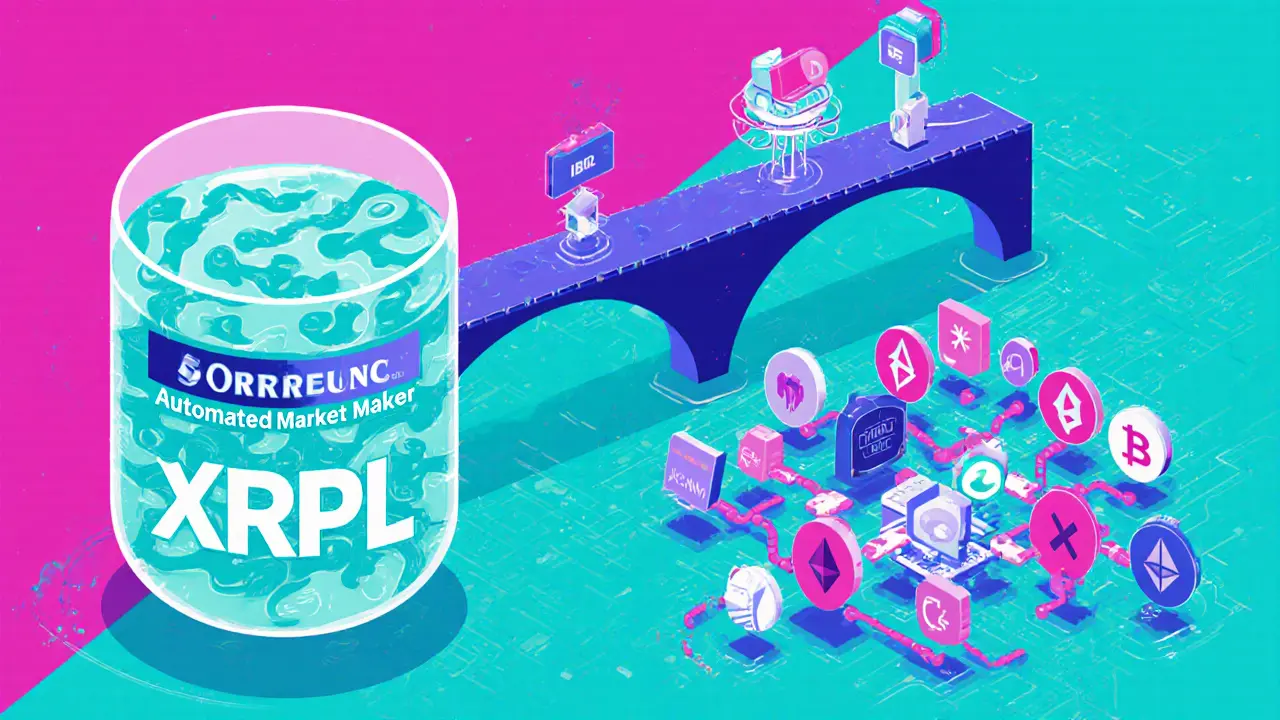
The backbone is the XRPL’s Automated Market Maker (AMM) introduced by the XLS‑30 amendment. This AMM provides liquidity pools that let you swap assets instantly, and you earn LP rewards just for keeping funds in the pool.
On top of that, Sologenic includes the Coreum Bridge, an inter‑chain bridge that connects XRPL to more than 100 other blockchains via IBC. The bridge is the answer to a common criticism of XRPL‑only DEXes: limited cross‑chain access. While the bridge still relies on XRPL native tokens for fees, it opens the door to DeFi apps on Ethereum, Solana, and other ecosystems.
Wallet Integration: Keep Full Control of Your Keys
Self‑custody is only as good as the wallet you use. Sologenic offers three main integrations:
- SOLO Wallet - the native wallet that ships with the web and mobile UI. It supports activation, asset management, and direct signing of trades.
- XUMM - a popular third‑party XRPL wallet that lets you sign transactions on your phone while keeping the private key in a secure enclave.
- Ledger Devices - hardware wallets provide the highest security level. You can connect a Ledger Nano S or X to the DEX via the browser extension.
All three require a minimum reserve of 10 XRP to activate the account, plus an extra 2 XRP for each new asset you add. For a casual trader, that’s a modest barrier; for a micro‑trader, it can feel steep.
Trading Experience: From Crypto to Tokenized Stocks and NFTs
The platform goes beyond typical DEX swaps. Its Token Hub lets issuers create, manage, and promote XRPL‑based tokens. Through the hub, Sologenic has listed over 100 tokens, ranging from utility coins to stable‑coins.
If you’re eyeing traditional finance, Sologenic’s tokenized stock offering lets you trade fractional shares of companies listed on more than 25 global exchanges. These are wrapped as XRPL‑issued assets, so you get the speed of XRP with the exposure of a stock.
The NFT Marketplace is another pillar. It markets itself as "utility‑driven," giving creators minting tools, low‑fee transactions, and zero commission on sales. Over 140,000 NFTs have been minted on the platform, and the marketplace integrates directly with the DEX for instant buying and selling.
Fees, Reserves, and Practical Limits
Because XRPL processes transactions in a few seconds and charges fractions of a cent, trading fees on Sologenic are remarkably low-typically 0.25 % of the trade value. However, you still need to keep the XRP reserve in mind. If you hold ten different assets, that’s 30 XRP locked up as a non‑spendable reserve.
Liquidity can be thin for niche token pairs, especially for newer tokenized stocks. The AMM pools mitigate this but aren’t as deep as those on Ethereum‑based DEXes like Uniswap. For high‑volume traders, you may hit slippage on larger orders.
Mobile App Performance: Trade on the Go
The SOLO DEX mobile app (iOS & Android) holds a 4.2‑star rating on Google Play from over 5,000 reviews. The latest update (May 29 2024) introduced UI tweaks, bug fixes, and smoother bridge interactions. Users can manage multiple wallets, view transaction history, and sign trades directly from the phone.
One of the standout features is the ability to toggle between the XRPL mainnet and testnet, which is handy for developers experimenting with new token launches or bridge integrations.
Comparison: Sologenic DEX vs. First Ledger
| Feature | Sologenic DEX | First Ledger |
|---|---|---|
| Underlying ledger | XRP Ledger | XRP Ledger |
| AMM implementation | Yes (XLS‑30) | Yes (custom AMM) |
| Tokenized stock support | Yes (25+ exchanges) | No |
| NFT marketplace | Integrated, zero commission | Basic NFT swaps only |
| Cross‑chain bridge | Coreum Bridge (100+ chains) | Limited (XRPL only) |
| Mobile app rating (Google Play) | 4.2 ★ / 5, 5,260 reviews | 3.7 ★ / 5, 1,120 reviews |
| Minimum XRP reserve | 10 XRP + 2 XRP per asset | 10 XRP (no per‑asset fee) |
In a nutshell, Sologenic packs a broader ecosystem-stocks, NFTs, bridge-while First Ledger focuses on a leaner, pure‑DEX experience. Your choice will hinge on whether you need tokenized equities and an NFT marketplace or just a straightforward crypto swap.
Pros & Cons Checklist
- Pros
- Sub‑second settlement and near‑zero fees thanks to XRPL.
- Integrated tokenized stock and ETF trading.
- Zero‑commission NFT marketplace.
- Cross‑chain bridge expands DeFi reach.
- Mobile app with strong ratings.
- Cons
- Mandatory XRP reserve can be a barrier for tiny traders.
- Liquidity varies heavily for niche assets.
- Regulatory clarity around tokenized stocks is still fuzzy.
- XRPL‑centric; not natively multi‑chain like Uniswap.
Who Should Consider Sologenic DEX?
If you fit any of these profiles, the platform might be a good match:
- Crypto traders looking for ultra‑fast swaps with minimal fees.
- Investors who want exposure to US or global stocks without a brokerage, and don’t mind holding them as XRPL‑issued tokens.
- Creators and collectors seeking a low‑cost NFT marketplace that doesn’t charge royalties.
- DeFi explorers curious about bridging XRPL assets to other chains via the Coreum Bridge.
On the flip side, if you need deep liquidity for large token pairs or a platform that is fully compliant with securities regulators in your jurisdiction, you may want to keep an eye on centralized exchanges or other multi‑chain DEXes.
Final Thoughts
Sologenic DEX delivers on its promise of a fast, low‑fee, all‑in‑one XRPL trading hub. Its biggest strength is the ecosystem-tokenized stocks, NFTs, and a bridge-all under self‑custody. The trade‑off is the inherent XRP reserve requirement and the fact that XRPL remains a niche compared to the sprawling Ethereum DeFi universe. If you already hold XRP or are comfortable keeping a small reserve, the platform is worth a test run, especially for those interested in tokenized equity exposure.
Frequently Asked Questions
What is the minimum amount of XRP needed to start on Sologenic DEX?
You need at least 10 XRP to activate a new wallet, plus an extra 2 XRP for each additional asset you add.
Can I trade traditional stocks on Sologenic DEX?
Yes. The platform offers tokenized shares and ETFs from more than 25 global exchanges, all issued as XRPL tokens.
How does the Coreum Bridge work?
The Bridge uses Inter‑Blockchain Communication (IBC) to lock assets on XRPL and mint corresponding tokens on over 100 other chains, enabling cross‑chain swaps and DeFi access.
Is there a fee for minting NFTs on Sologenic?
Minting fees are limited to the XRPL transaction cost, typically a fraction of a cent. Sologenic does not charge a marketplace commission.
Which wallets are compatible with Sologenic DEX?
The native SOLO Wallet, XUMM, and hardware wallets like Ledger Nano S/X are fully supported.
13 Comments
OMG, Sologenic DEX feels like the wildest circus on the XRPL stage!
I cant beleive this platform still pushes tokenized stocks. It's a gimmick that will never hold up.
The XRP Ledger’s sub‑second settlement really changes the game for anyone who hates waiting for confirmations. When you pair that speed with a 0.25 % fee, you’re looking at a cost structure most Ethereum DEXes can only dream of. However, the mandatory 10 XRP reserve plus 2 XRP per additional asset can quickly eat into the balance of a micro‑trader. For a casual user who just wants to swap a few tokens, that reserve might feel like an unnecessary barrier. On the other hand, investors who already hold XRP find the reserve a small price to pay for the speed advantage. The built‑in Coreum Bridge is a notable attempt to solve XRPL’s cross‑chain isolation. By locking assets on XRPL and minting equivalents on over a hundred other chains, it gives you a foothold into broader DeFi ecosystems. The bridge’s reliance on IBC means you still need to understand gas fees on the destination chain, but that’s a trade‑off many are willing to accept. Tokenized stocks are an interesting proposition, yet regulators worldwide are still figuring out how to treat them. Holding fractional shares as XRPL tokens can be useful for diversification, but you should be aware of the legal gray area. Liquidity for niche token pairs, especially newer tokenized equities, remains shallow compared to Uniswap pools. This can cause noticeable slippage on larger orders, so planning your trade size is essential. The integrated NFT marketplace offers zero‑commission minting, which is great for creators wanting to keep costs low. Still, the overall NFT ecosystem on XRPL is smaller, meaning you may have fewer buyers than on larger networks. In sum, Sologenic DEX provides a fast, low‑fee environment, but its design choices make it best suited for users already comfortable with the XRPL and its reserve requirements.
Ah, another platform promising “all‑in‑one” solutions while quietly demanding a reserve that could fund a small coffee shop. How refreshing.
Hey team, if you’re already sitting on some XRP, give Sologenic a spin – the low fees and speedy trades can be a real boost! 🚀💪
Just a heads‑up: the 2 XRP per asset fee can add up fast if you experiment with many tokens.
Sologenic DEX, undeniably, presents a compelling suite of features; however, one must consider the inherent trade‑offs, namely the XRP reserve requirement, the variable liquidity across asset pairs, and the regulatory ambiguity surrounding tokenized equities; all of which merit careful scrutiny before committing substantial capital.
While the hype may feel overblown, the low transaction costs do offer a practical edge for everyday swaps.
Give the platform a test run with a modest amount; you’ll quickly see the speed advantage in action.
Sure, the hype train is leaving the station, but remember that every shiny new DEX eventually hits the brakes.
They don’t tell you that every bridge is a backdoor for the elite to siphon off your crypto under the guise of “cross‑chain access”.
Speed is nice, but freedom is better. Think about who really controls the ledger.
If you’re looking for a legit alternative, skip the tokenized stock gimmick and stick to proven chains.