
Slashing Penalty Amounts by Blockchain: Ethereum, Cosmos, and Polkadot Compared
Imagine losing your entire life savings overnight because a server in your basement hiccuped for ten minutes. In the world of Proof-of-Stake (PoS) blockchains, this isn't just a nightmare-it's a real financial risk known as slashing. If you're running a validator node or planning to delegate your tokens, understanding exactly how much you stand to lose when things go wrong is non-negotiable. The difference between a minor fee and total ruin often comes down to which network you choose and what specific mistake you make.
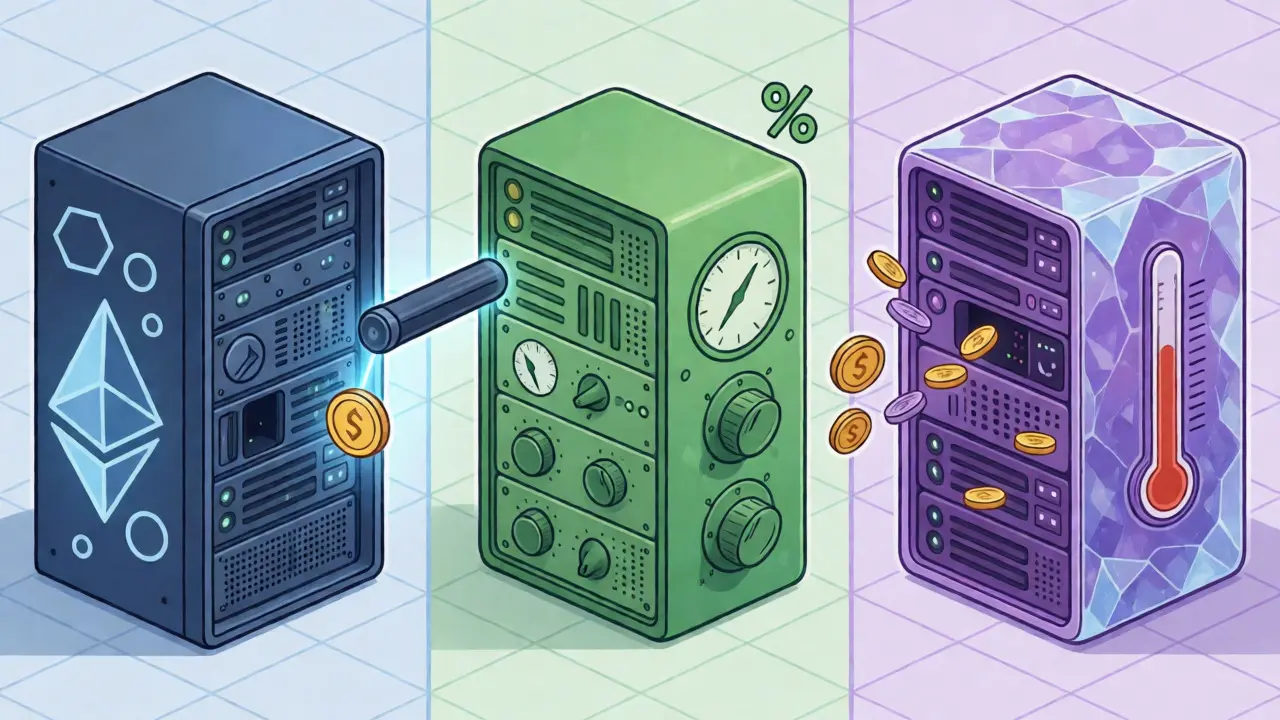
| Ethereum: | Initial penalty is ~1 ETH (1/32 of stake), plus correlation penalties if multiple validators fail simultaneously. |
| Cosmos: | Penalties are parameter-driven; downtime costs are small, but double-signing can wipe out up to 5% of stake. |
| Polkadot: | Uses "chilling" for minor issues (loss of rewards) and severe slashing for equivocation (up to 100% of stake). |
| Risk Factor: | Correlated failures (e.g., cloud provider outage) trigger massive penalties across all affected networks. |
What Exactly Is Slashing?
At its core, slashing is an economic punishment mechanism. It’s the blockchain’s way of saying, "You promised to keep the network secure, you broke the rules, so now you pay." This isn't arbitrary. In PoS systems, security relies on validators having "skin in the game." If a validator acts maliciously-like trying to fork the chain-or negligently (going offline), the protocol confiscates a portion of their staked tokens. These confiscated tokens are often burned (destroyed) or redistributed to honest participants, reinforcing the idea that bad behavior has a tangible cost.
The severity of the penalty depends entirely on two factors: the blockchain network you’re using and the type of offense committed. Not all mistakes are created equal. Missing a few blocks because your internet dropped might cost you a few dollars in missed rewards. But signing two different versions of the same block? That could vaporize thousands of dollars instantly.
Ethereum: The Gold Standard of Precision
Ethereum has the most well-documented and predictable slashing structure, largely because it’s been around the longest. As of 2026, the rules are strict but clear. When a validator commits a slashable offense, such as double-signing (attesting to two conflicting blocks at the same height), they face an immediate initial penalty. This is calculated as exactly 1/32 of the validator's effective balance. Since the standard minimum stake is 32 ETH, this initial hit is roughly 1 ETH.
But the pain doesn't stop there. Once slashed, the validator enters a "slashed_exiting" status. They are forced to leave the network, but not immediately. During this exit period, which lasts about 36 days, they incur additional penalties for every epoch (a period of 6.4 minutes) they miss. This adds another ~0.07 ETH to the bill. While this sounds manageable, the real danger lies in correlation penalties. If hundreds or thousands of validators get slashed within a short timeframe-say, due to a widespread software bug or a major cloud provider outage-the penalty per validator increases exponentially. In extreme scenarios, this can wipe out the entire 32 ETH stake, effectively deleting a validator's capital.
Cosmos and Polkadot: Governance-Driven Risks
If Ethereum is a rigid rulebook, Cosmos and Polkadot are more like living constitutions. Their penalty structures aren't hardcoded into stone; they are parameters that can be adjusted through on-chain governance votes. This flexibility allows communities to tweak penalties based on network health, but it also means the rules can change without warning.
In the Cosmos ecosystem, penalties are generally split into two categories: downtime and double-signing. Downtime penalties are relatively mild, often just deducting a small fraction of the validator's commission rate from their rewards. However, double-signing (equivocation) is treated severely. A common default parameter slashes 5% of the validator's stake for a double-sign event. Crucially, this applies to the delegators as well. If you staked your ATOM with a validator who got slashed, your principal takes the hit too. This creates a strong incentive for delegators to monitor their validators' performance closely.
Polkadot takes a slightly different approach with its concept of "chilling." For minor infractions, like missing attestations, a validator might be "chilled," meaning they lose their eligibility for rewards for a certain number of eras but keep their stake. It’s a warning shot. However, for serious offenses like equivocation (signing conflicting finality messages), Polkadot implements aggressive slashing. Depending on the specific chain configuration within the Polkadot ecosystem, penalties can range from 1% to 100% of the stake. The ability to slash up to 100% makes Polkadot one of the higher-risk environments for inexperienced operators.
The Three Offenses That Will Bankrupt You
To navigate these waters safely, you need to know what triggers the worst outcomes. Across almost all PoS networks, three specific behaviors lead to the heaviest fines.
- Double-Signing (Equivocation): This is the cardinal sin. It happens when a validator signs two different blocks or attestations for the same slot/height. Because this breaks consensus and can allow double-spending, networks punish it hardest. On Ethereum, it triggers the full slashing sequence. On Cosmos, it typically wipes out 5% of stake immediately.
- Downtime: Being offline is less catastrophic than being malicious, but it still costs money. Most networks have a threshold (e.g., missing 50% of attestations over a week). If you cross it, you lose rewards and potentially a small percentage of stake. Repeated downtime can lead to jail time, where you earn zero rewards until you fix the issue.
- Surround Votes / Conflicting Attestations: Specific to Ethereum and similar LMD-GHOST chains, this involves voting for a checkpoint that surrounds another vote in a way that contradicts previous commitments. It’s subtle but equally dangerous, triggering the same heavy penalties as double-signing.
Why Correlated Failures Are Your Biggest Threat
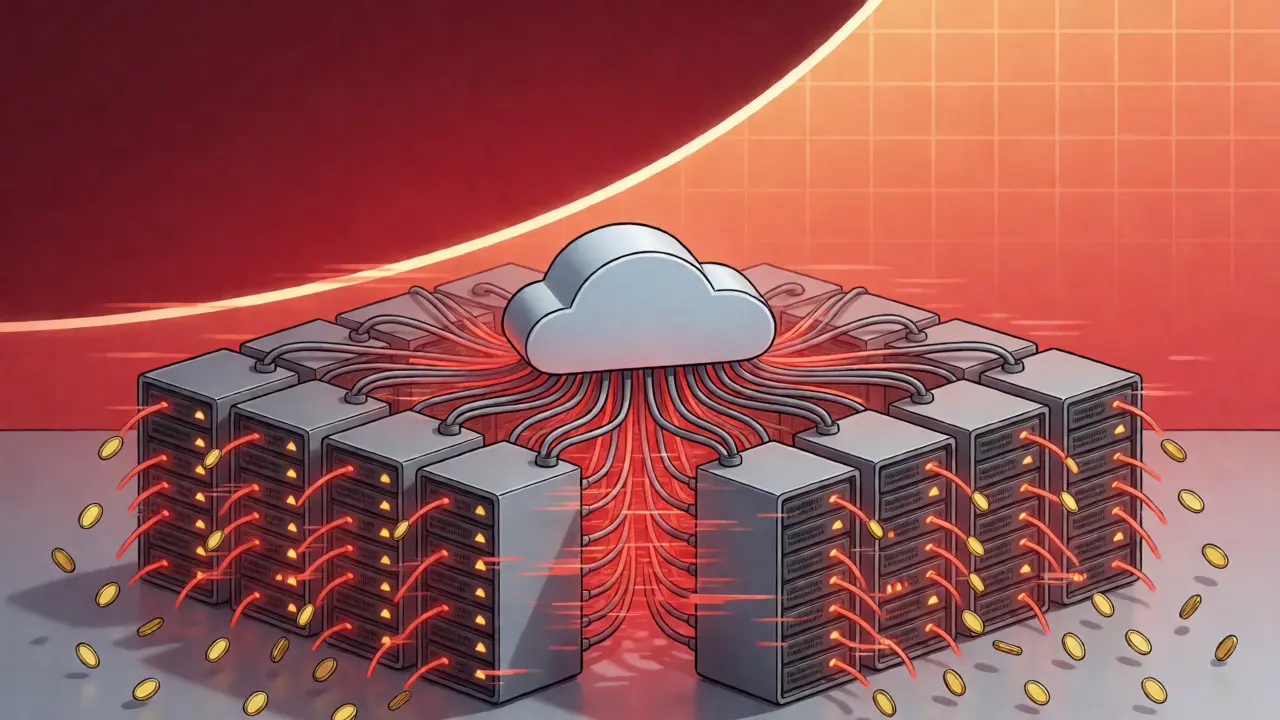
Here is a counter-intuitive truth: your biggest risk isn't usually your own hardware failing. It’s everyone else’s hardware failing at the same time. Modern validators often rely on similar infrastructure stacks. Many use AWS or Google Cloud, run Ubuntu servers, and use the same client software (like Prysm or Lighthouse).
If a critical bug in Prysm causes 30% of Ethereum validators to double-sign, the correlation penalty kicks in. Instead of each validator paying 1 ETH, they might pay 10 ETH or more. This systemic risk is why professional staking providers diversify heavily. They don't just spread nodes across regions; they spread them across different cloud providers and even different client implementations. For individual stakers, this means choosing a validator who practices this kind of redundancy is crucial for protecting your delegation.
How to Protect Your Stake
You don't need to be a DevOps engineer to survive slashing, but you do need to be smart. Here is a practical checklist to minimize your exposure.
- Use Slash Protection Databases: Ensure your validator client uses a robust database (like SQLite or LevelDB) that persists signing history. Never let two instances of a validator sign the same slot. Use file locks or remote signers to prevent accidental duplication.
- Diversify Infrastructure: If you run multiple nodes, don't put them all in one data center. If you delegate, check if your validator uses redundant setups. Ask them: "Do you run multiple clients? Do you use different cloud providers?"
- Monitor Aggressively: Set up alerts for missed attestations. Tools like Grafana dashboards or specialized services like Chorus One’s monitoring can ping you before you hit the slashing threshold. Don't wait for the penalty email; act on the first warning sign.
- Understand the Exit Rules: Know how long it takes to unstake. On Ethereum, it’s weeks. On other chains, it might be days. If you see trouble coming, sometimes exiting early-even with a small penalty-is better than riding out a correlated crash.
The Future: Graduated Penalties and Liquid Staking
The landscape is shifting. Newer networks are experimenting with graduated penalty systems. Instead of a binary "slash or no slash," they introduce tiers. First offense: warning. Second: small fine. Third: removal. This aims to distinguish between honest accidents and persistent negligence.
Meanwhile, Liquid Staking protocols like Lido or Rocket Pool are changing the game for users. They socialize the slashing risk. If a node operator gets slashed, the loss is spread across all token holders rather than hitting one person directly. This lowers the barrier to entry for casual users but introduces new complexities regarding who bears the ultimate responsibility for key management errors. Always read the fine print on liquid staking protocols-they vary wildly in how they handle slashing insurance.
Can I recover my funds after being slashed?
Generally, no. Slashed funds are usually burned or redistributed. Once the penalty is applied, that portion of your stake is gone forever. You can unstake the remaining balance, but the lost amount is unrecoverable.
Does downtime always result in slashing?
No. Short periods of downtime usually only result in lost rewards (missed income). Slashing for downtime typically requires prolonged unavailability, such as missing more than 50% of attestations over a week, depending on the specific network parameters.
Who pays the penalty if I delegate to a validator?
On most networks like Cosmos and Ethereum, the penalty is deducted from the total stake pool, including both the validator's self-stake and the delegated funds from users like you. Your principal balance will decrease.
What is a correlation penalty?
A correlation penalty increases the fine per validator when many validators are slashed simultaneously. This prevents large-scale attacks where an adversary tries to overwhelm the network by causing mass failures, ensuring the cost of attacking the network scales with the size of the attack.
Are slashing penalties the same on testnets?
Often, yes, the logic is identical. Testnets mimic mainnet behavior to help developers debug. However, some testnets may have relaxed parameters or fake stakes to encourage experimentation without real financial loss.