
Silver Token (XAGX) Explained: The Silver‑Backed Crypto Stablecoin
Silver Token Value Calculator
Silver Token Calculator
Convert physical silver ounces to Silver Tokens (XAGX). Each XAGX token equals 1 troy ounce of physical silver.
Your Silver Value
You have: troy ounces of silver
Equivalent XAGX Tokens:
Total Value at Current Price: $
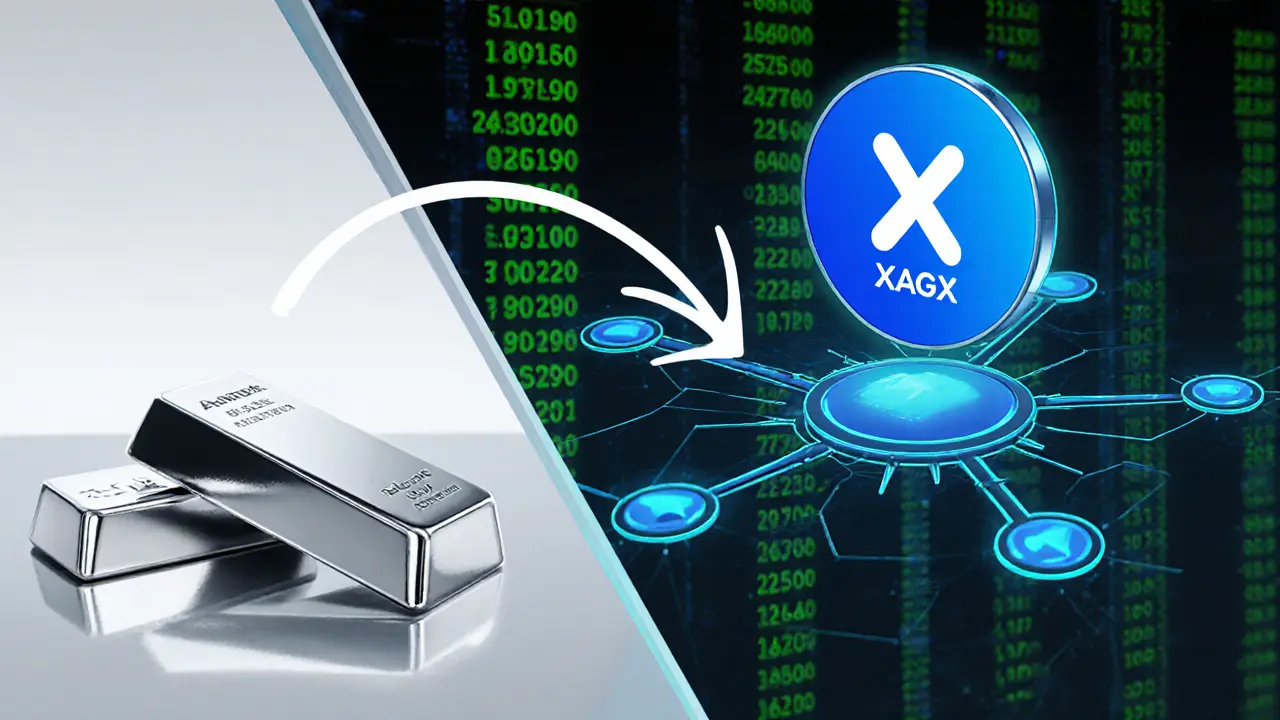
Silver Token (XAGX) is a decentralized stablecoin that ties each token to one troy ounce of physical silver. Developed by NEOMO Technologies & Trading LLC, it lives on the Avalanche C-Chain blockchain and uses real‑time Bloomberg Terminal pricing to stay pegged to the spot price of silver.
How the Silver‑Backed Model Works
Every XAGX token represents actual silver stored in secure vaults. The project claims 99% of its funds are used to buy more silver, while the remaining 1% covers storage, operations, and tech development. This allocation creates a direct link between token supply and the metal’s market value. When silver prices rise, the protocol automatically mints new tokens to keep each token equal to one ounce; when prices fall, tokens are burned. The dynamic supply mechanism ensures the peg stays accurate without manual rebalancing.
Technical Foundations
The Avalanche C-Chain was chosen for its high throughput, low latency, and energy‑efficient consensus. Transactions settle in seconds, making 24/7 trading of silver possible. For price indexing, the token pulls the latest silver price from the Bloomberg terminal - the industry‑standard source used by banks and hedge funds. By anchoring to Bloomberg data, XAGX avoids the lag and manipulation risks that can affect community‑sourced price feeds.
Current Market Snapshot
As of 22 October 2025, XAGX trades around $51 USD per token on major exchanges like Binance. Its market value sits near $7.2 million, with a fully diluted cap of roughly $13 million based on a hard‑capped supply of 250,000 tokens. The all‑time high hit $54.57, while the all‑time low was $0.01, showing dramatic growth from its infancy. Reported 24‑hour trading volume is $0, suggesting either very low activity or data‑reporting gaps that investors should verify.
Buying, Storing, and Using XAGX
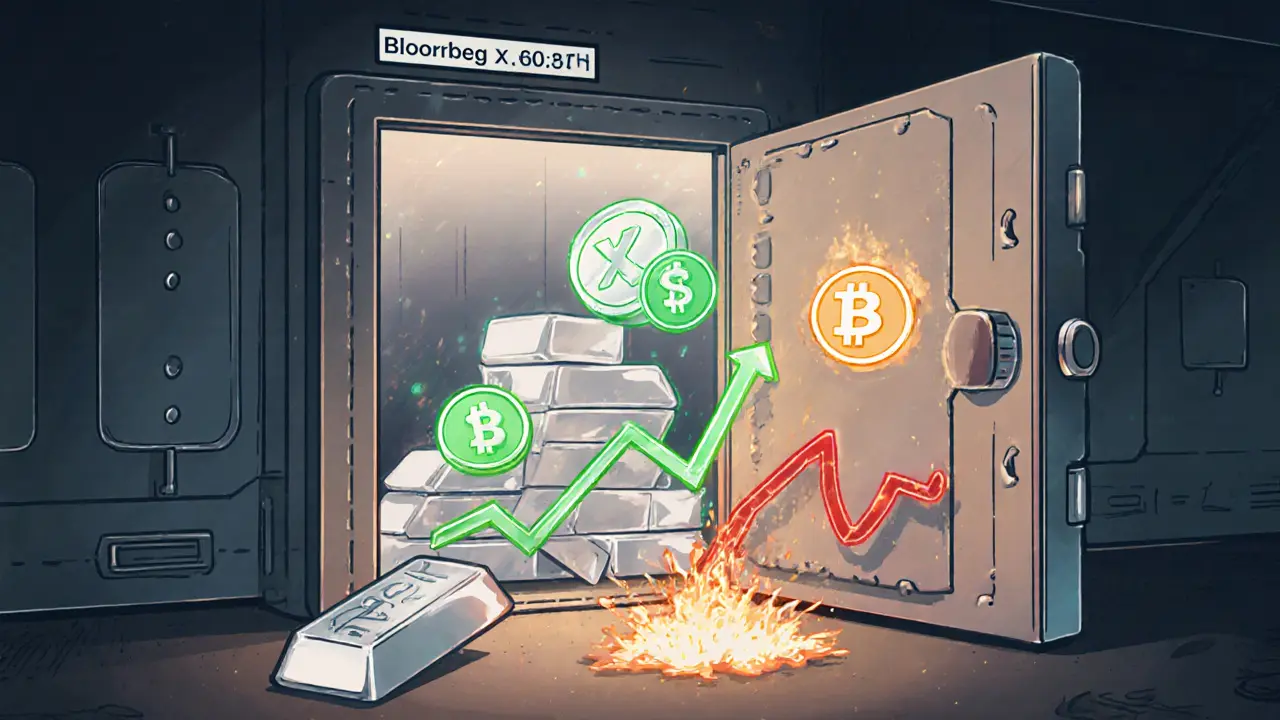
You can acquire XAGX on Binance, KuCoin, and several smaller DEXs that run on Avalanche. Some platforms allow instant purchases without KYC, appealing to privacy‑focused users. For storage, the recommended Best Wallet supports Avalanche‑based assets and provides private‑key control. Once you hold XAGX, you can trade it, transfer it peer‑to‑peer, or stake it in liquidity pools that earn a share of transaction fees. Staking rewards vary by pool, but the primary benefit is earning yield while staying fully backed by silver.
Risks and Due Diligence Points
- Liquidity: The $0 reported volume raises questions about how easily you can exit a position without slippage.
- Transparency: The project does not publish third‑party audit reports or real‑time proof‑of‑reserves for the physical silver, so investors must trust the issuer’s disclosures.
- Regulation: While operating out of Georgia, the token’s legal status varies by jurisdiction; some countries may treat it as a commodity, others as a security.
- Silver price volatility: Though pegged to silver, the metal’s price can swing dramatically due to industrial demand, making XAGX less “stable” than fiat‑backed stablecoins.
Roadmap & Future Outlook
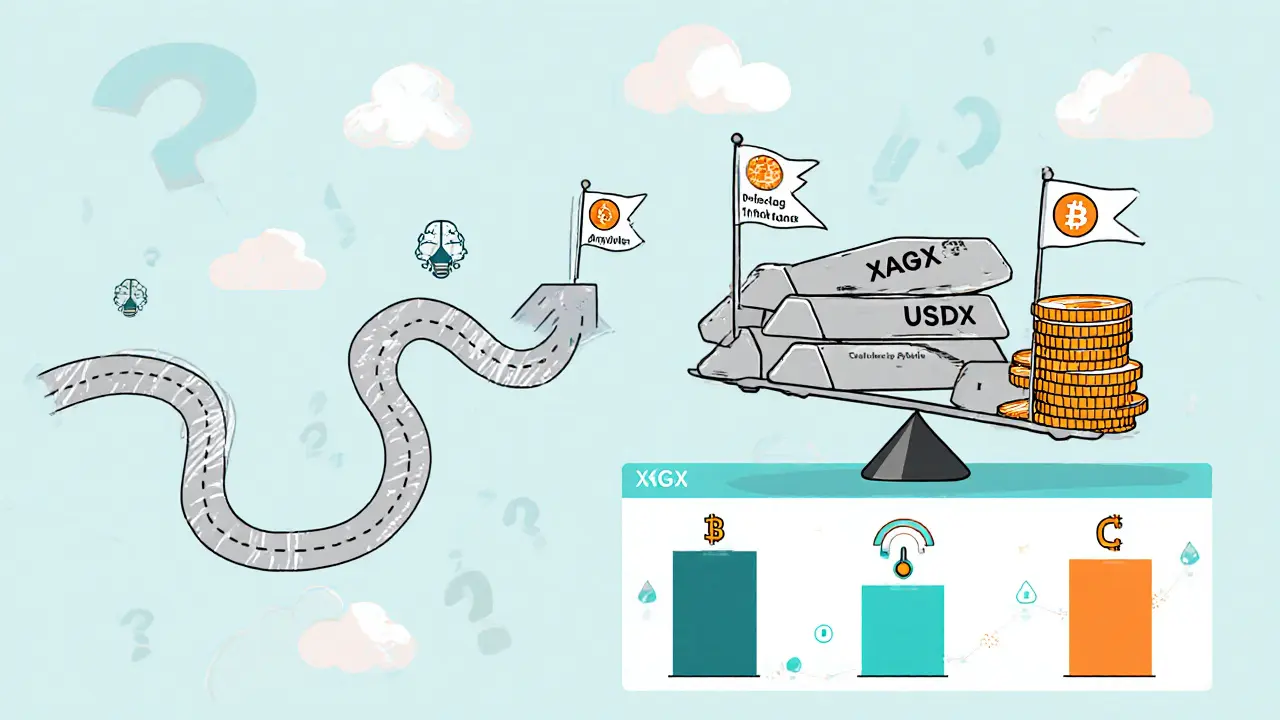
The development timeline includes three technical phases, a beta test, whitepaper release, and the main token launch. Upcoming milestones aim to add audited proof‑of‑reserves, expand to additional exchanges, and introduce new use cases like tokenized loan collateral. If adoption grows, the fixed maximum supply could create scarcity dynamics, potentially driving price appreciation beyond pure silver movements.
Comparison with Other Stablecoins
| Attribute | Silver Token (XAGX) | USDT (Tether) | USDC (Circle) |
|---|---|---|---|
| Backing Asset | Physical silver (1 oz per token) | Fiat reserves (USD) | Fiat reserves (USD) |
| Blockchain | Avalanche C‑Chain | Multiple (Ethereum, Tron, etc.) | Multiple (Ethereum, Solana, etc.) |
| Price Peg | Real‑time Bloomberg silver price | 1 USD | 1 USD |
| Supply Mechanism | Dynamic mint/burn to match silver price | Fixed issuance, periodic audits | Fixed issuance, monthly audits |
| Max Supply | 250,000 tokens | Unlimited | Unlimited |
Quick Takeaways
- Silver Token offers direct digital exposure to physical silver.
- It runs on Avalanche, delivering fast, cheap transactions.
- Dynamic supply keeps the token pegged to real‑time silver prices.
- Liquidity and transparency remain the biggest hurdles.
- Future audits and expanded exchange listings could boost confidence.
What is the underlying asset for XAGX?
Each XAGX token is backed by one troy ounce of physical silver stored in secure vaults, with the metal’s market price sourced from Bloomberg.
How does the token stay pegged to silver?
The protocol automatically mints new tokens when silver’s price rises and burns tokens when it falls, ensuring the token‑to‑silver ratio stays at 1:1.
Where can I buy Silver Token?
XAGX is listed on Binance, KuCoin, and several Avalanche‑compatible DEXs. Some platforms allow KYC‑free purchases.
Is there a way to redeem the physical silver?
The project’s public documents do not detail a redemption process; investors should contact NEOMO Technologies for clarification before committing large amounts.
What are the main risks of holding XAGX?
Key risks include low trading liquidity, limited third‑party audits of the silver reserves, regulatory uncertainty, and the inherent price volatility of silver itself.
How does XAGX compare to fiat‑backed stablecoins?
Unlike USDT or USDC, XAGX is commodity‑backed, so its value moves with silver’s market price rather than staying at $1. This gives it a different risk‑return profile.
25 Comments
They hide the real silver reserves!!!
India's precious metals sector has historically been under‑regulated, which makes a silver‑backed token particularly attractive for domestic investors seeking a hedge against rupee volatility. The protocol's use of real‑time Bloomberg pricing aligns with our market's need for transparent price discovery.
Oh wow, the Silver Token is basically the theatrical thriller of the crypto world-each ounce of metal a spotlight, each mint a dramatic twist! It feels like watching a soap opera where the villain is price volatility and the hero is a shiny ounce of silver.
Exactly, the vaults are probably sealed behind secret doors, and the auditors are just holograms!!! They don’t want us to know what’s really inside.
The dynamic mint‑burn mechanism leverages Avalanche’s sub‑second finality, allowing the protocol to react instantly to Bloomberg‑priced silver fluctuations. By anchoring to a high‑throughput C‑Chain, transaction costs stay low, which is crucial for arbitrageurs who need to mint or burn tokens without eroding margins.
From a global perspective, tokenizing silver bridges the gap between traditional wealth storage and modern digital finance 😊.
It’s reassuring to see community members sharing practical insights; knowledge spreads faster than any minted token.
Turning a physical commodity into a speculative asset raises ethical concerns-are we commodifying something that has intrinsic industrial value? 🤔
When you stare at the shimmer of silver, you realize value is as much perception as it is metal 🌟.
To buy XAGX, just create an Avalanche‑compatible wallet, deposit AVAX, then trade on Binance’s XAGX market.
Liquidity? Oh yeah, because a one‑day volume of $0 screams confidence to every seasoned trader.
The concept of a silver‑backed stablecoin is alluring, but it brings a suite of challenges that merit careful consideration.
First, the reliance on a single physical commodity ties the token’s fate to the metal’s market dynamics, which can be volatile due to industrial demand shifts.
Second, the reported $0 24‑hour volume raises red flags about real‑world liquidity-exiting a position might be costly or impossible without significant slippage.
Third, the lack of third‑party audited proof‑of‑reserves means investors must trust the issuer’s disclosures, a trust model that many traditional finance participants would reject.
Fourth, regulatory uncertainty looms; different jurisdictions may classify the token as a commodity, a security, or something entirely new, exposing holders to unforeseen compliance risks.
Fifth, the dynamic mint‑burn algorithm, while clever, depends on flawless price feeds; any latency or manipulation in the Bloomberg data could destabilize the peg.
Sixth, storage costs for physical silver, though modest, are still a drag on the token’s economics, especially if the 1% allocation proves insufficient.
Seventh, the token’s hard‑capped supply of 250,000 could create scarcity‑driven price appreciation beyond the underlying metal, turning a stablecoin into a speculative asset.
Eighth, the ecosystem’s current tooling-wallets, exchanges, staking pools-is still nascent, limiting practical utility for everyday transactions.
Ninth, investors should compare this offering to traditional silver ETFs, which provide audited custody and higher liquidity at comparable expense ratios.
Tenth, the roadmap promises audited reserves and broader exchange listings, but until those milestones materialize, the project remains experimental.
Eleventh, community governance mechanisms are unclear, leaving users without a voice in critical protocol upgrades.
Twelfth, the token’s dependency on Avalanche ties its security to the health of that network; any chain‑wide issue could affect all XAGX holders.
Thirteenth, the marketing narrative emphasizes “real‑time” pricing, yet the actual update frequency may be constrained by technical limits.
Fourteenth, the token’s staking rewards are an attractive yield source, but they also introduce additional risk layers related to smart‑contract bugs.
Fifteenth, for long‑term investors, the key question remains: does the convenience of digital silver outweigh the cumulative risks outlined above?
While low volume may appear discouraging, perseverance and community engagement often transform nascent projects into robust ecosystems.
Keep your eyes on the horizon-silver’s bright future is just around the corner!!!
yeah i think its cool but dont forget the fees
I’ve been watching the XAGX market since its launch and I can tell you it feels like watching a slowly brewing storm.
Every time the silver price nudges upward, you see a flurry of minting activity, and when it dips, the tokens vanish into the ether.
The token’s design is clever, but the lack of transparent vault audits makes the whole thing feel a bit like a magician’s trick-there’s a secret compartment nobody gets to see.
Investors should remember that the promised 1% allocation for storage and ops might not be enough if the vaults expand or insurance costs rise.
Moreover, the fact that the project’s liquidity is practically non‑existent on major exchanges means that even if you hold a large amount, converting it to cash could be a nightmare.
For those looking for a hedge against fiat inflation, physical silver bars still win on auditability and tangibility.
That said, the digital token offers instant transferability and the potential for staking yields, which could appeal to yield‑hungry DeFi enthusiasts.
If the team delivers on its roadmap-especially audited proof‑of‑reserves and wider exchange listings-the risk/reward profile could shift dramatically.
Until then, treat XAGX as a high‑risk speculative play rather than a safe store of value.
If the audit never appears, the risk stays high.
Imagine a sunrise of gleaming silver draped over the blockchain-a poetic merger of earth and ether.
Sure, the roadmap reads like a bedtime story, but the plot twist is a lack of audited reserves.
Hey friend, I get the confusion-let's figure this out together 😊.
Stop wasting time, just demand proof or walk away!
Happy to share that the token’s smart contract code is open‑source on GitHub, which is a good sign for transparency.
Sounds good thanks
All the hype is just a smokescreen for a poorly funded experiment.
Before investing, compare the token’s fee structure with traditional silver ETFs to gauge cost efficiency.