
RuDEX Crypto Exchange Review: Is It Still a Viable Option in 2026?
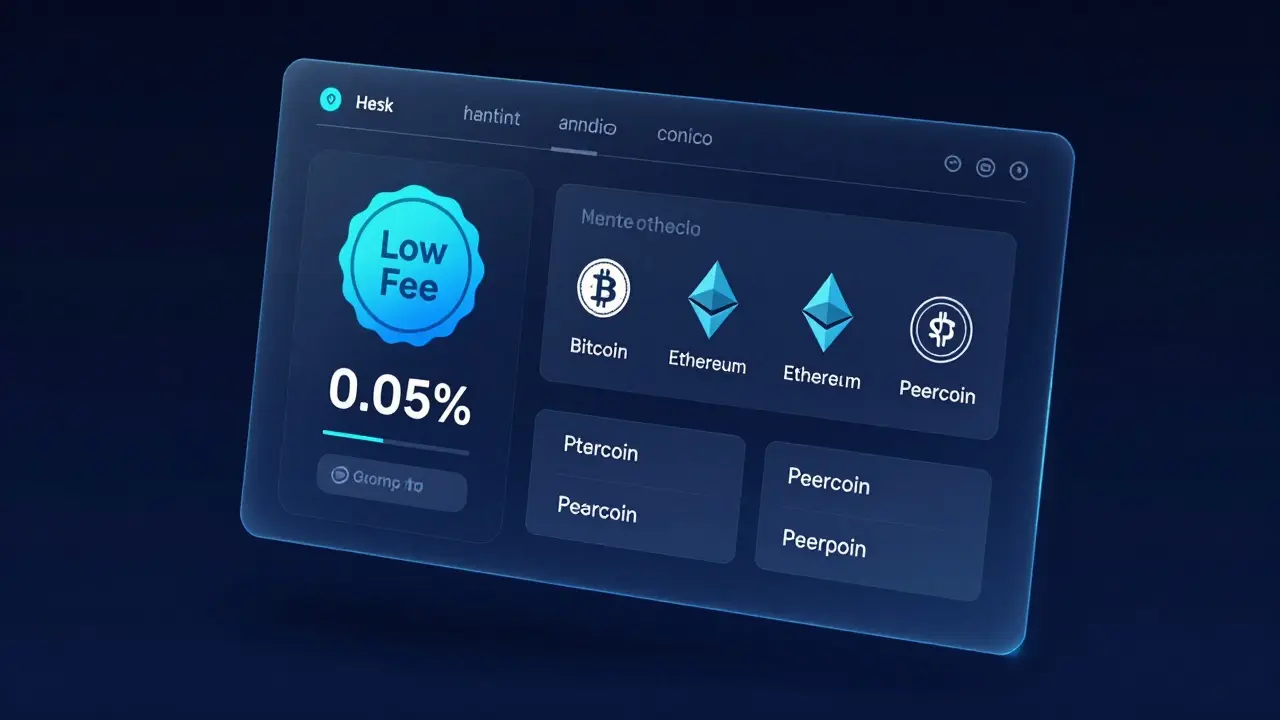
If you're hunting for a low-cost way to trade niche coins, you might stumble across RuDEX. On paper, it looks like a dream for budget-conscious traders: fees that are five times lower than the industry average and a streamlined interface. But here's the catch-the RuDEX crypto exchange review landscape tells a story of a platform that has essentially vanished from the active trading world. While the website is still up, the actual exchange has shifted from a trading hub to a ghost town, and eventually, a simple swap tool.
Quick Summary: The Bottom Line on RuDEX
- Current Status: Effectively defunct as a centralized exchange; now operates primarily as a swap aggregator.
- The Big Pro: Historically offered incredibly low trading fees (0.05%).
- The Big Con: Critical lack of liquidity, making real trading nearly impossible.
- Accessibility: No fiat on-ramps; you must already own crypto to use it.
- Verdict: Avoid for serious trading; only useful for basic, small-scale swaps via their aggregator.
What Exactly is RuDEX?
Launched in April 2017, RuDEX is a centralized cryptocurrency exchange that originally targeted the Russian market but opened its doors to global traders. Despite the "DEX" in its name, which usually implies a decentralized exchange, RuDEX operated as a centralized entity. Its technical backbone was the BitShares network, a blockchain designed for high-speed asset issuance and trading. This integration allowed them to keep overhead low and speed up transactions, but it also meant their fate was tied to the stability and popularity of the BitShares ecosystem.
For a while, RuDEX carved out a niche by supporting a mix of giants like Bitcoin and Ethereum alongside smaller, more obscure assets like Peercoin and Gridcoin. It wasn't trying to be Binance; it was trying to be the cheapest place for a specific group of traders to move their assets without losing a chunk of their profits to commissions.
The Fee Structure: A Rare Win
If we look at the historical data, RuDEX's pricing was its strongest weapon. While the global average trading fee hovered around 0.25%, RuDEX slashed that down to 0.05% for major pairs. For some specific pairs, the trading fee was even 0.00%, with users only paying the standard BitShares network fees.
Even the withdrawal fees were impressively low. Moving Bitcoin out of the platform cost roughly 0.0005 BTC, which was about 40% cheaper than what most other exchanges were charging at the time. For a high-frequency trader, these savings add up quickly. However, low fees are only a benefit if there is actually someone on the other side of the trade to buy or sell your coins.
| Feature | RuDEX | Industry Average | Top-Tier (e.g., Binance) |
|---|---|---|---|
| Trading Fee | 0.05% | 0.25% | 0.10% |
| BTC Withdrawal | 0.0005 BTC | 0.0008 BTC | Variable |
| Fiat Deposits | None | Common | Extensive |
| Liquidity | Very Low | Moderate to High | Extremely High |
The Liquidity Crisis: Why You Can't Actually Trade
Here is where the dream falls apart. Trading fees don't matter if there is no liquidity. In the crypto world, liquidity refers to how easily you can buy or sell an asset without causing a massive price swing. By March 2023, RuDEX hit a wall. Reports showed its 24-hour trading volume plummeted to around $1,196. To put that in perspective, a healthy exchange handles billions of dollars daily.
Imagine trying to sell a car in a town where only one person is looking to buy, and they only have $10 in their pocket. That was RuDEX. If you tried to execute a trade for a few thousand dollars, you would likely find no buyers, or you'd end up selling your coins for way less than they are worth because there aren't enough orders in the book. This liquidity collapse effectively moved the platform into what experts call the "Exchange Graveyard."
User Experience and Security
The platform kept things simple. No flashing lights or complex derivatives-just an order book, a price chart, and a trade history. However, that simplicity came with a lack of guidance. Newcomers often found the fee documentation confusing, and the lack of fiat on-ramps created a massive barrier to entry. If you didn't already own crypto, you couldn't use RuDEX. You had to buy your coins elsewhere and deposit them, which defeated the purpose of using a "cheap" exchange if you'd already paid high fees to get your coins from a different platform.
On the security front, RuDEX implemented standard protections. They used multi-factor authentication (MFA) and encryption to protect accounts. While the technical security was decent, the regulatory side was a black hole. There was no clear information on who was overseeing the exchange or which laws they followed. In the world of crypto, "unspecified regulatory status" is usually a red flag that suggests a higher risk of fund loss or sudden shutdowns.
The Pivot: From Exchange to "RuDEX Swap"
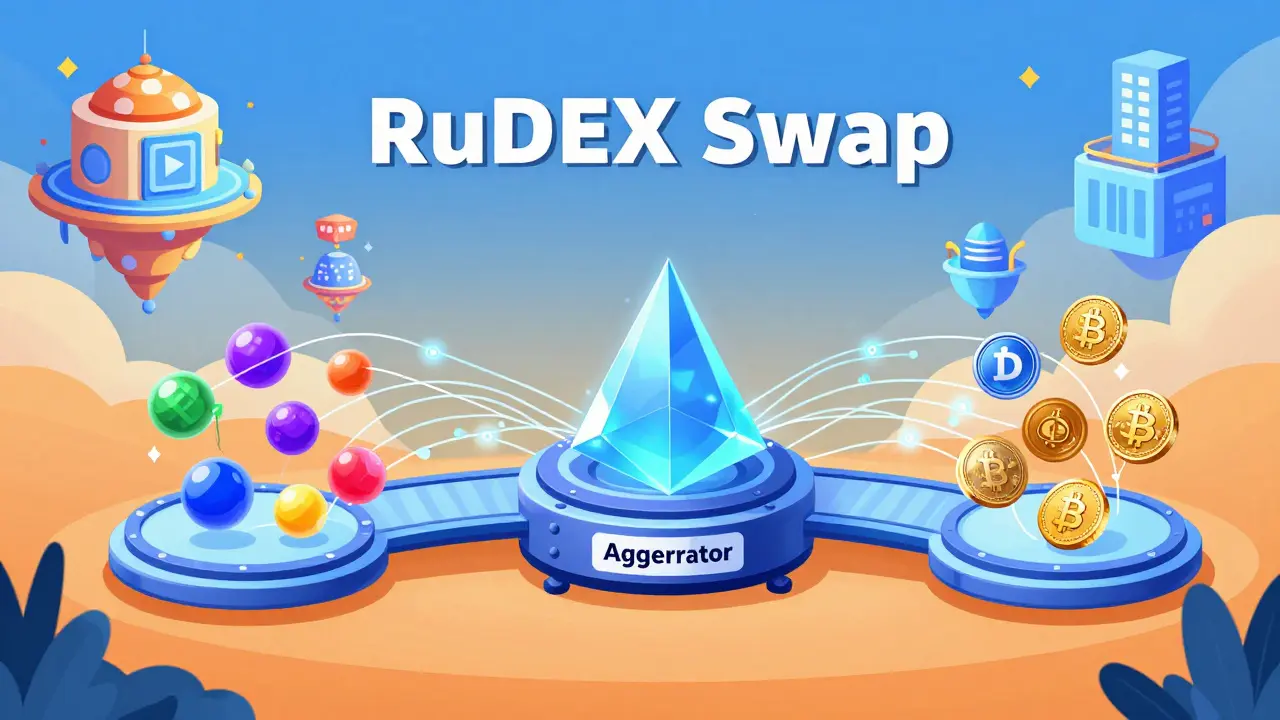
You might visit rudex.org today and see that it's still active. But it's not the exchange it once was. The platform has pivoted into an instant cryptocurrency exchange aggregator called "RuDEX Swap." Instead of hosting its own order books where users trade with each other, it now acts as a middleman. It scans other exchanges to find the best rate and lets you swap over 1,600 different cryptocurrencies without needing to create an account.
This is a completely different animal. An aggregator doesn't need its own liquidity because it's borrowing the liquidity of the larger exchanges it connects to. While this makes the site "useful" again, it confirms that the original RuDEX trading platform is dead. If you're looking for a professional trading environment with technical indicators and deep order books, you won't find it here.
Final Verdict: Should You Use It?
If you just need to quickly swap a tiny amount of one random altcoin for another and you don't want to sign up for a massive exchange, RuDEX Swap is a convenient tool. But for anyone else, the answer is a hard no. The original exchange's lack of liquidity, absence of fiat support, and regulatory ambiguity make it a dangerous choice for your capital.
In 2026, the market has matured. We have regulated platforms with massive volume and transparent fees. There's no reason to risk your funds on a platform that has already been flagged as inactive by major industry trackers. If you're starting out, stick to the giants or a reputable decentralized protocol where you keep control of your keys.
Is RuDEX still active in 2026?
The original centralized trading exchange is effectively dead due to a critical lack of liquidity. However, the website still operates as "RuDEX Swap," which is an aggregator for swapping cryptocurrencies across other platforms.
Does RuDEX support fiat deposits like USD or EUR?
No, RuDEX does not support fiat deposits. It is a crypto-only platform, meaning you must already own cryptocurrency to use its services.
Are the trading fees on RuDEX actually lower than Binance?
Historically, yes. RuDEX offered fees as low as 0.05%, while Binance's standard fee is typically 0.10%. However, since the exchange lacks liquidity, these low fees are irrelevant because you cannot execute large trades efficiently.
What is the BitShares network and how does it relate to RuDEX?
BitShares is a blockchain designed for the fast issuance and trading of digital assets. RuDEX was built on this network, using its gateway services for deposits and withdrawals to maintain high speed and low costs.
Is RuDEX a scam?
While some users and reviewers have labeled it a scam due to poor customer support and unreliability, others see it as a failed business model. The lack of regulatory oversight and extreme liquidity drop make it high-risk, regardless of whether it was intentionally malicious.
17 Comments
Honestly, the pivot to a swap aggregator is a classic move for platforms that can't compete with the big players' liquidity pools. It's basically just a skin for other APIs now.
The mention of BitShares is the key here. Most people don't realize that relying on a niche blockchain for your entire infrastructure is a recipe for disaster when the network's own utility drops.
It's actually quite interesting to see how they tried to carve out a niche for budget traders! 😊 Even if it didn't work out in the long run, the intent was very friendly to the community. ✨
It is utterly laughable that anyone would consider a platform with a twenty-four hour volume of twelve hundred dollars to be a viable financial instrument. The sheer negligence of those who stayed is astounding.
Typical western obsession with 'regulation' lol. Real traders in India know how to handle these things without some suit in DC telling us what to do. This whole 'graveyard' thing is just a lack of vison by the devs who lapped it
the fundamental flaw here isnt just the liquidity but the lack of a proper market maker strategy which is a common failure in these early 2017 era exchanges that thought low fees alone would attract volume without a sustainable order book
For those confused about the 'Swap' part, it's basically an API bridge! 🚀 You're not trading on RuDEX, you're trading on other liquidity providers via their interface. It's a smart way to stay relevant without the overhead of a full CEX! Keep learning and keep trading! 📈
Wait, you guys actually trust 'aggregators'? It's just another layer for them to sniff your wallet and track your IP. The 'regulatory black hole' is where the shadow government keeps the real ledgers. Don't be sheep!
Oh, how quaint. A platform that thinks 0.05% fees are a 'weapon'. I suppose for those whose portfolios consist of pocket change, such a discount is truly revolutionary. 🙄
Omg the drama of calling it an 'Exchange Graveyard' is just too much! 😂 But seriously, who even uses BitShares in 2026? It's like using a pager to send a DM.
It is perhaps an opportunity for newer traders to study the importance of liquidity. While this specific venture did not succeed, the lesson in market dynamics is quite valuable for any aspiring investor.
Just stay safe guys. Use the big ones.
Aggregators are fine... but the risk is still there!!! Just use a hardware wallet!!!
There is a profound sadness in seeing a platform that aimed to be accessible fade into a mere tool. It's a reminder that in the digital age, beauty and utility are often sacrificed for sheer scale. Such a tragic evolution!
If you're using the swap tool, just make sure you check the slippage. Since it's an aggregator, the rate you see isn't always what you get if the coin is really obscure. I usually double-check the target exchange first.
Simplicity is a virtue, but not when it hides risk. Stick to audited protocols.
BRO i tried using this years ago and it was such a mess lolll!! 💀 the site looked like it was from 2005 but the fees were actually legit low. just dont try to move big money there or you'll be waiting forever for a buyer!