
Remittances and Cryptocurrency: Cutting Cross-Border Payment Costs

Imagine sending $200 to a family member abroad. You hand over the cash, wait days for it to arrive, and watch nearly $14 vanish into fees before your recipient even sees a cent. That’s not a hypothetical; it’s the current reality for millions of people relying on traditional banking rails. The average global cost to send a remittance sits at roughly 6.62%, according to recent World Bank data. But what if you could send that same money for less than a penny, arriving in minutes instead of days? This isn't science fiction-it's happening right now with stablecoins and blockchain technology. These digital tools are quietly rewriting the rules of international finance, challenging giants like Visa and Western Union by slashing costs and speeding up settlement times.
If you’re tired of opaque fee structures and slow transfer speeds, understanding how cryptocurrency fits into cross-border payments is no longer optional-it’s essential for saving money. Let’s break down exactly how this works, where the pitfalls lie, and whether it’s ready for your next transaction.
The High Cost of Traditional Remittances
Traditional cross-border payments rely on a complex web of intermediaries known as correspondent banking. When you send money from New Zealand to, say, Nigeria, your bank doesn’t just wire the funds directly. Instead, it sends a message through networks like SWIFT to a correspondent bank, which then updates accounts across multiple institutions. None of this actually moves physical cash across borders instantly; it’s all ledger entries bouncing between banks.
This process is inefficient. According to the Bank for International Settlements, these sequential account updates create delays and incur significant operational costs. These costs get passed down to you. In 2024, the average fee for a $200 transfer was approximately $13.24. For many workers in developing nations, remittances make up a huge chunk of their household income, so losing 6% or more to fees hurts. While regional variations exist-sending money within Europe might be cheaper due to unified regulations-corridors involving emerging markets often face higher hurdles due to currency conversion risks and limited banking infrastructure.
How Stablecoins Change the Game
Stablecoins are cryptocurrencies pegged to a stable asset, usually the US dollar. Examples include USDC and USDT. Unlike Bitcoin, which can swing wildly in price, stablecoins aim to maintain a 1:1 value ratio with the fiat currency they track. This stability makes them ideal for payments because neither sender nor receiver has to worry about the value dropping mid-transaction.
The magic lies in the underlying blockchain. Blockchain acts as a shared, immutable ledger. When you send stablecoins, you aren’t asking three different banks to agree on a balance update. You’re executing a single, atomic transaction on a decentralized network. If the network supports Layer 2 solutions (scaling layers built on top of main blockchains), transaction fees can drop below $0.01. Yes, one cent. Compare that to the $13+ you’d pay via a bank, and the difference is stark.
In 2024, stablecoins moved an eye-opening $15.6 trillion in value. To put that in perspective, that volume effectively matched Visa’s annual processing volume. Despite this massive throughput, stablecoins still only represent about 3% of total global cross-border payments. This gap indicates huge growth potential but also highlights that we are still in the early adoption phase.

Speed, Cost, and Reliability: A Comparison
Why would anyone switch from trusted banks to digital tokens? The answer is performance metrics. Let’s look at the hard numbers comparing traditional methods against blockchain-based transfers.
| Feature | Traditional Banking/SWIFT | Blockchain/Stablecoin Transfer |
|---|---|---|
| Average Cost ($200 transfer) | ~$13.24 (6.62%) | <$0.01 (on Layer 2 networks) |
| Settlement Time | 2-5 Business Days | <1 Minute to Minutes |
| Intermediaries | Multiple (Correspondent Banks) | Minimal (Network Validators) |
| Accessibility | Requires Local Bank Account | Internet + Wallet Only |
| Regulatory Clarity | High/Mature | Varying/Evolving |
The speed advantage is particularly critical for businesses. One manufacturing executive noted that switching to USDC payments for Singapore-based suppliers reduced processing time from 3-5 business days to under 15 minutes. This liquidity improvement helps companies manage cash flow better, especially when dealing with volatile supply chains.
The Regulatory Maze and Real-World Hurdles
If crypto payments are so cheap and fast, why isn’t everyone using them? Two words: regulation and usability. The legal landscape for digital assets is fragmented. The European Union has implemented the Markets in Crypto-Assets (MiCA) regulation, providing a clear framework. Meanwhile, the United States is still developing its approach, creating uncertainty for providers operating globally. Major Asia-Pacific hubs have their own distinct rules, too.
This fragmentation creates compliance headaches. Financial institutions must navigate Anti-Money Laundering (AML) and Know Your Customer (KYC) requirements differently in every jurisdiction. The "Travel Rule," which mandates passing originator and beneficiary information during transfers, adds another layer of complexity. While blockchain offers transparency, ensuring that this transparency meets local privacy laws is tricky.
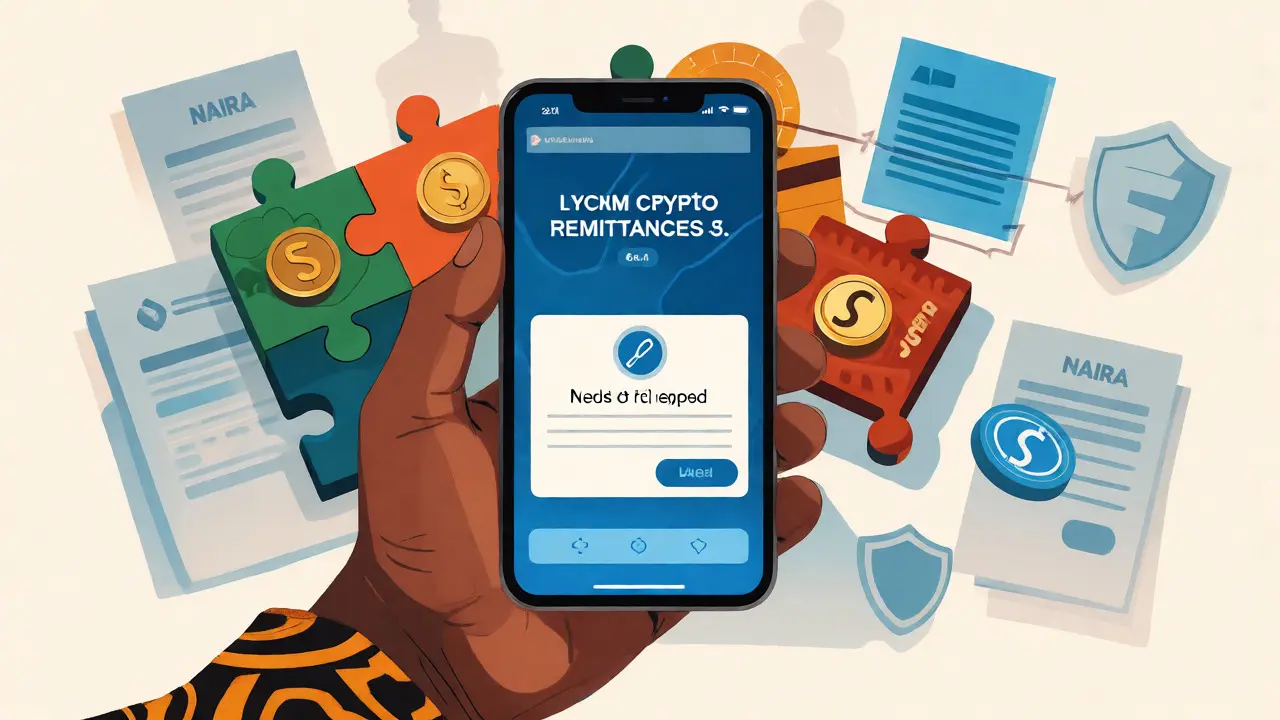
Then there’s the user experience gap. Sending stablecoins is easy for tech-savvy users. Receiving them is harder for those without digital literacy. A common complaint from consumer users involves the "off-ramp" problem. Your family in Nigeria might receive USDC easily, but converting that USDC into Nigerian Naira often requires third-party services that charge 3-5% fees. These hidden costs can negate some of the initial savings, though they are still typically lower than traditional bank fees.
Who Should Use Crypto for Remittances?
Cryptocurrency isn’t a one-size-fits-all solution yet. It excels in specific scenarios:
- B2B Transactions: Companies with suppliers who accept digital currencies benefit most. B2B entities often have dedicated finance teams capable of managing wallets and compliance, making the transition smoother.
- Unbanked Populations: In regions with poor banking infrastructure, mobile phones plus internet access provide a faster route to financial inclusion than waiting for a brick-and-mortar branch.
- High-Frequency Senders: If you send money weekly or monthly, the cumulative savings on fees add up quickly.
However, for occasional senders or those unfamiliar with digital wallets, the learning curve might outweigh the benefits. Setting up a wallet, securing private keys, and understanding gas fees takes time. Finance teams report needing 2-3 weeks of training to comfortably integrate these systems into existing accounting workflows.
The Future: CBDCs and Interoperability
We are moving toward a hybrid future. Central Bank Digital Currencies (CBDCs) are being developed by approximately 90% of central banks worldwide. Projects like the Bank for International Settlements’ mBridge pilot show promise, demonstrating settlement finality in seconds using permissioned blockchains. J.P. Morgan has successfully simulated cross-border transactions using Singapore dollar and euro CBDCs, proving technical feasibility.
Interoperability remains the key challenge. As J.P. Morgan experts note, unless one blockchain network becomes the global standard, we risk replicating the siloed problems of today’s banking system. Protocols like Circle’s Cross-Chain Transfer Protocol (CCTP) help by allowing USDC to move seamlessly between chains like Ethereum, Solana, and Avalanche. This reduces friction, but true global harmony requires coordinated regulatory approaches, something the G20 and Financial Stability Board are actively pushing for.
For now, blockchain complements rather than replaces traditional systems. It handles the high-volume, low-margin segments efficiently, while legacy banks handle complex, regulated institutional flows. But the trend is clear: the monopoly of expensive, slow intermediary banking is cracking.
Are stablecoins safe for sending money internationally?
Yes, generally speaking. Stablecoins like USDC and USDT are backed by reserves (cash or equivalents). However, safety depends on the issuer's transparency and the security of your personal wallet. Always use reputable exchanges and enable two-factor authentication. Unlike bank deposits, crypto holdings are not always insured by government schemes like FDIC or NZ deposit guarantees, so store large amounts in hardware wallets.
Do I need a bank account to receive crypto remittances?
No, you don’t strictly need a traditional bank account to receive stablecoins. You only need a digital wallet app on a smartphone with internet access. However, to convert those stablecoins into local spendable cash (like NZD or Naira), you will likely need a service that connects to local payment rails or ATMs, which may require some form of identification.
Which countries are leading in crypto remittance adoption?
Southeast Asia and Africa are seeing the fastest growth. The Philippines reported a 217% year-over-year increase in cryptocurrency remittances in 2024, largely driven by overseas workers seeking lower fees. Nigeria and Vietnam are also hotspots, where high traditional remittance costs make alternative rails attractive despite regulatory uncertainties.
What are the tax implications of sending crypto abroad?
Tax rules vary significantly by country. In many jurisdictions, converting crypto to fiat or spending it is considered a taxable event. However, simply transferring stablecoins between your own wallets is often not taxed. Always consult a local tax professional, as regulations are evolving rapidly. Keep detailed records of transaction dates, values, and counterparties to simplify reporting.
Can I reverse a crypto remittance if I send it to the wrong address?
Generally, no. Blockchain transactions are irreversible. If you send funds to an incorrect wallet address, they are lost forever unless you know the owner of that address and they agree to return them. Always double-check the recipient’s public address and consider sending a small test transaction first if you are new to the process.
1 Comments
this is huge for my fam in the philippines
sending money home used to eat up so much of my paycheck and now stablecoins are actually working out great