
Peer-to-Peer Crypto Trading in China After the 2021 Ban: How It Still Works
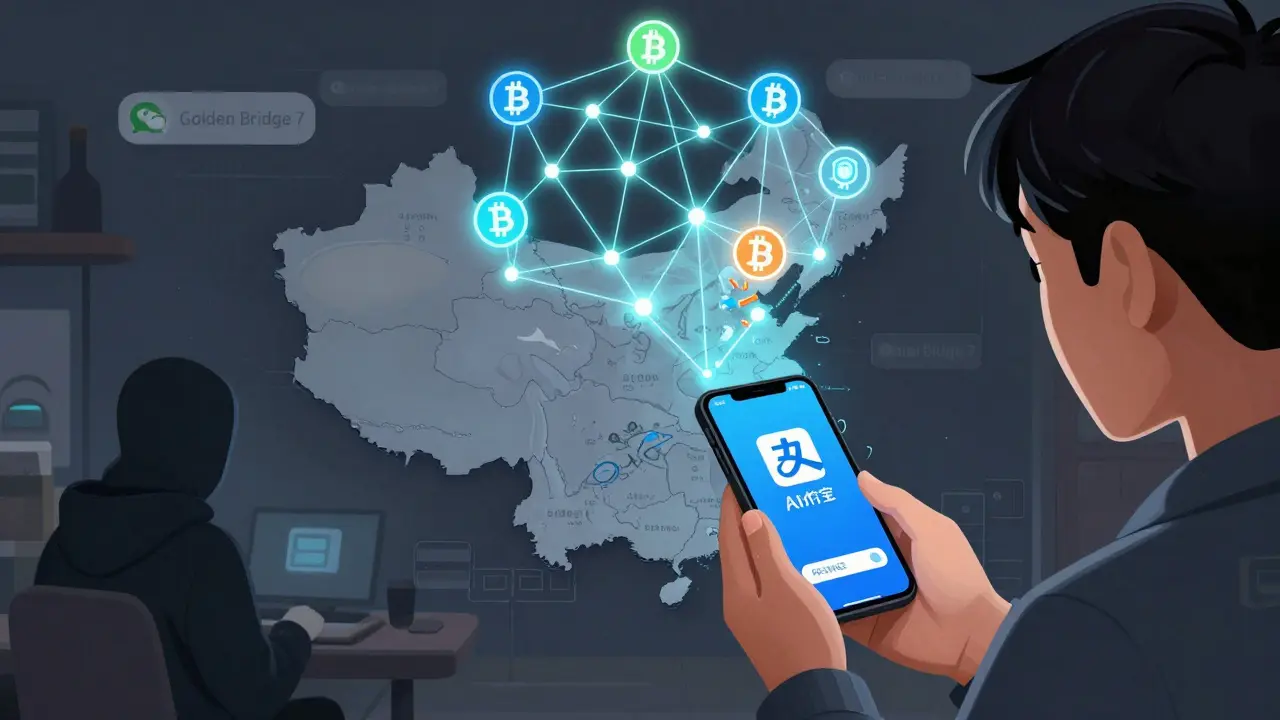
China banned cryptocurrency exchanges in September 2021. Banks were ordered to cut off services. Mining rigs were shut down. The government said it was about financial stability. But if you look at the data, crypto didn’t disappear-it just went underground. Today, despite the ban, P2P crypto trading in China is still alive, quiet, and growing in clever, risky ways.
Why the ban didn’t kill crypto
The People’s Bank of China didn’t ban owning crypto. They banned exchanges, trading platforms, and financial institutions from handling it. That’s a big difference. Courts in Shenzhen, Hangzhou, and Shanghai had already ruled in 2018 that crypto is legal property. So if you hold Bitcoin or USDT in your wallet? That’s fine. But if you try to buy it through a local app like Huobi or OKX? That’s illegal. That legal gray zone is why P2P trading survived. People still want to move money. They still need access to global markets. And with China’s strict capital controls-limiting how much you can send overseas-crypto became a backdoor. In 2019 and 2020 alone, over $50 billion in crypto left East Asia, mostly from China. The ban didn’t stop that. It just made it harder.How P2P trading actually works now
You won’t find a crypto app on the Chinese App Store. But you’ll find traders on WeChat groups with names like “Golden Bridge 7” or “Cloud Wallet Express.” These aren’t public. They’re invite-only. And they’re full of rules. Here’s how a typical trade goes:- You find a buyer or seller through a Telegram channel or encrypted WeChat group.
- You agree on a price in RMB for USDT or Bitcoin. Fees? Usually 3-5%, up from 1% before the ban.
- You send money via Alipay or bank transfer-never through a crypto platform.
- The seller sends crypto to your non-Chinese wallet (like Trust Wallet or Exodus).
- You verify the transfer on a blockchain explorer like Etherscan or Blockchain.com.
The risks are real-and growing
This isn’t a safe system. There’s no customer support. No chargebacks. No recourse if someone scams you. One user on Reddit, ‘BeijingCryptoLoser,’ lost $25,000 after a seller sent a fake bank screenshot. The money never arrived. The account was frozen. The police didn’t help. Scams are everywhere. One common trick? “Flash freezing.” A scammer sends you money, then immediately reports the transaction as fraudulent. Your bank freezes your account. You lose your crypto. And you’re stuck. According to a 2022 survey by ForkLog, nearly 39% of Chinese P2P traders had their bank accounts frozen at least once. Some lost access for months. Others had to open new accounts under family members’ names. Paxful’s rating in China dropped from 4.3 stars in 2021 to 2.7 stars in 2022. Why? Fraud. Delays. Unresponsive sellers. The system is breaking down under pressure.
How traders adapt: Splitting, bridging, bartering
People aren’t giving up. They’re getting smarter. One technique is “transaction splitting.” Instead of sending 200,000 RMB in one go, you send four transactions of 49,000 RMB. Banks don’t flag small transfers. It’s slow. Annoying. But it works. Another? “Transaction bridges.” You find a trusted third party-someone you’ve traded with before-who holds your crypto until your bank transfer clears. They take a small fee. But it reduces the chance of being scammed. And now? Some are using NFTs as value carriers. You sell a digital art piece for 10 Bitcoin. The buyer pays you in RMB. The NFT moves on-chain. No direct crypto transfer. No red flags. There’s even “crypto barter.” You trade Bitcoin for a used iPhone, a luxury watch, or even gold bars. The item is shipped overseas. The value moves. The trail gets colder.Who’s still trading?
It’s not students or casual investors. It’s professionals. A 2022 study by Peking University found that 82% of active P2P traders in China were between 25 and 45. Most had university degrees. Many worked in tech, finance, or international trade. Some had family overseas. Others needed to pay foreign suppliers or move savings out of the yuan. It’s not about speculation anymore. It’s about survival. The yuan has lost value. Inflation is rising. People are looking for alternatives. Crypto isn’t the only option-but it’s one of the few that works.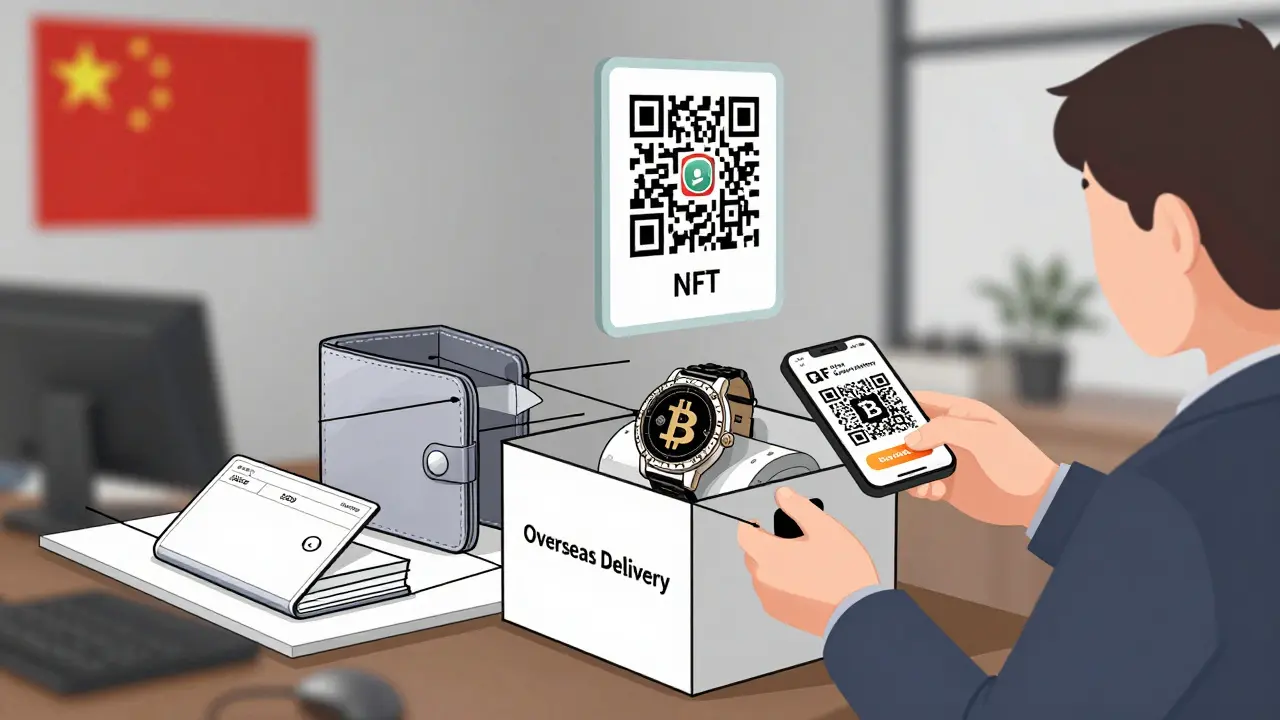
What the government is doing now
China isn’t sitting still. In January 2023, the PBOC issued new rules targeting “any form of decentralized transaction.” That means even direct wallet-to-wallet trades could be considered illegal. The State Administration of Foreign Exchange (SAFE) investigated over 1,200 crypto cases in 2022. Nearly 900 people were convicted. Fines totaled over $150 million. But here’s the thing: enforcement is messy. You can’t arrest every person with a crypto wallet. You can’t monitor every WeChat message. And you can’t stop every bank transfer. Chainalysis reported a 300% jump in P2P volume from Chinese IP addresses in early 2022. That’s not a glitch. That’s demand.Where it stands in 2025
China still accounts for about 4% of global crypto transaction volume-down from 23% in 2020, but still massive. That’s more than Japan, Germany, and Canada combined. The tools are better now. The networks are tighter. The trust is lower. But the need? It’s stronger than ever. Binance Research predicts P2P volume in China will stay between 3-5% of global activity through 2025. HSBC says it’s impossible to fully shut down. The Chinese Academy of Social Sciences wants to build AI tools to track every crypto move. The truth? You can ban exchanges. You can shut down mining. But you can’t ban people from wanting to move money. And when you have 1.4 billion people, some of them will always find a way.What you need to know if you’re trying this
If you’re thinking about joining P2P crypto trading in China, here’s what you need:- A non-Chinese email and a working VPN (NordVPN or ExpressVPN still work, but avoid free ones).
- A wallet that doesn’t show Chinese language or local bank options (Trust Wallet, Exodus, or Ledger Live).
- Start small. Under 50,000 RMB per transaction.
- Only trade with people who have 50+ completed trades and verified screenshots.
- Never use your real name or primary bank account.
- Keep records. Screenshots. Wallet addresses. Timestamps.
The ban didn’t end crypto. It just made it harder. And sometimes, harder is enough.
Is it legal to trade crypto privately in China after the 2021 ban?
Owning crypto is not illegal in China. Courts have recognized it as property. But trading it through platforms or exchanges is banned. P2P trading exists in a legal gray zone. While the government hasn’t arrested individuals for small personal trades, they’ve cracked down on large-scale operations. If you’re caught facilitating trades or using bank accounts to move large sums, you could face fines or criminal charges. The risk is real.
Can Chinese banks detect P2P crypto trades?
Yes, but not always. Banks monitor for patterns: rapid deposits and withdrawals, transfers to known crypto-related merchants, or frequent small transactions that add up. Many traders avoid detection by using multiple accounts, spreading payments over days, and using Alipay’s “friend transfer” feature, which is less monitored. But if you send 100,000 RMB to a stranger every week, you’ll get flagged. The system isn’t perfect-but it’s getting better.
Why do people use USDT instead of Bitcoin for P2P trading?
USDT is pegged to the U.S. dollar. That means its value doesn’t swing like Bitcoin. If you’re trading RMB for crypto to send money overseas, you don’t want to lose 15% because Bitcoin dropped overnight. USDT acts like digital cash. It’s easier to price, easier to verify, and easier to explain to a bank auditor-if you’re ever questioned. Plus, most sellers in China prefer USDT because it’s the most liquid stablecoin in the gray market.
What happens if I get caught trading crypto in China?
For small, personal trades-like sending a few thousand RMB to a friend-it’s unlikely you’ll face legal action. But if you’re trading large sums regularly, using business accounts, or acting as a middleman, you could be investigated. Fines can reach millions of RMB. In extreme cases, people have been charged with illegal business operations or capital flight. The government doesn’t want to jail everyone-but they want to make an example of those who run large operations.
Are there any safe P2P platforms for Chinese users?
No platform is truly safe. LocalBitcoins and Paxful are accessible via VPN, but they’ve become riskier since 2021. Fraud has increased. Customer support is slower. Many Chinese users have left these platforms. The safest option is to trade through trusted, long-term contacts in encrypted groups-not public marketplaces. Reputation matters more than platform security.
Will China ever allow crypto trading again?
It’s unlikely in the near term. China is investing heavily in its own digital currency, the e-CNY, and sees decentralized crypto as a threat to financial control. The government’s goal isn’t just to ban crypto-it’s to replace it with a state-controlled system. P2P trading will persist as long as people need to move money outside the system. But official approval? That’s not on the horizon.
17 Comments
so like... people are literally risking jail just to move money? i mean, i get it, but also, why not just use a wire transfer? like, what's the point of all this drama? i'm just here for the chaos
This is actually one of the most well-documented cases of grassroots financial adaptation i've seen. The fact that people are using transaction splitting and NFTs as value carriers shows real ingenuity. It's not about crypto as an investment-it's about autonomy.
China bans crypto and suddenly everyone's a libertarian hero? Newsflash: the government has every right to control its financial system. This isn't freedom, it's financial recklessness wrapped in a hoodie
I've seen this up close in Mumbai too-people using WhatsApp groups to trade USDT via UPI. The real story isn't China, it's how global the underground economy has become. The same patterns, same risks, same desperation. We're not talking tech-we're talking survival.
man the way people adapt is wild like they turn every restriction into a puzzle and solve it with vibes and burner phones
LMAO they think they're smart? Banks track everything. They're just waiting to lock everyone down. This is how you get your life ruined
it's heartbreaking and beautiful at the same time 🥺 people just want to protect their future... and they're doing it with whispered trades and encrypted chats. we're all just trying to survive the system
Okay, so. Let me get this straight. You can own crypto. But you can't trade it. And if you do trade it? You risk everything. So... you're basically forced to become a criminal just to protect your money? That's not a ban. That's a trap.
This isn't about crypto. It's about trust. When your currency loses value and your banks become extensions of the state, what's left? People aren't choosing crypto-they're choosing dignity. And that's something no law can erase.
so china bans crypto... and then everyone just... uses wechat? lol. next they'll ban breathing and we'll all start trading oxygen on telegram
The PBOC is not foolish. They know that decentralized finance undermines the entire socialist financial model. This is not a loophole. This is a slow-motion coup. And the West is cheering it on like it's a game
i read this whole thing and all i could think was wow these people are so brave and so scared at the same time. like they're dancing on a wire and the wind is getting stronger
The notion that P2P trading is 'survival' is a romanticized myth. The reality is that these are speculative actors exploiting regulatory arbitrage. The Chinese state is not the villain here-the lack of financial literacy is.
Honestly, this gives me hope. Even under pressure, people find ways to connect, to exchange, to be free. It's not about Bitcoin-it's about the human urge to keep moving forward.
39% of traders get their accounts frozen? That’s not a gray zone. That’s a minefield. And you’re calling this innovation? It’s desperation with a blockchain overlay.
You don’t need to agree with the ban to respect the resilience here. People are building parallel systems with nothing but grit and WhatsApp. That’s not illegal-it’s human.
P2P? More like P2P (Panic-to-Panic) trading. The whole thing is a liquidity black hole with a side of FUD and zero compliance. This isn't finance. It's chaos engineering.