
North Korean Crypto Sanctions: Tracking Stolen Wallets and Illicit Funds in 2026
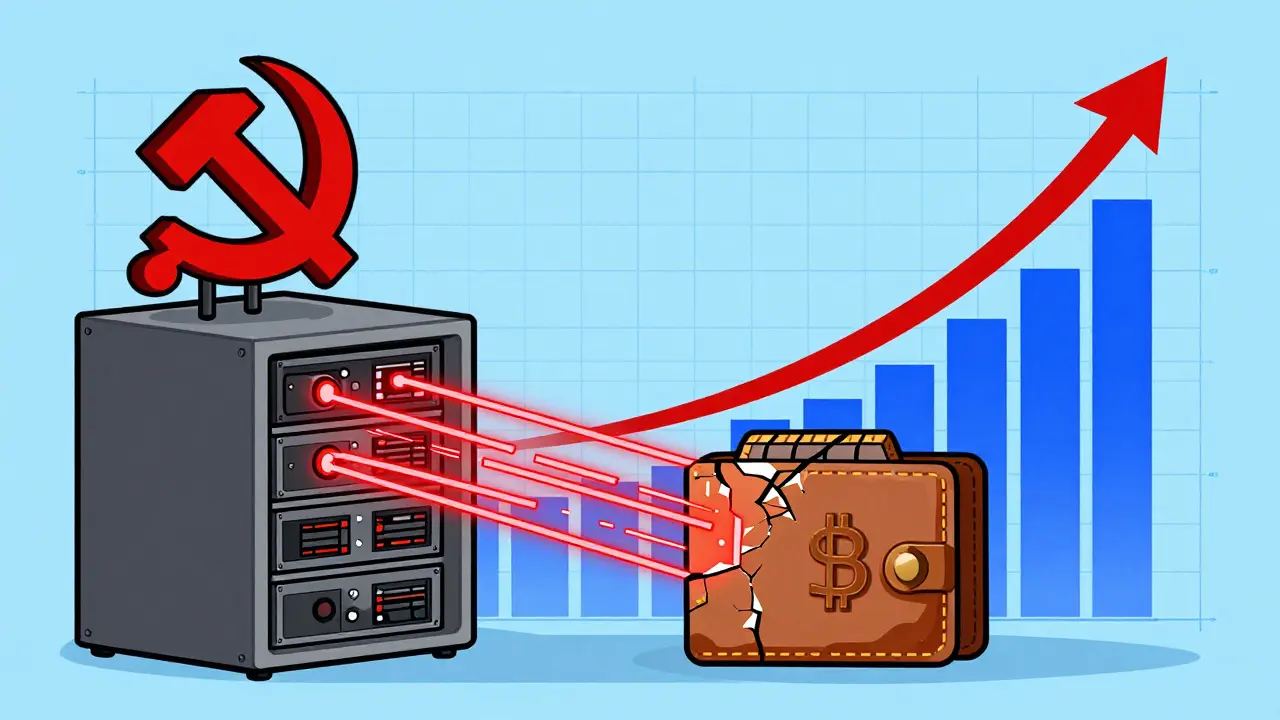
The digital ledger doesn’t lie, but the people manipulating it are getting better at hiding. In 2025, North Korea didn’t just steal cryptocurrency; they broke the record books. With over $2 billion siphoned from exchanges and protocols in a single year, the Democratic People’s Republic of Korea (DPRK) has turned cybercrime into its primary revenue stream. For investors, developers, and compliance officers, understanding North Korean crypto sanctions and how to identify sanctioned wallet addresses is no longer optional-it’s a matter of financial survival and legal safety.
This isn’t about abstract geopolitical tension. It’s about real money moving through your wallet, your exchange, or your DeFi protocol. When you interact with a compromised address, you aren’t just losing funds; you’re potentially funding nuclear weapons programs. Let’s break down how this machine works, who is pulling the strings, and how you can protect yourself from becoming an unwitting accomplice.
The Scale of the Theft: More Than Just Hacks
To understand the sanctions, you first have to grasp the magnitude of the problem. According to blockchain analytics firm Elliptic, North Korean hacking groups stole over $2.03 billion in cryptocurrency during 2025 alone. That figure is staggering when you consider that 2024 saw $712 million stolen, and the previous record year of 2022 was $1.35 billion. The jump isn’t incremental; it’s exponential.
Where did all this money come from? A significant chunk came from the February 2025 breach of the major exchange Bybit, which lost $1.46 billion in a single incident. Other targets included LND.fi, WOO X, and Seedify. These aren’t small-time phishing scams. They are sophisticated, state-sponsored attacks targeting the most secure infrastructure in the crypto industry.
Who is behind these massive cryptocurrency thefts?
The thefts are orchestrated by the North Korean government through specialized cyber units, primarily known as Lazarus Group and BlueNoroff. These are not independent hackers but state employees whose wages are often tied to the success of their heists.
The cumulative total of known crypto assets stolen by the regime now exceeds $6 billion since tracking began. The United Nations and multiple government agencies confirm that these funds directly finance North Korea’s prohibited nuclear weapons and missile development programs. This direct link between crypto theft and global security threats is what triggers the heavy hand of international sanctions.
How Sanctions Work Against Digital Assets
You might wonder how you sanction something that exists on a decentralized blockchain. You can’t stop Bitcoin from moving, but you can make it unusable for anyone holding a bank account, using a regulated exchange, or interacting with traditional finance. This is the core mechanism of North Korean crypto sanctions. International restrictions designed to freeze assets and cut off access to the global financial system for entities linked to DPRK illicit activities.
The U.S. Department of the Treasury’s Office of Foreign Assets Control (OFAC) leads this charge. On July 24, 2025, OFAC sanctioned several key entities and individuals, including Vitaliy Sergeyevich Andreyev, Kim Ung Sun, Shenyang Geumpungri Network Technology Co., Ltd, and Korea Sinjin Trading Corporation. These weren’t random choices. They were identified as orchestrators of fraudulent IT worker schemes used to launder money and steal data.
Under Secretary of the Treasury John K. Hurley made the intent clear: “The North Korean regime continues to target American businesses through fraud schemes involving its overseas IT workers, who steal data and demand ransom.” The goal is to hold the guilty accountable and protect Americans from these schemes. But it goes beyond the U.S. Japan, South Korea, and eight other nations formed the Multilateral Sanctions Monitoring Team (MSMT) to coordinate efforts. Their second report, released in October 2025, declared North Korea’s cyber program a “full-spectrum” operation rivaling China and Russia.
Identifying Sanctioned Wallet Addresses
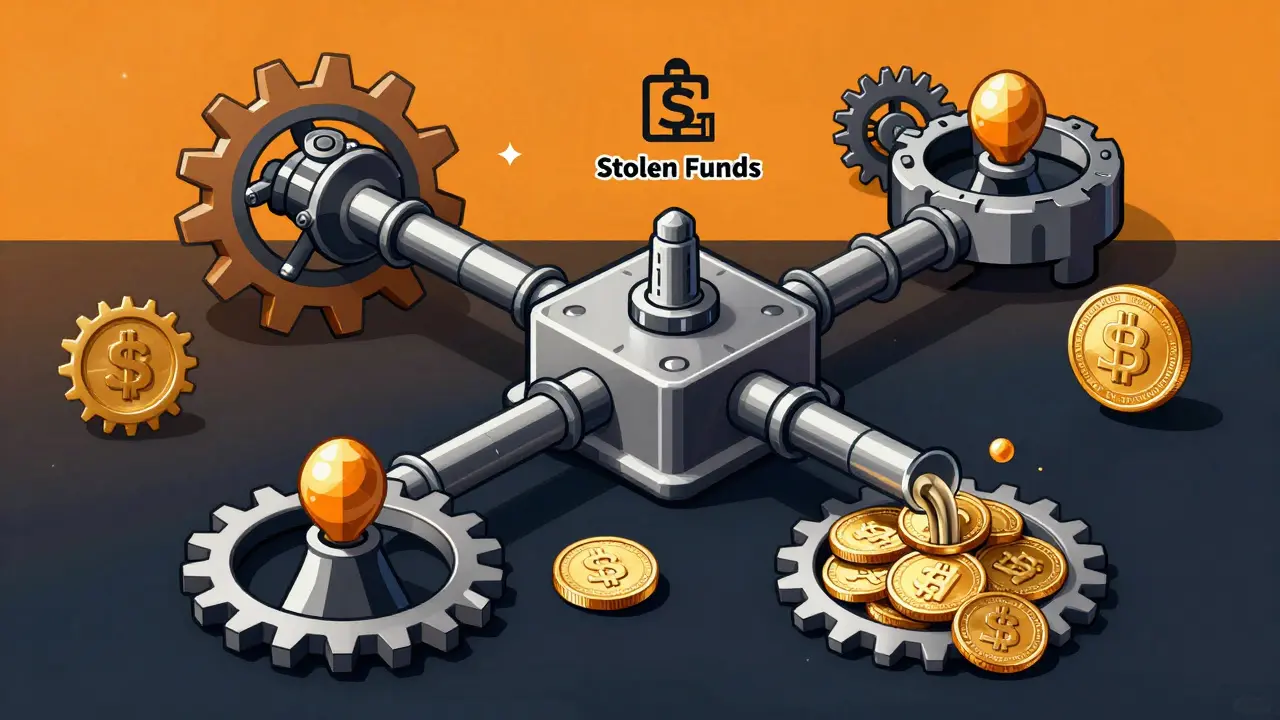
If you are running a business or managing large personal holdings, knowing which wallets are tainted is critical. However, finding a simple list of “bad wallets” online is dangerous. North Korean actors use sophisticated laundering techniques to obscure their tracks. They don’t just move stolen BTC to a new wallet. They mix it, swap it across chains, convert it to privacy coins like Monero, and then slowly trickle it back into fiat currency through shell companies.
Blockchain analytics firms like Elliptic use cluster analysis and transaction pattern recognition to attribute thefts. They look for specific hallmarks:
- Rapid Movement: Funds are moved quickly after a hack to avoid immediate freezing.
- Chain Hopping: Using bridges to move value from Ethereum to Solana or Bitcoin to obscure the trail.
- Mixing Services: Using tumblers to blend stolen coins with legitimate ones.
- Privacy Coin Conversion: Converting transparent assets into untraceable currencies before cashing out.
Because of these tactics, specific wallet addresses are rarely published in public reports due to operational security concerns. If you publish a wallet address, the actors simply create a new one. Instead, intelligence agencies share hash values and behavioral patterns with private sector partners. This means that for most users, relying on manual checks is impossible. You need automated screening tools.
| Technique | Description | Detection Difficulty |
|---|---|---|
| Direct Transfer | Moving funds directly from victim to attacker wallet | Low (Easy to flag) |
| Cross-Chain Swaps | Using bridges to move assets between different blockchains | Medium (Requires multi-chain monitoring) |
| Mixing/Tumbling | Blending funds with others to break traceability | High (Patterns still detectable by AI) |
| Privacy Coins | Converting to Monero or Zcash | Very High (Extremely difficult to track) |
The Role of IT Workers in Money Laundering
It’s not just about hacking. A huge part of the North Korean strategy involves human capital. The MSMT report highlighted “illicit information technology (IT) worker activities” as a major violation. North Korea sends programmers abroad under the guise of freelance work. These workers often operate out of countries with lax regulations, writing code for foreign companies while remitting a large portion of their earnings back to the regime.
But it gets darker. Some of these IT workers are involved in fraud schemes. They infiltrate companies, steal data, and then demand ransom. Or they help launder the crypto stolen by their hacker colleagues. The U.S. State Department offers rewards of up to $15 million for information leading to the disruption of these operations. This shows how seriously Washington views the intersection of cyber labor and financial crime.
For businesses hiring remote developers, this poses a risk. Are you inadvertently employing someone tied to a sanctioned entity? Due diligence is no longer just about checking references; it’s about screening against international sanctions lists and understanding the geopolitical risks of your talent pool.
Protecting Yourself and Your Business
So, what do you do? If you are an individual investor, stick to reputable, regulated exchanges. These platforms already implement real-time screening against known DPRK-associated wallet addresses. They bear the burden of compliance so you don’t have to. Never accept payments from unknown sources without verifying their origin.
If you run a business, especially in fintech or crypto, you need advanced blockchain monitoring tools. The learning curve steepened significantly in 2025. Basic KYC (Know Your Customer) is no longer enough. You need Transaction Monitoring (TM) systems that can detect the sophisticated laundering patterns described earlier.
- Implement Real-Time Screening: Use APIs from providers like Elliptic, Chainalysis, or TRM Labs to screen every incoming and outgoing transaction.
- Monitor for Behavioral Anomalies: Look for sudden spikes in volume, rapid chain hopping, or interactions with high-risk mixers.
- Stay Updated on Sanctions Lists: OFAC updates its lists frequently. Subscribe to alerts for any changes involving DPRK entities.
- Educate Your Team: Ensure your compliance and engineering teams understand the signs of illicit activity. Human intuition combined with AI detection is powerful.
- Avoid Privacy Coins if Possible: If your business model allows, restrict support for privacy-focused cryptocurrencies to reduce exposure to untraceable illicit flows.
The cat-and-mouse game continues. North Korean actors adapt quickly. When one bridge is blocked, they find another. When one mixer is shut down, they build a new one. But the net is tightening. International cooperation is stronger than ever, and the technology to trace illicit flows is improving daily.
Looking Ahead: The Future of Crypto Sanctions
As we move into late 2026, experts predict North Korea will increasingly target decentralized finance (DeFi) protocols and cross-chain bridges. The $1.46 billion Bybit breach showed that even centralized giants are vulnerable. DeFi, with its lack of central control, presents both a challenge and an opportunity for attackers. However, the same transparency that makes blockchain attractive also makes it traceable. Every interaction leaves a mark.
The long-term viability of North Korea’s crypto theft operations faces growing challenges. Blockchain analytics capabilities are improving, and international cooperation is strengthening. The MSMT initiative ensures that violations are pointed out and reported consistently. While the regime’s adaptability suggests these attacks will remain a persistent threat, the cost of doing business for them is rising. More wallets are being frozen, more intermediaries are being sanctioned, and more victims are demanding restitution.
For the rest of us, the message is clear: ignorance is not a defense. Whether you are a developer building a smart contract or a trader executing a swap, you are part of this ecosystem. Understanding the risks associated with North Korean crypto sanctions and sanctioned wallet addresses protects not just your portfolio, but the integrity of the entire digital asset space. Stay vigilant, use the right tools, and remember that in crypto, provenance is everything.
What happens if I accidentally transact with a sanctioned North Korean wallet?
If you transact with a sanctioned wallet, you may be violating international laws, particularly U.S. sanctions enforced by OFAC. This can result in severe fines, legal action, and the freezing of your own assets. Immediately cease further transactions, document the incident, and consult with legal counsel specializing in financial compliance. Report the incident to relevant authorities if required by local law.
Can I see a public list of all North Korean crypto wallet addresses?
No comprehensive public list exists because publishing such lists helps attackers identify and abandon those wallets. Instead, intelligence agencies and blockchain analytics firms maintain private databases. Businesses should subscribe to commercial screening services that provide real-time updates on sanctioned clusters and behavioral patterns rather than static lists.
How much money has North Korea stolen via crypto in 2025?
According to Elliptic's analysis in October 2025, North Korean hacking groups stole over $2.03 billion in cryptocurrency during 2025. This includes the $1.46 billion breach of Bybit and attacks on other platforms like LND.fi and WOO X. The actual figure may be higher as some thefts remain unreported or unattributed.
Who is the Multilateral Sanctions Monitoring Team (MSMT)?
The MSMT is an initiative involving 11 nations, including the U.S., Japan, and South Korea, established to monitor and report on North Korea's sanctions violations. It replaced the disbanded UN Panel of Experts. Its second report, released in October 2025, focused heavily on cyber activities and IT worker schemes used to evade sanctions.
Are there rewards for reporting North Korean crypto crimes?
Yes. The U.S. Department of State offers rewards of up to $15 million for information leading to the disruption of North Korea's revenue generation schemes, including cryptocurrency theft and illicit IT work. This highlights the critical importance placed on ending this funding stream for weapons development.