
Nivex Crypto Exchange Review: AI Trading Claims vs. Red Flags
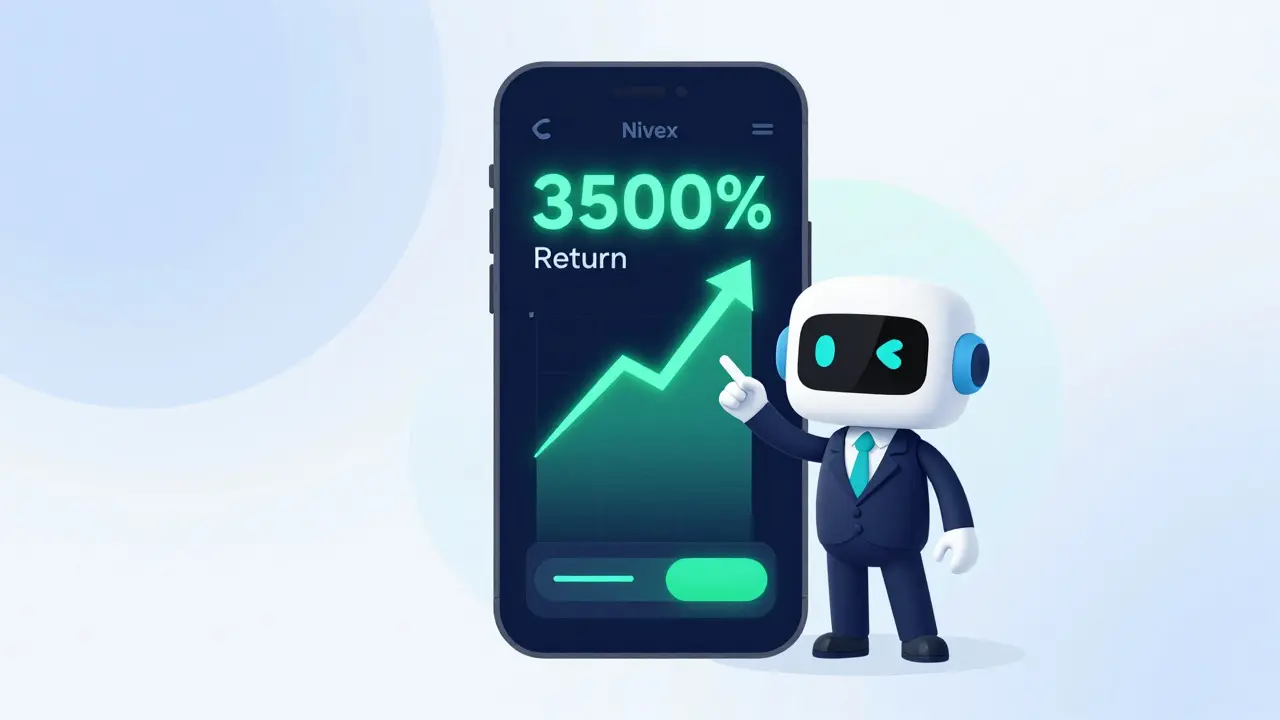
When a new cryptocurrency platform promises annualized returns of up to 3500% using artificial intelligence, your first reaction should be skepticism, not excitement. In the world of digital assets, extraordinary claims usually require extraordinary evidence-and often signal significant risk. This review of Nivex, a recently launched cryptocurrency exchange claiming to offer AI-powered trading tools and institutional-grade strategies to retail investors examines whether its promises hold water or if they represent another high-risk venture in an already volatile market.
What Is Nivex?
Nivex positions itself as a next-generation trading platform that leverages artificial intelligence to democratize access to sophisticated trading strategies. The company operates through multiple domains including nivex.one, nivex0.one, and nivex.vip, with its mobile application developed by NXONE GLOBAL PTE. LTD., based at 77 High Street #02 High Street Plaza, Singapore 179433. According to promotional materials from August 2025, the platform supports over 100 digital assets and offers spot, perpetual, and futures markets.
The platform's core value proposition centers on AI integration across all trading modules. Nivex claims to provide automated trend detection, strategy assembly, capital allocation, risk control, and execution-a complete AI trading loop designed for both novice and experienced traders. The mobile app, last updated on September 4, 2025, reportedly includes features like recurring investment automation (DCA), multi-chain deposits and withdrawals, and a WEB3 Wallet functionality added in recent updates.
However, the timeline raises immediate concerns. The domain nivex0.one was registered in April 2025, making this a very young platform with minimal operational history. For context, established exchanges like Binance, the largest cryptocurrency exchange by trading volume, founded in 2017 and Coinbase, a publicly traded US-based cryptocurrency exchange founded in 2012 have spent years building trust, regulatory compliance, and user bases before offering advanced trading features.
Performance Claims That Defy Market Reality
Nivex's most eye-catching claims involve performance metrics that would make even the most successful hedge funds look mediocre. Promotional articles from AIJourn and Chronicle Journal (both dated August 9, 2025) report annualized returns ranging from 60% to 3500%, win rates between 85% and 95%, maximum drawdown controlled between 15%-70%, and Sharpe Ratios above 2.6. A specific strategy called "BTC Grid Arbitrage + AI Risk Control" allegedly executed 540 trades in 2024 with a 92% win rate and 272% total return.
Let's put these numbers into perspective. According to the Preqin Hedge Fund Performance Report 2024, even the most successful hedge funds rarely exceed 30% annual returns after fees. The average S&P 500 return over the past decade has been approximately 10-12% annually. A Sharpe Ratio above 2.6 is exceptional-most top-performing quantitative funds achieve ratios between 1.5 and 2.0.
These discrepancies aren't just academic concerns. They represent fundamental red flags. No legitimate financial institution can consistently deliver 3500% annual returns without taking catastrophic risks that would eventually result in massive losses. When performance claims significantly exceed established market benchmarks, you're likely looking at one of three scenarios: fabricated data, unsustainable strategies that will eventually fail, or outright fraud.
| Metric | Nivex Claimed | Industry Average/Benchmark | Risk Level |
|---|---|---|---|
| Annualized Returns | 60%-3500% | 10%-30% (top hedge funds) | Extreme |
| Win Rate | 85%-95% | 55%-65% (successful traders) | Very High |
| Sharpe Ratio | Above 2.6 | 1.5-2.0 (top quant funds) | High |
| 24-Hour Volume | $186 million | $70+ billion (Binance) | Low Liquidity |
| Operating History | Since April 2025 | 5+ years (established exchanges) | Very High |
Regulatory Transparency Issues
Regulatory compliance is crucial for any financial platform, especially in the cryptocurrency space where investor protection mechanisms are still evolving. Nivex claims MSB (Money Services Business) licensing under U.S. FinCEN and Canadian authorities, plus compliance with Singapore financial authorities and pending applications with AUSTRAC (Australia) and VARA (Dubai).
However, independent investigations reveal significant problems. OpenPR investigators found no record of 'Nivex Technology Limited' in the Colorado Business Registry despite claims of corporate registration there. The ownership structure appears deliberately concealed, with registration data hidden behind privacy services-a common tactic among platforms that want to avoid accountability.
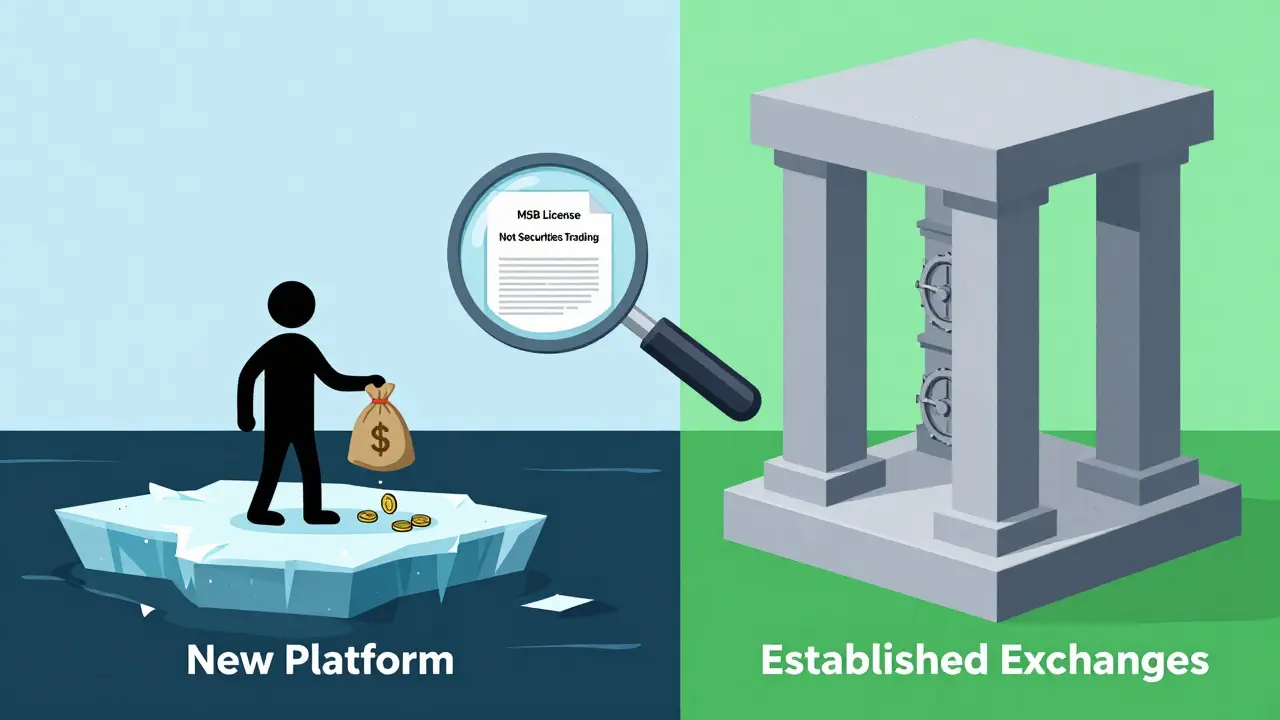
More concerning is what MSB registration actually means. An MSB license covers money transmission activities but does NOT authorize securities trading or guarantee the legitimacy of trading platforms. The U.S. Securities and Exchange Commission increased enforcement actions against unregistered exchanges by 317% year-over-year in 2024, highlighting growing regulatory scrutiny of platforms operating in legal gray areas.
CoinMarketCap lists Nivex's reserve data as unavailable, which is another major red flag. Legitimate exchanges regularly publish proof-of-reserves audits conducted by independent firms like CertiK or Chainalysis. Without transparent reserve verification, there's no way to confirm whether customer funds are actually held or being used for other purposes.
User Experience and Hidden Risks
The Google Play Store listing shows Nivex's mobile application with claims of 24/7 multilingual support in over 10 languages and no data sharing with third parties. While these sound like positive features, the reality is more complicated.
User feedback reveals troubling patterns. Reddit discussions cited by OpenPR include reports of difficulties tracing lost funds, with users unable to withdraw their investments after initial deposits. The platform's Trustpilot presence is virtually non-existent, and independent forum reviews are scarce-suggesting either a very small user base or deliberate suppression of negative feedback.
The learning curve assessment presents another contradiction. Nivex markets itself as accessible to beginners through AI automation, yet the same AI systems that supposedly protect your investments are also responsible for executing trades at speeds and frequencies that human traders cannot monitor or understand. If something goes wrong with an automated system, who do you hold accountable? Which regulations apply? What recourse do you have?
Technical analysts note that while HTTPS encryption protects data in transit, it doesn't guarantee platform legitimacy. SSL certificates are inexpensive and easy to obtain-they don't verify business practices, fund security, or regulatory compliance.
How Nivex Compares to Established Alternatives
To understand Nivex's position in the market, let's compare it with established alternatives that offer similar features:
Binance reported $70.8 billion in 24-hour spot trading volume in Q3 2024, representing approximately 38 times more liquidity than Nivex's claimed $186 million. Binance offers copy trading, algorithmic trading tools, and extensive regulatory compliance across multiple jurisdictions. The platform has survived multiple regulatory challenges and maintains transparent proof-of-reserves.
Bybit specializes in derivatives trading with robust API infrastructure for algorithmic strategies. Unlike Nivex, Bybit provides detailed documentation, active developer communities, and verifiable track records spanning several years.
Kraken emphasizes security and regulatory compliance, holding licenses in multiple jurisdictions including the United States, Canada, and European Union countries. Kraken's conservative approach has resulted in lower trading volumes but higher trust levels among institutional investors.
The key difference isn't just size-it's transparency. Established platforms undergo regular audits, publish comprehensive terms of service, maintain clear ownership structures, and accept regulatory oversight. Nivex offers none of these protections while promising returns that defy mathematical possibility.

Market Context and Long-Term Viability
Nivex operates within the broader AI-in-finance market, projected to reach $12.7 billion by 2030 with a 23.6% compound annual growth rate according to Grand View Research (2024). The cryptocurrency exchange sector remains highly concentrated, with Binance, Coinbase, and Kraken controlling 65% of global spot trading volume as of Q3 2024.
AI trading tools genuinely exist and can enhance trading efficiency when properly implemented. Platforms like Alpaca, QuantConnect, and MetaTrader offer legitimate algorithmic trading capabilities with transparent fee structures and verified performance histories. The problem isn't AI technology itself-it's platforms using AI as a marketing gimmick to disguise fundamentally risky or fraudulent operations.
OpenPR investigators conclude that Nivex exhibits multiple characteristics associated with pump-and-dump schemes: recent domain registration, hidden ownership, aggressive performance claims targeting inexperienced investors, and lack of independent verification. Given these factors, long-term viability appears extremely questionable.
Practical Recommendations
If you're considering cryptocurrency trading, here are essential safety guidelines:
- Never invest more than you can afford to lose-especially on new platforms
- Verify regulatory claims directly with official government databases
- Check proof-of-reserves audits from independent firms
- Research platform ownership and operational history thoroughly
- Skepticism toward returns exceeding 30% annually is rational, not pessimistic
- Use established exchanges with proven track records for substantial investments
- Start with small test transactions before committing significant funds
The cryptocurrency market offers genuine opportunities for those who approach it with proper education, realistic expectations, and appropriate risk management. Platforms promising guaranteed high returns through mysterious AI algorithms typically deliver exactly the opposite-total loss of invested capital with limited recourse.
Is Nivex a legitimate cryptocurrency exchange?
Nivex exhibits multiple red flags that suggest it may not be legitimate. These include hidden ownership, unverifiable regulatory claims, extraordinary performance promises that defy market reality, and limited operational history since April 2025. Independent investigators have raised serious concerns about potential fraud-like behaviors.
Are Nivex's AI trading claims realistic?
No. Nivex claims annualized returns of 60%-3500% and win rates of 85%-95%, which significantly exceed even the most successful hedge funds and quantitative trading strategies. Such performance is mathematically unsustainable and suggests fabricated or misleading data.
What regulatory licenses does Nivex actually hold?
Nivex claims MSB registration with U.S. FinCEN and Canadian authorities, plus compliance with Singapore regulators. However, independent investigations found no verification of these claims, and MSB licenses only cover money transmission-not securities trading or platform legitimacy.
Can I trust my funds on Nivex?
There are significant reasons not to trust Nivex with your funds. The platform lacks transparent proof-of-reserves, has hidden ownership, shows user reports of withdrawal difficulties, and operates with minimal regulatory oversight. These factors create substantial risk of losing invested capital.
What are safer alternatives to Nivex?
Established exchanges like Binance, Coinbase, Kraken, and Bybit offer verified trading platforms with transparent operations, regulatory compliance, and proven track records. For algorithmic trading specifically, consider platforms like Alpaca, QuantConnect, or MetaTrader that provide legitimate tools with documented performance histories.
Why do some platforms promise unrealistic returns?
Unrealistic return promises are commonly used to attract inexperienced investors seeking quick profits. These platforms often operate as pump-and-dump schemes, Ponzi structures, or outright frauds. The combination of AI buzzwords and impossible returns creates false credibility while masking underlying risks.
How can I verify a cryptocurrency exchange's legitimacy?
Check official regulatory databases for license verification, review proof-of-reserves audits from independent firms, research platform ownership and operational history, examine user reviews on trusted sites like Trustpilot, and be skeptical of returns exceeding 30% annually. Legitimate platforms welcome transparency and regulatory oversight.
17 Comments
Oh look, another 'AI' scam trying to separate fools from their wallets. The math is literally impossible. If you can make 3500% returns with AI, why are you begging strangers on the internet for money instead of just compounding your own capital until you own the entire global economy? It’s not even a question anymore, it’s just basic arithmetic that these grifters hope people ignore because they’re too busy dreaming about Lambos.
This article is painfully obvious but necessary because apparently some people still need to be told that free lunch doesn't exist in finance. I’ve seen this exact playbook a hundred times: register a domain yesterday, claim you have secret institutional tech, hide behind privacy shields, and promise returns that would make Renaissance Technologies look like a savings account. The fact that they don’t have proof of reserves is the smoking gun right there. No legitimate exchange operates without transparency. You’re either stupid or greedy if you touch this platform.
I totally agree with the skepticism here! It’s really important to stay safe out there. I was actually looking into this earlier today and felt super uneasy about the whole setup. The lack of any real user reviews on Trustpilot is such a huge red flag. We should all stick to the big names like Binance or Kraken where we know our funds are at least somewhat secure. Let’s keep each other informed so no one gets burned!
Great breakdown 📊 The Sharpe ratio claim alone should scare anyone off. A consistent Sharpe above 2.6 over a long period is basically mythical in the real world. Most quant funds struggle to hit 1.5 consistently. When you see numbers like 3500% APY, it’s not innovation, it’s a Ponzi scheme wearing a tuxedo. Always verify the source code or at least the audit reports before putting a single cent in. Stay smart folks! 🧠💸
One must consider the sheer audacity of these charlatans to believe the general public lacks the intellectual capacity to recognize a fraudulent enterprise. The presentation of data is rudimentary, yet effective for the uneducated masses who flock to such digital vultures. It is truly disheartening to witness the decline of financial literacy in the modern era. One hopes that regulatory bodies will eventually intervene, though given the current pace of bureaucracy, it may be too late for many unfortunate souls.
Boring read. Everyone knows crypto scams are bad. Why do we need a 2000 word essay to tell us not to give money to strangers on the internet? Just say 'it's a scam' and move on. Nobody has time for this fluff.
i mean i get what youre saying but sometimes i feel like the ai thing might actually be real because technology moves so fast now and who are we to say what is possible or not maybe they found a loophole or something and its sad that people are so quick to judge without giving them a chance to prove themselves even if the numbers seem crazy because crazy things happen all the time in the stock market and crypto is just the wild west version of it so maybe its worth a small try?
Please don’t risk your savings on this. I know it sounds exciting but trust your gut when something feels off. Protect yourself first.
Typical foreign scam operation. They register in Singapore to avoid US laws and then target Americans with fake promises. This is exactly why we need stricter borders and stricter financial regulations. These companies exploit our openness and then vanish with the money. Shame on anyone who supports these offshore entities. Keep your money in American banks where it belongs.
The MSB license detail is key here. People often confuse money transmission licenses with securities trading authorization. Having an MSB registration just means you can move money around legally; it doesn’t mean the SEC or CFTC has approved your trading algorithms or your business model. It’s a classic gray area tactic used by sketchy platforms to appear compliant while doing nothing regulated. Good catch on that distinction.
From a technical standpoint, the latency arbitrage strategies they claim to use require co-location services and direct market access feeds that cost millions per month. A startup with a $186M volume cap isn’t paying for those. They’re likely using simulated backtests with look-ahead bias to generate those charts. The UI/UX of their app also screams low-budget template rather than proprietary tech stack.
Indian regulators are watching closely 👀 But yeah, this looks like a rug pull waiting to happen. Don’t fall for it guys. Stick to verified exchanges only. India is building strong crypto frameworks now, let’s support legitimate growth not scams. 🇮🇳
Actually the article misses the point that high risk equals high reward and if you cant handle losing your money then you shouldnt be in crypto at all. These platforms fill a niche for degens who want leverage and speed not safety. Calling it fraud is lazy journalism because nobody knows if it works until someone tries it. Stop being so conservative.
omg this reminds me of that site my cousin lost money on last year. She kept saying the bot was working but then she couldnt withdraw. Its scary how similar these stories are. Please be careful everyone dont let them trick u with fancy graphs and ai buzzwords its all just marketing hype tbh
It is indeed very concerning to see such blatant disregard for financial ethics. One must always prioritize security over potential gains. The lack of transparent ownership is a major issue that cannot be overlooked. We should demand better standards from all fintech companies operating in our markets.
Why do people keep falling for this nonsense? It’s embarrassing. Read the terms and conditions if you dare. They’ll find clauses that allow them to freeze your account indefinitely. Typical scammer behavior. Avoid at all costs.
Let us not pretend for a moment that the established exchanges are any more virtuous. Binance has been fined billions, Coinbase is under constant investigation, and Kraken has its own skeletons. The difference is merely scale and legal teams. Nivex is simply a smaller player in a dirty game. To suggest that 'legitimate' exchanges exist in crypto is delusional. They are all casinos, some just have better lighting.