
MorCrypto Crypto Exchange Review: Fees, Security, and How It Stacks Up

Crypto Exchange Fee Calculator
Compare Your Trading Costs
MorCrypto
$0.1% Maker / $0.2% Taker
No public audit or insurance details
Binance US
0% - 0.6% Taker
Coinbase
0% - 3.99% Taker
Kraken
0% - 0.4% Taker
When you hear the name MorCrypto is an emerging cryptocurrency exchange that markets low fees and a sleek interface, the first question is: does it live up to the hype? This review pulls together what little public data exists, compares MorCrypto to the industry heavyweights, and tells you whether it’s worth a try.
Quick Summary
MorCrypto is a lightweight platform that appears to be targeting retail traders in a few niche markets. It lacks the depth of audits and public disclosures that larger exchanges provide, which raises red flags for security‑focused users. Fees look competitive on paper, but the exact structure is opaque. If you value transparency and proven security, stick with established players; if you are an early‑adopter willing to gamble on a newcomer, MorCrypto could be a low‑cost experiment.
What Is MorCrypto?
Officially, MorCrypto positions itself as a "next‑generation" exchange that supports spot trading, staking, and a mobile app. The website lists a handful of major cryptocurrencies-Bitcoin, Ethereum, and a few BNB‑based tokens-but does not provide a full coin list. No clear regulatory license is disclosed, and the firm’s corporate registration is registered in an offshore jurisdiction with limited public records.
Security Considerations
Security is the single most important factor for any exchange. Established platforms such as Kraken is known for 95% of funds stored in cold storage and a history of zero successful hacks or Coinbase is regulated in the U.S., regularly audited, and insured for digital assets held in custody publish detailed security audits, insurance coverage, and compliance documents.
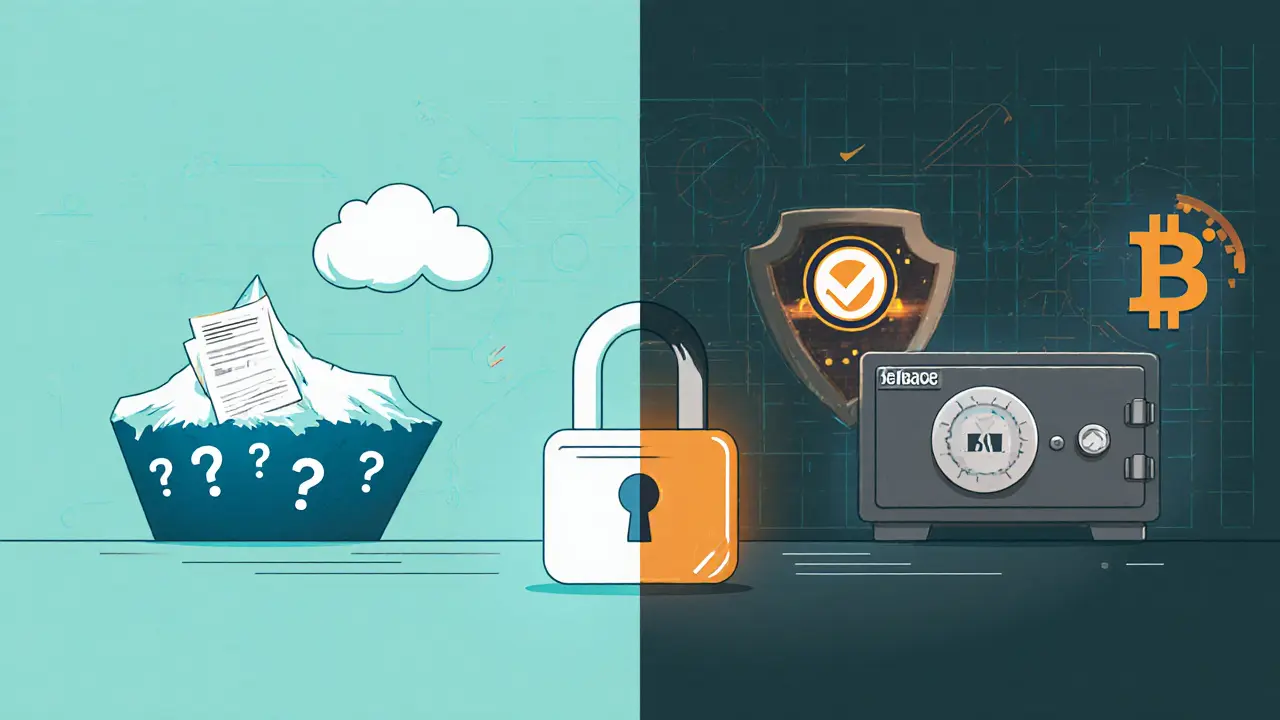
MorCrypto, by contrast, offers only a generic statement: "All user funds are protected by industry‑standard security protocols." There is no third‑party audit report, no mention of cold‑storage percentages, and no insurance policy. This lack of transparency means you cannot verify whether your assets are safe.
Fee Structure
Most traders compare fee schedules before signing up. Binance US is known for a maker‑taker model ranging from 0% to 0.6%, while Gemini is charged between 0.5% and 3.49% depending on volume. MorCrypto advertises a flat 0.2% taker fee and a 0.1% maker fee, but the fine print reveals that fees increase for low‑volume traders after a 30‑day threshold. Because the exchange does not publish a detailed fee table, you must rely on screenshots that could be outdated.
Supported Assets
The exchange’s public API lists about 25 coins, mostly top‑10 market‑cap assets and a few meme tokens. There is no support for fiat on‑ramps, meaning you need an external wallet or another exchange to fund your account. In contrast, Crypto.com is offering 313 cryptocurrencies and multiple fiat gateways, and OKX is available in over 100 countries with a robust derivative suite. MorCrypto’s limited selection may suit traders who only need the biggest tokens, but it falls short for those seeking niche altcoins or stablecoins.
User Experience
First‑time users report a clean mobile UI with quick account creation via email. However, the KYC process is rudimentary-just a photo of an ID and a selfie. While this speeds up onboarding, it can cause compliance issues in stricter jurisdictions. Customer support is only via a ticket system; response times average 48 hours, according to community forum posts. By comparison, Uphold is rated 4.8/5 for its live chat and fast support turnaround.

How MorCrypto Compares to Top Exchanges
| Exchange | Year Launched | Supported Coins | Fee Range (Maker/Taker) | Security Highlights |
|---|---|---|---|---|
| MorCrypto | 2024 (estimated) | ~25 (major tokens only) | 0.1% / 0.2% (subject to volume thresholds) | Unverified, no public audit |
| Kraken | 2011 | 350+ | 0% - 0.4% | 95% cold storage, no hacks |
| Coinbase | 2012 | 235 | 0% - 3.99% | Regulated US broker, insurance coverage |
| Binance US | 2019 | 158 | 0% - 0.6% | Two‑factor authentication, SAFU fund |
| Uphold | 2013 | Thousands of pairs | 0% - 0.5% | Live chat support, strong compliance |
Should You Use MorCrypto?
If you are a crypto hobbyist who wants to experiment with a low‑fee platform and you can tolerate a lack of audited security, MorCrypto could be an affordable side project. However, for anyone with significant holdings, the safest bet remains a well‑established exchange that publishes regular security attestations and offers insurance.
Here’s a quick decision guide:
- Prioritise security? Choose Kraken, Coinbase, or OKX.
- Need the lowest fees possible? Compare Maker/Taker tiers on Binance US and MorCrypto, but verify the fine print.
- Looking for a wide coin selection? Go with Crypto.com or OKX.
- Want a simple mobile‑first UI and are comfortable with risk? MorCrypto may fit.
Frequently Asked Questions
Is MorCrypto regulated?
Public documents do not list a specific financial regulator for MorCrypto. The exchange claims to follow “global AML/KYC standards,” but without a clear licensing authority, the regulatory status remains ambiguous.
How can I fund my MorCrypto account?
Currently only crypto deposits are supported. You must transfer Bitcoin, Ethereum, or other listed coins from an external wallet. No fiat gateways (bank cards, ACH, or wire) are offered.
What security measures does MorCrypto use?
The website mentions two‑factor authentication (2FA) and encrypted storage, but it does not disclose cold‑storage ratios, audit reports, or insurance details. Users should assume a higher risk compared to audited exchanges.
Are there any hidden fees?
MorCrypto advertises flat maker/taker fees, but the terms note higher fees for accounts with less than $5,000 in 30‑day trading volume. Withdrawal fees are listed per currency and can be higher than average for smaller coins.
How does MorCrypto’s user support compare?
Support is limited to an email ticket system. Community feedback suggests response times of 24‑48 hours, which is slower than the live‑chat or phone options offered by Uphold and Coinbase.
16 Comments
MorCrypto advertises a 0.1% maker and 0.2% taker fee, which looks attractive at first glance. However, the platform provides no public audit and lacks an insurance fund, making the nominal fees deceptive. Users should also be aware of withdrawal fees that are not disclosed in the headline numbers. In the end, low transaction fees do not compensate for the opacity in security.
Look, the fee structure is merely the tip of the iceberg-what truly matters is the custodial risk you’re signing up for! While the numbers read 0.1%/0.2%, the absence of a SAFU-like fund means you’re gambling with every trade. Imagine paying a penny for a ticket to an unguarded vault; the drama lies in the potential loss, not the dime you save. In philosophy, the value of a promise is measured by its enforceability, and MorCrypto’s promise is flimsy at best. Therefore, tread carefully, or you’ll be the next cautionary tale.
Honestly, low fees don’t excuse zero transparency. The platform’s risk level is off the charts.
One could argue that the trade‑off between cost and security is a personal calculus. If a user values cheap execution above all else, perhaps MorCrypto aligns with that philosophy. Yet, the passive stance on audits suggests a deeper institutional neglect.
From a regulatory perspective, the lack of a licensed custodian raises significant concerns. While the fee schedule is competitive, the potential for unmitigated loss outweighs the marginal savings. It would be prudent to seek exchanges with verifiable compliance.
fees look good but withdrawl cost hidden. also the site feels sketchy
Let’s break this down constructively. MorCrypto’s fee percentage is indeed lower than many major exchanges, which can benefit high‑volume traders. However, the security model lacks public verification, meaning users cannot independently assess the risk. A balanced approach would be to use MorCrypto for a small portion of your portfolio while keeping the majority on platforms with audited custody.
Great to see a low‑fee option! Just remember to keep an eye on the security side 😊👍
Whilst the fee % appears attractiive, the indefinitive security claims maketh me sceptical. One must consider the lacking audit as a severe drawback. In addition, the unclarified withdrawal structures may incur unanticipate costs.
The previous point about audit absence is well‑taken. Could we quantify the potential exposure by comparing historical hack incidents across similar platforms? Additionally, a detailed fee breakdown-including network fees-would aid users in making an informed decision.
Yo, let’s get real-MorCrypto’s “low‑fee” hype is just another flash in the pan, a classic case of marketing jargon cloaking systemic risk! You’re basically dancing on a thin layer of code while they whisper sweet nothings about “maker/taker” percentages. In the crypto wild west, the only thing lower than fees is the probability of your assets surviving a breach. So, unless you thrive on adrenaline, skip the drama and stick with vetted custodians.
Oh sure, because paying pennies in fees definitely outweighs the potential total loss of your portfolio!!! 🙄🚀
MorCrypto’s fee hype is as thin as a whisper, and the security story is a dusty old legend. Nice try, folks.
Listen, even if you think the fees are a bargain, you’ve got to prioritize safety. Start by allocating a tiny slice of your holdings to MorCrypto, monitor the performance, and only increase exposure if you see consistent security updates.
When evaluating any cryptocurrency exchange, the first principle to consider is the relationship between fee structures and custodial risk. Low maker and taker percentages can be alluring, yet they often mask other cost components such as withdrawal charges, network fees, and spread differentials. Moreover, the true cost of a trade includes the opportunity cost of potential security breaches, which can be catastrophic for users. MorCrypto advertises a 0.1% maker and 0.2% taker fee, positioning itself competitively against larger exchanges, but it fails to disclose any public audit or insurance coverage. This lack of transparency is a significant omission, as independent audits provide an objective assessment of how funds are safeguarded. Without such verification, the platform’s security claims remain anecdotal and unsubstantiated. In addition, the exchange’s risk indicator highlights "No public audit or insurance details," which should prompt a cautious approach. Users should compare this with exchanges that maintain cold storage ratios, multi‑signature wallets, and third‑party insurance policies. While MorCrypto may offer lower direct transaction costs, the indirect costs related to potential loss can far exceed the saved pennies on each trade. A prudent strategy involves diversifying holdings across multiple venues, allocating the majority to exchanges with proven security track records. Furthermore, regulatory compliance plays a pivotal role; exchanges operating under stringent jurisdictions are subject to oversight that can mitigate certain risks. MorCrypto’s absence of regulatory registration means users lack that additional layer of protection. It is also advisable to monitor the platform’s development roadmap for any future commitments to security audits or insurance funds. Finally, personal risk tolerance should guide the proportion of assets placed on any single exchange. For those with high tolerance, a modest exposure to MorCrypto may be acceptable for fee optimization, but for the risk‑averse, the trade‑off does not justify the potential downside. In summary, while the fee headline is compelling, a holistic assessment reveals that security transparency and regulatory posture are equally, if not more, important considerations.
Only fools would trust MorCrypto without an audit.