
MINU 2.0 (MINU) Crypto Coin: What Is It, Risks & Tokenomics
Imagine buying a stock that costs less than a cup of coffee, only to find out there are no buyers waiting on the other side. That is the reality for MINU 2.0, a micro-cap meme cryptocurrency operating on the BNB Smart Chain. Launched in 2024 as a restructured version of an earlier token, MINU promises automatic burns and locked liquidity, but its market presence is nearly invisible. If you are wondering what this coin actually does, how it works, and whether it is worth your attention, this guide breaks down the facts without the hype.
Key Takeaways
- MINU 2.0 is a low-liquidity meme coin on the BNB Smart Chain with a total supply of under 1 million tokens.
- The project features a 2% transaction fee that is automatically burned, reducing supply over time.
- Trading volume is effectively zero, making entry and exit extremely difficult for new investors.
- With only ~163 holders, community engagement is minimal compared to established meme coins like Dogecoin.
- The token has dropped significantly from its all-time high, reflecting high risk and low adoption.
What Exactly Is MINU 2.0?
MINU 2.0 is a digital asset designed as a meme coin with added utility mechanisms. Unlike traditional cryptocurrencies that solve specific technical problems, meme coins often rely on community sentiment and speculative trading. However, MINU 2.0 attempts to differentiate itself by introducing structural changes to its tokenomics. The "2.0" label indicates a significant upgrade or reset from its predecessor, which had a massive supply of billions of tokens. In contrast, MINU 2.0 launched with a drastically reduced supply of approximately 999,780 tokens. This reduction suggests a major burn event or restructuring occurred before the relaunch, aiming to create scarcity and potentially drive price appreciation if demand increases.
The token operates on the BNB Smart Chain using the BEP20 standard. This means it shares the same infrastructure as many other popular assets on this network, benefiting from faster transaction speeds and lower fees compared to Ethereum-based tokens. The contract address is publicly verified, allowing anyone to inspect the code and track holder distributions directly on the blockchain.
Tokenomics and the Burn Mechanism
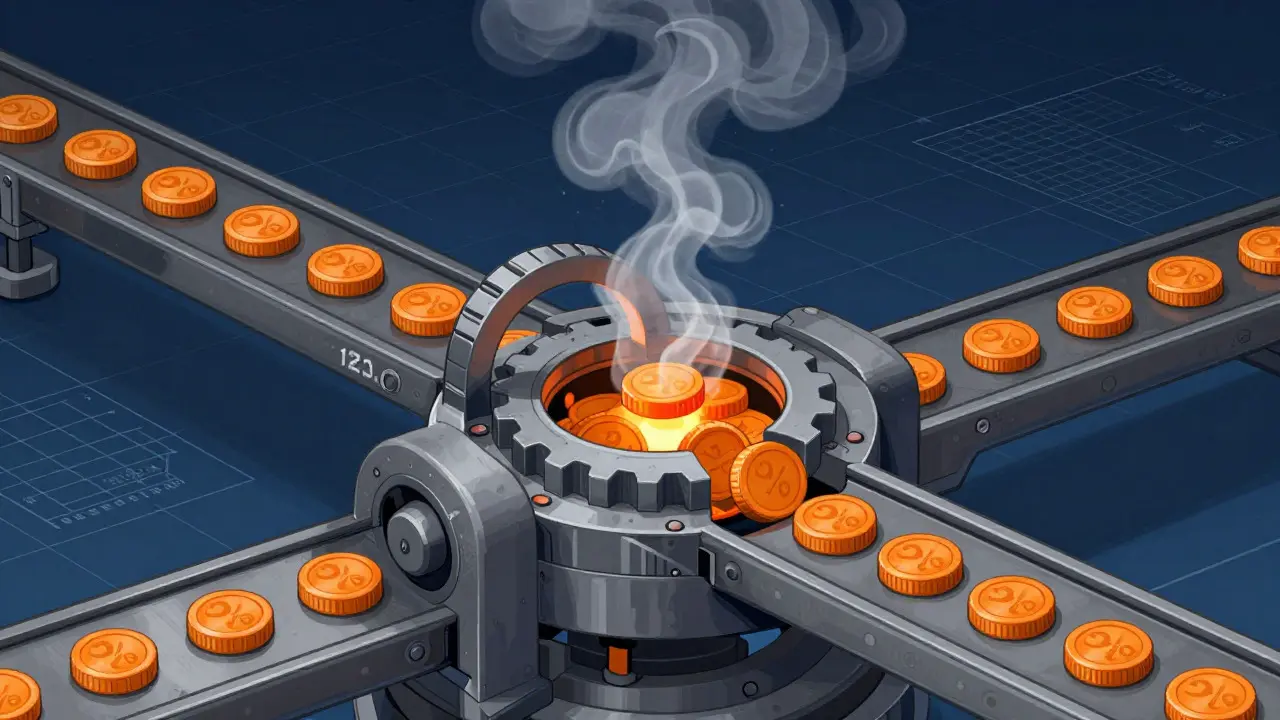
The core selling point of MINU 2.0 is its automatic burn mechanism. Every time a transaction occurs-whether someone buys, sells, or transfers the token-a 2% fee is applied. This fee is not sent to a developer wallet; instead, it is permanently removed from circulation. Over time, this reduces the total supply, which theoretically supports the price if demand remains constant or grows. While this feature is common among low-cap tokens, its effectiveness depends entirely on trading volume. With current volumes near zero, the burn rate is negligible, meaning the supply reduction happens very slowly.
Additionally, the project claims that its liquidity pools are permanently locked. This prevents developers from pulling out funds and crashing the price, a common tactic in scam projects known as "rug pulls." However, because the token has so few holders, verifying the long-term integrity of these locks requires careful monitoring of smart contract events. The total supply of 999,780 tokens is a fixed number, ensuring no new tokens can be minted arbitrarily, which adds a layer of predictability to the asset's structure.
Market Performance and Liquidity Challenges
Here is where the story gets complicated. Despite the technical features, MINU 2.0 struggles with basic market metrics. As of late 2024, the token traded at roughly $0.0023 per unit, down about 96% from its peak of $0.069 in March 2024. More critically, the 24-hour trading volume was reported as zero across major tracking platforms. Zero volume means there are no active buyers or sellers at any given moment. For an investor, this creates a significant barrier: you might not be able to buy the token easily, and more importantly, you might not be able to sell it when you want to exit.
Liquidity is the lifeblood of any tradable asset. Without sufficient liquidity, price movements become erratic. A small sale could crash the price, while a small purchase could spike it, neither of which reflects true value. MINU 2.0 ranks around #7700 in global market capitalization, placing it in the bottom fraction of percent of all cryptocurrencies. Its market cap sits at just a few thousand dollars, a tiny fraction of even mid-tier meme coins. This lack of depth makes it highly illiquid, posing a substantial risk for anyone looking to enter or exit positions.
Community Size and Social Presence
Meme coins live and die by their communities. Successful tokens like Dogecoin thrive on active social media engagement, memes, and viral moments. MINU 2.0, however, shows almost no signs of community activity. Data from December 2024 indicated only 163 unique holders. To put that in perspective, Dogecoin has millions of addresses holding the token. With fewer than 200 people owning MINU 2.0, the potential for organic growth through word-of-mouth is limited. Social media mentions are sparse, with only a handful of tweets tagged with the project’s symbol in recent months. There are no dedicated subreddits or active forums discussing the token, suggesting that interest has waned since its initial launch.
This lack of engagement raises questions about the project's long-term viability. Without a vocal community to promote the token, attract new users, or defend it against criticism, the asset relies solely on speculative interest from a very small group of traders. The absence of user reviews on major platforms further underscores its obscurity in the broader crypto landscape.

Risk Assessment and Red Flags
Investing in micro-cap tokens always carries high risk, but MINU 2.0 exhibits several characteristics that warrant caution. First, the promised "8% daily" returns mentioned in some early descriptions are unsustainable in the long run. Financial experts often flag such high yield promises as indicators of Ponzi-like structures, where returns are paid from new investor money rather than actual revenue. Second, the combination of zero trading volume and a tiny holder base creates a perfect storm for volatility. Even if the team holds no tokens, the lack of market depth means that any single large transaction can drastically impact the price.
Furthermore, documentation for MINU 2.0 is scarce. There is no prominent official website linked in major data aggregators, and updates on development progress are rare. For a project claiming to list on 30 major exchanges, the absence from all top centralized exchanges like Binance or Coinbase is a notable gap. While being listed on decentralized exchanges is a start, it does not provide the same level of security or accessibility for mainstream users. Potential investors should approach MINU 2.0 with extreme skepticism, treating it as a high-risk speculative bet rather than a solid investment.
| Feature | MINU 2.0 | Dogecoin | Shiba Inu |
|---|---|---|---|
| Blockchain | BNB Smart Chain | Dogecoin Network | Ethereum |
| Total Supply | ~999,780 | Unlimited (Inflationary) | 589 Trillion |
| Market Cap (Approx.) | $2,780 | $14 Billion+ | $3 Billion+ |
| Holders | ~163 | 2.5 Million+ | Millions |
| 24h Volume | $0 - Negligible | Billions | Hundreds of Millions |
| Primary Utility | Burn Mechanism | Paid Advertising / Community | Ecosystem / Payments |
How to Interact with MINU 2.0
If you decide to explore MINU 2.0 despite the risks, the process is similar to handling any other BEP20 token. You will need a compatible wallet, such as MetaMask, configured for the BNB Smart Chain network. Setting up a wallet typically takes 15 to 20 minutes for beginners. Once set up, you can connect to a decentralized exchange that lists the token. However, due to the lack of liquidity, finding a valid trading pair might be challenging. You may need to search specifically for the contract address to ensure you are interacting with the correct token, as name collisions can occur on decentralized platforms. Always double-check the contract address against verified sources before swapping, as buying the wrong token is a common mistake for newcomers.
Slippage settings are crucial here. Because liquidity is thin, you may need to adjust your slippage tolerance higher than usual to complete a trade. Keep in mind that higher slippage means you accept a wider range of prices, which can result in paying more than expected during volatile periods. Given the zero volume reports, patience is key; sometimes, trades simply won't execute if there are no counterparties willing to match your order.
Frequently Asked Questions
Is MINU 2.0 a good investment?
MINU 2.0 is considered a high-risk, speculative asset. With zero trading volume, a tiny market cap, and minimal community support, it lacks the fundamentals of stable investments. It is suitable only for those willing to lose their entire stake in pursuit of high-reward speculation.
What blockchain does MINU 2.0 use?
MINU 2.0 operates on the BNB Smart Chain (BEP20). This allows for fast transactions and lower fees compared to Ethereum-based networks. Users need a wallet compatible with BSC, such as MetaMask or Trust Wallet, to hold the token.
How does the 2% burn work?
Every time a transaction occurs, 2% of the amount transferred is automatically sent to a dead address, removing it from circulation. This reduces the total supply over time. However, because trading volume is currently very low, the actual impact on supply reduction is minimal.
Where can I buy MINU 2.0?
MINU 2.0 is not listed on major centralized exchanges like Coinbase or Binance. It can only be acquired through decentralized exchanges (DEXs) on the BNB Smart Chain. Due to low liquidity, finding a liquid trading pair may be difficult, and slippage can be high.
Why is the trading volume zero?
Zero volume indicates a lack of active buyers and sellers. This is common for abandoned or extremely niche micro-cap tokens. It suggests that the community interest has faded, and there is little to no speculative activity driving trades at any given time.
1 Comments
It is interesting to see how the market treats tokens with such low liquidity. The comparison to Dogecoin really puts things in perspective, doesn't it? It feels like a ghost town out there on the BNB chain for this specific coin.