
Mining Crypto in Russia: Laws, Bans, and Restrictions (2025-2026)
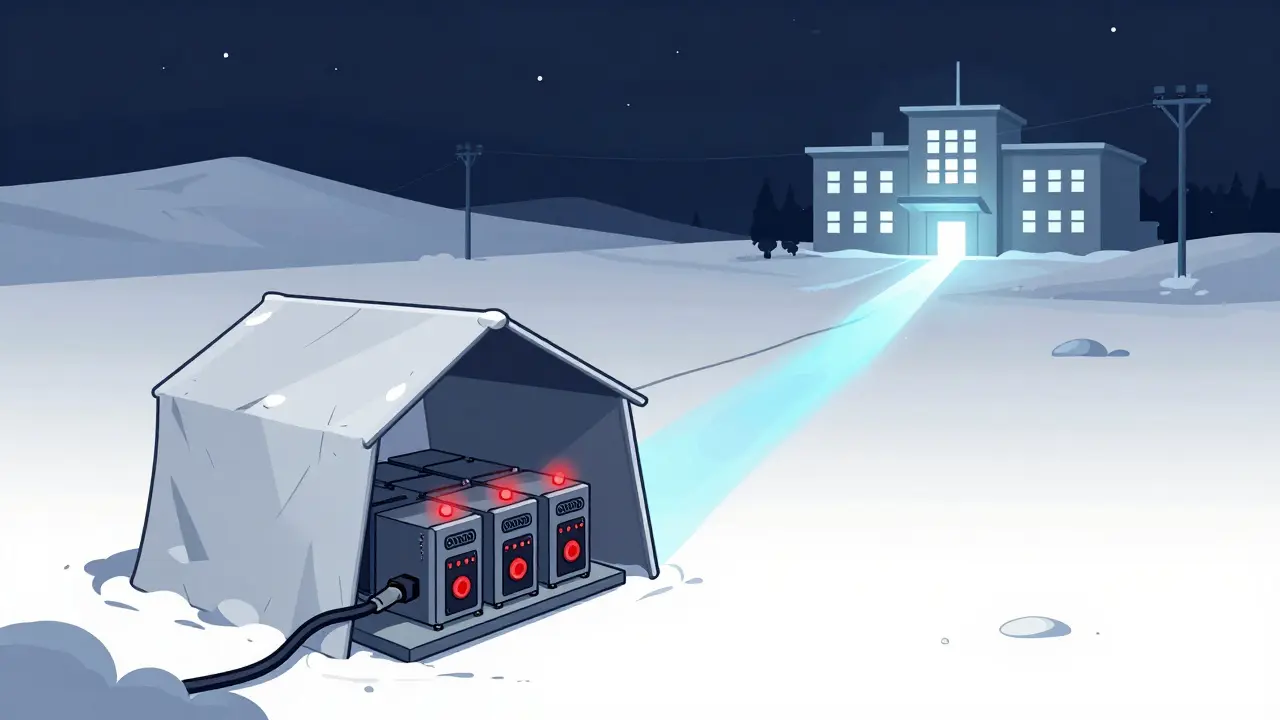
Imagine plugging in a powerful ASIC miner in Siberia during winter. The lights flicker. The grid groans. And suddenly, your machine just stops working-not because of a hardware failure, but because the government remotely cut your power to keep a nearby hospital running. This isn't a dystopian sci-fi scenario; it is the daily reality for cryptocurrency miners operating in Russia today.
If you are thinking about setting up mining operations in Russia or already have hardware there, you need to understand that the legal landscape shifted dramatically between late 2024 and early 2025. The days of the "wild west" are over. The Russian government has moved from vague prohibitions to a strict, controlled legalization model. They want the economic benefits of mining, but they refuse to let it destabilize the national energy grid. For anyone involved in this space, knowing the difference between legal compliance and criminal liability is no longer optional-it is survival.
The New Legal Framework: Controlled Legalization
Before August 2024, the status of crypto mining in Russia was murky. Now, it is defined by comprehensive legislation signed by President Vladimir Putin. The core message from Moscow is clear: mining is legal if you register, pay taxes, and accept state control over your electricity usage. If you do not follow these rules, you are engaging in an illegal activity with severe financial and operational consequences.
The cornerstone of this new framework is the mandatory state registry. All mining equipment must be labeled and certified. When you import hardware into Russia, it enters a system that allows authorities to track exactly where that machine is plugged in and how much power it consumes. This transparency enables the government’s most powerful tool: remote disconnection.
Under the current regulations, miners are classified as "fourth category" consumers. This classification places them at the very bottom of the priority list for electricity distribution. In practical terms, this means your mining rig is the first thing to go when the grid is under stress. During peak demand periods-especially in winter-the authorities can remotely shut down registered mining operations to prioritize essential services like homes, hospitals, and critical industries. You might be fully compliant on paper, but your uptime is entirely at the mercy of the local energy infrastructure.
Geographic Bans: Where You Cannot Mine
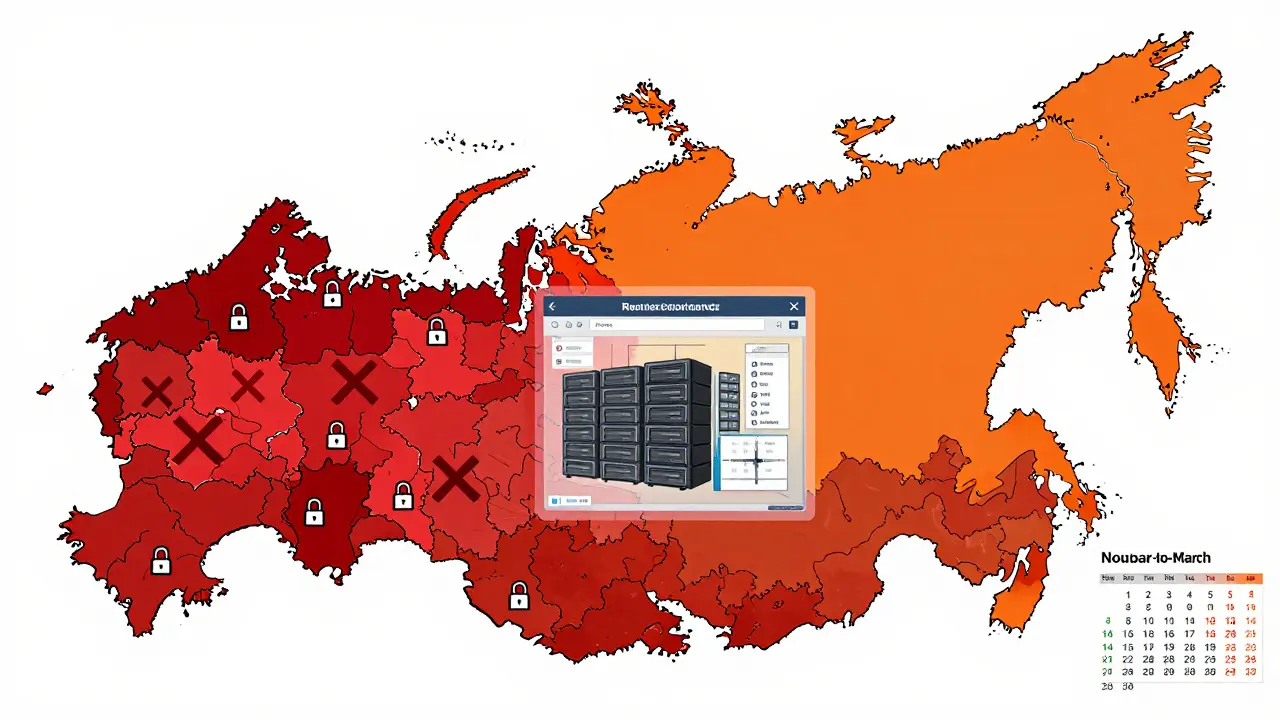
Perhaps the most shocking aspect of the 2025 regulations is the geographic restriction map. Russia has implemented a two-tiered ban system that covers 13 regions total. These bans are not temporary glitches; they are long-term policy decisions driven by energy deficits.
Permanent Regional Bans
Ten regions face complete blanket bans on cryptocurrency mining. These restrictions began on January 1, 2025, and are set to last until March 15, 2031. That is a six-year lockout. The banned regions include:
- Dagestan
- Ingushetia
- Kabardino-Balkaria
- Karachay-Cherkessia
- North Ossetia
- Chechnya
- The Donetsk People's Republic
- The Lugansk People's Republic
- Zaporizhzhia region
- Kherson region
If you attempt to mine in any of these areas, you are breaking the law. There are no exemptions for small hobbyists here. The government views these regions as having insufficient energy reserves to support even minimal mining loads without jeopardizing civilian comfort and safety.
Seasonal Restrictions in Siberia
Three Siberian regions-Irkutsk, Buryatia, and Zabaikalsky-operate under seasonal restrictions. Historically, these areas were hotspots for mining due to cheap hydroelectric power. However, the cold winters create massive heating demands that strain the grid. Consequently, mining is restricted during peak consumption periods. Initially, this window was January 1 to March 15, 2025. In subsequent years, the restriction period extends from November 15 through March 15. Outside of these months, mining may be permitted, but only if you are registered and compliant.
Registration and Taxation: The Cost of Compliance
You cannot hide in the shadows anymore. To operate legally, businesses and entrepreneurs must register with the national miners' registry. The government introduced a 15% tax on Bitcoin mining profits in November 2024. This move was designed to bring the sector into the formal economy and generate revenue for the state.
There is one narrow exemption for individual miners. If you consume less than 6,000 kWh of energy per month, you are exempt from registration requirements. However, this threshold is tight. A single modern ASIC miner can easily exceed this limit depending on its efficiency and runtime. Most serious operations will fall well above this cap, requiring full registration and tax reporting.
Compliance remains a significant challenge. As of mid-2025, Deputy Minister of Finance Ivan Chebeskov admitted that only 30% of miners were registered with the Federal Tax Service. He stated that another two-thirds needed to be "cleaned up" and entered into the register. This admission highlights the tension between the government's desire for control and the decentralized nature of the industry. Many operators are still trying to fly under the radar, but the net is tightening.
Penalties for Illegal Mining
The risks of non-compliance are steep. The government has reinforced sanctions to deter unauthorized operations. Currently, fines for illegal mining range from 200,000 rubles to potentially 2 million rubles (approximately $25,500). But the threat goes beyond money.
The Digital Development Ministry is actively considering increasing these fines further to enhance enforcement effectiveness. More importantly, illegal mining can lead to confiscation of equipment. Since all imported hardware must be labeled and certified, unregistered machines are easy to identify during inspections. If you are caught mining without permission, you lose your hardware, pay heavy fines, and potentially face additional legal scrutiny.
Furthermore, using cryptocurrencies to pay for goods and services remains illegal in Russia. While owning and trading digital assets is permitted, the ruble is the sole legal tender. Individuals and organizations must report cryptocurrency transactions exceeding 600,000 rubles to tax authorities. Failure to report these transactions can trigger audits and penalties unrelated to mining itself, adding another layer of complexity to operating in this ecosystem.
| Feature | Legal Mining | Illegal Mining |
|---|---|---|
| Registration | Mandatory (unless <6,000 kWh/month) | None |
| Tax Rate | 15% on profits | N/A (but subject to evasion penalties) |
| Power Priority | Fourth Category (can be remotely disconnected) | No connection allowed; risk of confiscation |
| Fines | None (if compliant) | 200,000 - 2,000,000 RUB |
| Equipment Status | Certified and labeled | Risk of seizure |
Energy Security and Grid Stability
Why is the government so aggressive? The answer lies in energy security. Russia has vast energy resources, but distribution is uneven. Regions like Siberia have abundant hydroelectric power, but the transmission infrastructure is aging and often insufficient for peak winter loads. The North Caucasus regions face similar challenges.
The surge in mining demand tripped a wire in the fourth quarter of 2024. Demand for industrial equipment tripled compared to the previous year, driven by the initial wave of legalization hopes. This rapid expansion prompted immediate concern about electricity shortages and price disparities in subsidized regions. The government realized that unchecked mining could lead to blackouts for residential areas, which is politically untenable.
The remote disconnection system is a sophisticated tool for real-time load management. It allows grid operators to balance supply and demand dynamically. By treating miners as flexible load, the state ensures that critical infrastructure never suffers. For miners, this means unpredictable downtime. You cannot rely on consistent hashing power if the grid operator decides to pull the plug at 8 PM during a cold snap.
Market Dynamics and Future Outlook
Despite the restrictions, the market is growing. Regulatory changes have enhanced the credibility of mining as an economic activity. Large-scale operators are entering the space, attracted by the potential for profit despite the risks. Industry experts suggest that while volatile, mining can still be a viable diversification strategy, recommending investors allocate up to 5% of their portfolios to such operations.
However, the path forward is fraught with uncertainty. The six-year timeline for regional bans provides some stability, but enforcement is still evolving. With only 30% compliance, the government is likely to intensify inspections and raise penalties. The goal is to force the remaining 70% of operators into the light or push them out entirely.
For those looking to enter the market, the advice is simple: do not cut corners. Register your equipment, pay your taxes, and choose your location carefully. Avoid the banned regions entirely. In permissible areas, build redundancy into your power setup and expect interruptions. The era of easy, unregulated mining in Russia is dead. The new era requires discipline, compliance, and a deep respect for the grid's limits.
Is cryptocurrency mining legal in Russia?
Yes, but with strict conditions. Mining is legal only if you register with the national miners' registry, pay a 15% tax on profits, and comply with geographic and energy restrictions. Unregistered mining is illegal and subject to heavy fines.
Which regions in Russia have a ban on crypto mining?
Ten regions have permanent bans until March 2031: Dagestan, Ingushetia, Kabardino-Balkaria, Karachay-Cherkessia, North Ossetia, Chechnya, Donetsk, Lugansk, Zaporizhzhia, and Kherson. Additionally, Irkutsk, Buryatia, and Zabaikalsky have seasonal winter bans.
What happens if I mine illegally in Russia?
You face fines ranging from 200,000 to 2 million rubles, potential confiscation of your mining equipment, and possible legal prosecution. The government uses certified labels on imported hardware to identify unregistered machines.
Do I need to register if I am a small individual miner?
Individuals consuming less than 6,000 kWh per month are exempt from registration. However, most modern ASIC miners exceed this limit quickly, making registration necessary for almost all active operations.
Can the government turn off my miner remotely?
Yes. Miners are classified as "fourth category" consumers, meaning they have the lowest priority for electricity. During peak demand, especially in winter, authorities can remotely disconnect registered mining equipment to protect essential services.
How much tax do I pay on crypto mining profits?
Russia imposes a 15% tax on Bitcoin mining profits. This tax applies to registered businesses and entrepreneurs. Transactions over 600,000 rubles must also be reported to tax authorities.