
Kuna Crypto Exchange Review: Closed in 2025 - What Happened to Your Funds?

Imagine logging into your favorite trading platform only to find a stark message: "Operations ceased." If you were a user of Kuna, this isn't a hypothetical nightmare-it’s the reality as of mid-2026. For over a decade, Kuna stood as Ukraine’s pioneering cryptocurrency exchange, but it officially shut its doors on March 31, 2025. So, why did one of Eastern Europe's most prominent crypto platforms disappear? And if you still have funds stuck there, what are your actual options?
This review doesn’t just look back at what Kuna was; it focuses on what happened, why it matters for your financial security, and where you should go now. We’ll break down the final days of the exchange, analyze the customer service failures that plagued its later years, and compare it with current viable alternatives.
Is Kuna.io still open for trading in 2026?
No. Kuna.io permanently ceased all operations on March 31, 2025. The platform no longer accepts new registrations, processes trades, or handles withdrawals. Any remaining balance is effectively frozen unless specific recovery protocols established during the wind-down period were followed.
The Rise and Fall of Ukraine’s First Public Crypto Exchange
To understand the closure, we have to look at the history. Founded in 2014 by Michael Chobanian, Kuna was Ukraine’s first public cryptocurrency exchange, serving over 600,000 users at its peak. It wasn’t just a trading platform; it was a cultural touchstone for digital asset adoption in Eastern Europe. Chobanian, who also served as president of the Blockchain Association of Ukraine, positioned Kuna as more than a business-he made it a symbol of technological sovereignty.
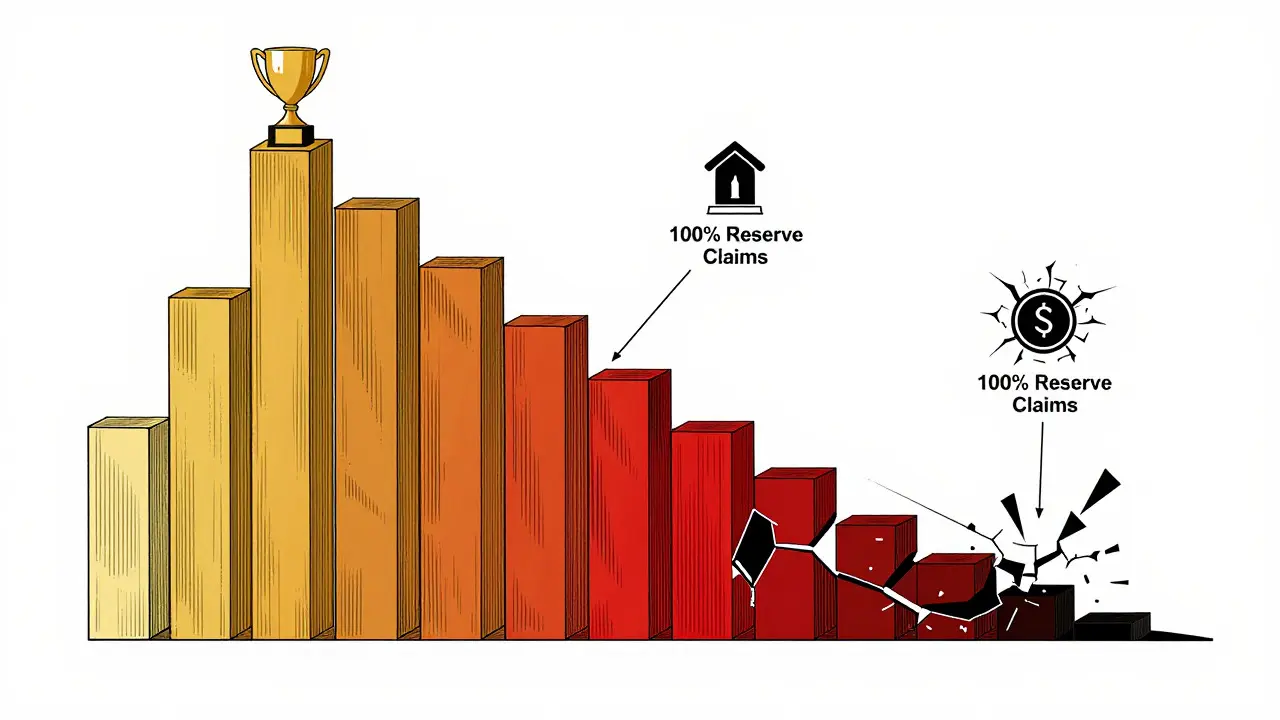
The platform gained significant prestige. It was named a Top 20 Fintech Startup by Forbes and won the Red Dot Award for Brands & Communication Design in 2023. These accolades highlighted a sleek interface and a strong brand identity. However, awards don’t pay bills, nor do they guarantee operational stability. While Kuna excelled in branding and community building-most notably raising over $75 million for Ukraine’s Armed Forces through the 'Aid for Ukraine' Crypto Fund during the war-its underlying infrastructure struggled under pressure.
The core promise of Kuna was trust. They advertised a 100% reserve ratio, claiming every user coin was backed 1:1 in cold storage, unlike traditional banks that keep less than 10% in reserves. This was a powerful selling point for skeptics wary of fractional reserve banking. But as regulatory scrutiny tightened globally and regionally, maintaining that perfect reserve while covering operational costs became increasingly difficult. By 2024, whispers of liquidity issues began to circulate among long-term users.
User Experience: From Smooth Sailing to Support Nightmares
If you joined Kuna in its early years, the experience was relatively smooth. The dashboard offered real-time indicators for buying Bitcoin, Ethereum, and various stablecoins. They supported fiat currency pairs, which was crucial for newcomers in regions where bank transfers to international exchanges were blocked or heavily taxed. At one point, over 30% of trades involved fiat pairs, making it accessible for everyday Ukrainians.
But the story changed dramatically in the platform’s final two years. Let’s talk about the elephant in the room: customer support. Or rather, the lack thereof.
A detailed user review from August 2023 paints a grim picture. Users reported wait times exceeding eight hours just to ask simple questions. Withdrawals, which should take minutes or hours, dragged on for three days or more. There was no phone support line. Instead, users relied on automated bot responses that often failed to address complex issues like failed transactions or account freezes.
- Wait Times: Average response time exceeded 8 hours for basic inquiries.
- Withdrawal Delays: Consistent reports of delays lasting 3+ days.
- Interface Issues: As the platform aged, the UI became cluttered and difficult to navigate without adequate help resources.
- Liquidity Concerns: Smaller altcoin pairs suffered from low liquidity, leading to slippage.
These weren’t isolated incidents. They were systemic failures. When an exchange can’t process withdrawals reliably, trust evaporates. Many users advised others not to waste time and money on the platform long before the official closure notice appeared.
Why Did Kuna Close? Analyzing the Final Days
The official cessation date was March 31, 2025. But the decline started earlier. Several factors converged to make continuation impossible:
- Regulatory Pressure: Global regulations on crypto exchanges tightened significantly between 2023 and 2025. Compliance costs skyrocketed. Regional exchanges like Kuna lacked the legal teams and capital buffers of giants like Binance or Coinbase.
- Operational Costs vs. Revenue: Maintaining a 100% reserve ratio while offering competitive fees is mathematically challenging. Transaction volumes likely dropped as users migrated to platforms with better support and wider token selections.
- Geopolitical Instability: Operating in Eastern Europe during ongoing conflict added layers of complexity. Banking partnerships became harder to maintain, and infrastructure resilience was constantly tested.
- Crowded Market: The rise of decentralized exchanges (DEXs) and global centralized exchanges (CEXs) with Ukrainian language support eroded Kuna’s unique value proposition.
When the website finally displayed the closure notice, it advised users with remaining questions to contact support. But since the platform stopped processing transactions, those contacts were largely administrative. For many, it was too late.
Kuna vs. Modern Alternatives: Where Should You Trade Now?
Since Kuna is gone, you need a reliable alternative. Not all exchanges are created equal, especially if you’re based in Eastern Europe or hold fiat currencies like USD, EUR, or UAH. Here’s how Kuna compared to current top contenders:
| Feature | Kuna (Pre-2025) | Binance | Bybit | Kraken |
|---|---|---|---|---|
| Status | Closed (March 31, 2025) | Active | Active | Active |
| Fiat Support | UAH, USD, EUR | Wide range including UAH via P2P | P2P focus, limited direct fiat | USD, EUR, GBP, CAD |
| Customer Support | Poor (8+ hr waits) | Mixed (Ticket-based) | Good (Live chat available) | Excellent (Verified Pro) |
| Reserve Proof | Claimed 100% | Proof of Reserves (PoR) monthly | Proof of Reserves (PoR) monthly | Proof of Reserves (PoR) regular |
| Best For | N/A (Closed) | High volume traders, wide asset selection | Derivatives, P2P trading | Security-focused investors, fiat on-ramps |
Binance remains the heavyweight champion for users needing local currency pairs. Their Peer-to-Peer (P2P) market allows you to buy Bitcoin using UAH directly from other users, bypassing some banking restrictions. However, their support can be slow, so verify trades carefully.
Bybit has gained traction in Eastern Europe due to aggressive marketing and a robust P2P system. Their interface is cleaner than Kuna’s ever was, and live chat support is actually responsive. If you traded altcoins on Kuna, Bybit offers a similar or broader selection.
Kraken is the gold standard for security and transparency. If your priority is knowing exactly where your money is, Kraken’s regular Proof of Reserves audits provide peace of mind. They support major fiat currencies but may require stricter KYC (Know Your Customer) verification.
What To Do If You Still Have Funds on Kuna
If you missed the withdrawal deadline before March 31, 2025, here is your action plan:
- Check Official Channels: Visit the archived version of Kuna.io’s homepage. Look for any final notices regarding fund distribution or legal claims. Sometimes, exchanges partner with third-party auditors to handle residual balances.
- Contact Support (With Low Expectations): Send a formal email to the last known support address. Include your wallet address, transaction IDs, and a clear statement of your claim. Keep records of all correspondence.
- Monitor Legal Updates: Follow news related to Michael Chobanian and the Blockchain Association of Ukraine. If there is a liquidation process, creditors (users) will need to register claims within a specific window.
- Accept Potential Loss: Hard truth: if the company has dissolved assets to cover debts, individual retail users often rank last in repayment hierarchies. Prepare emotionally and financially for the possibility that these funds are unrecoverable.
Lessons Learned: How to Choose a Safe Exchange in 2026
Kuna’s closure serves as a critical case study. It shows that even respected, award-winning platforms can fail. Here is how to protect yourself moving forward:
1. Verify Proof of Reserves (PoR). Don’t just trust claims. Look for exchanges that publish monthly, independently audited PoR reports. This proves they hold your coins, not just IOUs.
2. Test Withdrawals Early. Before depositing large sums, send a small amount out. If it takes three days for $10, imagine what happens with $10,000 during a crisis.
3. Diversify Platforms. Never keep all your eggs in one basket. Use one exchange for active trading, another for long-term storage, and consider hardware wallets (like Ledger or Trezor) for significant holdings.
4. Check Regulatory Status. Ensure the exchange operates under licenses in reputable jurisdictions. Unregulated entities operate in gray areas that vanish when trouble hits.
5. Read Recent Reviews. Ignore reviews from five years ago. Look for feedback from the last six months. Are users complaining about downtime? Slow support? Those are red flags.
Final Thoughts on the End of an Era
Kuna played a vital role in bringing cryptocurrency to mainstream awareness in Ukraine and Eastern Europe. Its humanitarian efforts during the war deserve recognition. But as a commercial entity, it fell victim to operational inefficiencies, poor customer support scaling, and an unforgiving regulatory landscape.
For traders today, the lesson is clear: loyalty to a brand is dangerous in crypto. Always prioritize accessibility, transparency, and exit strategies. The best exchange is the one that lets you get your money out quickly and easily. With Kuna gone, shift your focus to platforms that prove their solvency daily, not just through marketing awards, but through consistent, reliable performance.
Who founded Kuna exchange?
Michael Chobanian founded Kuna in 2014. He was also the president of the Blockchain Association of Ukraine and played a key role in promoting blockchain technology at the World Economic Forum in Davos.
Did Kuna lose user funds?
While Kuna claimed a 100% reserve ratio, the closure means users who did not withdraw before March 31, 2025, face uncertainty. Without active operations, accessing remaining balances depends on any post-closure liquidation processes initiated by the company’s administrators.
What cryptocurrencies did Kuna support?
At its peak, Kuna supported 24 coins including Bitcoin (BTC), Ethereum (ETH), and various stablecoins. It offered 32 trading pairs, with a significant portion involving fiat currencies like USD and UAH.
Is Kuna Pay still working?
No. Kuna Pay, along with KUNA Tech and the main exchange, ceased operations as part of the broader ecosystem shutdown in March 2025. Businesses relying on Kuna Pay for crypto acquiring services had to migrate to other providers.
Why did Kuna have bad customer support?
In its final years, Kuna struggled to scale its support team to match user demand. Reliance on automated bots and a lack of phone support led to wait times exceeding 8 hours. This was a common symptom of operational strain preceding the eventual closure.