
Implementation Challenges in Blockchain Technology for 2026
Everyone talks about the potential of blockchain, but very few talk about the messy reality of actually building it. You see the hype around decentralized finance and supply chain tracking, yet the projects that fail often stumble on the same few hurdles. We are now in 2026, and while the technology has matured, the gap between theory and deployment remains wide. Understanding these blockchain implementation challenges is the only way to move past the pilot phase and into real-world utility.
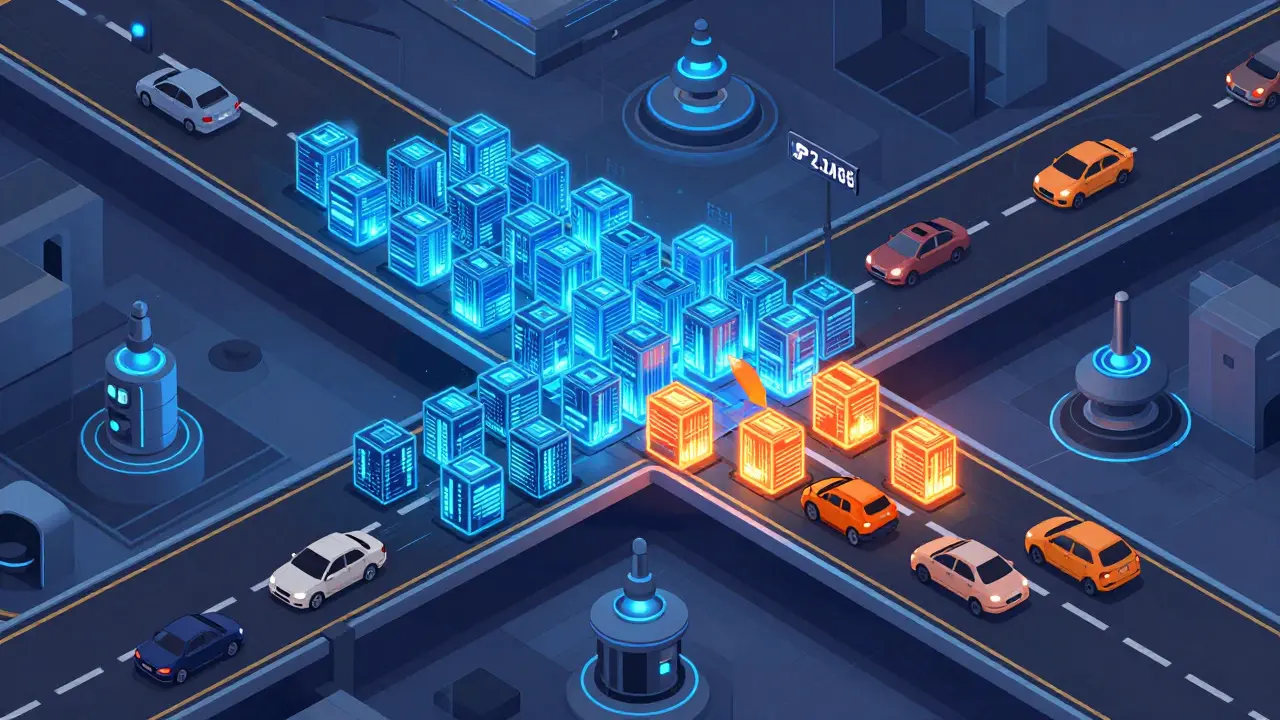
When you start a project, the first wall you hit is usually speed. Public blockchains like Bitcoin were never designed to process thousands of transactions per second. If you try to run a global payment system on the base layer of Bitcoin, you will find it too slow and too expensive. This is the scalability problem. In 2026, we have Layer 2 solutions like Optimistic Rollups and ZK-Rollups that help, but integrating them adds complexity. You have to manage liquidity across chains and ensure finality times don't frustrate users waiting for their funds to clear.
Then there is the issue of talking to other systems. Most businesses operate on legacy databases that do not speak the language of distributed ledgers. This creates an interoperability nightmare. You might build a fantastic supply chain tracker on a specific chain, but if your partner uses a different protocol, you need a bridge. Bridges are notoriously risky. In the last few years, we have seen billions stolen through bridge exploits. Ensuring that your blockchain can communicate securely with external APIs and other chains without creating a single point of failure is a massive engineering task.
Scalability and Network Performance
Scalability is not just about transaction speed; it is about cost and latency. When a network gets congested, gas fees spike. Imagine a user trying to buy a coffee with a digital wallet, only to pay five dollars in network fees. That is not a viable business model. To fix this, developers look at sharding, where the network is split into smaller pieces to process data in parallel. Ethereum has been moving toward this with its roadmap updates.
However, sharding introduces new security risks. If one shard is compromised, does the whole network suffer? You need to balance throughput with decentralization. This is often called the Blockchain Trilemma. You can usually pick two: security, scalability, or decentralization. Most enterprise solutions sacrifice some decentralization to gain speed, which defeats the purpose of using blockchain in the first place. You must decide which trade-off your specific use case can tolerate.
Another factor is storage. A blockchain is a growing ledger. Every transaction ever made is stored forever. As the chain grows, the data required to run a full node increases. This pushes smaller participants out of the network, leading to centralization. If only big corporations can afford the hardware to validate transactions, the network loses its trustless nature. Archiving solutions exist, but they complicate the verification process for new nodes joining the network.
Smart Contract Security Risks
Smart contracts are code that executes automatically when conditions are met. The promise is that code is law, but the reality is that code is written by humans, and humans make mistakes. A single vulnerability in a smart contract can lead to the loss of millions of dollars. We saw this repeatedly with DeFi hacks in previous years. Even in 2026, audit firms are not foolproof. They might miss a subtle logic error that an attacker can exploit.
The immutability of the blockchain means you cannot just push a patch when a bug is found. If a hacker drains a smart contract, the funds are gone forever. This requires a different approach to development. You need to build upgradeability into your contracts, often using proxy patterns. But adding upgradeability introduces a new risk: the centralization of the upgrade authority. If the admin key is stolen, the attacker can change the rules of the contract.
Formal verification is becoming more common, where mathematical proofs are used to ensure the code behaves as intended. This is expensive and time-consuming. For many startups, the cost of a full formal verification audit is prohibitive. They rely on standard audits, which are better than nothing but still leave gaps. You must budget for security from day one, not as an afterthought.
Regulatory and Compliance Hurdles
Regulation is the wild card that can kill a project overnight. In 2026, frameworks like the EU's MiCA regulation are setting standards, but the global landscape remains fragmented. What is legal in one jurisdiction might be banned in another. If you build a decentralized exchange, you might face questions about who is responsible for money laundering. Is it the developers? The node operators? The users?
Privacy laws like GDPR create a conflict with blockchain. GDPR gives users the right to be forgotten. Blockchain is immutable; you cannot delete data once it is written. This creates a legal standoff. You might need to store personal data off-chain and only hash it on-chain. This reduces the transparency benefits of the ledger. You have to navigate these legal grey areas carefully, often requiring legal counsel specialized in crypto law.
Token classification is another headache. Is your utility token a security? If the SEC or a local regulator says yes, you face strict registration requirements. Many projects have had to delist tokens or shut down operations because they failed to classify their tokens correctly. This uncertainty stifles innovation. Investors are wary of funding projects that might be deemed illegal later.
Interoperability and Ecosystem Fragmentation
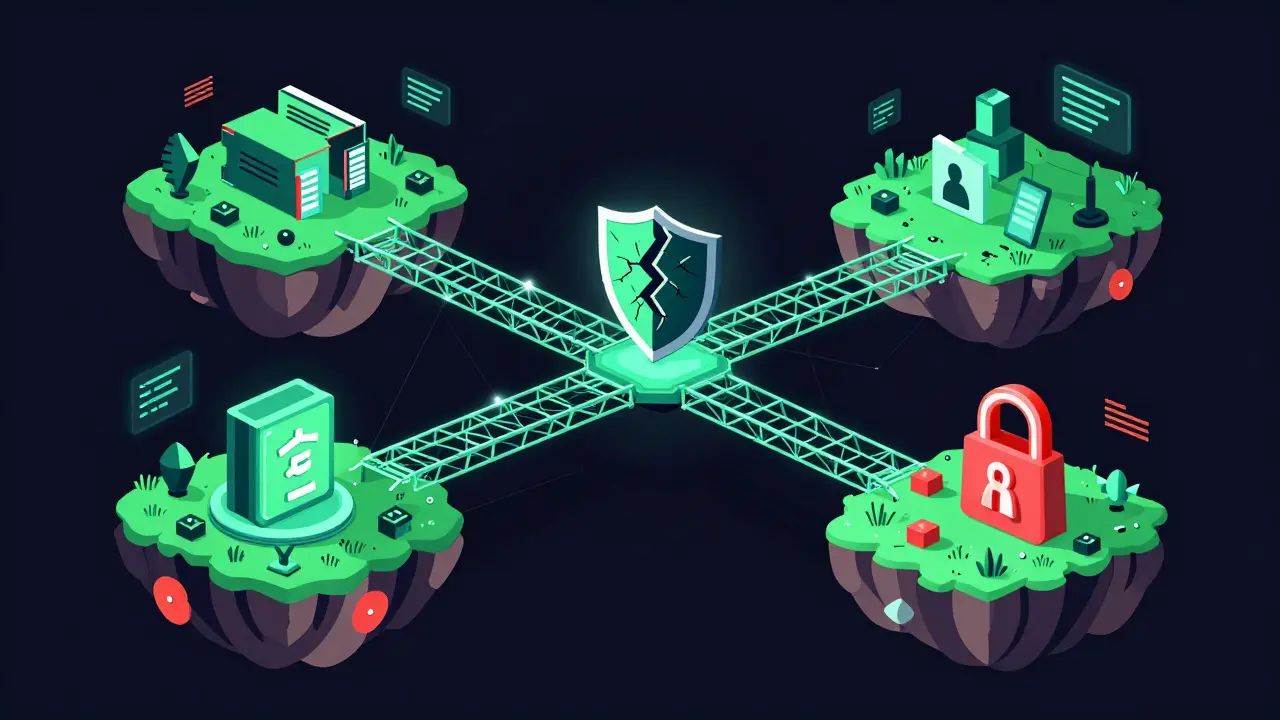
The blockchain world is siloed. Ethereum, Solana, and Cardano all have their own ecosystems. They do not naturally talk to each other. Cross-chain bridges are the current solution, but they are complex. You have to lock assets on one chain and mint wrapped versions on another. This introduces counterparty risk. If the bridge protocol fails, your wrapped assets become worthless.
Protocols like Cosmos and Polkadot aim to solve this with interoperability standards. They allow different chains to communicate through a hub. However, adoption is slow. Developers are hesitant to build on new infrastructure when established chains like Ethereum have more liquidity. This creates a chicken-and-egg problem. You need liquidity to attract users, but you need users to attract liquidity.
APIs also play a role. Traditional web2 APIs are not designed for web3. You need middleware to translate requests. This adds latency and potential points of failure. If the middleware goes down, your dApp stops working. You are essentially building a bridge between two incompatible worlds, and that bridge is fragile.
User Experience and Adoption Barriers
Even if the technology works, users might not use it. The current user experience is clunky. Managing private keys is a security burden that most people are not ready for. If you lose your seed phrase, you lose your funds. There is no customer support to call. This is a massive barrier to mass adoption.
Wallets are improving with social recovery and account abstraction. These features allow users to recover access via trusted contacts or email. But they introduce new trust assumptions. You are trusting the recovery providers. Gas fees are another friction point. Users expect to pay in dollars, not ETH or SOL. You need to implement gasless transactions or meta-transactions, which requires a sponsor to pay the fees. Who pays? The developer? The user via a subscription?
Education is also a challenge. Users need to understand the difference between hot wallets and cold storage. They need to know how to spot phishing sites. The learning curve is steep. Until the interface is as seamless as a standard banking app, blockchain will remain a niche technology for early adopters.

Solutions and Future Outlook
Despite these hurdles, progress is being made. Zero-knowledge proofs are allowing for privacy-preserving transactions that can still be verified. This helps with regulatory compliance while maintaining anonymity. Layer 2 scaling solutions are driving costs down to fractions of a cent per transaction. This makes micro-payments viable for the first time.
Enterprise adoption is shifting toward permissioned blockchains. Companies like Hyperledger Fabric allow for controlled access. This solves the regulatory and privacy issues for business use cases. It sacrifices some decentralization but gains speed and compliance. For many supply chain applications, this is the sweet spot.
Developer tooling is also maturing. Frameworks like Hardhat and Foundry make testing and deployment easier. Automated security scanners can catch common vulnerabilities before code is deployed. This reduces the risk of hacks. As the ecosystem grows, more talent enters the field, raising the overall quality of code.
Ultimately, success depends on solving the specific problem, not just using the technology. Blockchain should be the solution, not the product. If a centralized database works better for your use case, use it. Blockchain is best for scenarios requiring trustless coordination among parties that do not trust each other. Identifying those scenarios is the first step to overcoming implementation challenges.
| Challenge Area | Primary Impact | Current Mitigation |
|---|---|---|
| Scalability | High fees, slow transactions | Layer 2 Rollups, Sharding |
| Security | Smart contract exploits | Audits, Formal Verification |
| Regulation | Legal uncertainty, compliance costs | Off-chain data, KYC/AML tools |
| Interoperability | Siloed assets, bridge risks | Cross-chain protocols, Wrappers |
| User Experience | Key management, gas fees | Account Abstraction, Gas abstraction |
Frequently Asked Questions
What are the biggest technical barriers to blockchain adoption?
The primary technical barriers are scalability, interoperability, and security. Public blockchains struggle to handle high transaction volumes without high fees. Different chains cannot easily communicate, creating silos. Additionally, smart contract vulnerabilities can lead to significant financial losses, making security audits critical.
How do regulatory issues affect blockchain projects?
Regulatory uncertainty can halt development or force shutdowns. Issues include token classification, anti-money laundering (AML) compliance, and data privacy laws like GDPR. Projects must navigate varying laws across jurisdictions, often requiring legal counsel to ensure compliance with local regulations.
Can blockchain be used for private enterprise data?
Yes, permissioned blockchains like Hyperledger Fabric are designed for enterprise use. They allow controlled access to the ledger, ensuring privacy while maintaining immutability. This is ideal for supply chain tracking or internal record-keeping where public transparency is not required.
What is the role of Layer 2 solutions in implementation?
Layer 2 solutions process transactions off the main chain to improve speed and reduce costs. They settle finality on the main blockchain, inheriting its security. Examples include Optimistic and ZK-Rollups, which are essential for scaling applications like DeFi and gaming.
How can smart contract risks be minimized?
Risks can be minimized through rigorous code audits, formal verification, and bug bounty programs. Using established libraries and avoiding complex logic where possible also helps. Implementing upgradeability patterns allows for fixes, though this introduces centralization risks that must be managed carefully.
Building on blockchain is not for the faint of heart. It requires a deep understanding of cryptography, economics, and law. But as the technology stabilizes, the rewards for solving these implementation challenges are significant. The future of decentralized systems depends on us getting the infrastructure right today.
19 Comments
It is great to see the focus shifting toward actual deployment hurdles instead of just the hype cycle. We need more practical discussions on how to handle the latency issues in real time. The storage requirements for full nodes are definitely going to centralize things if we do not address them soon. I hope more developers look into the archiving solutions mentioned in the text. It is crucial for the network to remain trustless for everyone to participate.
its all a scam anyway america should just use its own money not this crypto stuff. they want to control us with these chains and bridges. i dont trust any of this tech and its just for rich people to hide cash. the gov will ban it soon enough and then where will we be. just stick to the dollar and dont get scammed by this nonsense.
you say scam but the tech is real and the problem is the greed not the code itself. we need to look at the infrastructure not just the currency aspect. bridges are risky yes but without them we are stuck in silos forever. the security risks are high but so is the potential for freedom. we must push forward even if the path is rocky and full of traps.
lol only people who dont understand economics try this 🤦♂️. the fees alone make it useless for anything other than speculation. real businesses need speed and certainty not this probabilistic finality mess. i guess the enthusiasts enjoy the gamble but its not serious tech. 🙄
Layer 2 solutions like Optimistic Rollups actually mitigate the throughput issues significantly for high frequency trading. We are seeing a shift where the base layer handles settlement while execution moves off chain. This separation of concerns is vital for enterprise grade applications requiring low latency. Gas abstraction is also key to hiding the complexity from end users during transactions. We need to focus on the UX layer to make these backend improvements visible to the consumer.
it is all just too hard to use for normal people. why would i want to manage keys when i can just use a bank app. the tech is cool but the user experience is terrible. i think most projects will fail because nobody wants the hassle.
i think its gonna be realy big soon we just need to fix the typos in the code lol. the future is bright and we should all learn how to use wallets. account abstraction is going to make it so much easier for everyone to join in. we just need to be patient and keep building the tools. its exciting to see all the progress happening every day.
The scalability trilemma remains a fundamental constraint that developers must navigate carefully when architecting new systems. We see that throughput improvements often come at the cost of decentralization or security guarantees in the current landscape. Sharding introduces partitioning risks that can compromise the integrity of the global state if not managed correctly. Layer 2 rollups provide a temporary fix but they rely heavily on the security of the underlying settlement layer. Gas fees fluctuate wildly based on network congestion which creates unpredictability for consumer facing applications. Account abstraction is a promising avenue to abstract away the complexity of gas management for users. However implementing meta transactions requires a sponsor which introduces a new trust assumption into the protocol. Interoperability protocols like cross chain bridges are currently the weakest link in the security chain. We have seen billions drained from bridge contracts due to smart contract vulnerabilities and logic errors. Formal verification is becoming standard but it is still too expensive for many early stage startups to afford. The regulatory environment adds another layer of complexity that cannot be ignored during the design phase. GDPR compliance requires off chain storage for personal data which reduces the transparency benefits of the ledger. Token classification issues can lead to delisting and legal action from securities regulators. We must balance innovation with compliance to ensure long term viability of these projects. Enterprise adoption is moving towards permissioned ledgers where access is controlled and privacy is maintained. This shift sacrifices some decentralization but gains speed and regulatory acceptance for business use cases. Ultimately the technology must solve a specific problem better than a centralized database to justify the overhead. The ecosystem is maturing but there is still a long way to go before mass adoption occurs. We need better developer tooling to reduce the risk of deployment errors and security exploits. The future depends on solving these implementation challenges systematically rather than hoping for a magic solution.
Regulatory frameworks like MiCA are setting important precedents for how decentralized networks will operate in the future. Compliance is not optional if we want institutional participation in the ecosystem. We must ensure that privacy laws are respected while maintaining the integrity of the ledger. Legal counsel is essential for any project planning to operate across multiple jurisdictions. The industry needs to self regulate to avoid heavy handed government intervention.
Oh how delightful that you think regulations will save us from the inevitable collapse of this experiment. The irony of trying to apply central laws to decentralized code is truly something to behold. I suppose the lawyers will get paid handsomely while the technology stagnates under compliance burdens. One can only hope the bureaucracy does not stifle the innovation completely. It is a fascinating dance of control versus freedom that plays out in the courts.
Just watching the space and seeing how the bridges evolve is pretty interesting stuff. I think the interoperability problem will solve itself as the big chains merge or standardize. For now it feels like a mess but that is how new tech always starts. Chill and let the devs figure it out.
The storage issue is definitely the biggest bottleneck for node runners.
Storage bloat is indeed a critical factor that threatens the decentralization of the network over time. As the chain grows the hardware requirements for running a full node increase significantly. This creates a barrier to entry that favors large corporations with deep pockets over individual validators. Archiving solutions exist but they complicate the verification process for new nodes joining the network. We need state pruning techniques that allow nodes to discard old data without losing security guarantees. Light clients can help but they rely on full nodes to provide the necessary data proofs. If the number of full nodes drops the network becomes more susceptible to censorship and attacks. The trade off between historical data availability and resource constraints is difficult to balance. Some projects are experimenting with data availability sampling to reduce the storage burden on validators. This approach requires a robust network of nodes to ensure data can be reconstructed if needed. The economic incentives must align to keep nodes online and storing the required data. If the cost of storage exceeds the rewards validators will simply leave the network. This could lead to a centralization event where only a few entities control the history. We must design protocols that encourage participation from a wide range of participants globally. The goal is to maintain a trustless system where no single party can manipulate the ledger. Storage solutions will be a key differentiator for blockchains aiming for mass adoption in the future. Developers need to prioritize this aspect during the initial design phase to avoid issues later. Ignoring the storage problem will lead to a fragile network that cannot sustain long term growth. We have to find a way to make the ledger efficient without compromising the security model. The technology is promising but the engineering challenges are substantial and require careful planning.
The emotional toll of losing funds due to a key loss is something that really resonates with me. It is a terrifying prospect that keeps many people away from the technology. We need to build systems that are forgiving of human error without compromising security. The current model puts too much burden on the user to be perfect. It is heartbreaking to see people lose life savings because of a simple mistake.
Social recovery and account abstraction are the only viable paths forward for mainstream adoption. We cannot expect grandma to manage a seed phrase like a security professional. The industry is moving towards multi sig recovery options that allow trusted contacts to help restore access. This reduces the risk of permanent loss while maintaining a decent level of security. It is a necessary evolution for the technology to become useful for everyone. We need to prioritize the human element in our security designs.
I really appreciate the detailed breakdown of the challenges we face in this space. It is good to have a realistic view instead of just the hype. We all need to work together to solve these problems for the good of the community. The future looks bright if we can overcome these hurdles. Let us keep supporting each other as we build.
You are all missing the point that blockchain is just a solution looking for a problem. Most of these use cases can be handled by a simple SQL database with better performance. The decentralization aspect is a luxury that most businesses cannot afford. I bet the majority of these projects will fail within the next two years. Stop wasting time on this fantasy and build something that actually works.
They are watching us every time we make a transaction on these chains. The government wants to track every penny we spend using this tech. It is all a surveillance tool disguised as financial freedom. Do not trust the developers they are working for the deep state. We need to go back to cash and stay off the grid completely.
Oh please tell me you are not still falling for the cash is king narrative in 2026. You sound like a paranoid old timer who missed the boat on the internet. The surveillance argument is tired and ignores the privacy features built into modern protocols. I am sure you will be the first to complain when you cannot buy a coffee with your physical bills. It is truly sad to see such resistance to progress in the comments.