
How to Track Smart Contract Interactions on Blockchain: A Complete Guide
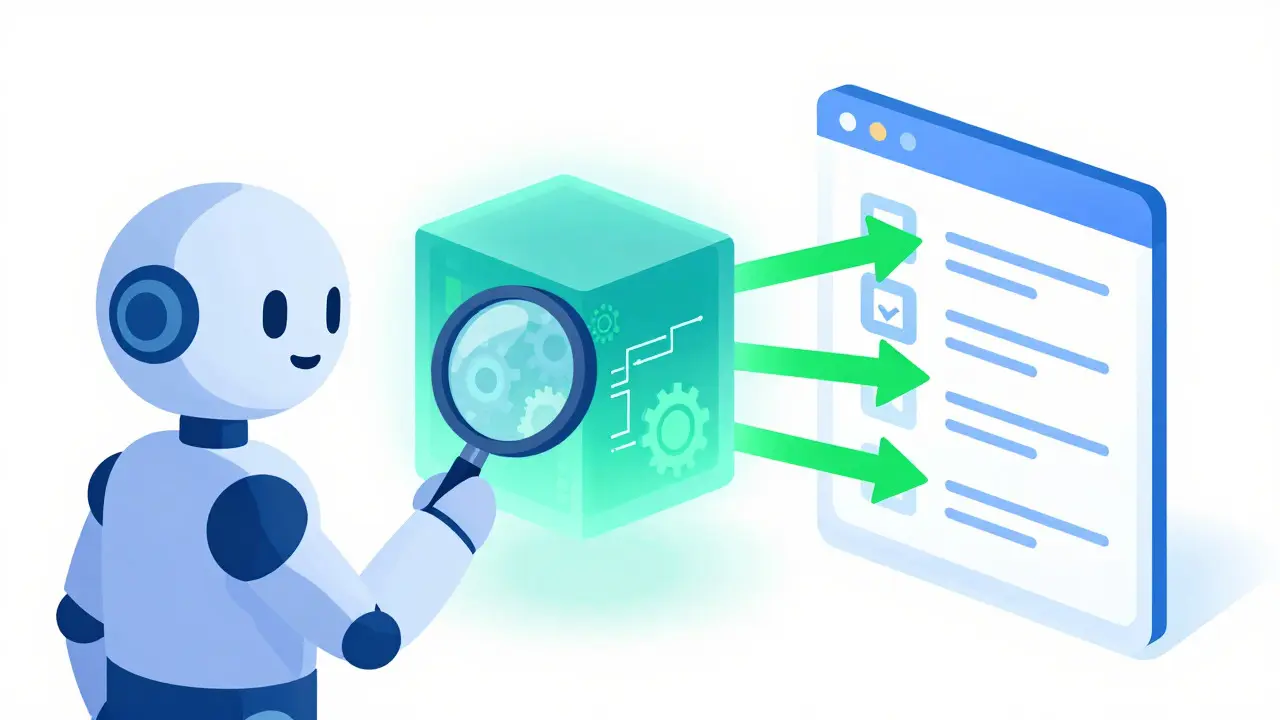
Imagine signing a legal contract where every handshake, every exchanged document, and every whispered clause is recorded in stone, visible to everyone forever. That is the promise of smart contract interaction tracking, a mechanism that logs every action taken within decentralized applications. But here is the catch: while the data is there, finding it without the right tools is like looking for a specific grain of sand on a beach. For developers, auditors, and even curious investors, understanding how these interactions are tracked is not just a technical nicety-it is the backbone of trust in the Web3 ecosystem.
When you interact with a decentralized exchange, mint an NFT, or lock funds in a lending protocol, you are triggering code. That code executes, changes state, and emits signals. Tracking these interactions means capturing those signals, decoding them, and building a coherent narrative of what happened on-chain. Without this visibility, smart contracts are black boxes. With it, they become transparent ledgers of truth. Let’s break down exactly how this works, why it matters, and how you can use it to protect your assets and optimize your applications.
The Mechanics of On-Chain Visibility
To track interactions, you first need to understand what is being tracked. Smart contracts operate on simple logic: if condition X is met, then execute action Y. When this happens, two things occur simultaneously. First, the state of the contract changes-perhaps a balance updates or an ownership record shifts. Second, the contract emits events. These events are essentially log statements written into the blockchain’s history.
In networks like Ethereum, these events are created using LOG opcodes. Specifically, LOG0 through LOG4 allow contracts to write indexed topics and data payloads to the transaction receipt. Think of topics as tags in an email system. They make searching fast and cheap. The data payload contains the actual details, like the amount transferred or the address involved. This structure is crucial because reading from the blockchain storage directly is expensive in terms of gas fees. Reading from event logs is significantly cheaper and faster.
Every action is permanently recorded. This creates an immutable audit trail. If a user sends tokens, the transaction hash, the sender’s address, the receiver’s address, and the timestamp are all etched into the block. You cannot delete this. You cannot edit it. This immutability is what gives smart contracts their power, but it also places a heavy burden on those who need to interpret this raw data.
Why Interaction Tracking Matters Beyond Debugging
Developers often think of tracking as a tool for fixing bugs. While true, its value extends far deeper into security, compliance, and business intelligence. In the world of Decentralized Finance (DeFi), money moves at lightning speed. A single exploit can drain millions in seconds. Comprehensive interaction tracking allows security firms to detect anomalies in real-time.
Consider a reentrancy attack. This is a classic vulnerability where a malicious contract calls back into a vulnerable function before the first execution finishes. By tracking the sequence of function calls and state changes, monitoring systems can spot the unusual pattern-a withdrawal followed immediately by another call-and alert users or pause the contract. Similarly, front-running and sandwich attacks, where bots manipulate prices by seeing pending transactions, leave distinct footprints in the mempool and subsequent blocks. Tracking these patterns helps identify bad actors.
For businesses, especially in supply chain management, tracking proves authenticity. If a pharmaceutical company uses smart contracts to track drug shipments, each handoff from manufacturer to distributor to pharmacy is logged. If a dispute arises, the blockchain provides indisputable evidence of where the product was and when. This level of transparency reduces friction and builds trust between parties who may never meet face-to-face.
Tools and Platforms for Monitoring
You don’t have to build your own node to track these interactions. Several layers of tools exist to help you parse this data. At the most basic level, you have blockchain explorers. Etherscan, BscScan, and Polygonscan are the go-to interfaces for viewing transaction histories. They decode event logs automatically, showing you human-readable data instead of raw hexadecimal strings. If you click on a transaction, you can see the "Decoded Input Data" and the "Event Logs." This is sufficient for manual investigation of a few transactions.
However, for continuous monitoring or large-scale analysis, you need more robust solutions. Platforms like Chainlens offer SaaS and on-premises analytics that provide deeper insights. They can visualize complex interaction flows, helping you understand how one contract calls another. These tools often include features for gas optimization, showing you which functions are costing too much and suggesting improvements.
For enterprise-grade environments, particularly those using private blockchains like Hyperledger Fabric, the approach differs. Instead of public event logs, Fabric uses endorsement policies and channel-based architectures to track interactions. Here, tracking is tied to permissioned access, ensuring that sensitive business data remains confidential while still maintaining an audit trail for authorized participants.
| Tool Type | Best For | Key Features | Limitations |
|---|---|---|---|
| Blockchain Explorers (e.g., Etherscan) | Manual lookup, quick verification | Free, easy to use, decoded logs | No real-time alerts, limited historical depth |
| Analytics Platforms (e.g., Chainlens) | Deep analysis, pattern recognition | Visualization, gas insights, API access | Costly for high volume, requires setup |
| Custom Node Indexers | High-frequency trading, custom apps | Full control, low latency, tailored queries | High maintenance, requires engineering resources |
Challenges in Scaling and Privacy
Tracking everything sounds great until you realize how much data we are talking about. High-volume networks like Ethereum generate terabytes of interaction data daily. Storing and querying this efficiently is a massive challenge. If you run your own indexer, you need significant storage and compute power. If you rely on third-party APIs, you risk rate limits and downtime.
Then there is the issue of privacy. Public blockchains are transparent by design. If your smart contract tracks employee salaries or proprietary trade secrets, anyone can read those event logs. This creates a tension between accountability and confidentiality. Some projects turn to zero-knowledge proofs (ZKPs) to solve this. ZKPs allow you to prove that a transaction occurred correctly without revealing the underlying data. However, implementing ZKP-based tracking adds complexity and computational overhead.
Gas costs also play a role. Every event emitted consumes gas. If a developer over-indexes-creating too many topics or logging excessive data-they increase the cost for users interacting with the contract. Finding the balance between detailed tracking and cost efficiency is a constant optimization task.

Future Trends: AI and Cross-Chain Tracking
The landscape is evolving rapidly. We are seeing the integration of artificial intelligence into tracking platforms. AI models can analyze vast amounts of historical interaction data to predict future behaviors or detect subtle anomalies that rule-based systems might miss. Imagine a system that learns your typical spending pattern on-chain and flags a transaction that deviates slightly from the norm, potentially catching a phishing attempt before funds are lost.
Cross-chain interaction is another frontier. As bridges connect different blockchains, tracking a single asset’s journey becomes complicated. A token might start on Ethereum, move to Polygon via a bridge, and end up on Arbitrum. Each step involves different contracts and different log formats. Future tracking solutions will need to unify these disparate sources into a single view, providing seamless visibility across ecosystems.
Finally, regulatory pressure is pushing for better tracking capabilities. Governments want to ensure that blockchain activity complies with anti-money laundering (AML) laws. This drives demand for tools that can link on-chain addresses to real-world identities (where permitted) and monitor for suspicious flows. Compliance-focused tracking will likely become a standard feature in enterprise blockchain solutions.
Practical Steps for Developers
If you are building smart contracts, start thinking about tracking from day one. Define clear event structures. Use indexed parameters wisely-index the fields you will search by, like user addresses or token IDs. Document your events so others can easily decode them. Test your tracking logic thoroughly. Simulate various scenarios, including edge cases and potential attacks, to ensure your logs capture enough detail to reconstruct events accurately.
Use existing libraries and standards. Solidity has built-in support for events. Leverage it. Don’t reinvent the wheel. Also, consider using off-chain indexing services like The Graph for querying your data efficiently. This keeps your on-chain footprint light while still allowing rich data retrieval.
Remember, tracking is not just for debugging. It is for trust. Your users need to know that the system works as advertised. Transparent, well-documented interaction tracking builds that trust. It turns opaque code into a verifiable service.
What is the difference between transaction logs and state changes?
Transaction logs are the event emissions created by smart contracts during execution. They are stored in the transaction receipt and are optimized for searching and indexing. State changes refer to the actual updates made to the contract's storage variables, such as changing a balance or updating an owner address. While state changes reflect the current reality of the contract, logs provide the historical record of how that state was reached.
Can smart contract interactions be completely private?
On public blockchains like Ethereum, no. All transactions and event logs are visible to anyone. However, privacy can be enhanced using techniques like zero-knowledge proofs, which allow verification of data without revealing the data itself. Private or permissioned blockchains, such as Hyperledger Fabric, offer inherent privacy by restricting access to the ledger to authorized participants only.
How do I track cross-chain interactions?
Cross-chain tracking requires monitoring multiple blockchain networks simultaneously. You typically need to set up indexers or use specialized analytics platforms that support multi-chain data aggregation. These tools track the bridge contracts involved in transferring assets between chains, correlating the exit events on one chain with the entry events on another to create a unified transaction history.
Why are indexed topics important in event logs?
Indexed topics allow for efficient filtering and searching of event logs. In Ethereum, up to four topics can be indexed. When you query the blockchain, you can specify these topics to quickly find relevant events without scanning every single log. This makes tracking specific actions, like transfers to a particular address, much faster and cheaper than parsing unindexed data payloads.
What are the security risks of poor interaction tracking?
Poor tracking can lead to undetected exploits, such as reentrancy attacks or unauthorized state changes. If events are not emitted correctly or are missing critical data, auditors and users cannot verify that the contract behaved as expected. This lack of transparency increases the risk of fraud and makes it difficult to diagnose issues after they occur, potentially leading to significant financial losses.