
How to Read Crypto Trading Pair Notation: A Complete Guide for Beginners
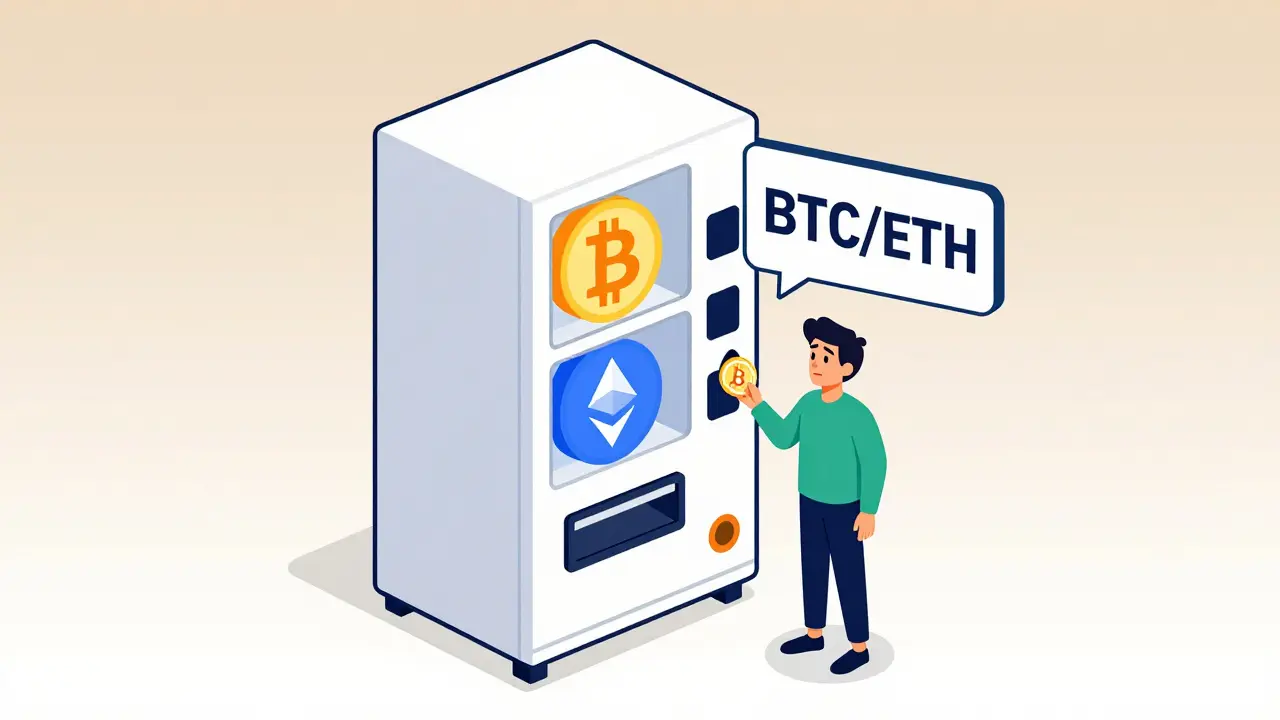
Imagine you’re standing in front of a vending machine. You want a soda, and the price tag says $2.50. You know exactly what’s happening: you give up dollars (the quote) to get the soda (the base). Now, swap that soda for Bitcoin and those dollars for Ethereum. Suddenly, the screen flashes BTC/ETH. If you don’t know how to read that slash, you might accidentally sell your Bitcoin when you meant to buy it. That mistake costs real money.
Cryptocurrency trading pair notation is the language of every exchange, from Binance to Coinbase. It tells you which asset you are buying, which one you are selling, and what the price actually means. Without this knowledge, you are guessing. With it, you take control. This guide breaks down the simple math behind the symbols so you can trade with confidence.
The Anatomy of a Trading Pair
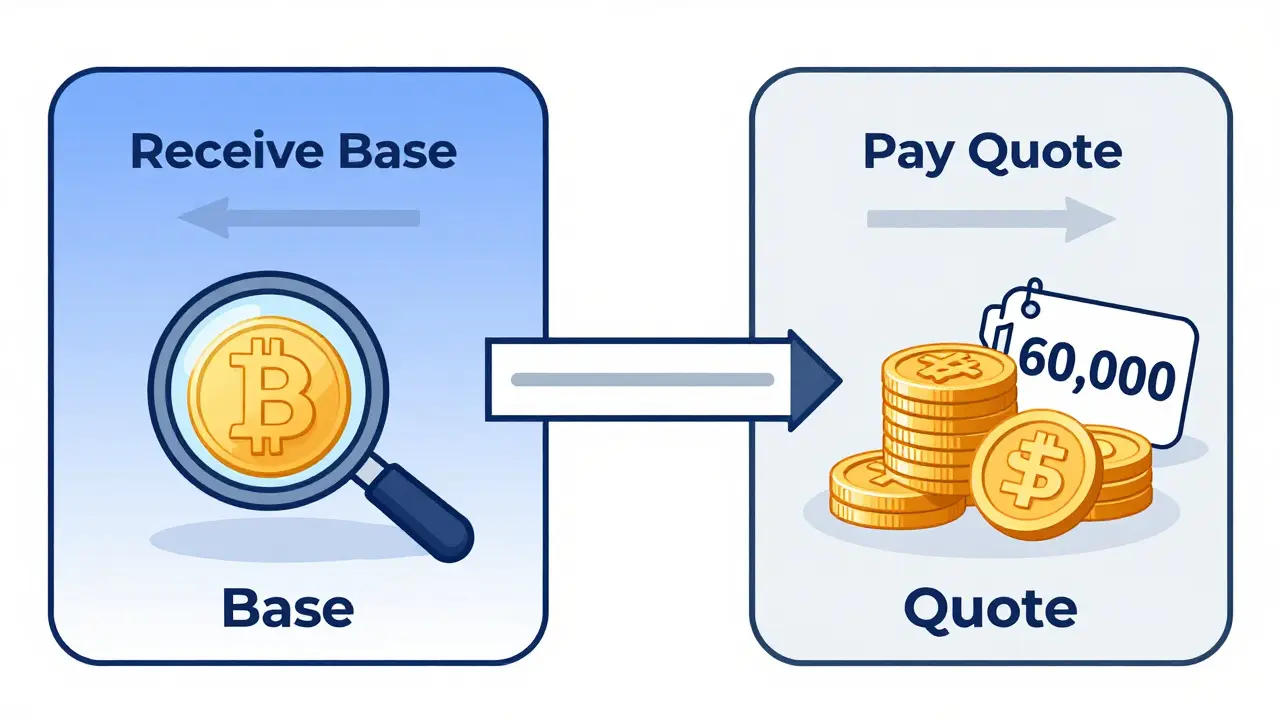
Every trading pair follows a strict format: Base Currency / Quote Currency. The slash acts like the word "per." Think of it as a fraction in a math class. The first symbol is the Base Currency. The second symbol is the Quote Currency.
- Base Currency: This is the asset you are interested in buying or selling. It is the primary subject of the trade.
- Quote Currency: This is the asset you use to pay for the base currency. It represents the value or price.
Let’s look at BTC/USDT. Here, Bitcoin (BTC) is the base. Tether (USDT) is the quote. The price displayed next to this pair tells you how many USDT tokens you need to spend to buy one Bitcoin. If the price is 60,000, it means 1 BTC = 60,000 USDT. You are not buying USDT; you are using USDT to buy BTC.
This structure stays consistent across almost all centralized exchanges. Whether you are on Kraken, Gemini, or Coinbase, the rule remains the same. The left side is what you get. The right side is what you pay.
Common Types of Trading Pairs
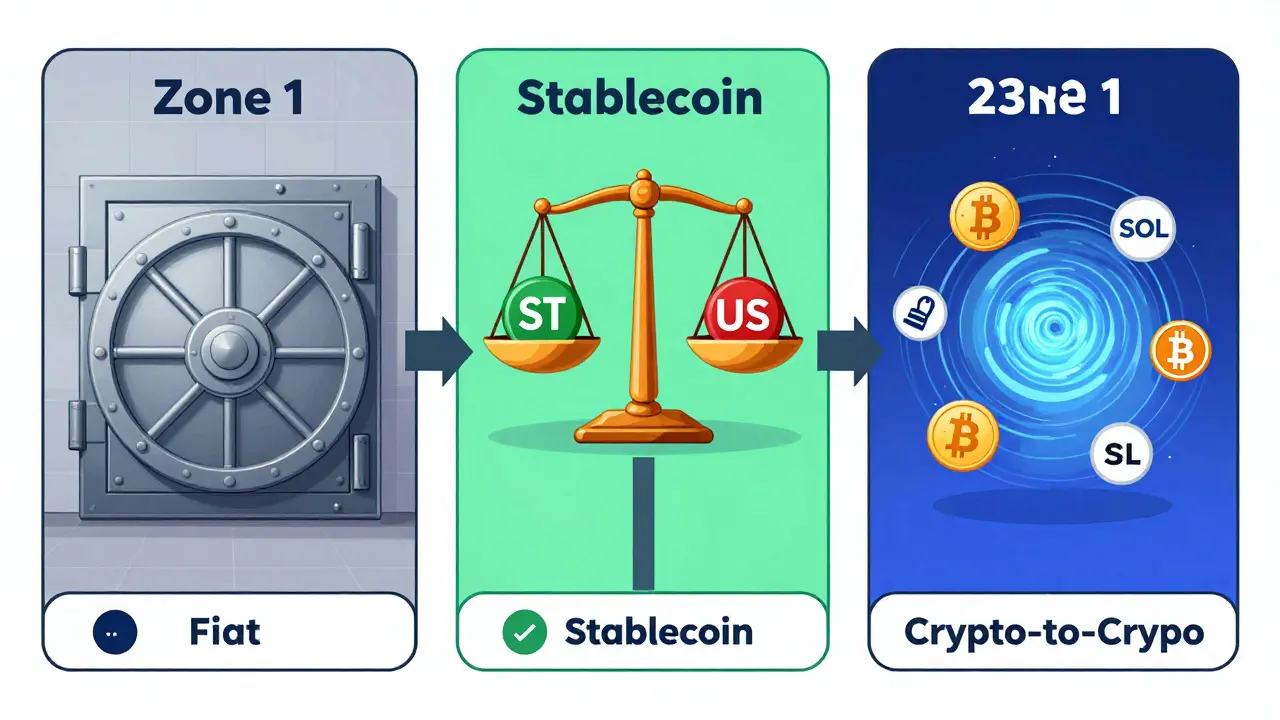
Not all pairs are created equal. They fall into three main categories based on liquidity and stability. Understanding these helps you choose where to place your trades.
| Pair Type | Example | Best For | Risk Level |
|---|---|---|---|
| Fiat Pairs | BTC/USD | New investors depositing cash | Low |
| Stablecoin Pairs | ETH/USDC | Daily trading, preserving value | Medium |
| Crypto-to-Crypto | SOL/BTC | Advanced traders, arbitrage | High |
Fiat Pairs involve traditional money like USD, EUR, or GBP. These are the easiest to understand because the quote currency is stable. When you see BTC/USD, you know exactly how much your local currency buys. However, not all exchanges offer fiat pairs due to regulatory hurdles.
Stablecoin Pairs dominate the market today. Stablecoins like USDT (Tether) and USDC (USD Coin) peg their value to the US dollar. Traders love them because they provide liquidity without the volatility of other cryptos. As of 2024, over 60% of global crypto volume happens in stablecoin pairs. They act as a safe harbor during market crashes.
Crypto-to-Crypto Pairs are for those who already hold digital assets. If you own Bitcoin but want Ethereum, you trade BTC/ETH. You don’t need to touch dollars. This saves time and avoids withdrawal fees. But beware: if both assets drop in value against the dollar, you might lose purchasing power even if the pair ratio looks favorable.
Decoding Price and Volume
Reading the pair is only half the battle. You must also interpret the numbers next to it. The price is always quoted in the quote currency. In ETH/USDT, the price shows how much USDT one Ether costs. If the price moves up, the base currency (ETH) is gaining value relative to the quote (USDT).
Volume tells you how much of that pair was traded in the last 24 hours. High volume means high liquidity. Why does this matter? Because low-volume pairs suffer from slippage. Imagine trying to buy a rare collectible card in a small town shop. There might be only one seller, and they can charge whatever they want. In crypto, if you try to buy a large amount of a low-volume altcoin pair, your order might push the price up significantly before it fills. You end up paying more than expected.
Stick to major pairs like BTC/USDT or ETH/USDC if you are new. They have deep order books, meaning you can enter and exit positions quickly without moving the market against yourself.
The Hidden Trap: Cross-Exchange Confusion
Here is where many beginners stumble. Different exchanges sometimes present data differently. While the notation BASE/QUOTE is standard, the user interface might label things confusingly.
For example, some platforms display "Price" as the value of the base currency, while others might show "Inverse Price" for advanced charting tools. Always double-check the tooltip or hover text. Ask yourself: "Am I seeing how much Quote I pay for one Base, or how much Base I get for one Quote?"
Another issue arises with ticker symbols. Bitcoin is usually BTC, but on older systems like Kraken, it was XBT. Ethereum is ETH. Ripple is XRP. Some tokens have similar names but different symbols. Always verify the contract address or official name before trading an obscure pair. Mistaking a scam token for a legitimate one because of a similar ticker is a common error.
Practical Steps to Master Notation
You don’t need a finance degree to master this. Follow these steps to build muscle memory:
- Start with Fiat: Open an account on a regulated exchange. Deposit USD or EUR. Trade BTC/USD. It mirrors everyday shopping logic.
- Move to Stablecoins: Once comfortable, withdraw your fiat to USDC or USDT. Trade ETH/USDC. Notice how the price movements are identical to ETH/USD, just denominated in tokens.
- Try One Crypto Pair: Pick a major altcoin like Solana (SOL). Trade SOL/BTC. Watch how the price reacts when Bitcoin moves. If BTC drops, SOL/BTC might rise even if SOL’s dollar value falls.
- Use Paper Trading: Many platforms offer demo accounts. Practice reading pairs without risking capital. Set alerts for specific pairs to observe their behavior over weeks.
Experts suggest spending at least 15-20 hours actively reviewing charts and executing small test orders to fully internalize the concept. Don’t rush. The goal is accuracy, not speed.
Future Trends in Pair Notation
The industry is evolving. Regulatory frameworks like MiCA in Europe are pushing for standardized displays to reduce errors. Experiments with "dual notation"-showing both BASE/QUOTE and QUOTE/BASE simultaneously-are reducing beginner mistakes by nearly 30% in pilot programs.
Additionally, cross-chain trading introduces complex notations like BTC.BTC/ETH.USDC, indicating assets on different blockchains. While this adds depth, it also increases cognitive load. For now, stick to single-chain pairs until you are confident in your understanding.
What does the slash mean in a crypto trading pair?
The slash separates the Base Currency from the Quote Currency. It functions like the word "per." In BTC/USDT, it reads as "Bitcoin per Tether," meaning the price shows how many Tether tokens you need to buy one Bitcoin.
Which currency do I receive when I click 'Buy'?
When you click 'Buy' on a pair like ETH/USDC, you receive the Base Currency (Ethereum). You pay using the Quote Currency (USDC). Always check the first symbol in the pair to know what you are acquiring.
Why are stablecoin pairs more popular than fiat pairs?
Stablecoin pairs like BTC/USDT offer faster settlement times and 24/7 availability compared to bank transfers required for fiat pairs. They also avoid currency conversion fees and regulatory delays associated with traditional banking systems.
Is it risky to trade crypto-to-crypto pairs?
Yes, they carry higher risk. Both assets can fluctuate independently. If you hold BTC/ETH and Bitcoin crashes harder than Ethereum, your position value in dollar terms may drop significantly even if the pair ratio improves. Always monitor the underlying asset values.
How do I avoid slippage when trading?
Trade high-volume pairs with deep liquidity. Avoid placing large market orders on low-volume altcoins. Use limit orders instead of market orders to set a maximum price you are willing to pay, ensuring you don't pay more than expected during volatile moments.