
How EU MiCA Regulations are Changing the Cyprus Crypto Sector

The wild west era of digital assets in the Mediterranean is officially over. For years, Cyprus was known as a flexible hub for fintech and blockchain, but the full rollout of the Markets in Crypto-Assets (MiCA) is the European Union's comprehensive regulatory framework designed to harmonize crypto-asset rules across all member states has completely rewritten the playbook. If you're running a crypto business in Limassol or Nicosia, the days of "making it up as you go" are gone. Now, it's about strict licenses, heavy documentation, and institutional-grade governance.
The New Power Dynamics: Who's in Charge?
Under the MiCA regime, the regulatory landscape in Cyprus is split between two main powerhouses. The Cyprus Securities and Exchange Commission the national competent authority responsible for authorizing and supervising Crypto-Asset Service Providers (CASPs) in Cyprus (CySEC) handles the bulk of the work. They are the ones you deal with if you're an exchange or a custodian. On the other hand, the Central Bank of Cyprus the monetary authority overseeing the issuance and regulation of Electronic Money Tokens (EMTs) (CBC) focuses specifically on Electronic Money Tokens. This clear division prevents the regulatory overlap that used to plague the industry, but it also means firms must be very clear about which category their tokens fall into.
What Does it Take to Get a CASP License?
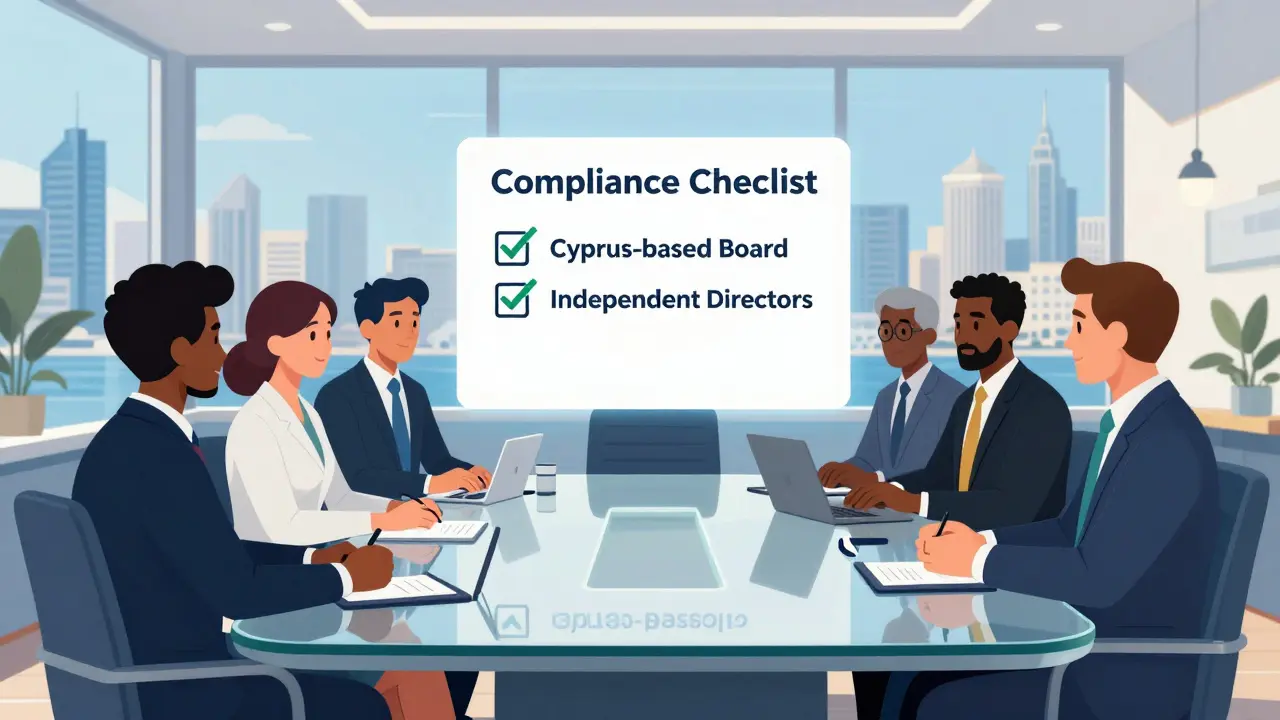
Getting authorized as a Crypto-Asset Service Provider a legal entity that provides crypto services such as exchange, execution, custody, or portfolio management (CASP) isn't just a paperwork exercise; it's a fundamental business overhaul. You can't just have a "letterbox company" anymore. To get the green light from CySEC, your business must be legally established in Cyprus with a real management structure. We're talking about a board where the majority of members are actually based on the island and actively making decisions.
Furthermore, there's a strict governance rule: at least half of your board must consist of independent non-executive directors. This is designed to stop founders from having total, unchecked control and to ensure there's a level of professional oversight that mirrors traditional banking. If you're still operating under old national rules, you have a deadline of July 1, 2026, to get your full MiCA authorization. This 18-month transition period is a lifeline, but the clock is ticking.
| Requirement | Specific Value / Condition | Purpose |
|---|---|---|
| Management Location | Majority of board members must be Cyprus-based | Ensure effective local supervision |
| Board Composition | >= 50% Independent Non-Executive Directors | Robust corporate governance |
| Documentation | Program of operations & prudential safeguards | Operational viability check |
| Deadline for Existing Firms | July 1, 2026 | Full regulatory transition |
The "Travel Rule" and the End of Anonymity
One of the biggest headaches for Cyprus crypto firms in 2025 and 2026 has been the integration of the Transfer of Funds Regulation a set of EU rules requiring the identification of senders and receivers for crypto-asset transfers, often called the Travel Rule (TFR). In simple terms, every time a user sends crypto, the CASP must attach the sender's and receiver's identity information. This isn't just for exchange-to-exchange transfers; it also applies to self-hosted wallets if the transaction exceeds EUR 1,000.
This has forced companies to ditch simple spreadsheets and invest in expensive, automated transaction monitoring tools. You can't just wave through a transaction anymore; you have to verify who is on the other end. This makes CASPs "obliged entities" under the EU's broader Anti-Money Laundering framework, meaning they now perform rigorous Customer Due Diligence (CDD) and Enhanced Due Diligence (EDD) for users from high-risk countries.
Is Cyprus Still a "Crypto Haven"?
You might wonder if these strict rules have killed the vibe in Cyprus. Actually, the opposite is happening. While some small players who couldn't afford the compliance costs have folded or merged, the ones that remain are much stronger. This market consolidation is creating a more professional ecosystem. Investors are more likely to trust a firm that has a CySEC-approved governance structure than a random startup with no oversight.
Cyprus is playing a smart game by blending strictness with innovation. The CySEC Innovation Hub and its Regulatory Sandbox a controlled environment where fintech firms can test innovative products under regulatory supervision allow companies to trial new business models without the immediate fear of a massive fine. This is a huge advantage compared to more rigid jurisdictions in Northern Europe. Even the Central Bank of Cyprus, which was historically skeptical, has launched its own Innovation Hub to engage with digital finance.

New Opportunities: Tokenization and Institutional Custody
The clarity provided by MiCA is opening doors that were previously closed. We're seeing a surge in Tokenization the process of converting real-world assets, such as fund units or real estate, into digital tokens on a blockchain . Imagine issuing fund units as digital tokens; it increases liquidity and makes the whole process of buying and selling shares in a fund much faster. Because the rules are now clear, traditional custodians-big banks and established financial firms-are finally entering the Cyprus crypto market.
This influx of traditional capital is pushing local asset servicers to level up. Fund administrators are no longer just doing basic bookkeeping; they are now handling complex digital asset valuations and integrating compliance for new, tokenized asset classes. The focus has shifted from "how do we avoid the law" to "how do we use the law to scale our business."
Common Compliance Pitfalls to Avoid
If you're navigating this transition, don't make the mistake of thinking that a basic AML policy is enough. CySEC is looking for end-to-end alignment. A common failure is having a policy on paper that doesn't match the actual software being used for transaction monitoring. If your software can't flag a transaction that violates the TFR Travel Rule, your policy is useless.
Another pitfall is neglecting the "substance" requirement. Having a registered office address in Limassol isn't enough. If the regulators find out that all the decision-making is happening in a different country and the board members are just signing documents remotely without any real involvement, you risk losing your license. Substance is the name of the game in the MiCA era.
When is the final deadline for existing crypto firms in Cyprus to comply with MiCA?
Existing Crypto-Asset Service Providers (CASPs) that were operating under national rules have until July 1, 2026, to obtain full MiCA authorization. Cyprus has opted to use the full 18-month transitional period allowed by the EU.
What is the "Travel Rule" and how does it affect my users?
The Travel Rule, part of the Transfer of Funds Regulation (TFR), requires CASPs to collect and share specific identification data for the sender and receiver of every crypto transfer. For transfers to self-hosted wallets, this is mandatory for amounts exceeding EUR 1,000.
Who supervises different types of crypto assets in Cyprus?
CySEC (Cyprus Securities and Exchange Commission) is the primary authority for authorizing and supervising CASPs. However, the Central Bank of Cyprus (CBC) is responsible for the oversight of Electronic Money Tokens (EMTs).
Does my board need to be based in Cyprus?
Yes. To get CASP authorization, the firm must be legally established in Cyprus with an effective management structure. The majority of board members must be based in Cyprus and actively involved in the company's decision-making process.
What happens to small crypto companies that can't afford MiCA compliance?
Many smaller players are exiting the market or merging with larger firms because the cost of licensing, governance, and technology for the Travel Rule is too high. This has led to a consolidation of the sector toward fewer, more stable entities.
24 Comments
Just more red tape. Who actually cares about this stuff anyway?
Actually, this is a huge win for the long term! Getting things legit just means more people will feel safe jumping in. It's all about building a sustainable ecosystem where everyone can grow together without worrying about the rug being pulled. Love seeing the transition toward a more professional setup in Cyprus!
Typical EU nonsense. They think they can "harmonize" the world with a few PDF documents. While Cyprus pretends to be a hub, the real innovation is happening elsewhere where regulators aren't terrified of a bit of volatility. Absolute joke.
The substance requirement is the real hurdle here. Most firms just wanted the tax benefits without actually operating on the ground. If you're serious about scaling, having a local board isn't just a rule, it's a strategic advantage for networking within the EU.
I don't see how this helps. Regulations usually just kill the tech.
Listen, the EU is just trying to play catch-up. My country's approach to digital assets is far more intuitive because we actually understand the tech instead of just trying to fit it into a 20th-century banking box. MiCA is a clumsy attempt to maintain control over something they don't even understand.
It's a bit sad to see the smaller companies go under, but I guess that's how it works when the bar gets raised. Hopefully, the remaining ones actually treat their users better now that they have to follow a code.
Oh sure, let's just let the government track every single move we make with the Travel Rule. What could possibly go wrong with that? I'm sure the regulators are totally trustworthy and won't use this data for anything creepy. Total disaster for privacy!
The Travel Rule is just the beginning. Once they have the identity of every wallet holder, the transition to a full CBDC surveillance state is complete. They want to eliminate self-custody because they can't freeze your funds if you hold your own keys. Wake up people.
It's kinda wild to think about how we move from this total anarchy of the early days to this super structured corporate world where everythin is in a box. I guess it's just the natural cycle of things, you know, the wildness of discovery always ends up gettin tamed by the need for stability and the boringness of bureaucracy. Its like when art moves from the streets into a gallery, it loses some soul but it gains a lot of value in the eyes of people who only care about the price tag. Maybe the soul of crypto isn't in the lack of rules, but in how we adapt to them while keepin the core idea of decentralization alive even if the legal entity is centrally managed in Nicosia.
This is an absolute game-changer for the Mediterranean! It's time we stop treating crypto like a basement hobby and start treating it like the financial revolution it is! Let's get those licenses, build those boards, and show the world that Cyprus is the gold standard for digital assets! Full steam ahead!
Good to see clarity. Helps everyone.
Right, because a board of directors in Limassol is exactly what the blockchain needed. Pure genius.
One must contemplate the moral imperative of such regulations. Is it not our duty to ensure that the pursuit of profit does not supersede the protection of the innocent? 😇 The imposition of order upon the chaos of the digital marketplace is a virtuous endeavor indeed.
The sheer audacity of demanding fifty percent independent directors is simply preposterous! It is a travesty that founders are being stripped of their rightful authority in their own ventures! This is nothing short of a regulatory coup!
Let's be real here: the firms that can't handle these requirements weren't professional to begin with. If you can't manage a basic board structure, you shouldn't be handling people's money. Period.
Interesting!! Does the 1000 EUR limit apply to all tokens or just stablecoins??
Oh yeah, because adding more paperwork always makes the technology work better. I'm sure the automated monitoring tools are just a breeze to set up and definitely not a massive drain on resources. Truly efficient.
The shift toward tokenization of real-world assets (RWA) is the most compelling part of this. By establishing a clear legal framework for institutional custody, Cyprus is essentially reducing the friction for capital entry via a compliant gateway.
The drama of the "wild west" ending is so exaggerated. It's just boring compliance. I'm exhausted just reading about these board meetings.
Only an American would think this is a bad thing. We need this kind of discipline everywhere. Its frankly embarrassing how some people cling to this fake idia of total anonimity while they use the internet in their living rooms. The state has a right to know where the money is going to stop the criminals and the traitors!!
im just glad there is a sandbox for the new guys. its lazy to just shut everyone down without a way to try stuff out first. hope the cysec people are actually helpful thogh.
Typical govt. They wait until the tech is popular and then they swoop in to take a cut and control everything. The "Travel Rule" is just a way for them to map out who is actually winning so they can tax them harder later. Its all a scam.
Cyprus is a cool spot. Glad they're keeping it open but organized.