
How Crypto Exchanges Detect and Block Multi-Layered VPNs
When you try to access a crypto exchange like Binance or Coinbase from a country where trading is restricted, you might think using a VPN is enough to slip through. But today’s exchanges don’t just check your IP address-they run a full diagnostic on your entire digital footprint. Multi-layered VPN detection isn’t just a feature; it’s a necessity for exchanges trying to stay legal while users push back against geographic locks.
It’s Not Just About Your IP Address
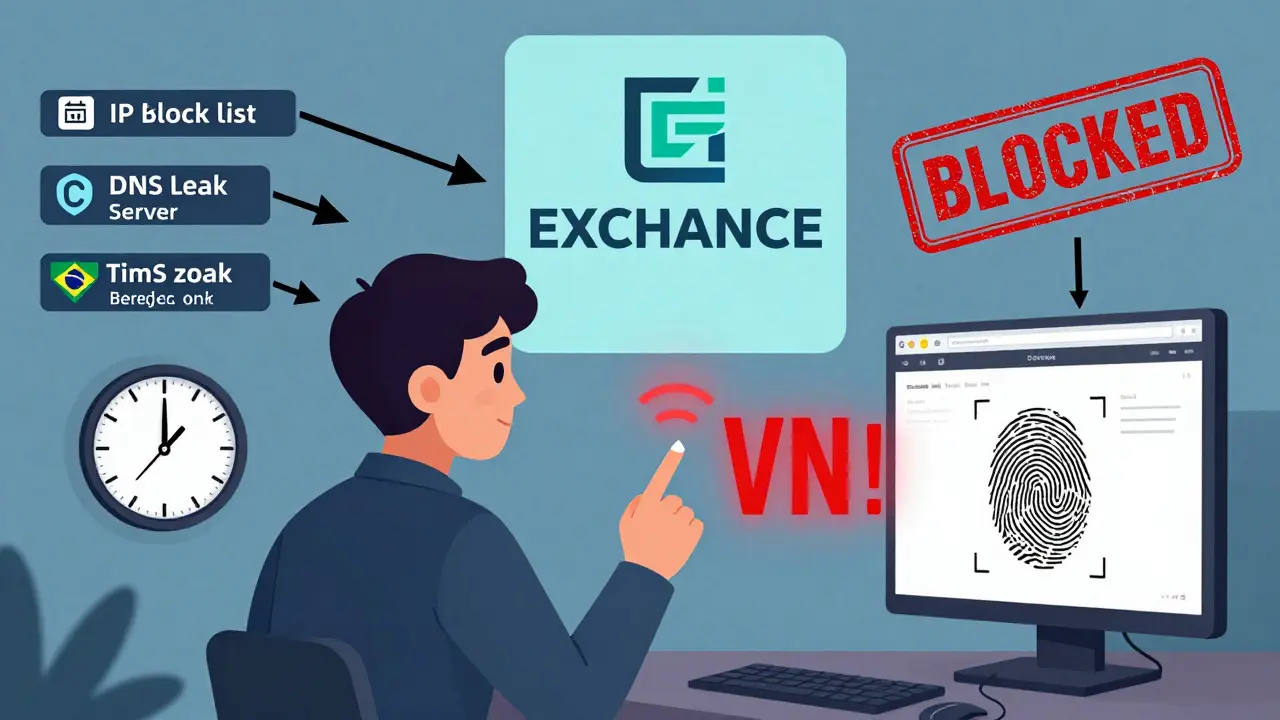
The oldest trick in the book was changing your IP to appear in a different country. Back in 2020, that worked fine. Now? It’s like showing up to a bank with a fake ID and expecting no questions. Exchanges maintain massive, constantly updated databases of known VPN server IPs-thousands of them. If your connection comes from an IP flagged as NordVPN, ExpressVPN, or even a lesser-known provider, you’re likely blocked before you even log in. But that’s just the first layer. Advanced systems now look at how your traffic behaves. Deep Packet Inspection (DPI) doesn’t just see that you’re connected to a server-it analyzes the pattern of your encrypted data. Regular internet traffic has a rhythm. VPN traffic, even when obfuscated, often has telltale timing quirks, packet sizes, or handshake signatures that machine learning models learn to spot. It’s not about breaking encryption-it’s about recognizing the fingerprint of a VPN tunnel.DNS Leaks and Time Zone Mismatches
Your browser might think it’s in Singapore, but if your DNS resolver is still pointing to a server in Moscow, the exchange knows something’s off. DNS leak detection is simple but brutally effective. Even if your VPN hides your real IP, misconfigured DNS settings can give you away in seconds. Then there’s time zone analysis. If your account was created in Brazil, you’ve always traded between 8 AM and 11 PM local time, and suddenly you’re placing orders at 3 AM New York time while your device claims you’re in London-alarm bells ring. Behavioral patterns matter more than you think. Exchanges track login times, trading hours, even how long you spend on the app before making a trade. Sudden shifts in behavior trigger verification requests or temporary holds.Browser Fingerprinting: The Silent Tracker
You might not realize it, but your browser leaks a ton of identifying info. Screen resolution, installed fonts, GPU model, plugin list, even the exact version of your operating system-all of it gets collected silently. If your fingerprint says you’re using a Windows 11 machine with a 4K display and Chrome 120, but your IP says you’re in Turkey where most users have older Android phones and Firefox-it doesn’t add up. This isn’t just about VPNs. It’s about consistency. If your device profile changes every time you switch servers, the system flags it as suspicious. Some users report success by cloning their browser profile exactly across different VPN servers. But that’s hard to do consistently, and exchanges are getting better at spotting cloned fingerprints.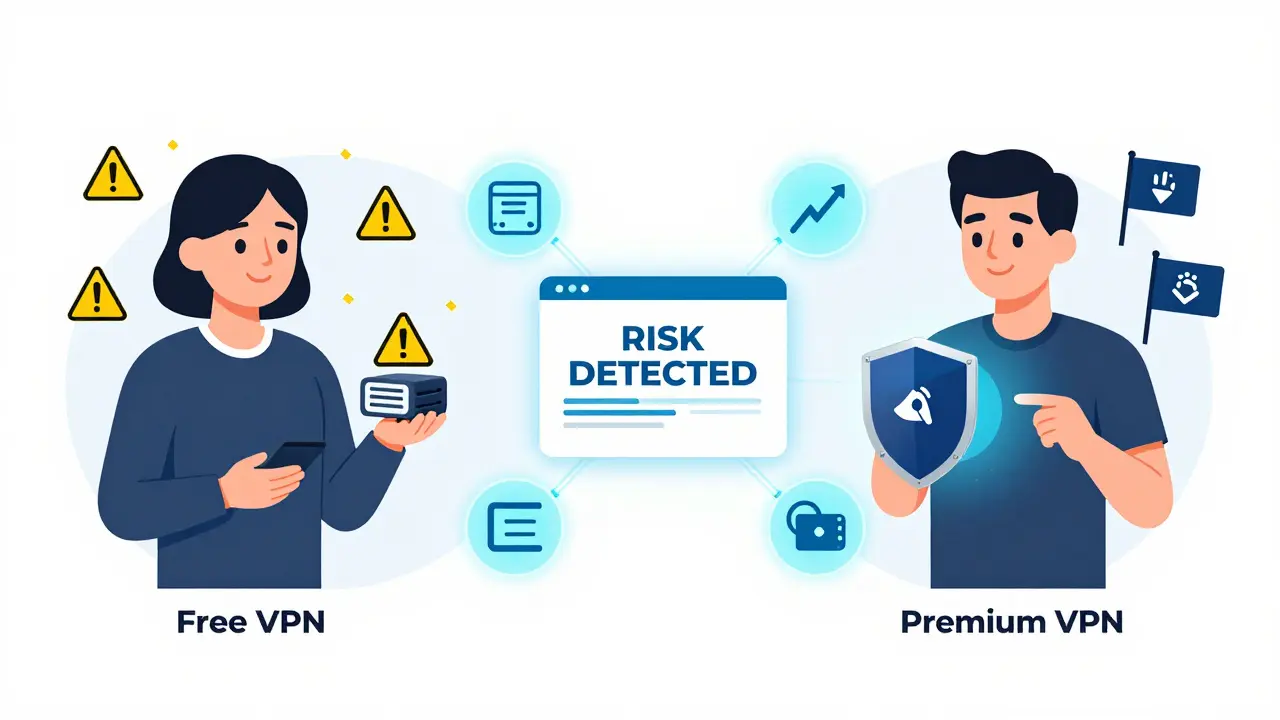
Not All VPNs Are Created Equal
Free VPNs? They’re almost always caught. Their IP ranges are tiny, overloaded, and well-known. Even if you manage to get in, your account will likely get flagged for suspicious activity within hours. Premium services like NordVPN and ExpressVPN have better odds-but not because they’re untraceable. They’re just harder to block entirely. Users report mixed results: sometimes a server in Japan works for days, other times it’s blocked within minutes. The key is server selection. Some servers are optimized for streaming, others for torrenting. Only a handful are actually tuned to bypass crypto exchange detection. And then there’s the newer players. Services like NymVPN use a completely different model-mixnets that route traffic through dozens of volunteer-run nodes, making it nearly impossible to trace origin or pattern. These aren’t designed for speed or streaming. They’re built for anonymity. And right now, most crypto exchanges can’t detect them-not because they’re too advanced, but because the detection systems aren’t built to look for something that doesn’t behave like a traditional VPN at all.Behavioral Triggers Beyond the Network
The smartest detection systems don’t stop at your connection. They look at your wallet. If you’ve been trading on Binance from a Brazilian account for six months, and suddenly you deposit ETH from a wallet that’s only ever been active on Russian IPs, the system connects the dots. Blockchain analysis tools now cross-reference wallet history with network metadata. Even if your VPN works, your on-chain behavior can betray you. Some exchanges now require mobile verification. If your phone’s GPS says you’re in Dubai, but your Wi-Fi connection says you’re in Germany, and your login IP says you’re in the Netherlands-you’re not just flagged. You’re locked out until you prove your identity with government ID and a live selfie. KYC isn’t just for compliance anymore-it’s a geo-location checkpoint.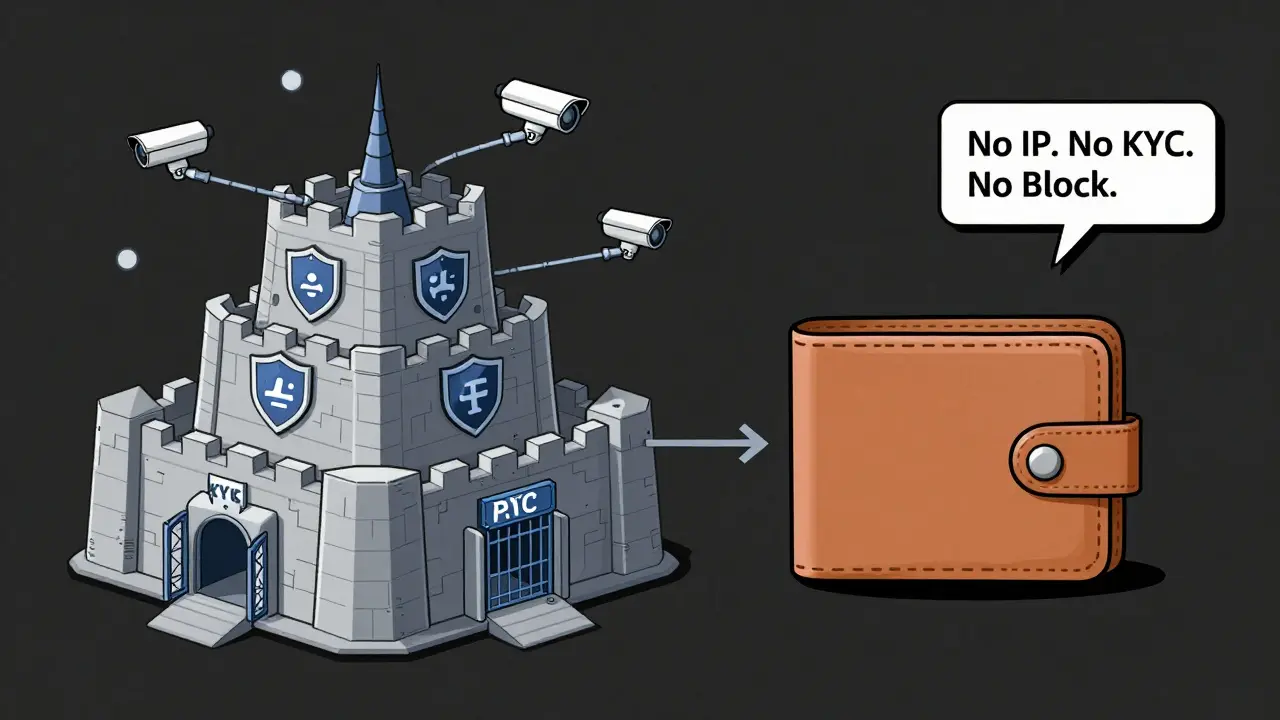
Why Exchanges Are Pushing So Hard
It’s not about controlling users. It’s about survival. In 2024, China fined one major exchange $230 million for allowing users to bypass its crypto ban. Russia has threatened to shut down any platform that doesn’t block local users. Turkey has banned crypto trading outright for non-residents. Exchanges that ignore these rules risk fines, legal action, or being blocked entirely in entire markets. That’s why Binance, Kraken, and Coinbase invest millions in detection tech. They’d rather lose a few thousand users than risk losing access to millions more in regulated markets. The global crypto exchange market is projected to hit $57 billion by 2030. That’s the prize. And the cost of failure? Billions.What Happens When You Get Caught
Getting detected doesn’t always mean instant ban. More often, you’ll get a notification: “We’ve detected unusual activity. Please verify your identity.” If you’re a casual trader, you might just upload your ID and be fine. But if your account shows repeated attempts to bypass restrictions, or if your wallet history ties back to a banned region, your account may be frozen or closed. Some users report being locked out for weeks while waiting for manual review. Others say their funds were transferred to a “restricted account” and can only be withdrawn after 30 days. There’s no standard policy. Each exchange handles it differently. But one thing’s clear: if you’re using a VPN to access restricted markets, you’re playing with fire.The Future: Decentralized Exchanges and the End of Detection?
Here’s the twist: the most effective way to avoid VPN detection might be to stop using centralized exchanges altogether. Decentralized exchanges (DEXs) like Uniswap or dYdX don’t require sign-ups, don’t collect KYC data, and don’t monitor your IP. You connect your wallet, trade directly on the blockchain, and walk away. No detection system can block you if there’s no central server to block from. But even here, regulators are catching up. Some countries are starting to target wallet providers and DeFi protocols. The next wave of restrictions may not be about your connection-it’ll be about your wallet’s history. If your wallet has ever interacted with a banned exchange, you might be flagged anyway. The arms race isn’t slowing down. Exchanges are building AI models that predict user intent based on trading patterns. Privacy networks are getting smarter. The line between compliance and control is blurring. And users? They’re caught in the middle, trying to trade freely while staying out of legal trouble.There’s no perfect solution. Using a VPN to access crypto exchanges is risky. The detection systems are too advanced, too interconnected, and too well-funded to be easily fooled. If you need access to restricted markets, your safest bet isn’t a better VPN-it’s understanding the rules, knowing the risks, and considering alternatives like DEXs that don’t ask for your location in the first place.
Can crypto exchanges detect if I’m using a VPN even if I’m not doing anything illegal?
Yes. Exchanges don’t care why you’re using a VPN-they only care that you’re using one. Even if you’re just trying to access a service from abroad, their systems flag the connection as a potential compliance risk. Detection is automated and doesn’t require proof of wrongdoing. Simply connecting from a known VPN IP can trigger account restrictions or verification requests.
Which VPNs work best with crypto exchanges in 2026?
No VPN guarantees success, but premium services like NordVPN and ExpressVPN have the most consistent results because they rotate server IPs frequently and offer obfuscation features. However, success depends on the exchange and server selection. Some users report better luck with servers in countries like Germany, Japan, or Switzerland. Free VPNs almost always fail, and even premium ones can be blocked within hours. There’s no permanent solution-just trial and error.
Why does my account get flagged even when my VPN seems to be working?
Because detection isn’t just about your IP. Exchanges use behavioral analysis: your login times, trading habits, device fingerprint, and even how you type your password. If your behavior suddenly changes-like switching from a Brazilian account to trading at 3 AM New York time-the system flags it. Your VPN might hide your location, but it can’t hide your patterns.
Can I use a VPN with decentralized exchanges (DEXs)?
Technically yes, but it’s unnecessary. DEXs like Uniswap or PancakeSwap don’t require sign-ups or KYC, and they don’t monitor your IP. You connect your wallet directly to the blockchain. There’s no central server to bypass, so a VPN adds no benefit-and may even slow down your transactions. The only reason to use a VPN with a DEX is if your local internet provider is blocking blockchain access.
What happens if I’m caught using a VPN on a regulated exchange?
Outcomes vary. You might get a simple verification request, a temporary lock, or a full account freeze. In extreme cases, especially if your wallet history links to banned jurisdictions, your funds could be held indefinitely until you prove compliance. Some exchanges will close your account entirely and require you to reapply under a new identity-which is against their terms of service and can lead to permanent bans.
Are there any legal ways to access crypto exchanges from restricted countries?
Yes-but only if you’re a legal resident. Some exchanges allow users to open accounts if they can prove residency through official documents, even if they’re living abroad temporarily. Others partner with local payment processors or licensed custodians to offer compliant access. The only safe path is to comply with local laws. Using a VPN to bypass restrictions is a violation of terms and carries legal and financial risk.
24 Comments
This is why I switched to DEXs entirely. No more guessing games, no more VPNs, no more fear of getting locked out. Just connect my wallet and trade. The freedom is worth the slight learning curve.
It’s not about bypassing rules-it’s about building systems that don’t need them.
The fundamental flaw in centralized exchange architecture is its reliance on identity-as-geolocation. This isn’t compliance-it’s surveillance capitalism repackaged as regulatory necessity. The moment an entity correlates on-chain behavior with network metadata, it collapses the privacy-preserving properties of blockchain itself.
What we’re witnessing isn’t a technological arms race-it’s the institutionalization of trustlessness by entities that demand absolute trust in themselves.
You think this is bad? Wait till they start scanning your keyboard rhythms and voice patterns when you call support. They’re already training AI on how you type ‘BTC’ vs ‘bitcoin’-if you hesitate, it flags you as suspicious. I’ve seen it happen. My account got frozen because I paused too long before typing my password. They said ‘unusual cognitive pattern’.
Next thing you know, they’ll ban you for blinking wrong.
VPN users are just lazy. If you can’t follow the law, don’t trade. Stop trying to hack the system. Your ‘freedom’ is someone else’s compliance nightmare.
I get it-exchanges have to play nice with governments. But when your app blocks me because I used a server in Germany to check prices while visiting my mom, that’s not security. That’s arrogance.
And yeah, I know I’m breaking TOS. But I’m not laundering money. I’m just trying to see what BTC is worth outside my country’s bubble.
The entire premise of crypto is decentralization, yet here we are, submitting to centralized gatekeepers who demand KYC, IP checks, behavioral analytics, and now-psychological profiling. We didn’t build blockchain to be policed by Silicon Valley compliance officers with Excel sheets and machine learning models. We built it to escape this exact system.
So why are we still playing their game?
NordVPN? Please. I tried every premium service. The only thing that works is running a self-hosted WireGuard server on a VPS in a neutral country. No logs, no shared IPs, no fingerprinting. But even then, if you use the same browser profile across sessions, they catch you.
It’s not about the VPN. It’s about consistency. Your device is your real ID now.
This is all a lie. The real reason they block VPNs is so they can sell your data to governments. You think Binance gives a damn about Chinese law? They’re just selling access to your wallet history. They’re the ones feeding the surveillance state.
I’ve been using a DEX for over a year now, and honestly? It’s been the most peaceful experience I’ve had with crypto. No verification requests. No ‘unusual activity’ emails. No panic when I travel. Just me, my seed phrase, and the blockchain.
If you’re stressed about this stuff, maybe it’s time to rethink your approach-not your VPN.
Let’s be clear: using a VPN to access restricted markets violates terms of service. That’s not a gray area. Exchanges aren’t evil-they’re caught between regulators and users. If you want to trade legally, open an account in your country of residence. It’s inconvenient, but it’s safe.
You people act like this is a new problem. It’s not. Banks have been doing this for decades. The only difference is now you’re mad because they’re using AI instead of human reviewers. Grow up. If you’re not breaking the law, why do you need to hide?
I used to think VPNs were cool. Now I just laugh. My friend got his account frozen for 90 days because he used ExpressVPN from a hotel in Thailand. He’s a US citizen, lived in Thailand for 3 years, had a Thai bank account. Didn’t matter. IP said ‘VPN’. Boom. Locked out.
They don’t care about your life. They care about their compliance dashboard.
India has clear rules. If you want to trade crypto, do it through regulated channels. Why should Indian users suffer because Americans can’t follow local laws? This isn’t about freedom. It’s about privilege.
I’ve tried everything. Free VPNs, paid ones, Tor, proxy chains. Nothing works reliably. The only thing that kept me trading was using a burner laptop with a clean browser profile, only ever used for trading, never signed into anything else.
It’s a pain. But if you want to play this game, you gotta treat your device like a weapon.
I appreciate how thorough this breakdown is. Most people don’t realize how much data they leak-fonts, screen size, even how fast they scroll. I now use Firefox with privacy mode and disable WebGL. It’s not perfect, but it reduces my fingerprint by 70%.
Small steps matter.
They’re not detecting VPNs. They’re detecting *you*. Your habits. Your wallet. Your typing speed. Your phone’s IMEI if you’re on mobile. This isn’t about location. It’s about identity reconstruction. And if you think you’re anonymous because you use a VPN, you’re already late to the party.
I used to think I was clever using a VPN. Then I got my account frozen and lost access to $12k for 4 months while they ‘reviewed’ my case. Turns out my wallet had interacted with a mixer six months prior. That’s all they needed.
It’s not the VPN. It’s the chain. You can’t hide your past on-chain.
I’m from the US but work in Japan. I use a VPN to check prices here. No one’s ever blocked me. But I never trade from it. Just view. And I use a different device for trading. Keeps things clean.
It’s not about being sneaky. It’s about being smart.
They’re building a global digital ID system and calling it ‘compliance’. Next thing you know, your crypto wallet will be tied to your social credit score. You think this is about money? It’s about control. And we’re handing them the keys.
NymVPN is the future. Mixnets route your traffic through 12+ random nodes. No IP, no timing patterns, no fingerprint. It’s slow as hell, but if you’re serious about privacy? It’s the only thing that works. Exchanges can’t detect it because it doesn’t *look* like anything.
They’re not ready for anonymity. They’re ready for compliance theater.
The irony? The same people screaming about ‘financial sovereignty’ are the ones using a $10/month VPN to access a $200B corporation’s platform that demands your passport and selfie.
You want decentralization? Stop using centralized exchanges. Full stop. The rest is theater.
I’ve been studying this for years. The real breakthrough isn’t in obfuscation-it’s in timing. Exchanges use behavioral models that learn your rhythm. If you trade at 9 AM every day, they expect it. If you suddenly trade at 3 AM, even from a clean IP, you’re flagged.
So I randomize my hours. I simulate ‘sleep’. I even use automation to mimic idle time before trading. It’s not perfect, but it fools their AI more than any VPN ever could.
I’ve been on both sides. Used VPNs. Got banned. Then I moved to a DEX. No hassle. No drama. Just trade. I know it’s not for everyone-but if you’re tired of feeling like a criminal just for checking prices, maybe it’s time to switch.
OMG I just got my account locked AGAIN because I used my phone’s hotspot while traveling. I didn’t even use a VPN! Just changed networks. They said ‘location mismatch’. I was literally in Bali. They thought I was in Florida. I had to send them my boarding pass. Like I’m a criminal. This is insane.