
How Blockchain Transparency Prevents Fraud: A Practical Guide
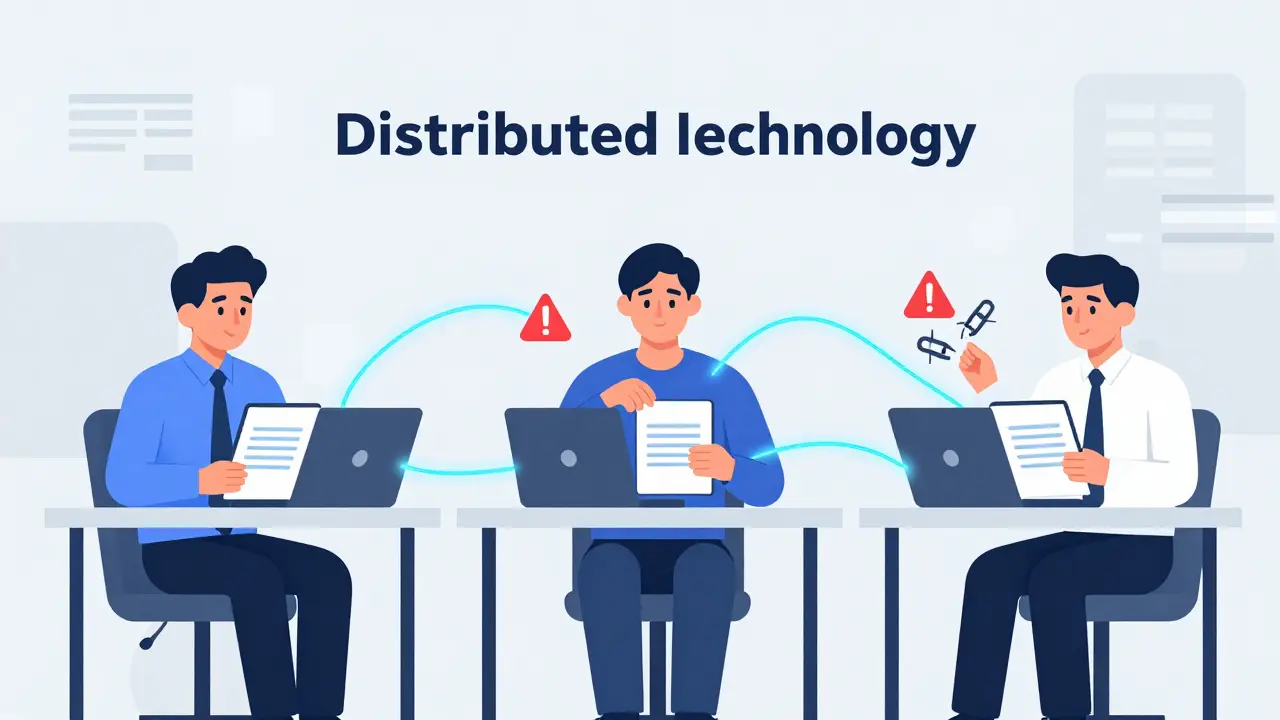
You’ve probably heard the buzz about blockchain being a silver bullet for corruption. But does it actually work? Or is it just another tech trend that sounds good in a boardroom but fails in practice?
The short answer is yes, but with a major catch. Blockchain doesn’t magically stop bad actors from trying to cheat. Instead, it makes cheating incredibly expensive, difficult, and nearly impossible to hide. It shifts the game from "trust me" to "verify this."
Let’s break down exactly how this technology stops fraud in real-world scenarios like real estate, supply chains, and banking, and where its limits lie.
The Core Mechanism: Why You Can’t Delete History
To understand how blockchain prevents fraud, you first need to understand what it isn’t. It is not a database where an admin can go in and change a record because they made a typo or wanted to cover their tracks.
Imagine a traditional spreadsheet. If Alice changes a cell from $100 to $1,000, no one else sees the original value unless there’s a separate backup system. Now imagine a notebook that every single person in a room has a copy of. Every time someone writes a new entry, everyone updates their own copy simultaneously. If Alice tries to tear out a page in her notebook, she still has to convince everyone else to tear out the same page at the exact same moment. That’s practically impossible.
This is the essence of distributed ledger technology (DLT). Each transaction is grouped into a block, which contains a unique digital fingerprint called a hash. This hash is linked to the previous block. If you alter any data in Block 1, its hash changes. This breaks the link to Block 2, which then changes its hash, breaking the link to Block 3, and so on. To successfully commit fraud, you wouldn’t just need to hack one computer; you’d need to hack more than 51% of all computers on the network simultaneously. For major networks like Bitcoin or Ethereum, this requires more computing power than most countries possess.
| Feature | Centralized Database | Blockchain Ledger |
|---|---|---|
| Data Control | Single administrator | Distributed across many nodes |
| Editability | Easily modified/deleted | Immutable once confirmed |
| Audit Trail | Often incomplete or hidden | Permanent and transparent |
| Fraud Risk | High (insider threat) | Low (requires consensus attack) |
Stopping Real Estate Title Fraud
One of the most painful places fraud happens is in property ownership. In many jurisdictions, title records are kept in fragmented, paper-based, or poorly connected digital systems. This creates opportunities for identity theft and document forgery.
Consider a scenario where a criminal steals someone’s identity and forges a deed to sell a house they don’t own. In a traditional system, if the clerk doesn’t catch the forgery, the sale goes through. The victim loses their home, and the trail of money vanishes into offshore accounts.
With a blockchain-based title registry, every transfer of ownership is recorded permanently. Before a sale can occur, the system checks the entire history of the property. If the seller’s digital signature doesn’t match the current owner on the ledger, the transaction is rejected automatically. There is no "lost file" excuse. There is no "typo in the system" loophole. The history is clear, public (or permissioned), and unchangeable.
Countries like Georgia and Sweden have already piloted these systems. The result? Drastic reductions in title disputes and near-elimination of deed fraud. The key here is ownership verification happening in real-time, not weeks later during a manual audit.
Supply Chain Integrity: From Farm to Fork
Have you ever bought "organic" produce only to find out later it was sprayed with pesticides? Or purchased luxury goods that turned out to be high-quality fakes? Supply chain fraud costs industries billions annually because tracking goods across multiple borders and intermediaries is messy.
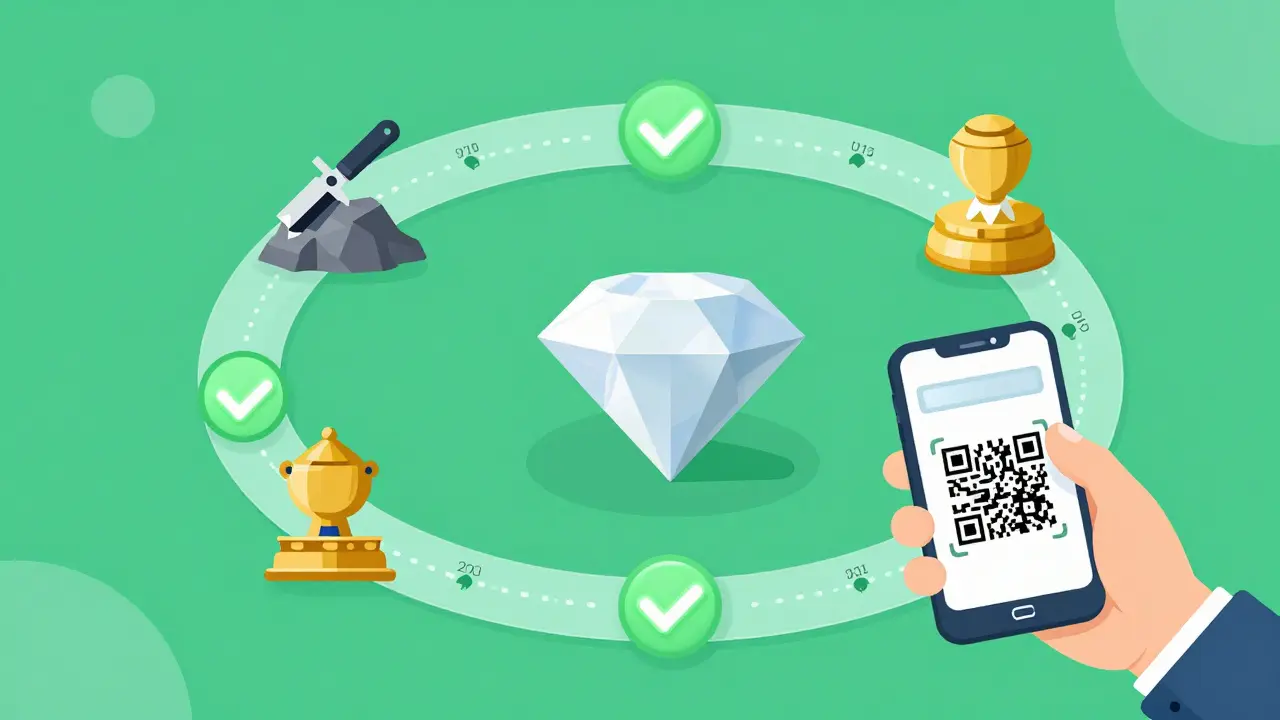
Blockchain solves this by creating an unbreakable chain of custody. Let’s look at diamonds. The Kimberley Process aims to stop conflict diamonds, but paper certificates can be forged. With blockchain, each diamond gets a unique digital ID when mined. As it moves to the cutter, then the polisher, then the jeweler, each step is logged on the blockchain with a timestamp and location.
If a jeweler claims a stone came from a certified ethical mine, you can scan a QR code and see the entire journey. If the data shows gaps or inconsistencies, the fraud is exposed instantly. Companies like IBM Food Trust use this logic for groceries. If lettuce is contaminated, retailers can trace the batch back to the specific farm in seconds, rather than days, preventing widespread recalls and protecting brand reputation.
Financial Controls and Smart Contracts
In finance, fraud often involves human error or intentional manipulation of invoices and payments. Think of a vendor submitting duplicate invoices or an employee approving payments to a fake supplier.
Enter smart contracts. These are self-executing codes stored on the blockchain. They run when predetermined conditions are met. For example, a smart contract might say: "Release payment only if the shipment GPS confirms arrival AND the quality inspector uploads a signed approval."
This removes the middleman who might be bribed or lazy. The code doesn’t care who you are; it only cares if the conditions are true. Since the terms and execution are visible on the ledger, auditors can review every transaction in real-time. Anomalies-like a sudden spike in small transactions designed to evade detection thresholds-are flagged automatically by algorithms monitoring the chain.
The Anti-Money Laundering Reality Check
There’s a common misconception that cryptocurrency is anonymous. It’s not. It’s pseudonymous. Every transaction is public. While your name isn’t attached to your wallet address, the flow of funds is completely visible. This actually helps law enforcement.
Regulations like the European Union’s Fifth Anti-Money Laundering Directive (5AMLD) now require crypto exchanges to follow the same strict Know Your Customer (KYC) rules as banks. When you buy Bitcoin, your identity is linked to your wallet. If that wallet is used to launder money, investigators can trace the funds through the transparent ledger to other wallets, eventually identifying the recipient.
Organizations like the Financial Action Task Force (FATF) monitor Virtual Assets Service Providers (VASPs) to ensure compliance. The transparency of the blockchain means that while criminals can try to mix funds using tumblers, the sheer volume of data leaves forensic traces. It’s harder to hide dirty money in a glass box than in a opaque bank vault.
The Critical Limitation: Garbage In, Garbage Out
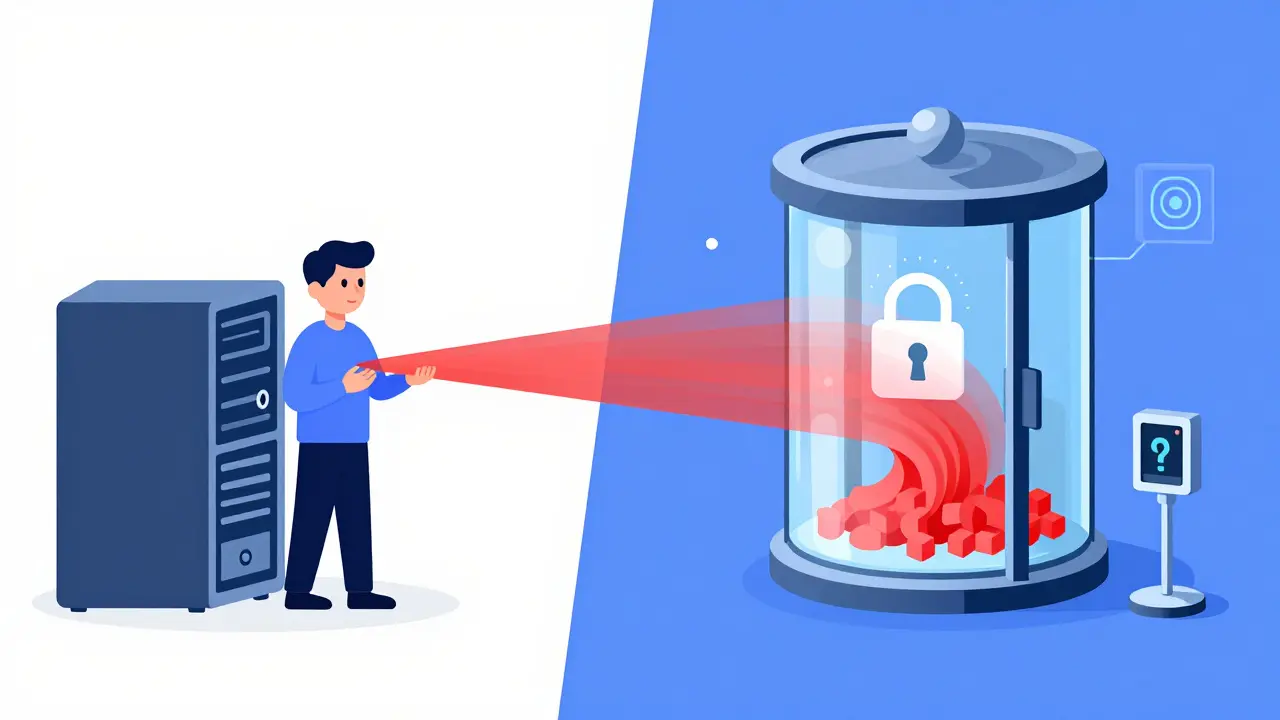
Here is the part that tech evangelists rarely emphasize: Blockchain guarantees the integrity of the data *after* it is entered, but it cannot verify the truth of the data *before* it is entered.
If a corrupt official manually enters "This land belongs to John Doe" into a blockchain registry, the blockchain will faithfully protect that false statement forever. It is immutable, but it is incorrect. This is known as the "oracle problem." The security of the system depends entirely on the trustworthiness of the initial data sources.
To mitigate this, systems often use multi-party validation. For example, in supply chains, data might come from IoT sensors (temperature, GPS) rather than human input. Sensors are harder to bribe than people. In real estate, biometric verification might be required before a title transfer is recorded. The technology is only as strong as the weakest link in the data entry process.
Conclusion: A Tool, Not a Magic Wand
Blockchain transparency prevents fraud by raising the cost of deception and removing the ability to hide behind closed doors. It turns opaque processes into open ledgers that anyone can audit. However, it requires careful implementation, trusted data inputs, and regulatory cooperation to be truly effective. It’s not about stopping crime entirely-it’s about making crime so obvious that it becomes unsustainable.
Can blockchain prevent all types of fraud?
No. Blockchain prevents data tampering and ensures transaction history is accurate. However, it cannot stop fraud that occurs before data is entered (e.g., identity theft at the source) or social engineering attacks where users voluntarily give away access keys.
Is blockchain data private or public?
It depends on the type of blockchain. Public blockchains like Bitcoin are fully transparent to everyone. Private or permissioned blockchains, often used by enterprises, restrict visibility to authorized participants only, balancing transparency with privacy needs.
How does blockchain help in supply chain fraud?
By providing an immutable record of every handoff in the supply chain. Consumers and auditors can verify the origin, authenticity, and handling of products, making it difficult to insert counterfeit goods or falsify provenance documents.
What is the role of smart contracts in fraud prevention?
Smart contracts automate enforcement of agreements. They execute only when predefined conditions are met, reducing human error, bias, and the opportunity for intermediaries to manipulate outcomes or embezzle funds.
Why is 'garbage in, garbage out' a risk for blockchain?
Because blockchain secures data once it is written. If false information is entered initially, the blockchain will permanently preserve that falsehood. Ensuring the accuracy of initial data inputs through verified sources is critical for the system's integrity.