
GameFi Protocol (GFI) Airdrop on CoinMarketCap: What Actually Happened
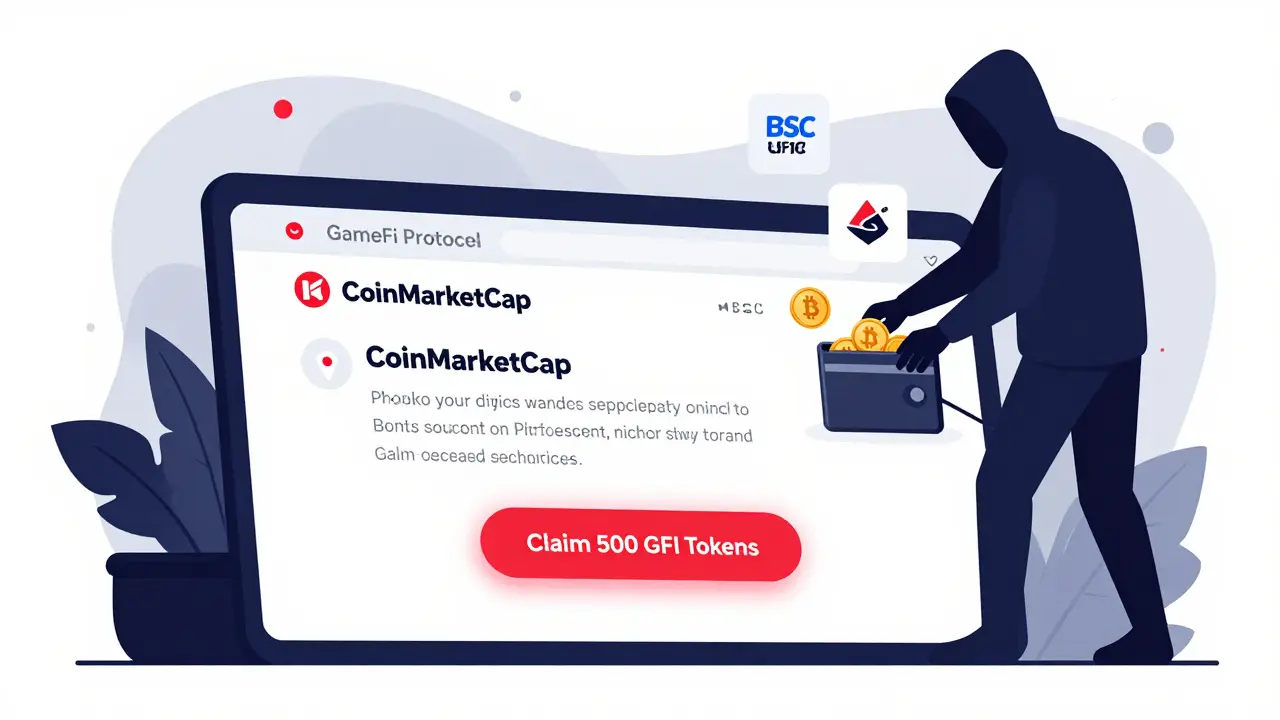
There was never a GameFi Protocol (GFI) airdrop partnered with CoinMarketCap. If you saw a post, tweet, or Telegram group saying otherwise, you were likely targeted by a scam.
GameFi Protocol doesn't exist as a real project
The name "GameFi Protocol" sounds official. It uses familiar terms like "GameFi" - which refers to blockchain games that reward players with tokens - and "Protocol," which implies a technical standard. But no legitimate blockchain project called GameFi Protocol has ever launched a token with the symbol GFI. There's no whitepaper, no GitHub repo, no team members listed on LinkedIn, and no official website with verifiable domain registration.Real GameFi projects like Thetan Arena, Binary X, or Faraland have public teams, audited smart contracts, and clear tokenomics. They don't hide behind vague names or fake partnerships. CoinMarketCap, as a trusted price aggregator, only lists tokens that meet strict verification standards. If GFI were real and listed, you'd see its market cap, trading volume, and contract address. You won't. Because it doesn't exist.
CoinMarketCap doesn't run airdrops like this
CoinMarketCap does host events - but not airdrops in the way scammers describe. Back in 2021, CoinMarketCap partnered with Binance Smart Chain (BSC) to promote the BSC GameFi Expo. That event featured real projects like BunnyPark, Thetan Arena, and Radio Caca. Participants earned tokens from those actual games, not from CoinMarketCap itself. CoinMarketCap didn't issue tokens. It didn't create a "GFI" coin. It simply helped connect users with legitimate GameFi projects.Today, CoinMarketCap’s role is to track data - prices, volumes, market caps. It doesn’t mint tokens. It doesn’t distribute free crypto. Any claim that "CoinMarketCap is giving away GFI tokens" is false. The platform has never done that, and it never will.
How the scam works
Scammers know people are hungry for free crypto. They copy real names - GameFi, CoinMarketCap, Binance - and mix them into fake campaigns. Here’s how it plays out:- You see an ad: "Get 500 GFI tokens for free! Only 100 spots left!"
- You click a link to a fake website that looks like CoinMarketCap’s.
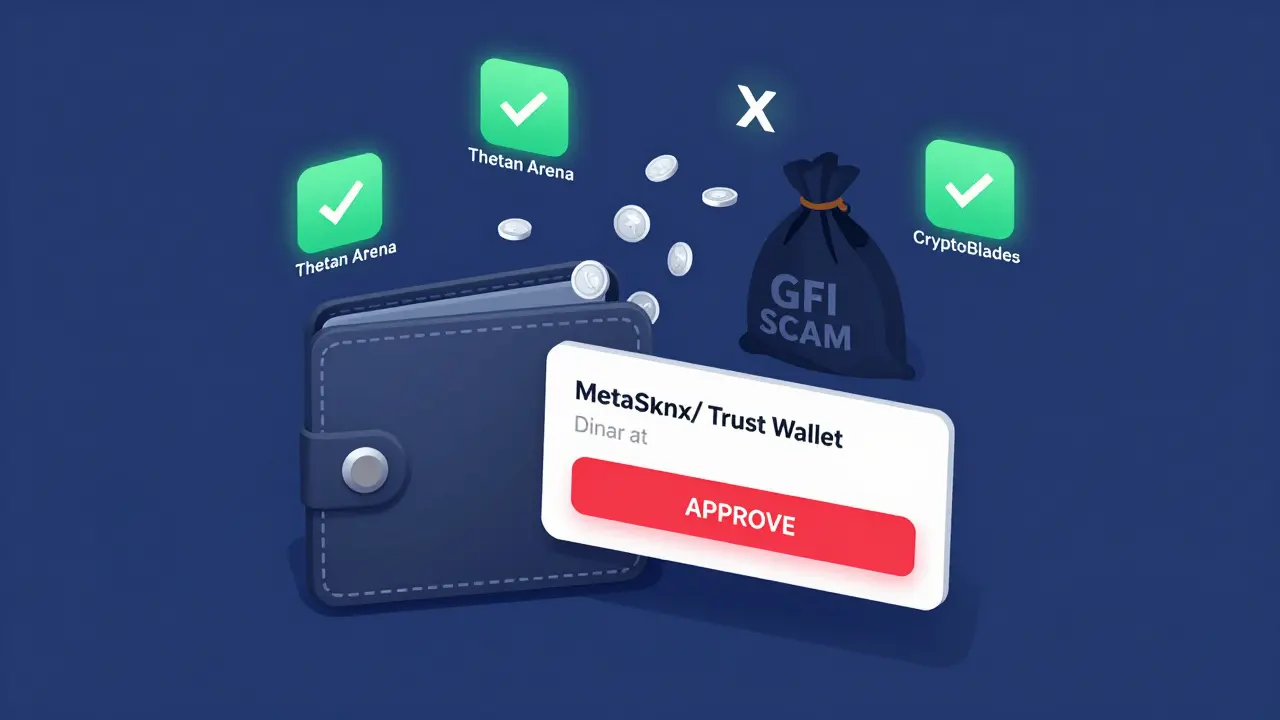
- You connect your wallet - maybe MetaMask or Trust Wallet.
- They ask you to approve a transaction - "Confirm to receive your airdrop."
- You approve it. Your entire wallet balance gets drained in seconds.
This isn’t a glitch. It’s designed theft. The "approve" step gives the scammer permission to move any token in your wallet - even if you don’t own GFI. They don’t need to send you anything. They just need your signature.
Real GameFi airdrops you can trust
If you want to earn real GameFi tokens, here are a few legitimate examples from 2024-2025:- Thetan Arena - Players earned THETA and GEM tokens by winning ranked matches. Airdrops went to active users with verified accounts.
- Binary X - Distributed BNX tokens to early testers and community contributors. All claims were made through their official site, binaryx.io.
- CryptoBlades - Airdropped SKILL tokens to players who reached level 10 before a specific date. No wallet approval required.
All of these projects had clear rules, public timelines, and no upfront payments. They didn’t ask you to connect your wallet to claim a token you’ve never heard of.
How to spot a fake airdrop
Here’s a quick checklist:- Is the project listed on CoinMarketCap or CoinGecko? If not, walk away.
- Does the website have an SSL certificate? Look for https:// and a verified domain name.
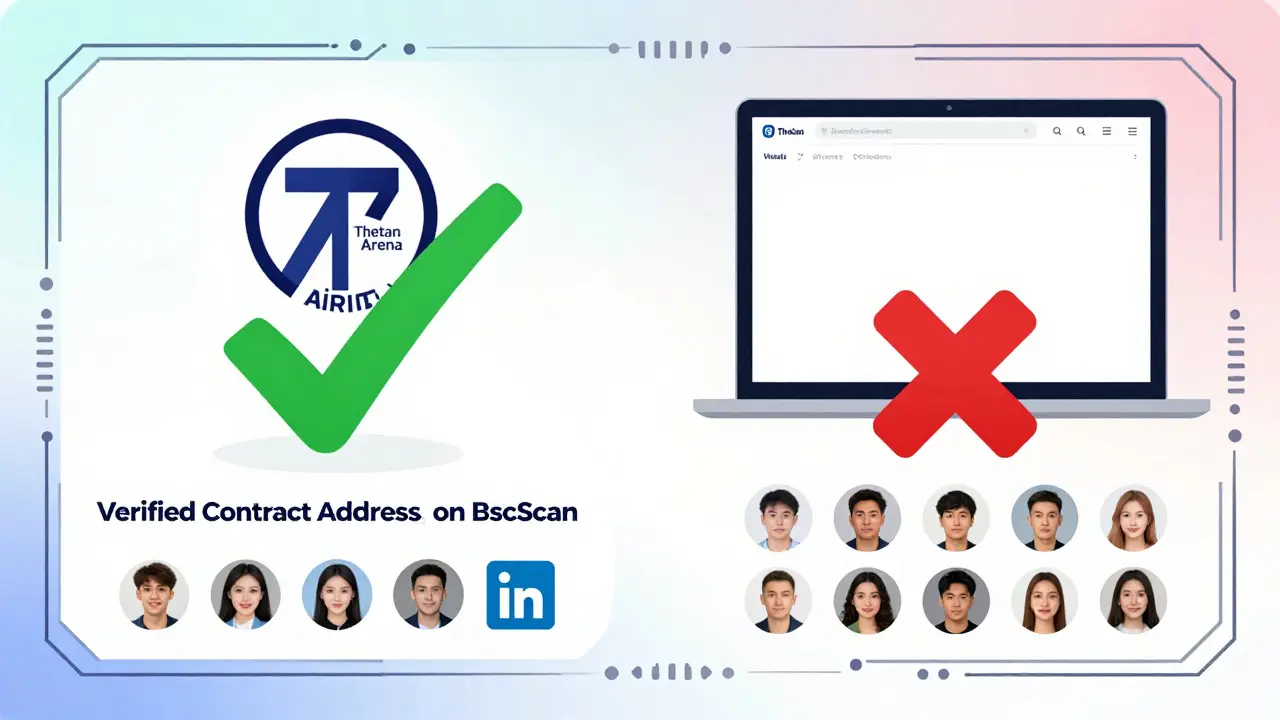
- Are there real team members? Check LinkedIn profiles. Are they linked to other crypto projects?
- Do they ask you to approve a transaction before receiving tokens? That’s a red flag. Real airdrops send tokens automatically.
- Is there a contract address? Real tokens have one. Search it on BscScan or Etherscan. If it’s blank or says "unverified," it’s fake.
What to do if you already connected your wallet
If you approved a transaction and now your wallet is empty:- Stop using that wallet. Move any remaining funds to a new one.
- Go to your wallet’s security settings (MetaMask, Trust Wallet, etc.) and revoke all permissions.
- Never use the same seed phrase again.
- Report the scam to CoinMarketCap’s fraud team via their official contact form.
Recovery is nearly impossible - blockchain transactions are irreversible. But you can stop the damage from spreading.
Where to find real GameFi airdrops
Stick to trusted sources:- Official project websites (not Twitter or Telegram links)
- Verified CoinMarketCap listings
- Community channels with blue checkmarks and active moderation
- Projects with audits from CertiK, PeckShield, or Hacken
Real airdrops don’t need hype. They don’t rush you. They don’t use countdown timers or "limited spots" language. They just announce: "Here’s how to qualify. Here’s when it drops. Here’s the contract."
Was there ever a GFI token airdrop from GameFi Protocol on CoinMarketCap?
No. There has never been a GameFi Protocol (GFI) token, and CoinMarketCap has never run an airdrop for it. Any website, social post, or message claiming otherwise is a scam. Real GameFi airdrops come from established projects like Thetan Arena or Binary X, not fake names that sound official.
Why do scams use CoinMarketCap’s name?
CoinMarketCap is one of the most trusted names in crypto. Scammers copy it because people trust it. They create fake websites that look like CoinMarketCap’s, use similar colors and fonts, and even copy real project logos. But CoinMarketCap doesn’t issue tokens, run giveaways, or ask you to connect your wallet. If it sounds too good to be true, it is.
Can I get free crypto from CoinMarketCap?
CoinMarketCap doesn’t give away free crypto. It tracks prices and data. In the past, it partnered with blockchain networks like BSC to promote real GameFi projects - but the tokens came from those projects, not CoinMarketCap. If someone says CoinMarketCap is giving you tokens, they’re lying.
How do I check if a GameFi token is real?
Search for the token on CoinMarketCap or CoinGecko. If it’s not listed, it’s not real. Then check the contract address on BscScan or Etherscan. Look for verified contracts, audit reports, and active development. If the team is anonymous or the website has no contact info, avoid it.
What should I do if I lost crypto to this scam?
Recovery is unlikely, but you can prevent further loss. Immediately move any remaining funds to a new wallet. Revoke all token approvals in your wallet settings. Report the scam to CoinMarketCap’s support team. Never use the same seed phrase again. Most importantly, learn from it - real crypto rewards come from participation, not shortcuts.
20 Comments
Wow this is such a clear breakdown. I just got scammed last week thinking GFI was real - I almost connected my wallet. Thanks for exposing this. People need to stop chasing free crypto like it’s a lottery ticket.
So basically every single airdrop post I’ve seen since January is fake lmao
It’s pathetic how easily people fall for this. The name ‘GameFi Protocol’ is a textbook scam name - vague, buzzword-heavy, and deliberately mimicking real projects. Anyone who doesn’t check CoinMarketCap before connecting their wallet shouldn’t be allowed near a crypto wallet. Basic due diligence is not optional.
Been there. Lost a little ETH. Learned hard. Now I check every token on BscScan first. No contract? No deal. Also, if it says ‘limited spots’ - just close the tab. 😅
why do people still fall for this? its 2025. even my grandma knows not to click on ‘free crypto’ links. i mean really.
Scammers are banking on greed. They know if you’re desperate for free money you’ll ignore all the red flags. The worst part? They use legit logos and fake SSL certs. Looks real till your wallet’s empty. And then you blame yourself. Don’t. It’s their job to trick you.
From a protocol design standpoint, the absence of a verifiable smart contract, a public team, and on-chain tokenomics renders GFI a non-existent asset class. The entire narrative is a social engineering vector exploiting cognitive biases around decentralized finance legitimacy. The CoinMarketCap brand hijacking is particularly insidious due to its institutional trust capital.
Thank you for this. I’ve been trying to explain this to my cousin for weeks. She thought she was ‘getting rich’ by approving a transaction for GFI. I sent her this post. She finally got it. 💛 Real airdrops don’t ask you to sign away your wallet. They just send you tokens. No magic. No hype.
Every time I see someone post about ‘GFI airdrop’ I just feel sad. Not because they got scammed - because they believed it was real. People think crypto is easy money. It’s not. It’s a minefield. And the scammers? They’re just doing their job.
Y’all need to stop treating crypto like a game show. Real projects don’t need countdown timers or ‘last 10 spots’ nonsense. Thetan Arena gave me tokens for playing - not for signing away my life savings. If it feels sketchy, it is. You’re not missing out. You’re avoiding disaster.
The structural integrity of decentralized finance relies on transparency, verifiable identity, and immutable audit trails. The GFI phenomenon represents a systemic failure of user education and platform accountability. CoinMarketCap’s non-involvement is not an oversight - it is a feature of its operational model. The proliferation of such scams underscores the urgent need for mandatory onboarding literacy in blockchain adoption frameworks.
lol i saw this scam on tiktok. some girl said she got 2000 gfi and now shes rich. her wallet had 0.1 eth left. she cried in the comments. i laughed so hard i spilled my coffee
So CoinMarketCap is just a glorified Google Finance now and people still think it’s handing out free crypto? I mean… wow. The gullibility is breathtaking
One quick tip: if a site asks you to approve a transaction before you receive anything - don’t. Just don’t. Even if it says ‘confirm to claim’. That’s not a confirmation. That’s a robbery notice.
I used to think people fell for scams because they were dumb. Then I realized - they’re just tired. Tired of working, tired of inflation, tired of feeling left behind. Scammers don’t target the rich. They target the hopeful. This post isn’t just about GFI - it’s about compassion. Help people learn. Don’t just laugh.
Anyone who still believes in airdrops after 2023 deserves to lose everything. I told my brother this exact thing last week and he called me a crypto elitist. Now he’s broke. Good riddance
For those unfamiliar with blockchain verification: Always cross-reference the token contract address on Etherscan or BscScan. Look for the ‘Contract Creation’ date, ‘Holder Count’, and ‘Audit Status’. If the contract is unverified, the project is not real. CoinMarketCap listings are secondary - the contract is primary. Never skip this step.
i just lost my whole portfolio to this. i thought i was being smart. i checked the website. it looked legit. i didn’t know about contract approvals. now i’m broke. and i’m too ashamed to tell anyone.
Scammers are just bad UX designers. They build fake sites that look better than real ones. The real projects? They’re busy building. The scammers? They’re busy copying. And people still click. I’m not mad. I’m just… disappointed.
Let me just say - if you’re reading this and you still think CoinMarketCap gives out free tokens, you’re not just uninformed. You’re a liability. This isn’t a game. This isn’t a lottery. This is financial survival. And you’re playing Russian roulette with your private keys. Get educated. Or get out.