
Future of Smart Contract Security: Trends and Tools for 2026
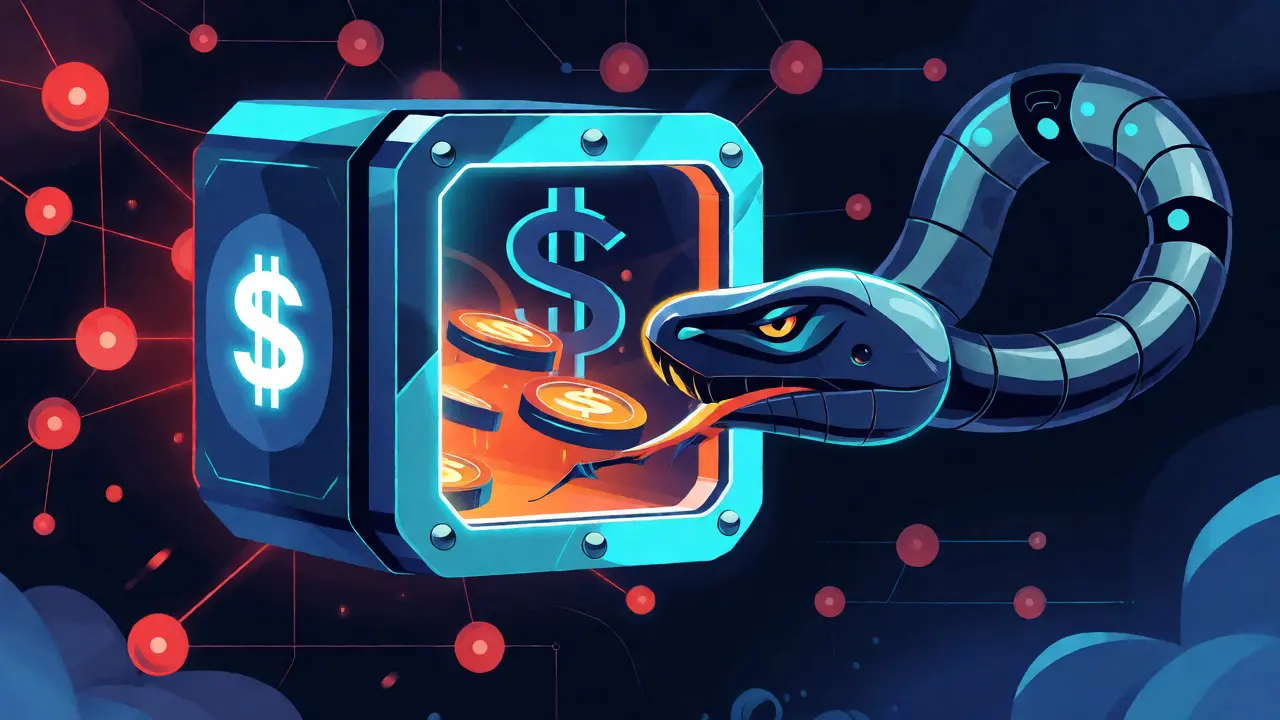
Imagine locking up $50 million in a decentralized finance protocol, only to watch it drain away in seconds because of a single line of code you didn't check. That's the reality for too many developers and users. Smart contract security is no longer just about finding bugs; it's about surviving an ecosystem where blockchain-based self-executing agreements face increasingly complex attack vectors. As we move through 2026, the stakes have never been higher. With over $2 trillion locked in DeFi, the difference between profit and total loss often comes down to how well you secure your contracts before deployment.
You might think hiring an auditor once is enough. But with bridge hacks accounting for 64% of all DeFi incidents last year, that approach is outdated. The future isn't about one-time checks; it's about continuous, layered defense. This guide breaks down exactly what's changing, which tools actually work, and how you can protect your assets without breaking the bank or your development timeline.
The High Cost of Getting It Wrong
Let's look at the numbers. In 2025 alone, smart contract exploits wiped out $2.8 billion. That's not just a statistic; it's real money lost by real people. The market for securing these contracts has exploded to $4.2 billion, growing nearly 38% year-over-year. Why? Because the threats are getting smarter.
Cross-chain interactions are the biggest headache right now. When you move assets from Ethereum to Solana or Arbitrum, you're trusting a bridge. If that bridge has a flaw, your funds are gone. Chainalysis reports that 73% of bridge-related exploits stem from unexpected interactions between different chains. It’s not just about your code being clean; it’s about how your code talks to other codes on different networks.
| Metric | Value | Impact |
|---|---|---|
| Total Value Locked (TVL) Protected | $2.1 Trillion | High systemic risk if breached |
| Losses from Exploits (2025) | $2.8 Billion | Direct financial impact on users |
| Bridge Hack Incidents | 64% of all DeFi incidents | Cross-chain vulnerability is top threat |
| Security Market Growth | 37.8% YoY | Industry prioritizing safety over speed |
Formal Verification Is No Longer Optional
If you're handling more than $50 million in value, skipping formal verification is basically gambling. Traditional audits catch obvious errors, but they miss logical flaws that only appear under specific conditions. Formal verification uses mathematical proofs to prove your code does exactly what you say it does, every time.
Tools like VeraLang and Certora Prover have become standard for serious projects. A study by ConsenSys Diligence showed that projects using rigorous formal verification avoided critical exploits entirely in 2025. Yes, it takes longer-about 3.2 times more development time-but it reduces post-deployment vulnerabilities by 89%. Think of it as buying insurance that actually works.
However, don't expect perfection. AI-driven tools still generate false positives, flagging safe code as dangerous. Trail of Bits found that AI security tools missed 31% of novel attack vectors that human auditors caught. So, while automation helps, human expertise remains crucial for understanding context and business logic.
Shift Left: Integrate Security Early
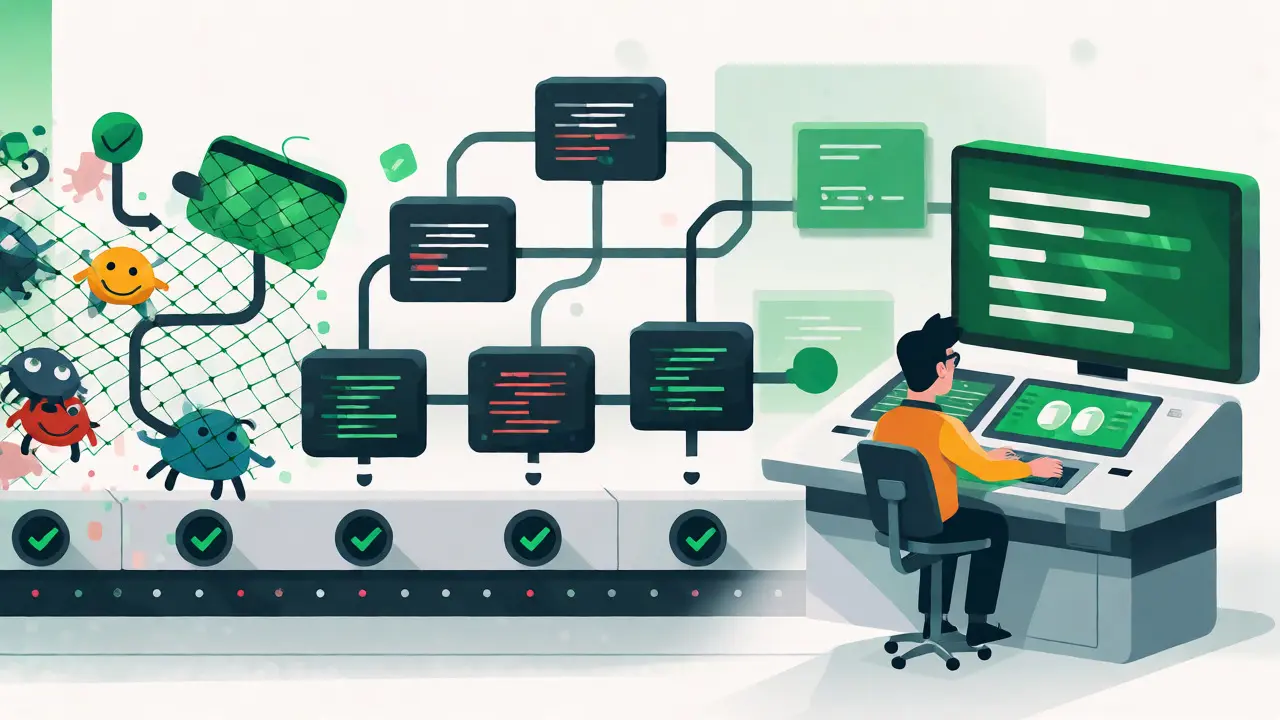
The old way was: write code, deploy it, then hope the auditors find problems. The new way is "shift left." This means integrating security tools directly into your CI/CD pipeline. You want to catch bugs when you commit code, not after it's live on the mainnet.
Modern scanning tools now identify 87% of vulnerabilities at the code commit stage. This drops the mean time to detection from weeks to hours. Tools like Slither for static analysis and Echidna for fuzz testing are essential here. Fuzzing throws random data at your contract to see if it crashes or behaves unexpectedly. It’s like stress-testing a bridge by driving heavy trucks over it until something breaks.
- Static Analysis: Use Slither to scan for known patterns and bad practices automatically.
- Fuzz Testing: Run Echidna to simulate thousands of random transaction sequences.
- Continuous Monitoring: Deploy runtime monitors like Forta Network to watch for suspicious activity in real-time.
Developers who adopt this approach report 78% fewer critical vulnerabilities. It requires upfront effort, but it saves massive headaches later. If you wait until launch to fix issues, you’re often dealing with frozen funds and angry communities.
Bridges and Cross-Chain Risks
Custodial bridges-where a central entity holds your tokens-are risky. They suffered 4.3 times more successful attacks than decentralized alternatives in 2025. The average loss per incident was $47 million for custodial bridges versus $12 million for decentralized ones. The lesson? Decentralization isn't just ideology; it's a security feature.
Solutions like Chainlink's Cross-Chain Interoperability Protocol (CCIP) are helping reduce these risks. CCIP adds a security layer that verifies messages across chains, cutting bridge-related vulnerabilities by over half in tested implementations. If you're building cross-chain apps, look for protocols that use standardized messaging layers rather than custom, ad-hoc bridge solutions.
Also, keep an eye on key management. Multi-Party Computation (MPC) networks are replacing traditional multisig wallets for protocol treasuries. MPC reduces single-point-of-failure risks by 92%. Instead of three keys needing to sign off, MPC splits the key into shards so no single person ever holds the full private key. It’s harder to hack because there’s nothing single to steal.
Regulation and Standards Are Coming
The Wild West days are ending. The EU’s Blockchain Security Directive now requires formal verification for public sector smart contracts handling over €1 million. In the US, the SEC issued guidance in late 2025 mandating specific security standards for DeFi protocols. Compliance isn't just good practice anymore; it's becoming law.
The Blockchain Standards Alliance (BSA) released version 3.1 of their framework, setting minimum requirements for contracts handling over $100 million. These include mandatory formal verification, continuous monitoring, and MPC-based key management. If you want enterprise adoption, you need to meet these bars. Fortune 500 companies are already implementing these protocols, with 61% adopting some form of smart contract security measures.
This regulatory pressure drives consolidation in the audit industry. The top five firms-OpenZeppelin, Trail of Bits, CertiK, Quantstamp, and BlockSec-now handle 58% of all major audits. Smaller firms struggle to compete on depth and reputation. For developers, this means choosing reputable auditors matters more than ever.

What’s Next: Quantum and AI Threats
Looking ahead, two big trends will shape security: quantum computing and AI-generated exploits. Quantum-resistant cryptography is increasing gas costs by 18-22%, but it’s necessary. Forrester predicts it will be standard for high-value contracts by 2028. Start planning for this transition now, especially if you’re building long-term infrastructure.
On the threat side, AI-generated exploits increased 300% in late 2025. Attackers are using AI to find vulnerabilities faster than humans can patch them. Immunefi’s threat report highlights that attackers are automating discovery. Your defense must also be automated. Relying solely on manual reviews leaves gaps that AI-powered attackers will exploit.
By 2027, Gartner predicts 85% of new smart contracts will have AI-assisted security features built-in. This doesn’t replace humans; it augments them. The best teams combine AI speed with human intuition. Protocols that implement comprehensive security frameworks see 5.3x higher survival rates over five years. Security is no longer a cost center; it’s a competitive advantage.
Frequently Asked Questions
Is formal verification worth the extra development time?
Yes, especially for high-value protocols. While it takes 3.2x longer, it reduces post-deployment vulnerabilities by 89%. For contracts handling over $50 million, it prevents catastrophic losses that far outweigh the initial time investment.
How do I secure cross-chain transactions?
Use decentralized bridges instead of custodial ones, as they suffer fewer attacks. Implement standardized protocols like Chainlink CCIP to verify messages across chains. Avoid custom bridge solutions unless thoroughly audited.
Can AI replace human smart contract auditors?
Not yet. AI tools help with speed and pattern recognition but miss 31% of novel attack vectors identified by humans. The best approach combines AI-assisted scanning with expert human review for business logic and complex edge cases.
What is Multi-Party Computation (MPC) in key management?
MPC splits a private key into multiple shards distributed among different parties. No single party holds the complete key, reducing single-point-of-failure risks by 92% compared to traditional multisig wallets. It enhances treasury security significantly.
How much does smart contract security cost?
Audit rates have risen to an average of $285 per hour due to increased demand. However, integrating security early via CI/CD pipelines reduces long-term costs by catching bugs pre-deployment. Comprehensive security is cheaper than recovering from a multi-million dollar exploit.