
FSC Crypto Regulations in Taiwan: Rules for Exchanges in 2026

You want to run a cryptocurrency exchange in Taiwan? The rules have changed. A lot. If you are still operating under the old "gray area" mindset from five years ago, you are already in trouble. Today, the Financial Supervisory Commission (FSC) is Taiwan's primary financial regulator that enforces strict anti-money laundering and consumer protection laws for digital assets watching every move. They don't just suggest best practices anymore; they mandate them.
The landscape shifted dramatically between 2023 and 2024. After the global shock of the FTX collapse, Taiwan moved fast. They didn't ban crypto. Instead, they built a cage around it-a sturdy, well-lit cage designed to keep fraudsters out and honest operators safe. For exchanges, this means one thing: compliance is no longer optional. It is the price of entry.
The Core Requirement: VASP Registration
Let’s cut to the chase. You cannot operate a crypto exchange in Taiwan without registering as a Virtual Asset Service Provider (VASP). This isn’t a suggestion. It is the law.
In July 2024, new measures solidified this requirement. Whether you are a local startup or a foreign giant like Binance or Coinbase trying to serve Taiwanese users, you must complete mandatory "Anti-Money Laundering Registration" with the FSC. This applies to both domestic and foreign entities.
Why did they do this? Simple. Money laundering. The FSC treats cryptocurrency as a "virtual commodity," not legal tender. Because it’s not money, it doesn’t get the same protections as cash-but it also doesn’t get the freedom of an unregulated market. It sits in the middle, heavily monitored.
If you skip this step, the penalties are severe. We aren’t talking about a small fine. We are talking about custodial sentences and heavy administrative penalties. The Ministry of Justice has backed these laws to criminalize financial crime via cryptocurrency. Do not test them.
The Eight Pillars of Compliance
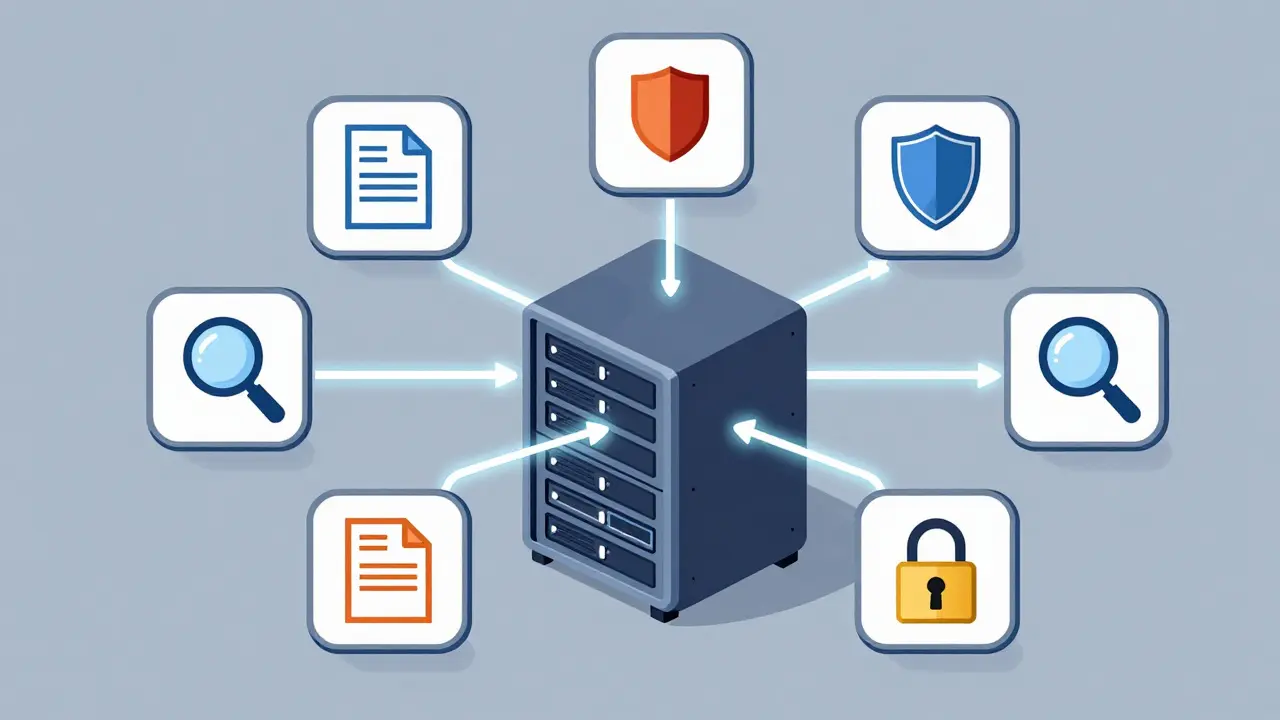
Registering is just the first step. Once you are registered, you need to follow the Guidelines for Virtual Asset Service Providers introduced in September 2023. These guidelines cover eight critical areas. Think of them as your daily operational checklist.
- Issuer Responsibilities: You must publish a "whitepaper" on your website. No more hidden terms. Everything needs to be clear.
- Review Mechanisms: You need a system to review virtual asset launches before listing them. Don’t just list whatever comes along.
- Asset Segregation: This is huge. Customer assets must be kept separate from your company’s operational funds. If you go bankrupt, their money stays theirs.
- Fair Transaction Conduct: Your trading platform must be transparent. No front-running, no hidden fees, no manipulation.
- Management Systems: You need robust operations and info security protocols. This includes managing both cold and hot wallets securely.
- Public Disclosure: Share relevant information with the public. Transparency builds trust.
- Internal Controls & Audits: Regular audits are required. You need internal checks to catch errors or fraud early.
- Cross-Border Provisions: Specific rules apply if you are operating from outside Taiwan but serving locals.
Here is the tricky part: these guidelines technically don’t have "hard law" status yet. But here is the reality check-the industry expects the FSC to make them mandatory very soon. Waiting for the hard law to arrive before complying is a bad strategy. Comply now, or get left behind.
Security Tokens vs. Spot Crypto
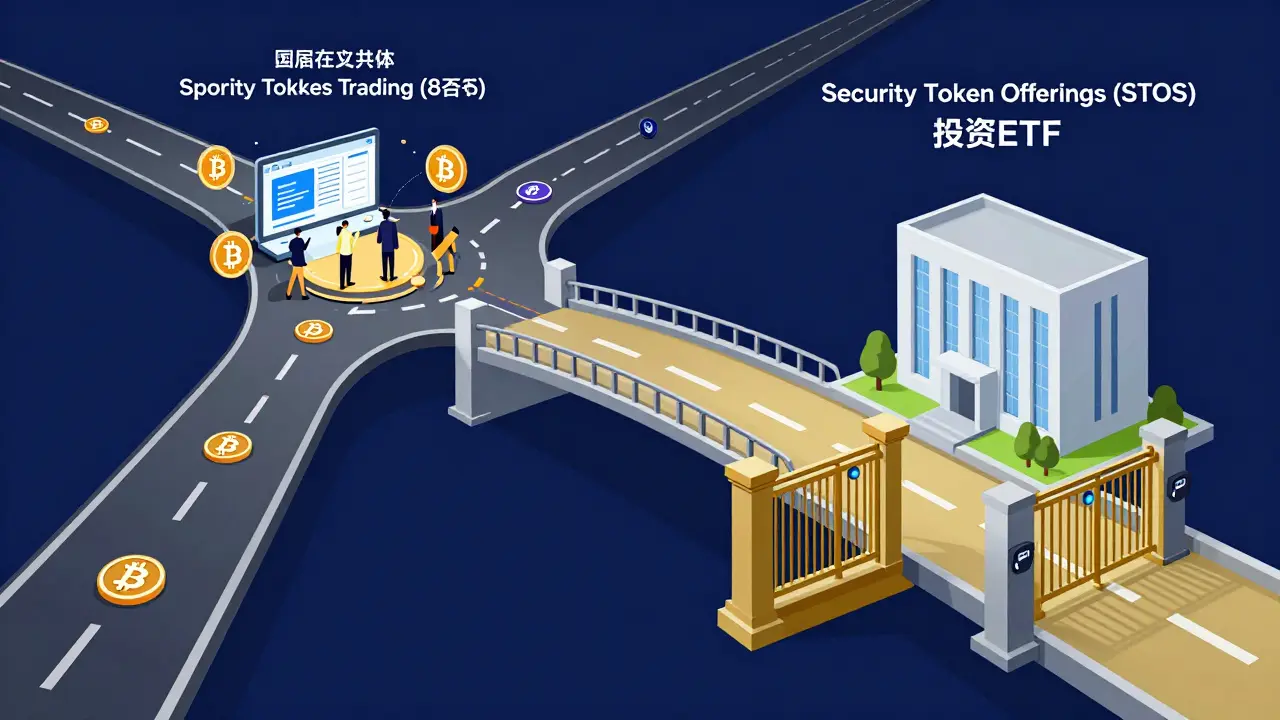
Not all crypto is treated the same. The FSC draws a sharp line between regular cryptocurrencies (like Bitcoin or Ethereum) and Security Tokens.
If your token qualifies as a security, it falls under the Securities and Exchange Act. This is a much stricter regime. Only licensed securities dealers can trade these tokens. The FSC authorized the Taipei Exchange (TPEx) is the official stock exchange in Taiwan responsible for regulating security token offerings (STOs) to handle this.
Is the STO market booming? Not really. The barriers to entry are high. To date, there is only one officially approved security token issuance program in Taiwan. Why? Because the compliance burden is massive. Most projects stick to non-security cryptocurrencies because the path is clearer, even if it’s still regulated.
ETFs and Institutional Access
While retail investors face strict rules, institutional players have a new door opening. The FSC worked with the Securities Business Association of the Republic of China to allow professional investors to buy into foreign virtual asset ETFs.
This is a big deal. It means traditional finance is slowly accepting crypto, but only for qualified investors. You can’t just open an app and buy a Bitcoin ETF like you might in the US or Europe. You need to meet specific investor qualification requirements. This keeps the risk contained while letting institutions play.
The Industry Response: Self-Regulation
Are exchanges fighting back? Surprisingly, no. They are cooperating. Major players formed the "Taiwan Virtual Asset Service Provider Association," a 24-member group. They did this during the legislative debates to show they are serious about AML/CFT (Anti-Money Laundering/Counter-Financing of Terrorism) compliance.
Why would they do this? Because chaos hurts business. By forming a self-regulatory body, they provide input on practical challenges while supporting the FSC’s goals. It signals to regulators: "We are here to stay, and we want to play by the rules."
What Comes Next? The 2025-2026 Outlook
We are in 2026. What does the future look like? The FSC is working on a comprehensive cryptocurrency law. A feasibility study was expected late 2024, and draft legislation was anticipated mid-2025. By now, you should be monitoring these drafts closely.
The goal is clarity. The current framework is strong, but a dedicated law will remove any remaining ambiguity. Expect more detailed operational guidelines. You might also see expanded access to crypto ETFs beyond just professional investors, though this will likely happen slowly.
Taiwan is choosing a "middle path." They are not banning crypto like some countries. They are not ignoring it like others used to. They are building a regulated, safe environment. For exchanges, this means higher costs but also higher trust. And in crypto, trust is the most valuable currency.
| Requirement | Spot Crypto Exchanges | Security Token Offerings (STOs) |
|---|---|---|
| Registration Body | FSC (as VASP) | FSC + Taipei Exchange (TPEx) |
| Legal Basis | AML Act / VASP Guidelines | Securities and Exchange Act |
| Market Maturity | Growing, active competition | Limited, only 1 approved program |
| Investor Type | Retail and Professional | Licensed Dealers / Professional Investors |
| Key Focus | AML, Consumer Protection | Securities Law Compliance |
Common Pitfalls to Avoid
Many exchanges fail because they misunderstand the nuance. Here are three mistakes I see often:
- Ignoring Cross-Border Rules: Just because your server is in Singapore doesn’t mean you’re exempt. If you target Taiwanese users, you need FSC registration.
- Mixing Funds: Never mix customer deposits with company revenue. The segregation rule is strict for a reason-protecting users.
- Assuming Guidelines Are Soft: Treating the VASP guidelines as suggestions is risky. The FSC is moving toward mandatory enforcement.
Stay compliant. Stay transparent. The market rewards those who respect the rules.
Do foreign crypto exchanges need to register with the FSC?
Yes. As of July 2024, all Virtual Asset Service Providers (VASPs), including foreign entities operating in or targeting Taiwan, must complete mandatory Anti-Money Laundering Registration with the Financial Supervisory Commission (FSC).
What happens if an exchange operates without FSC registration?
Non-compliance results in severe penalties, including custodial sentences and significant administrative fines. The Ministry of Justice actively pursues financial crimes involving cryptocurrency, making evasion extremely risky.
Are the VASP Guidelines legally binding?
Currently, they do not have "hard law" status, but industry expectations indicate the FSC will progressively mandate compliance. Treating them as optional is a dangerous strategy given the regulatory trend.
Can retail investors buy crypto ETFs in Taiwan?
No. Currently, only professional investors meeting specific qualification requirements are allowed to invest in foreign virtual asset exchange-traded funds, as per guidelines established by the FSC and the Securities Business Association.
How many security token issuances are approved in Taiwan?
As of late 2024, there is only one officially approved security token issuance program in Taiwan due to high regulatory thresholds and compliance burdens under the Securities and Exchange Act.
24 Comments
Taiwan is finally getting its act together. The US should look at this model instead of letting every scam artist set up shop in Delaware. It’s about time regulators stopped treating crypto like a wild west and started enforcing actual laws. This isn’t just bureaucracy, it’s necessary protection for the little guy who doesn’t have the stomach to lose their life savings to another FTX-style collapse.
Oh my gosh! I am so happy to see this kind of clarity!! 😊 It makes me feel so much safer knowing that there are rules in place now. 🌟 I was always worried about where my money went but now it sounds like they are actually protecting us! Isn't that wonderful? ✨
the cage is real but is it a cage or a cocoon? we think we are safe but maybe we are just being prepared for something else entirely. the lines between regulation and control are blurry af. who decides what is fair? the system is rigged no matter how you slice it.
This article is basic stuff. If you are running an exchange and you don't know about VASP registration by 2026, you deserve to go to jail. The segregation of assets is not rocket science. It is elementary accounting. Stop acting surprised that fraud has consequences.
I can only imagine the sheer weight of responsibility these exchanges must feel! It is dramatic, yes, but also incredibly important. We are witnessing history in real-time as the digital world collides with traditional finance. Let us hope for the best outcome for everyone involved!
Look, I get the compliance thing, but does anyone else feel like the government is just trying to track every single transaction we make? 🕵️♂️ It’s all about control. They want to know where your money comes from and where it goes. Privacy is dead, folks. Deal with it. 💀
It is indeed a very interesting development in the regulatory landscape of Asia. One must consider the long-term implications for cross-border transactions and the harmonization of international standards. The approach taken by the Financial Supervisory Commission appears to be quite rigorous and thorough in its methodology.
The reality is that the market was broken. Now it is being fixed. You either adapt or die. That is the way of business. The penalties are harsh because the crimes were severe. Do not complain about the rules when you broke them for years.
Obviously, those who cannot comprehend the nuances of AML/CFT frameworks are simply not cut out for this industry. The elite players understand that compliance is a moat. It keeps the amateurs out. Those who fail to grasp this fundamental truth will inevitably be marginalized by the sophisticated institutions. :)
This is absolutely tragic for the freedom of money! 😡 How dare they put restrictions on our digital assets? It is a moral failing of the highest order to restrict how people manage their own wealth. We are losing our liberty one regulation at a time! 😤
Actually, the notion that this is purely restrictive is flawed; it is protective. Furthermore, the idea that guidelines are not binding is a dangerous misconception among the uninitiated. One must adhere to the spirit of the law even if the letter is still being written. It is imperative to respect the process.
Fact: If you are not registered, you are illegal. End of story. No need for debate.
the bureaucratic dance continues. they call it safety i call it stagnation. the velvet glove over the iron fist of state control. we are herding cats into cages and pretending they are happy. the irony is palpable to those who care to look beyond the shiny veneer of compliance.
Wow, this is such a sophisticated move by Taiwan! 🎩✨ It shows a level of maturity that many other jurisdictions lack. I truly admire the foresight here. It is going to be fascinating to watch how this plays out globally. Very impressive indeed! 👏
When we think about the nature of trust in society, we must ask ourselves if technology can ever truly replace the human element of verification. The regulations seem to suggest that without oversight, chaos ensues, which is a philosophical stance that has been debated for centuries. It is a long road ahead for all of us.
I have been following this closely and it seems that the complexity of the security token offerings is often underestimated by the general public. The barriers to entry are intentionally high to prevent fraud, but this also stifles innovation for smaller entities who might have viable projects. It is a double-edged sword that requires careful navigation.
It is really encouraging to see the industry coming together through self-regulation. 🌸 This collaborative approach helps build trust with the regulators and shows that the community cares about integrity. Let us support these efforts for a safer financial future! 🙌
The average retail investor will never understand why their access to ETFs is restricted. It is elitist nonsense disguised as protection. Only the wealthy professionals get to play with the big toys while the rest of us are left watching from the sidelines. Typical.
i mean if u dont mix ur funds then why r they so scared? feels like they r punishing the innocent for the sins of the few. its just not right to treat everyone like criminals before they even do anything wrong. the whole vibe is off.
I really hope this leads to more transparency for everyone!! 🌈 It can be scary but I think it is better than the alternative. Lets keep each other informed and stay positive about the changes! 💖
It is important to acknowledge that while the regulations are strict, they provide a clear path for legitimate businesses. Cooperation with the FSC is the only viable strategy for long-term success in the Taiwanese market. Disregarding these rules is not an option.
The operational risk mitigation strategies outlined in the VASP guidelines are fundamentally sound. However, the lack of hard law status creates a liability gray area that exposes operators to significant legal uncertainty. This regulatory arbitrage opportunity will likely persist until comprehensive legislation is enacted.
Yeah, it makes sense. If you want to run a business, you gotta follow the rules. It is pretty straightforward really. Just do what they say and you should be fine. No need to overcomplicate it.
Boring! 😴 Where is the fun in all this compliance? I miss the days when you could just list any shitcoin and watch it moon! 🚀 Now it is all suits and ties and paperwork. What happened to the revolution? This is a total buzzkill for the culture! 📉