
Flamingo Finance Review 2026: Features, Risks, and FLM Token Analysis

Have you ever clicked through a flashy crypto dashboard only to realize the interface is smooth, but the underlying mechanics are murky? That’s the exact dilemma facing users of Flamingo Finance, a multi-protocol decentralized finance (DeFi) platform originally launched on the Neo blockchain in 2020. On paper, it promises everything: swaps, lending, perpetual contracts, and yield farming, all in one place. In reality, the picture is far more complicated.
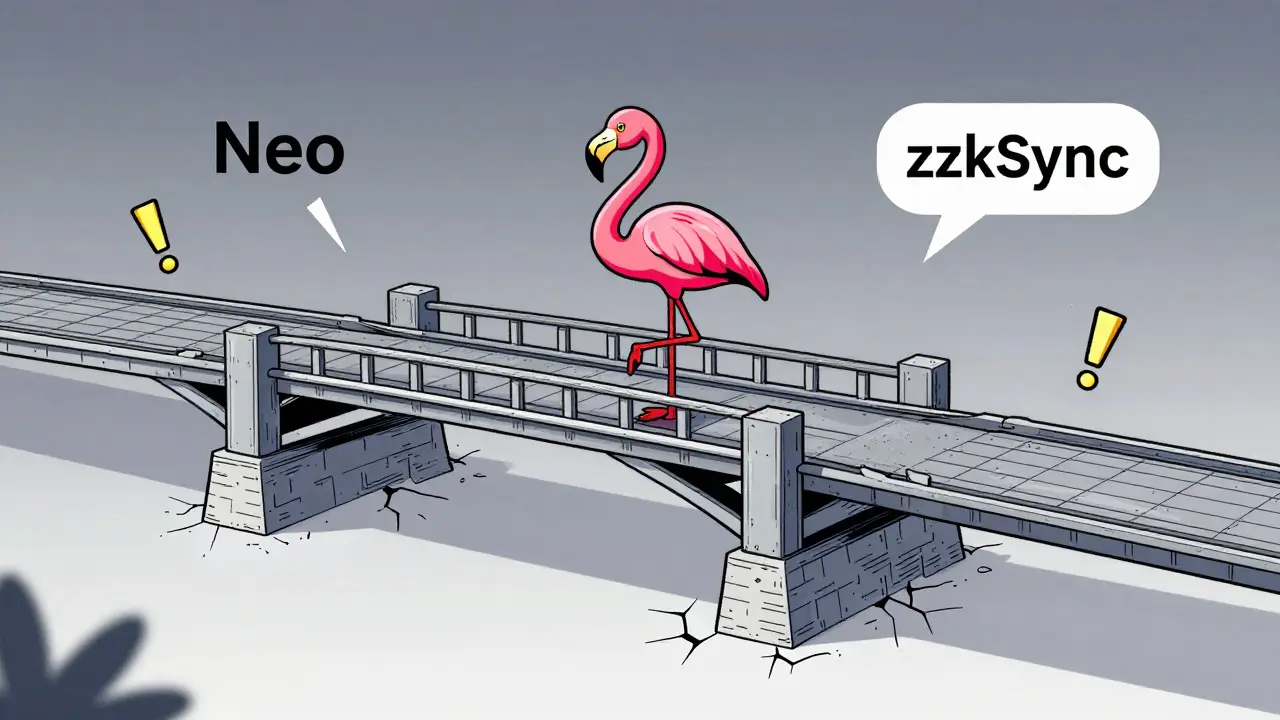
If you’re looking at Flamingo Finance in mid-2026, you aren’t just evaluating a tool; you’re weighing significant risks against potential rewards. The platform has expanded from its Neo roots to zkSync and other chains, aiming to be a "one-stop shop" for DeFi. But recent data reveals cracks in the foundation-liquidity fragmentation, regulatory gray areas, and a volatile native token. This review cuts through the marketing hype to tell you what actually happens when you connect your wallet.
What Is Flamingo Finance?
At its core, Flamingo Finance is not a traditional centralized exchange like Binance or Coinbase. It is a decentralized protocol that aggregates six core modules: wrapper, swap, vault, perpetual contracts, synthetic stablecoin (FUSD), and DAO governance. Think of it as a Swiss Army knife for DeFi, rather than a single specialized tool.
The platform was built to remove the friction of jumping between different apps. Instead of using Uniswap for swaps, Aave for lending, and GMX for perps, Flamingo attempts to house these functions under one roof. Users interact with the platform by connecting wallets like MetaMask or NeoLine. There is no email sign-up, no KYC (Know Your Customer) verification, and no customer support hotline. You are entirely on your own.
The native asset driving this ecosystem is the FLM token. This isn’t just a currency; it’s the key to the kingdom. Holders use FLM to vote on protocol upgrades, determine fee distributions, and decide which new assets get onboarded. If the platform succeeds, FLM should theoretically benefit. If it stumbles, the token takes the hit first.
Core Features: The Good, The Bad, and The Ugly
Let’s break down the actual utilities offered by the platform. Understanding these features is crucial because they define where your money goes and how much risk you assume.
- Swaps: Using Automated Market Maker (AMM) technology, you can trade tokens directly. The interface is clean, but slippage can be high if liquidity is thin-a common issue for smaller DeFi protocols.
- Vaults: These are yield aggregation tools. You deposit assets, and the vault automatically moves them to generate returns. Sounds great, until you look at the net APY after gas fees and impermanent loss.
- Perpetual Contracts (Perps): Flamingo allows leveraged trading without a central order book. This attracts traders who want exposure to price movements without owning the underlying asset.
- FUSD Stablecoin: A synthetic dollar pegged to USD. It serves as the base pair for many trades within the ecosystem, reducing volatility risk for traders.
- DAO Governance: Community-driven decisions. While democratic, this can lead to slow execution or decisions that favor large token holders over small users.
The biggest selling point is convenience. For a user who wants to farm yield, trade perps, and swap tokens without switching tabs, Flamingo delivers a polished experience. However, "convenience" often comes at the cost of depth. Specialized protocols usually have deeper liquidity and better security audits because they focus on doing one thing perfectly.
Security and Architecture: Are Your Funds Safe?
In DeFi, "not your keys, not your coins" is the golden rule. With Flamingo, you retain control of your private keys, which is a plus. But that doesn’t mean the smart contracts themselves are immune to failure.
One notable event occurred in May 2025 during widespread npm supply chain compromises that affected many Web3 projects. Flamingo Finance remained unaffected. Why? Because its architecture does not rely on direct EVM transfer flows for its core DEX operations. It uses EVM primarily for cross-chain messaging. This technical nuance saved the platform from immediate disaster, showcasing a resilient design.
However, resilience against one type of attack doesn’t guarantee safety against others. Smart contract bugs, oracle manipulation, and bridge exploits remain constant threats. The platform reopened its NEO N3 cross-chain bridge in May 2025 to enhance interoperability. Bridges are historically the weakest link in DeFi security. Every time you move assets across chains via Flamingo’s bridge, you are trusting code that has been targeted repeatedly by hackers across the industry.
Furthermore, there is no insurance fund. If a bug drains a vault, there is no recourse. No chargebacks, no support tickets. The loss is final.
Tokenomics and Market Performance
The value of the FLM token is a critical metric for judging the health of the ecosystem. As of late 2025, the token faced significant headwinds.
| Metric | Value | Context |
|---|---|---|
| Price Range | $0.019 - $0.147 | Highly volatile; ATH was $0.1475 |
| Market Cap | ~$19.7 Million | Small compared to giants like Uniswap ($4B+) |
| Circulating Supply | ~545.7 Million | Dilution risk if new tokens are issued |
| 24h Volume | ~$9 Million | Decent activity, but low relative to TVL |
| Binance Status | Monitoring Tag | Risk of delisting; hurts confidence |
A major red flag emerged in April 2025 when Binance placed a "Monitoring Tag" on FLM. This tag indicates that the exchange is reviewing the token for potential delisting. For a project that relies heavily on liquidity from major exchanges, this is a severe blow. It signals uncertainty about the project’s compliance, utility, or long-term viability.
Analyst predictions were wildly contradictory. CoinCodex forecasted a bearish drop to $0.019 by November 2025, while CoinLore predicted a surge to $0.1249. This divergence highlights the speculative nature of the token. Without clear revenue streams flowing back to token holders (like buybacks or dividends), the price is driven purely by sentiment and speculation.
User Experience and Liquidity Challenges
Getting started with Flamingo Finance is technically easy. Connect your wallet, approve transactions, and start swapping. Most users report completing their first transaction within 15-20 minutes. The UI is modern and intuitive, avoiding the cluttered look of older DeFi interfaces.
But ease of use masks a deeper problem: liquidity fragmentation. Because Flamingo operates on multiple chains (Neo, zkSync, etc.), its liquidity is spread thin. Compare this to Ethereum-based protocols that concentrate billions in a single pool. When liquidity is fragmented, you face higher slippage. If you try to swap a large amount of FLM or another asset, you might end up paying significantly more than the market rate because the pool can’t absorb your trade efficiently.
User reviews on platforms like Trustpilot and Reddit reflect this frustration. One common complaint involves inconsistent yields. A vault promising 20% APY might deliver only 5% after accounting for gas fees and impermanent loss. Another issue is support. With a Telegram group of ~12,500 members and Discord of ~8,300, the community is active, but response times for technical issues average 12-24 hours. In a fast-moving market, waiting half a day for an answer can be costly.

Regulatory Risks and Future Outlook
The regulatory landscape for DeFi is tightening globally. Flamingo’s synthetic stablecoin, FUSD, operates in a gray area. Following the U.S. SEC’s February 2025 guidance on algorithmic stablecoins, projects like Flamingo face scrutiny. If regulators classify FUSD as a security or unregistered banking product, the platform could face legal challenges that shut down operations in certain jurisdictions.
Additionally, there have been reports linking "Flamingo Loans" to suspicious entities, though it is unclear if this refers to the core protocol or a separate, potentially fraudulent entity using similar branding. Always verify the official URLs and contract addresses before interacting.
Looking ahead, the platform plans to integrate with more EVM-compatible chains and revamp its tokenomics in Q3 2025. These moves aim to address the "uncertain token economics" criticized by analysts. However, execution is key. Many projects announce ambitious roadmaps and fail to deliver. Until Flamingo demonstrates consistent growth in Total Value Locked (TVL) and resolves the Binance monitoring status, caution is advised.
Who Should Use Flamingo Finance?
This platform is not for everyone. Here is a quick breakdown:
- Good for: Experienced DeFi users comfortable with self-custody, high risk, and managing cross-chain assets. Those who specifically need access to Neo-based DeFi or want an all-in-one interface for small-scale trading.
- Bad for: Beginners who don’t understand impermanent loss, gas fees, or smart contract risks. Investors looking for stable, insured returns. Anyone uncomfortable with the possibility of total loss due to hacks or rug pulls.
If you decide to proceed, start small. Test the waters with amounts you can afford to lose. Monitor the Binance listing status closely. And never ignore the importance of verifying contract addresses on official channels.
Is Flamingo Finance a centralized or decentralized exchange?
Flamingo Finance is a decentralized exchange (DEX). It operates on public blockchains like Neo and zkSync. Users retain control of their funds via personal wallets, and there is no central authority holding assets or requiring KYC verification.
What is the FLM token used for?
The FLM token is the native governance token of Flamingo Finance. It is used for voting on protocol upgrades, fee distribution models, and asset onboarding. It also serves as a medium of exchange within the ecosystem, particularly for trading pairs involving FUSD.
Why did Binance put a Monitoring Tag on FLM?
In April 2025, Binance placed a Monitoring Tag on FLM, indicating the token is under review for potential delisting. This often happens due to concerns about regulatory compliance, trading volume sustainability, or project transparency. It signals increased risk for holders relying on Binance for liquidity.
How secure is Flamingo Finance?
While Flamingo survived the May 2025 npm supply chain attacks due to its specific architecture, all DeFi platforms carry inherent smart contract risks. There is no insurance fund. Users must trust the integrity of the code and the security of cross-chain bridges, which are frequent targets for hackers.
Can I earn yield on Flamingo Finance?
Yes, through its Vault feature. However, reported yields can vary significantly. Some users have noted that promised APYs may not match actual returns after factoring in gas fees and impermanent loss. Always calculate the net return before committing funds.
What is FUSD?
FUSD is a synthetic stablecoin pegged to the US Dollar, native to the Flamingo Finance ecosystem. It is used as a base pair for trading and lending, allowing users to hedge against crypto volatility without leaving the platform.
Which blockchains does Flamingo Finance support?
Originally launched on the Neo blockchain, Flamingo Finance has expanded to include zkSync and other EVM-compatible chains. This multi-chain approach aims to increase accessibility but can lead to liquidity fragmentation.
Is Flamingo Finance regulated?
No, Flamingo Finance is a decentralized protocol and operates without direct regulatory oversight. This lack of regulation means there is no consumer protection or recourse in case of fraud or technical failures. Regulatory changes, such as those regarding stablecoins, could impact its operations.