
Favorable Crypto Tax Framework in Malta: How to Legally Pay 0% on Crypto Gains
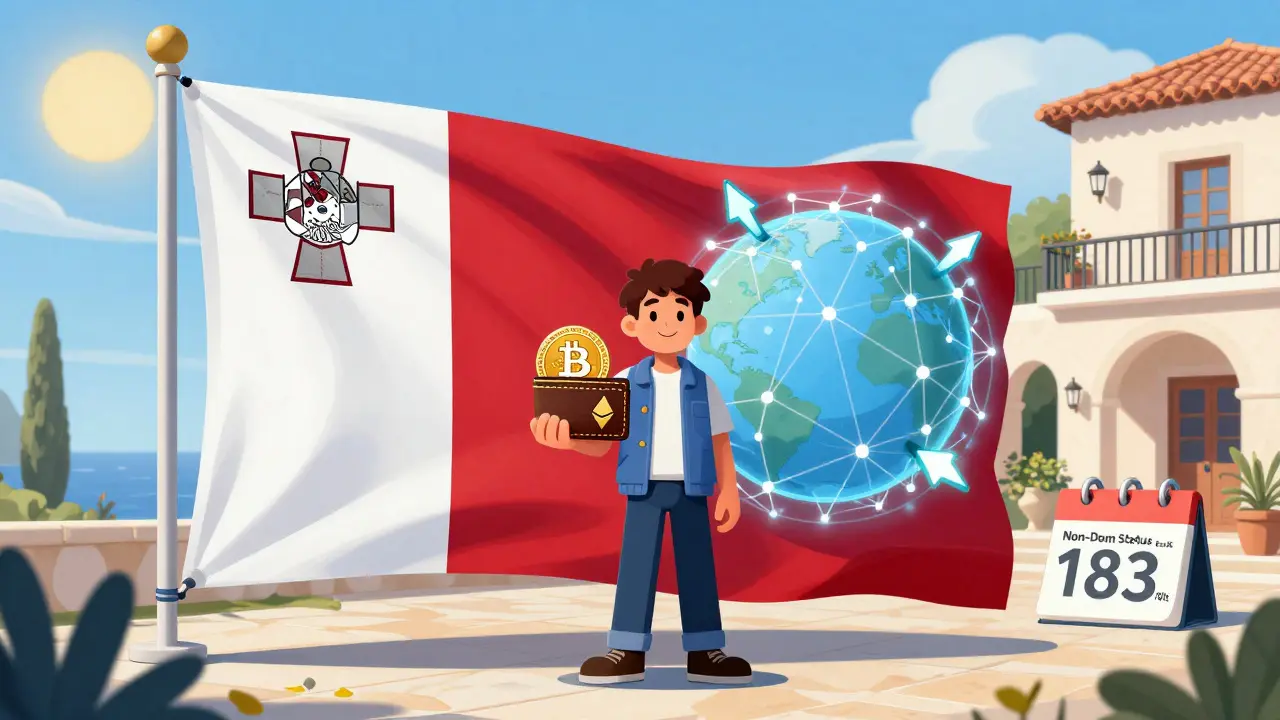
When it comes to paying less tax on cryptocurrency gains, Malta stands out-not because it’s easy, but because it’s one of the few places in the world where you can legally pay 0% on crypto profits. Not through loopholes. Not through secrecy. Through a structured, legal system built into its tax code. But here’s the catch: most people who think they can just move to Malta and avoid taxes end up paying more than they would at home. Why? Because the system isn’t about location. It’s about structure.
How Malta Lets You Pay 0% on Crypto Gains
Malta doesn’t have a capital gains tax on cryptocurrencies. That’s not a rumor. It’s the law. But that doesn’t mean everyone gets a free pass. The real advantage comes from Malta’s remittance-based taxation system, which only taxes income you bring into the country. If you earn crypto profits overseas and never transfer them to a Maltese bank account, you owe nothing. This applies to individuals who qualify as non-domiciled residents-often called "non-doms." To qualify, you need three things:- Live in Malta for at least 183 days per year
- Keep your legal domicile (permanent home) outside Malta
- Only pay tax on money you actually bring into Malta
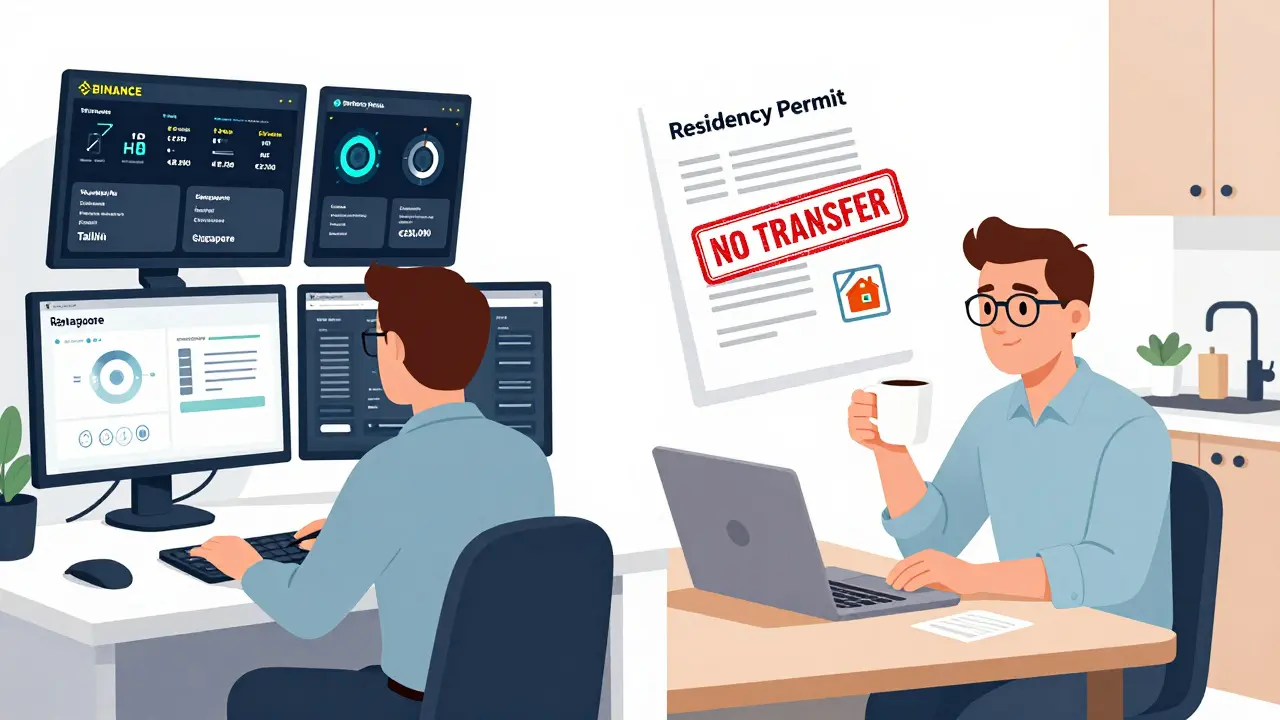
This means if you trade Bitcoin on Binance, mine Ethereum from a home rig in Tallinn, or earn staking rewards from a DeFi protocol based in Singapore-all while living in Malta-you pay zero tax, as long as you don’t move that money into a Maltese bank account. Your crypto stays in your wallet. Your profits stay offshore. And legally, Malta doesn’t touch it.
Who Doesn’t Qualify for 0% Tax?
Not everyone gets this benefit. If you’re a Maltese citizen, or if you’ve been a tax resident in Malta for more than five years, you’re no longer eligible for non-dom status. You’ll fall under the standard progressive tax system: 15% to 35% on income, depending on how much you earn.And here’s where most people get tripped up: business income is treated differently than capital gains. If you’re trading crypto daily-buying, selling, swapping tokens multiple times a week-you’re likely considered a professional trader. The Maltese tax authorities don’t care if you call yourself an "investor." If your activity looks like a business, you pay business tax. That’s 35% on profits, unless you qualify for a reduced rate under specific incentives.
Same goes for mining and staking. If you’re running a node, operating a mining rig, or validating blocks as a full-time job, the Maltese government sees that as a trade. You must report income from rewards, deduct expenses (electricity, hardware, cooling), and pay tax on net profits. It’s not about the asset-it’s about how you use it.
Crypto-to-Crypto Trades: The Gray Zone
One of the biggest unanswered questions in Malta’s tax code is what happens when you swap one crypto for another. Do you owe tax? Is it a taxable event? Right now, the answer is: it depends.Malta doesn’t have a clear rule yet. The government is expected to finalize guidance in 2025, but as of now, there’s no official stance. Some tax advisors treat crypto-to-crypto trades as non-taxable, arguing that no fiat currency was involved. Others say every swap is a disposal of one asset and an acquisition of another-meaning capital gains apply. If you’re swapping ETH for SOL, are you selling ETH? Or just moving value?
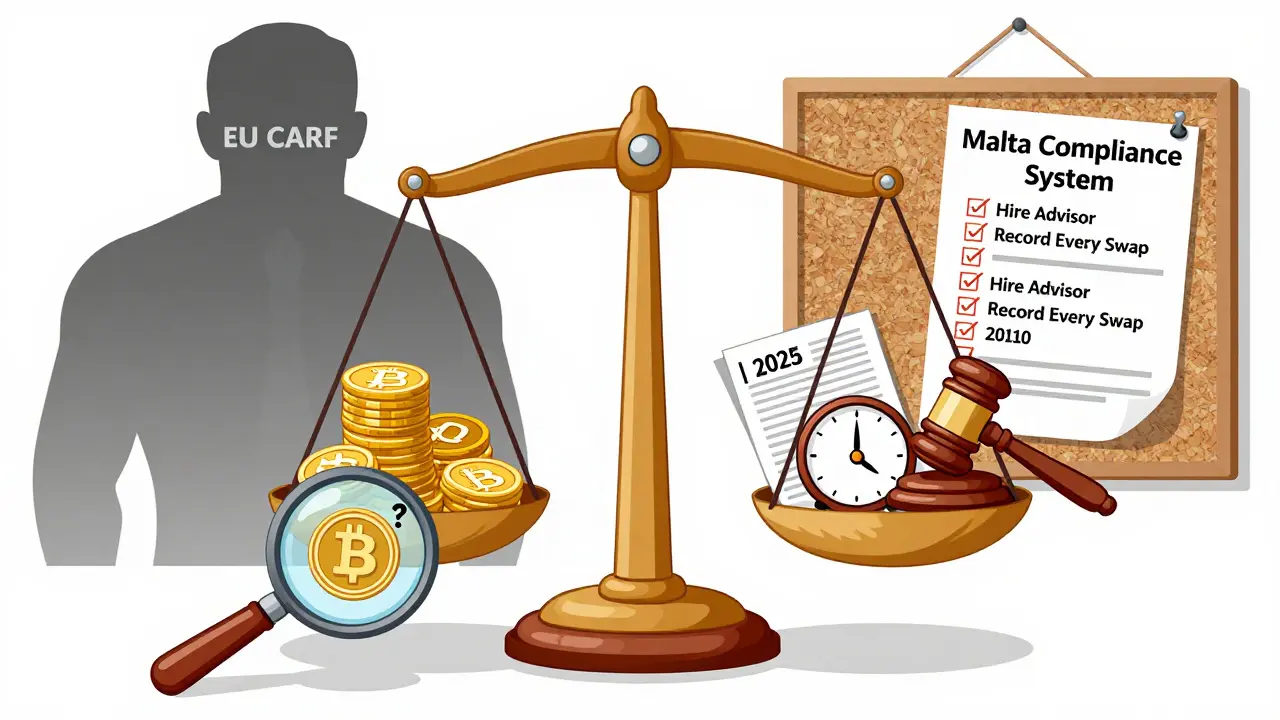
This ambiguity is dangerous. If you file your taxes assuming no tax is due, and the government later says otherwise, you could face penalties and back taxes. The safest move? Keep detailed records of every trade, including timestamps, values in EUR at the time of swap, and wallet addresses. If you’re unsure, treat every swap as a taxable event until official guidance comes.
What About Airdrops and ICOs?
Airdrops-free tokens sent to your wallet-are taxable when you receive them. The value at the time you gain control over the tokens counts as income. Same with tokens from an Initial Coin Offering (ICO). If you bought into a project and later sold, you pay tax on the profit. If you received tokens as part of a community reward, you still owe tax on their fair market value at receipt.There’s no exemption for "free" crypto. The Maltese tax authority treats it like any other income: cash, stock, or a gift card. You must report it. You must value it in euros. And you must keep proof.
The Real Cost of Living in Malta
You can’t just show up and claim non-dom status. To become a tax resident, you need to prove you’re living there. That means renting or buying property. The minimum investment? €8,750 per year for a rental, or €220,000 to buy. That’s not a tax-it’s a residency requirement. On top of that, there are administrative fees, legal costs, and mandatory health insurance.And don’t forget: you must spend 183 days in Malta, every single year. No exceptions. If you leave for 184 days, you lose your status. No grace period. No warning. Your tax benefits vanish overnight.
Then there’s the cost of professional help. A single consultation with a Maltese crypto tax lawyer can cost €1,500 or more. Ongoing compliance? Another €3,000-€5,000 per year. Most people don’t realize they’re not just paying for residency-they’re paying for a tax architecture. And if you get it wrong? The penalties can be worse than the tax you were trying to avoid.
Malta vs. Other Crypto Tax Havens
Malta isn’t the only place offering crypto tax advantages. But it’s one of the few that’s both EU-compliant and genuinely transparent.Portugal used to be a top choice-no capital gains tax on crypto. But in 2023, they tightened rules. Now, professional traders pay up to 28%. Malta’s system is more stable because it’s built into law, not policy.
Dubai offers 0% personal income tax with no residency days required. But if you need to bank in euros, deal with EU regulators, or work with European clients, Dubai’s lack of EU alignment makes it risky. Malta gives you EU passport access, EU banking, and EU regulatory clarity-all under one roof.
Switzerland is great for crypto businesses, but its personal tax rates are higher. Zurich can charge 20-40% depending on the canton. Malta’s 0% rate for non-doms is unmatched in Europe.
What You Must Do to Make This Work
If you’re serious about using Malta’s system, here’s what you actually need to do:- Choose a residency path: rent (€8,750/year) or buy (€220,000+)
- Apply for a Malta residence permit through the Malta Residency & Visa Programme
- Keep your domicile outside Malta (your legal home, not your address)
- Stay in Malta for 183+ days per year-no exceptions
- Use non-Maltese wallets and exchanges for trading and holding
- Never transfer crypto profits into a Maltese bank account
- Hire a Maltese tax advisor who specializes in crypto-don’t wing it
- Keep records of every transaction, wallet address, and trade date
It’s not about moving to Malta. It’s about building a legal structure around your crypto holdings. And that structure takes time, money, and expertise.
The Future of Crypto Tax in Malta
Malta isn’t resting. The government is already preparing updates to its crypto tax rules for 2025. Expect clearer guidelines on crypto-to-crypto trades. New incentives for long-term holders. Possibly lower tax rates for DAOs and decentralized projects. The country is betting big on blockchain, and it’s willing to adapt to stay ahead.But here’s the reality: Malta’s system won’t last forever. As global tax standards tighten-especially with the EU’s Crypto-Asset Reporting Framework (CARF)-Malta will have to comply. The 0% benefit for non-doms is legal today. It could change tomorrow. That’s why acting now, with professional guidance, is critical.
Final Warning
Don’t listen to YouTube influencers who say, "Just move to Malta and pay 0% tax." That’s a recipe for disaster. The Maltese tax authority has clear rules. They’re not hidden. They’re just complicated. And they’re enforced.If you’re thinking about this, ask yourself: Are you prepared to live in Malta for half the year? Are you ready to spend thousands on legal and accounting fees? Can you handle the paperwork, the audits, the constant compliance?
If the answer is yes, Malta could be your best tax advantage in Europe. If the answer is no-you’re better off staying where you are and planning your crypto taxes the smart way.
Can I pay 0% tax on crypto in Malta without living there?
No. To qualify for Malta’s 0% crypto tax rate, you must be a tax resident by living in Malta for at least 183 days per year. You can’t just set up a company or open a bank account remotely. Physical presence is mandatory.
Are crypto-to-crypto trades taxable in Malta?
As of 2025, Malta has no official rule. The government is expected to clarify this in 2025. Until then, the safest approach is to treat every swap as a taxable event-recording the value in euros at the time of trade. Many tax advisors recommend reporting these trades to avoid penalties later.
Do I pay tax on staking rewards in Malta?
Yes. Staking rewards are considered business income if you’re doing it regularly. Even if you’re just staking your own ETH, the Maltese tax authority treats the value of rewards as taxable income when received. You can deduct related expenses like electricity and hardware to reduce your taxable amount.
What’s the minimum investment to qualify for Malta residency?
You must either rent property for at least €8,750 per year or purchase property worth €220,000 or more. This is not a tax-it’s a residency requirement. You also need to pay administrative fees and obtain health insurance.
Is Malta’s crypto tax system at risk of changing?
Yes. Malta is part of the EU and must comply with international tax standards like CARF. While the non-dom system is currently legal, future changes to EU rules or global tax agreements could tighten requirements. The government is likely to adjust incentives to stay competitive, but the core 0% benefit for non-doms is protected under current law.
17 Comments
Bro this is wild. I was just staking ETH on my rig in Brooklyn and thought I was being slick. Turns out if I moved those rewards to my Maltese account, I'd be on the hook? 😳 Like, I didn't even know Malta had a tax code that actually made sense. This is the first time I've seen a crypto tax guide that doesn't read like a legal thriller written by a robot. 🤯
I really appreciate how thorough this breakdown is. Too many people treat tax optimization like a video game cheat code. The part about crypto-to-crypto trades being a gray zone? That's the exact reason I keep every single trade timestamped and valued in EUR. It's not about avoiding tax-it's about not getting blindsided by bureaucracy later. Respect.
This is why India must never adopt such policies. We have millions who live paycheck to paycheck, and now you want to let rich Americans play tax roulette while we struggle with GST? This is not freedom-it is economic colonialism dressed up as innovation. The world does not need more havens. It needs justice.
LMAO. So you're telling me the government is gonna let me live in Malta for 183 days a year... while they track every single swap I make? 🤨 Yeah right. This is all a CIA op to funnel crypto into EU banks. Next they'll say my MetaMask is a "national security risk."
I’ve been in Malta for 6 months now. The system works if you treat it like a job. I keep all my wallets on hardware, use Binance and Kraken (non-Maltese), and never touch my Maltese bank account. I even have a dedicated burner laptop for trading. Costs? Yeah. But I saved $87k last year in taxes. Worth every euro.
I’m so done with this "just move to Malta" nonsense. 🤡 Like, you think you’re a crypto wizard? Nah. You’re just a guy who got lucky and now thinks he’s Elon. I’ve seen 3 people get audited in Valletta last year. One of them cried in court. 💔 The real win? Not paying tax. The real loss? Your sanity.
You say 'non-domiciled residents' like it's a magic wand. But domicile isn't just where you live-it's where your heart, family, and legal identity reside. If you're claiming domicile outside Malta while living there 183 days a year, you're committing fraud. And the EU is watching. You think they don't have data sharing? Wake up.
Staking rewards taxable? Bro I thought free tokens were free. Now I gotta report my Solana airdrops? 😭 I just wanted to chill and earn some passive income. This is why crypto feels like work now.
How quaint. A small island nation with a population of half a million thinks it can outmaneuver global tax norms. The EU will crush this. CARF is coming. And when it does, Malta will be the first to fold. This isn’t innovation. It’s a bubble.
Malta? More like Malta-lie. They're just selling residency like a luxury NFT. Meanwhile, real people in Delhi are paying 30% on their gains while you're sipping espresso in Valletta pretending you're a pioneer. This system is rigged. And you're the one who got conned.
The notion that crypto-to-crypto trades are non-taxable under a remittance-based system is philosophically coherent, yet legally untenable. One must consider the ontological status of digital assets: are they fungible commodities, or are they bearer instruments of value? If the latter, then every swap constitutes a disposition. The state, therefore, has a legitimate interest in taxing the transfer of wealth, regardless of medium.
I’ve been thinking about this a lot. The real question isn’t whether Malta lets you pay 0%-it’s whether you’re ready to live a life where your entire financial existence is built around compliance. It’s not about money. It’s about freedom. Are you free to move? Or are you just a prisoner of your own paperwork? 🤔
If you're considering this path, please don't skip the legal advisor. I know it's expensive, but I've seen too many people try to DIY this and end up with a letter from the Maltese tax authority that looks like a court summons written in Comic Sans. Invest in the expert. Your future self will thank you.
So wait-you're telling me I have to spend half my year in Malta just to avoid paying taxes? That's not freedom. That's a prison with better Wi-Fi. And why do I need to spend $220k just to live there? This isn't a tax hack. It's a luxury membership. 🤷♀️
I lived in Valletta for a year. The coffee is good. The sun is nice. But the bureaucracy? Oh my god. I spent 3 months just getting my residency card. And then they asked for my bank statements from 2019. I didn't even have crypto back then. This isn't a tax haven. It's a performance art piece about modern capitalism.
You think you're smart? You're just another American trying to outsource his tax burden. The world is watching. The EU is tightening. And one day, your '0% tax' will be a footnote in a scandal. Don't be that guy.
I just want to buy some ETH and chill. Why does everything have to be this complicated? I get it, you're trying to be smart. But I just wanna know if I can keep my money in my wallet and not worry. That's all. Just... chill.