
FATF Grey List Removals: How Turkey, UAE, Philippines, and Croatia Unlocked Crypto Growth
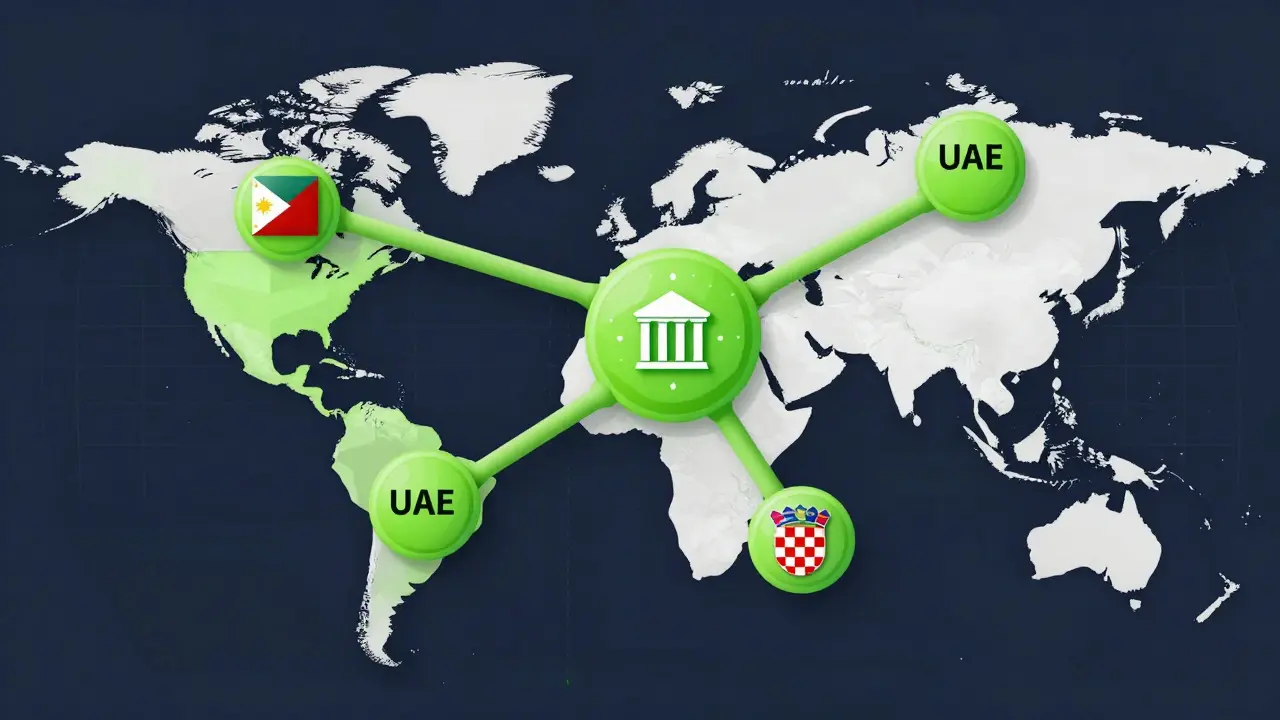
Getting your country off the FATF grey list is less about checking boxes and more about proving you can actually catch money launderers. For years, being on this list meant higher compliance costs, stricter bank scrutiny, and a general "trust me" problem when trying to partner with global financial institutions. But recently, four jurisdictions-Turkey, the United Arab Emirates (UAE), the Philippines, and Croatia-managed to shake off that label. For the crypto industry, these exits aren't just diplomatic wins; they are practical keys to unlocking smoother banking relationships, lower operational friction, and greater investor confidence.
The Financial Action Task Force (FATF) is the global standard-setter for anti-money laundering (AML). When a country lands on its "grey list" (officially Jurisdictions Under Increased Monitoring), it doesn't mean the country is banned from trade. It means the international community has flagged specific gaps in their AML or counter-terrorist financing frameworks. Staying on the list creates a ripple effect: banks apply enhanced due diligence, which slows down transactions and increases costs. For crypto businesses, which often struggle to find traditional banking partners, this friction can be fatal. Removing these countries from the list signals that their regulatory environments have matured enough to handle digital assets without inviting illicit flows.
The Mechanics of Getting Off the List
How does a country actually get removed? It’s not a single vote. The process follows a strict, multi-phase evaluation system. First, a country must agree to an action plan with specific deliverables. These usually involve legislative changes, improved supervision of financial institutions, and concrete law enforcement actions. Once the country claims completion, FATF assessors conduct on-site visits to verify if the laws are just sitting on paper or if they’re being enforced in reality.
Decisions are made during three annual plenary meetings: February, June, and October. As of mid-2025, only North Korea, Iran, and Myanmar remain on the harsher "blacklist," while 24 countries sit on the grey list. The recent wave of removals highlights a shift in strategy. Countries are no longer just patching holes; they are building comprehensive frameworks that explicitly include virtual assets. This is where the crypto connection becomes critical. The FATF’s 40 Recommendations now require nations to regulate Virtual Asset Service Providers (VASPs) with the same rigor as traditional banks. By aligning their crypto regulations with these standards, Turkey, the UAE, the Philippines, and Croatia didn’t just fix AML gaps-they modernized their entire financial infrastructure.
Case Study: The UAE’s Strategic Pivot
The United Arab Emirates provides perhaps the clearest example of how regulatory clarity drives crypto adoption. The UAE was removed from the FATF grey list in early 2024. Before this exit, the region was already positioning itself as a crypto hub, but the grey list status created unnecessary friction for institutional players. The UAE’s success hinged on two main pillars: corporate transparency and robust supervision.
They implemented stricter beneficial ownership rules, making it harder to hide behind shell companies-a common tactic in both traditional and crypto-based money laundering. More importantly, they strengthened the regulatory framework for financial institutions, including those dealing with digital assets. For a crypto exchange operating in Dubai or Abu Dhabi, this meant that their local regulator was seen as credible by global peers. This credibility translates directly into easier access to correspondent banking accounts. When FinCEN advised U.S. financial institutions to update their risk policies regarding the UAE, it signaled that doing business there was no longer a high-risk proposition. This reduction in perceived risk lowers compliance costs significantly, allowing crypto firms to focus on growth rather than just survival.
Philippines: Completing the Action Plan
The Philippines achieved removal in February 2025 after completing a comprehensive action plan. Their journey focused heavily on closing strategic deficiencies in the supervision of financial institutions and improving asset recovery mechanisms. In the context of crypto, this matters because one of the biggest challenges in digital asset enforcement is tracing funds across borders. By strengthening their asset recovery tools, the Philippines demonstrated that they could freeze and seize illicit crypto assets effectively.
This technical capability reassured international partners that the Philippines wasn’t just a haven for unregulated activity. The European Parliament followed suit, passing resolution B10-0315/2025 in July 2025, which removed the Philippines (along with the UAE and others) from the EU’s list of high-risk third countries. This dual recognition-from both the FATF and the EU-creates a powerful signal for global investors. It suggests that the Philippine crypto market is moving toward a regulated, transparent environment where legal protections exist for both consumers and businesses.

Croatia and Turkey: Regional Stabilizers
Croatia’s removal in June 2025, alongside Mali and Tanzania, marked another significant milestone. Croatia addressed gaps in its AML and counter-terrorist financing framework through legislative reforms and enhanced institutional capacity. While Croatia may not be the first name that comes to mind for a "crypto hub," its stability and EU membership make it a crucial node in European financial networks. By cleaning up its AML record, Croatia ensured that cross-border payments involving digital assets would face fewer hurdles within the Schengen area.
Turkey’s situation is slightly different but equally impactful. Although detailed public documentation on Turkey’s specific final steps is less prominent in recent summaries, its trajectory has been one of intense regulatory engagement. Turkey has historically had a complex relationship with crypto, oscillating between banning payments and embracing innovation. Its progress in aligning with FATF standards indicates a move toward a stable, rule-based regime. For regional crypto businesses, Turkey’s improved standing reduces the "compliance tax" associated with operating in the Middle East and Eastern Europe corridor. It opens doors for partnerships with neighboring markets that might otherwise view Turkey as a high-risk jurisdiction.
Why This Matters for Crypto Businesses
So, what does this mean if you run a crypto startup or manage a fund? The primary benefit is reduced friction. When a country is off the FATF grey list, banks are less likely to demand excessive documentation for routine transfers. This speeds up operations and reduces legal fees. Furthermore, it improves access to international financial services. Many crypto firms struggle to open custody accounts or secure payment processing rails. A clean FATF record makes it easier to convince traditional banks to take on the risk.
There is also an investor psychology angle. Institutional investors perform deep due diligence. Seeing a jurisdiction on the grey list is a red flag that requires extra justification. Removing that flag simplifies the investment thesis. It allows companies to pitch their projects based on merit and market opportunity, rather than spending time defending their regulatory environment.
| Jurisdiction | Removal Date | Key Regulatory Focus | Impact on Crypto Sector |
|---|---|---|---|
| United Arab Emirates | Early 2024 | Beneficial ownership transparency, VASP supervision | Easier banking access, lower compliance costs |
| Philippines | February 2025 | Asset recovery, institutional supervision | Increased investor confidence, EU alignment |
| Croatia | June 2025 | Legislative AML reforms, institutional capacity | Smoother intra-EU cross-border flows |
| Turkey | Ongoing/Recent | Regulatory alignment with FATF standards | Reduced regional compliance friction |

The Broader Implications of Financial Inclusion
In June 2025, FATF President Elisa de Anda Madrazo emphasized that bringing more people into the formal financial sector is crucial to fighting financial crime. This statement reframes the narrative. It’s not just about catching bad actors; it’s about reducing the size of the informal economy where criminals hide. For crypto, this is a double-edged sword. On one hand, it means tighter oversight. On the other, it validates crypto as a legitimate part of the formal financial system. If your users are in the formal sector, the risks of them engaging in illicit activity are statistically lower, and the infrastructure to support them is more robust.
This shift encourages a risk-based approach rather than a blanket exclusionary one. Firms are expected to demonstrate they aren’t excluding vulnerable populations, but they must also prove they aren’t letting criminals in. For crypto businesses in these four countries, this balance is the new normal. You need strong AML processes, but you don’t need to fear being shut out of the global banking system simply because your home country had a past lapse in oversight.
What Comes Next?
These removals are not permanent guarantees. The FATF monitors listed countries closely, and re-listing is possible if effectiveness drops. However, the momentum is positive. With 24 countries still on the grey list, the work continues for many others. For businesses operating in Turkey, the UAE, the Philippines, or Croatia, the current climate is favorable. The regulatory fog is clearing, replaced by clearer rules and stronger institutions. This is the environment where sustainable crypto growth happens-not in the shadows, but in the light of full regulatory compliance.
What is the difference between the FATF grey list and blacklist?
The grey list (Jurisdictions Under Increased Monitoring) includes countries with strategic deficiencies in their AML systems that are being actively monitored. The blacklist (High-Risk Jurisdictions Subject to a Call for Action) includes countries with severe deficiencies, prompting calls for countermeasures from the global financial system. Being on the grey list is generally less punitive but still increases compliance burdens.
How does FATF removal affect crypto banking relationships?
Removal typically leads to lower risk assessments by banks. This means fewer enhanced due diligence requirements, faster transaction approvals, and a higher likelihood of securing long-term banking partnerships. It reduces the administrative burden and cost for crypto businesses operating in those jurisdictions.
Which countries were removed from the FATF grey list in 2025?
In 2025, the Philippines was removed in February, and Croatia was removed in June. The UAE was removed earlier in 2024. Other countries like Pakistan and Morocco were removed in previous years, demonstrating a trend of successful action plan completions.
Does leaving the FATF list mean a country has no AML issues?
Not necessarily. It means the country has addressed the specific strategic deficiencies identified by the FATF and demonstrated sustained implementation. Continuous monitoring remains, and new issues can arise. However, it signifies a level of maturity and compliance that meets international standards.
How do EU designations relate to FATF lists?
The EU maintains its own list of high-risk third countries, which often overlaps with the FATF lists but is not identical. In July 2025, the European Parliament removed several countries, including the Philippines and UAE, from its high-risk list, mirroring their improved FATF status. This dual recognition enhances global credibility.