
Energy Data Management with Blockchain: How Decentralized Ledgers Are Transforming Power Systems
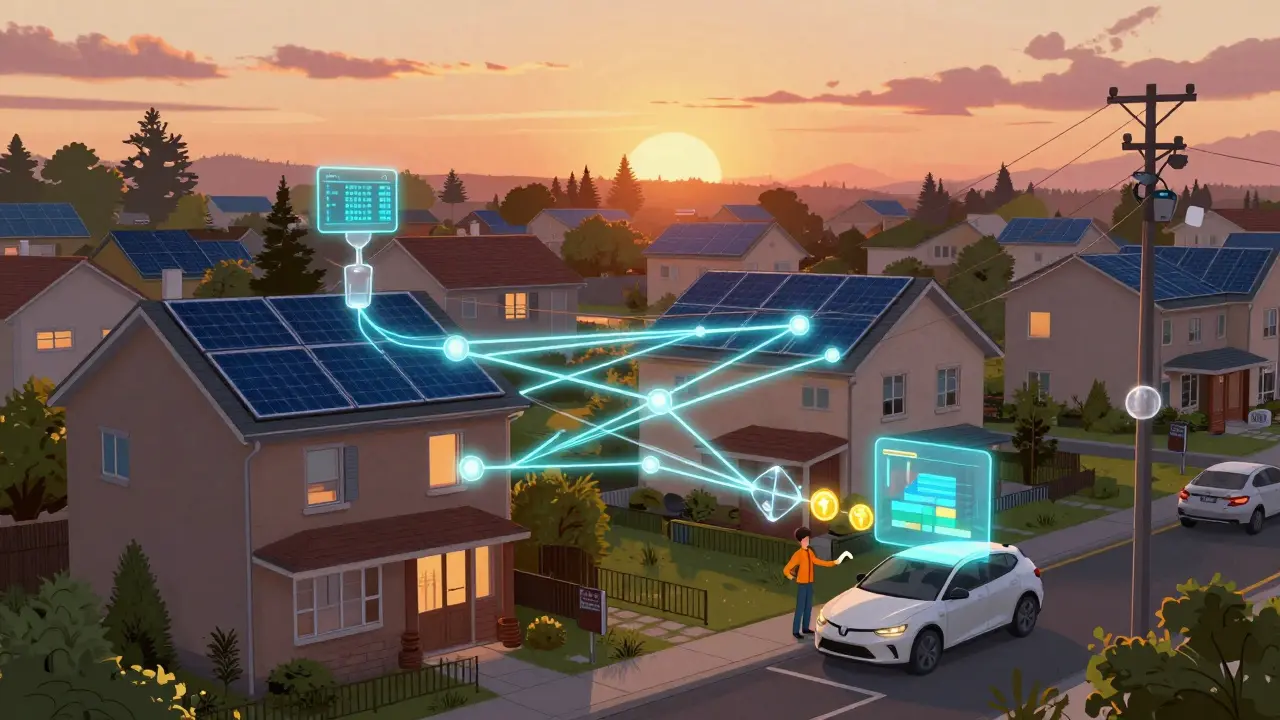
Imagine your solar panels generating more electricity than your home uses. Instead of selling that extra power back to the utility company for pennies, you sell it directly to your neighbor who just bought an electric car. No middleman. No delays. No hidden fees. Just a quick, secure, and transparent transaction recorded on a digital ledger that can’t be changed. This isn’t science fiction. It’s happening right now - and blockchain is making it possible.
Why Traditional Energy Data Systems Are Broken
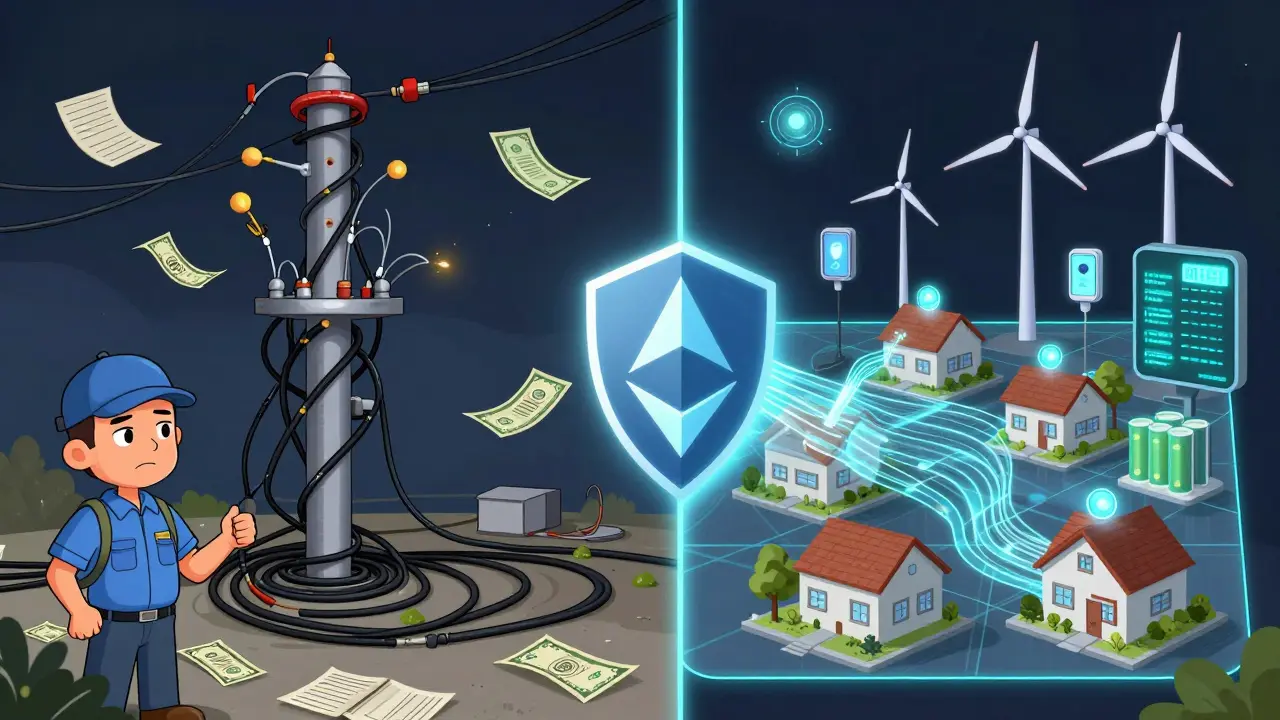
For decades, energy systems have relied on centralized databases controlled by utilities and regulators. These systems were designed for one-way power flow: from big power plants to homes and businesses. But today’s grid is changing. Rooftop solar, home batteries, and electric vehicles are turning consumers into producers. And that’s exposing the flaws in old systems.Centralized databases are slow. They’re opaque. And they’re easy to manipulate - intentionally or by accident. A utility might misreport how much renewable energy it’s generating. A regulator might lose track of carbon credits. A consumer might not even know how much they’re paying for power because the billing system is outdated and disconnected from real-time usage.
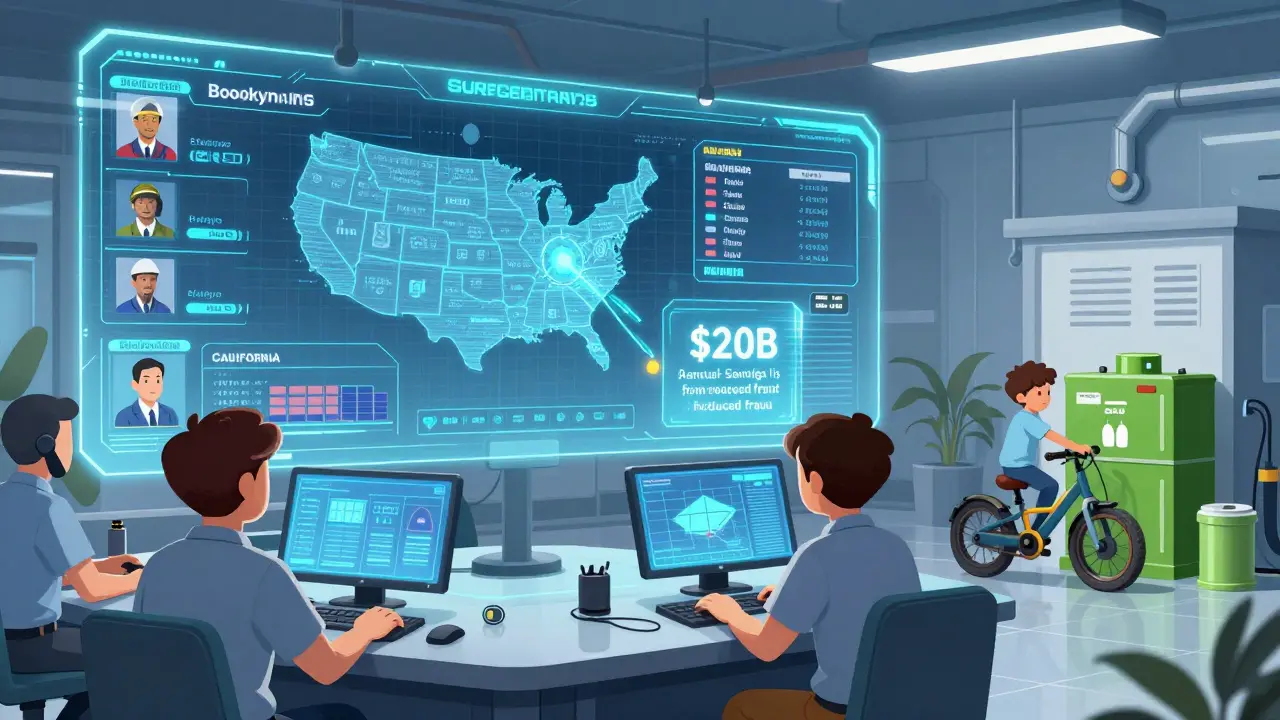
These problems aren’t just inconvenient. They’re costly. According to the International Energy Agency, inefficiencies in energy data management cost global markets over $20 billion annually in lost revenue, fraud, and wasted resources. And as more renewable energy comes online, the need for accurate, real-time data becomes even more urgent.
How Blockchain Solves These Problems
Blockchain is a digital ledger that records transactions across many computers. Once data is added, it can’t be erased or altered without changing every copy across the network. That’s called immutability. It’s not magic - it’s math. Each block of data is linked to the previous one using complex cryptographic hashes. Change one block? You’d need to rewrite every block after it - on every computer in the network. That’s practically impossible.In energy systems, blockchain does three things better than any centralized system:
- It records every kilowatt-hour of energy produced, used, or traded - in real time.
- It removes the need for middlemen by enabling direct peer-to-peer energy trading.
- It makes every transaction visible and auditable by all authorized parties.
Take the Chilean National Energy Commission (CNE). In 2018, they became one of the first government agencies to use blockchain - specifically Ethereum - to track energy law compliance, fuel prices, and renewable generation data. Before, records were stored in siloed systems. Now, anyone with access can verify the data. No more guessing. No more cover-ups. Just facts.
Real-World Applications: More Than Just Solar Sales
Blockchain isn’t just about selling excess solar power. It’s reshaping how energy systems operate at every level.- Peer-to-peer energy trading: In Brooklyn’s Transactive Grid project, neighbors trade solar power using smart contracts. When the sun shines, your panels generate electricity. The system automatically checks your usage, sells the surplus to someone nearby, and transfers payment in crypto - all without human intervention.
- Carbon credit tracking: Companies claim they’re offsetting emissions. But how do you prove it? Blockchain ties each carbon credit to a specific renewable project - like a wind farm in Texas or a reforestation effort in Brazil. Every credit is tracked from creation to sale, preventing double-counting and fraud.
- Smart grid management: Utilities can monitor voltage, load, and outages in real time. If a transformer fails, sensors trigger alerts. Blockchain logs every change, so engineers know exactly what happened, when, and where.
- Renewable energy certificates (RECs): Companies buy RECs to claim they’re using green energy. But many RECs are sold multiple times. Blockchain ensures each REC is issued once, tracked, and retired after use.
One of the most exciting developments is the rise of hybrid blockchains - part public, part private. Public blockchains like Ethereum offer transparency. Private ones offer speed and control. For energy systems, the hybrid model is ideal. Utilities can keep sensitive operational data private while sharing usage stats publicly. IoT sensors on wind turbines or smart meters feed data directly into the chain, creating a live, tamper-proof feed of energy activity.
Smart Contracts: The Automation Engine
If blockchain is the ledger, smart contracts are the rules that make it work automatically.A smart contract is a self-executing program stored on the blockchain. It runs when certain conditions are met. In energy systems, they handle everything from billing to grid balancing.
Here’s how it works: You install solar panels. Your meter connects to the blockchain. When your panels produce 5 kWh and your house uses 3 kWh, the smart contract automatically sells the extra 2 kWh to the highest bidder in your neighborhood. It checks your bank account, transfers payment in a crypto token (like $PEAQ or ETH), and updates your energy balance. All in under 10 seconds. No invoice. No call center. No waiting weeks for a check.
Companies like peaq and Olas are building AI-powered smart contracts that don’t just trade energy - they predict it. Using weather forecasts, historical usage, and grid demand, these contracts decide when to store energy in batteries, when to sell, and when to buy. It’s like having a financial advisor for your home energy system - and it never sleeps.
The Downsides: It’s Not Perfect Yet
Blockchain isn’t a magic fix. There are real challenges.First, energy use. Proof of Work blockchains - like early Bitcoin - consume massive amounts of electricity to validate transactions. That’s a problem when you’re trying to save energy. But newer systems use Proof of Stake, which cuts energy use by over 99%. Ethereum switched to PoS in 2022. Now, most energy-focused blockchains use it by default.
Second, complexity. Setting up a blockchain energy system isn’t like installing a new app. It requires expertise in blockchain development, energy infrastructure, cybersecurity, and regulatory compliance. Smaller utilities and rural cooperatives often can’t afford the upfront cost. That’s why many are joining consortiums - groups of organizations sharing one blockchain network to split costs and risks.
Third, regulation. Laws haven’t caught up. Who owns the data? Who’s liable if a smart contract fails? Can you tax energy trades on blockchain? These questions vary by country. The EU is leading with its Energy Efficiency Directive, which now accepts blockchain-based reporting. Some U.S. states are following. Others are still waiting.
Who’s Leading the Charge?
The global blockchain-in-energy market was worth $1.2 billion in 2024. By 2030, it’s expected to hit $18.6 billion. That’s a 45% annual growth rate.- Europe: Germany and the Netherlands have active peer-to-peer trading pilots. In the UK, National Grid is testing blockchain for balancing supply and demand.
- North America: New York’s Brooklyn Microgrid and California’s pilot programs are proving that decentralized energy works at scale.
- Asia: Japan and South Korea are using blockchain to manage distributed energy resources after Fukushima, reducing reliance on centralized nuclear and coal plants.
- Emerging markets: In Kenya and India, off-grid solar providers use blockchain to track payments from low-income households, enabling microloans based on energy usage.
Platforms like Hedera, ConsenSys, and Nevermined are building tools specifically for energy. They offer APIs, developer kits, and pre-built smart contracts so utilities don’t have to start from scratch.
What It Means for You
If you’re a homeowner with solar panels, blockchain means you get paid fairly and quickly for your excess power. No more waiting months for net metering credits.If you’re a business, you can prove your sustainability claims with verifiable data - not just marketing brochures.
If you’re a utility, you can reduce fraud, improve grid stability, and cut operational costs.
Even if you don’t have solar panels, blockchain makes the whole system more efficient. Fewer blackouts. Lower prices. Cleaner energy.
The shift isn’t happening because of hype. It’s happening because the old system is failing. And blockchain - with its transparency, automation, and security - is the most practical tool we have to fix it.
Getting Started: What You Need to Know
If you’re considering blockchain for your energy setup, here’s what to do:- Assess your needs: Are you trading energy? Tracking carbon credits? Automating billing? Each use case requires a different blockchain setup.
- Choose the right platform: Ethereum is mature but expensive. peaq is energy-efficient and built for IoT. Hyperledger is private and enterprise-focused.
- Partner with experts: Don’t try to build this alone. Work with firms that specialize in energy-blockchain integration.
- Start small: Pilot a single smart contract - like automated billing for a group of solar owners - before scaling up.
- Stay updated: Regulations and tech are changing fast. Join industry groups like the Blockchain in Energy Consortium or follow updates from the International Renewable Energy Agency (IRENA).
The future of energy isn’t centralized. It’s distributed. It’s real-time. And it’s powered by data that can’t be faked. Blockchain isn’t just a tool for recording energy data. It’s the foundation for a new kind of energy economy - one that’s fairer, cleaner, and more resilient than anything we’ve had before.
19 Comments
Bro this is actually happening in India too. My uncle in Kerala got a microgrid going with blockchain. He sells excess solar to neighbors and gets paid in crypto. No more waiting for utility rebates. Simple, fast, real.
Used to be scams everywhere with solar subsidies. Now everything’s on-chain. No one can fake it.
OH MY GOD. I just cried reading this. Like… literally cried. This is the FUTURE. The FUTURE IS HERE. And it’s not even in a movie. It’s in my neighborhood. I’m so emotional right now. Someone get me a tissue. And a Tesla. And a solar roof. And a blockchain wallet. I NEED IT ALL. 😭⚡🔋
This is actually one of the most practical uses of blockchain I’ve seen. Not just crypto hype. Real impact. If you’ve got solar, this changes everything. No more fighting with the utility over net metering. Just sell to the person next door who needs it. Smart contracts handle it all. No stress.
Start small. Try a peer-to-peer group with your HOA. You’ll be shocked how easy it is.
While the technical underpinnings of blockchain-based energy distribution are undeniably innovative, one must not overlook the profound epistemological and ethical implications of decentralizing energy governance. The commodification of energy as a tradable asset, while economically efficient, risks exacerbating socio-economic disparities under the guise of ‘democratization.’
One must ask: who owns the data? Who is accountable when a smart contract malfunctions? And at what cost to the vulnerable populations who cannot afford the requisite hardware or cryptographic literacy?
Blockchain in energy? Sure. But let’s be real. You’re just replacing one centralized authority with another. The miners. The devs. The token holders. Who’s to say they won’t collude? And don’t even get me started on the energy use of nodes. You think proof of stake fixed everything? It didn’t. It just made it quieter.
Also, why are you ignoring the fact that most people can’t even set up a Wi-Fi router? You’re building a system for tech bros, not for grandma in Ohio.
Love this. Seriously. I’ve been tracking my solar output on a private blockchain with my neighborhood group. We trade power, track carbon, even use it to vote on grid upgrades. It’s low-key amazing.
Biggest win? No more bills. Just a tiny crypto payment every month. My dog even knows when the sun’s out now. He sits by the window waiting for the meter to ping. 🐶☀️
Interesting read. I’ve worked with utility data systems for 15 years. The problems described are real. But blockchain isn’t the only solution. Secure IoT networks with zero-trust architecture can do much of this too, with less complexity.
Still, the transparency angle is compelling. I’d be curious to see a side-by-side audit of blockchain vs traditional systems over 12 months. Maybe someone’s already done it?
So you’re telling me we’re going to replace a broken system with another broken system but now it’s got a fancy name and needs a crypto wallet? Great. Just what the world needs. More complexity. More tech bros. More blockchain startups that vanish in 6 months.
Also who’s gonna fix it when the smart contract glitches and your AC turns off at 3am? You? The dev who lives in Bali? Good luck.
I mean I get the tech but why does everything have to be blockchain now? It’s like every startup thinks they need to slap ‘blockchain’ on it to get funding. This isn’t Web3. This is just energy. Real energy. With wires. And trees. And people who don’t care about tokens.
Also I’m tired of hearing about Brooklyn. What about everywhere else? Like… I don’t know… the Midwest?
USA is the only country that can make this work. Europe’s all bureaucracy. Asia’s too centralized. But here? We got innovation. We got grit. We got solar panels on every damn roof. This is American ingenuity at its finest.
Forget China. Forget Germany. This is OUR tech. OUR grid. OUR future. And we’re not letting anyone take it.
The architectural convergence of distributed ledger technology with IoT-enabled DERs (Distributed Energy Resources) enables a paradigmatic shift in energy transactional integrity. The cryptographic hashing layer ensures non-repudiation of metered energy flows, while smart contract orchestration facilitates atomic settlement between prosumers.
Notably, the hybrid consensus mechanism - combining PBFT for private nodes and PoS for public verifiers - optimizes latency without compromising auditability. This architecture is the de facto standard for next-gen grid resilience.
Oh so now you’re telling me we’re going to let random people on the grid trade electricity like it’s a crypto meme? And you think this is safe? What if someone hacks the smart contract and drains everyone’s battery? What if a kid accidentally sells their grandma’s power? What if the blockchain goes down during a storm?
You people are playing with fire. And you’re not even wearing gloves.
They’re not telling you the whole story. Blockchain energy systems? Yeah, right. But who owns the nodes? Who’s monitoring them? I bet it’s the same corporations that already control the grid. They just rebranded it. Now you’re paying for ‘decentralized’ energy… but still paying them.
It’s all a distraction. They want you to think you’re free. But you’re just on a different leash.
This is the kind of stuff that gives me hope. I’ve been thinking about getting solar for years but was scared of the complexity. This makes it feel doable. Like I don’t need to be a coder to benefit.
Anyone know of a good starter kit for homeowners? I’d love to join a local pilot. Just point me in the right direction. Thanks!
Blockchain? In energy? Pfft. I saw this in 2017. Everyone was hyped. Then it died. Why? Because it’s expensive. Because it’s slow. Because nobody wants to pay for it.
Also I’m from Canada. We don’t need this. We have hydro. We have clean power. You guys are overcomplicating things. Just fix the grid. Stop chasing shiny tech.
Bro this is lit. I just bought a solar kit and linked it to a blockchain app. Now my house is basically a mini power plant. My phone pings me when I make extra and I can sell it to my buddy down the street. He pays me in ETH. I use it to buy coffee. Life is good. ☕⚡
Everyone’s so excited about blockchain but no one’s talking about the fact that this system is built on assumptions that don’t apply to most people. What about renters? What about low-income households? What about people who don’t have smartphones?
This isn’t democratization. It’s exclusion with a blockchain logo.
Isn’t it wild how we’re turning energy into a spiritual experience? Like… your solar panels aren’t just generating watts - they’re generating cosmic alignment. Every kilowatt is a prayer to the sun. Every smart contract, a sacred pact with the blockchain gods.
And if you don’t join? You’re not just off the grid… you’re spiritually disconnected. 🌞🌀
Great point from @1702. This isn’t just about tech - it’s about access. That’s why I’m working with a nonprofit to set up blockchain microgrids in rural communities. We’re using low-cost solar + simple mobile apps. No crypto wallet needed. Just a phone number.
It’s working. One village in New Mexico is already trading power and paying for water with their surplus. Real change doesn’t need a whitepaper.