
Ellipsis Finance Review 2026: Is This BSC Stablecoin DEX Worth It?
You want to swap USDT for USDC without paying Ethereum gas fees that cost more than your lunch. That is exactly the problem Ellipsis Finance is a decentralized exchange (DEX) built on Binance Smart Chain designed for low-slippage stablecoin swaps. Launched in April 2021 as a fork of Curve Finance, Ellipsis promised to bring high-efficiency stablecoin trading to a cheaper network. But does it still deliver value in 2026, or has the hype faded into obscurity?
If you are looking for a place to park millions in volatile assets, this isn't it. Ellipsis is hyper-specialized. It focuses almost entirely on stablecoins. If you need to trade Bitcoin for Solana, keep scrolling. If you want to move between BUSD, USDT, and DAI with minimal price impact and near-zero fees, read on.
How Ellipsis Finance Actually Works
Ellipsis operates as an Automated Market Maker (AMM). Unlike centralized exchanges where buyers match with sellers, AMMs use liquidity pools. You deposit tokens into a pool, and smart contracts handle the math for swapping prices. Because Ellipsis runs on Binance Smart Chain is a blockchain network known for fast transaction speeds and significantly lower fees compared to Ethereum., transactions settle in seconds rather than minutes, and costs are fractions of a cent.
The platform’s core technology comes from its parent project, Curve Finance is a leading decentralized exchange protocol optimized for exchanging stablecoins and other assets pegged to the same value.. By forking Curve, Ellipsis inherited a battle-tested codebase specifically tuned for assets that should have the same value (like different types of dollars). This reduces slippage-the difference between the expected price and the executed price-which is critical when moving large amounts of capital.
Here is what makes the user experience distinct:
- No Deposit/Withdrawal Fees: You can add or remove liquidity without paying platform fees.
- Low Gas Costs: Since it sits on BSC, you pay BNB for gas, which is usually under $0.10 per transaction.
- Stablecoin Focus: The interface prioritizes pairs like USDT/BUSD or USDC/DAI.
The Token Situation: EPS vs. EPX
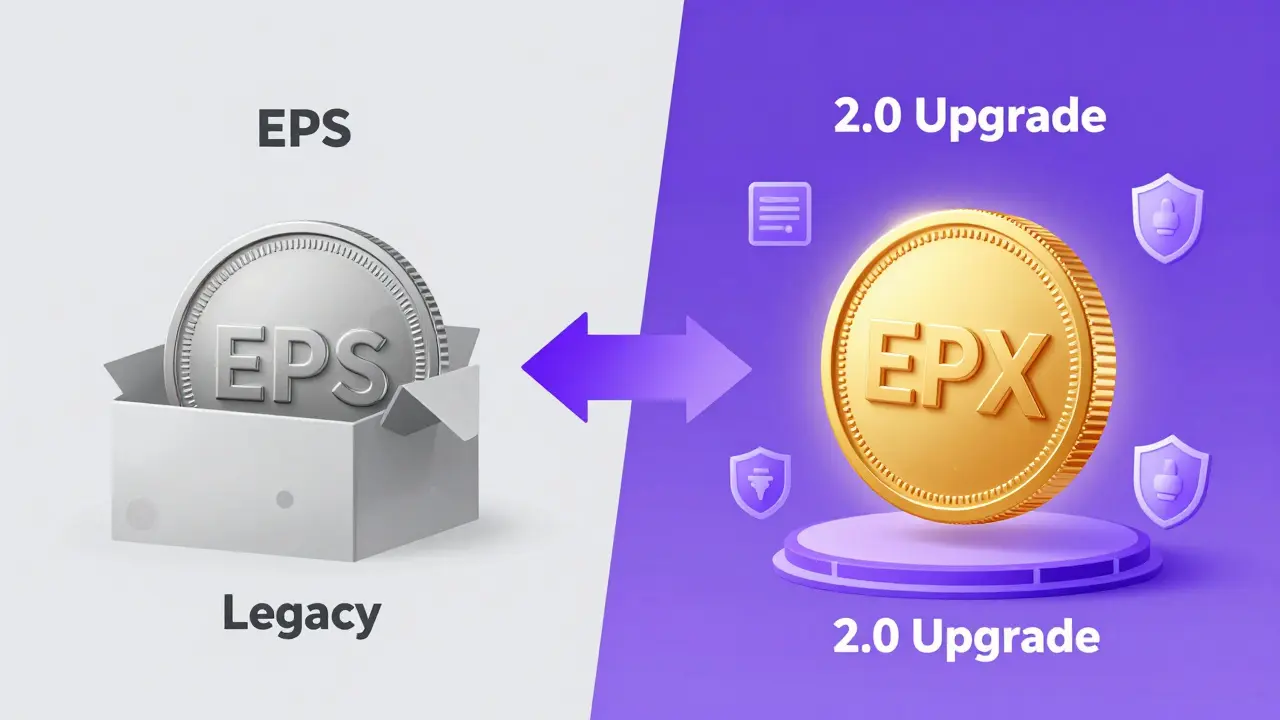
This is where things get messy. If you have been following Ellipsis since 2021, you know about the great migration. Originally, the governance and reward token was EPS is the original governance token of Ellipsis Finance used for staking rewards and voting rights.. Holders earned a share of trading fees by staking EPS.
Then came Ellipsis 2.0. In late 2022, the team announced a major upgrade involving new smart contracts and a token migration. The old EPS was replaced by EPX is the upgraded governance token introduced during the Ellipsis 2.0 transition, replacing the original EPS token.. The goal was to improve security and efficiency. Binance supported this move, adding some legitimacy.
However, the market reaction was lukewarm at best. As of mid-2026, EPS trades around $0.034 with a market cap of roughly $25 million. EPX shows slightly higher daily volume but remains in a similar price bracket. Many users found themselves confused by the migration process, and liquidity became fragmented between the two tokens. If you are entering now, you need to understand which token you are interacting with and whether your wallet supports the current standard.
| Feature | EPS (Legacy) | EPX (Current) |
|---|---|---|
| Status | Migrated/Deprecated | Active Governance |
| Primary Use | Historical Staking | Fee Distribution & Voting |
| Liquidity Depth | Lower | Higher (Consolidated) |
| Price Volatility | High | High |
Pros and Cons for Traders in 2026
Let’s cut through the marketing fluff. Here is what matters for your wallet.
The Good:
- Cost Efficiency: If you are moving $10,000 worth of stablecoins, doing it on Ethereum might cost $20-$50 in gas. On Ellipsis via BSC, it costs pennies. For high-frequency traders or arbitrageurs, this is a massive advantage.
- Proven Tech Stack: Being a Curve fork means the underlying math for minimizing slippage is solid. You won’t lose significant value due to poor pricing algorithms.
- Passive Income Potential: Liquidity providers (LPs) earn trading fees. While yields have cooled compared to the DeFi summer of 2021, they remain competitive for low-risk stablecoin pairs.
The Bad:
- Limited Asset Variety: Ellipsis is not a general-purpose DEX. You will find very few non-stablecoin pairs. If you want to trade meme coins or blue-chip alts, you need Uniswap or PancakeSwap.
- Trust Deficit: The post-launch price crash and the confusing token migration left a scar on community sentiment. Many investors view EPS/EPX as speculative assets with uncertain long-term viability.
- Liquidity Fragmentation: Compared to giants like Curve or even PancakeSwap, Ellipsis has less total value locked (TVL). This means larger trades might still experience slight slippage, though it remains better than most alternatives.
Is Ellipsis Finance Safe?
Safety in DeFi is relative. Ellipsis uses audited smart contracts, largely because they are derived from Curve’s open-source code. However, "audited" does not mean "unhackable." Every new deployment introduces risk.
The bigger risk is centralization dependency. While technically decentralized, Ellipsis relies heavily on the reputation and support of Binance and the Curve team. If Binance were to delist related assets or if regulatory pressure mounts on BSC, Ellipsis could suffer collateral damage. Always remember: in crypto, you are the custodian. If you connect your wallet to a compromised site, no audit will save you. Only interact with the official domain.
Who Should Use Ellipsis Finance?
Not everyone needs this tool. Here is who benefits most:
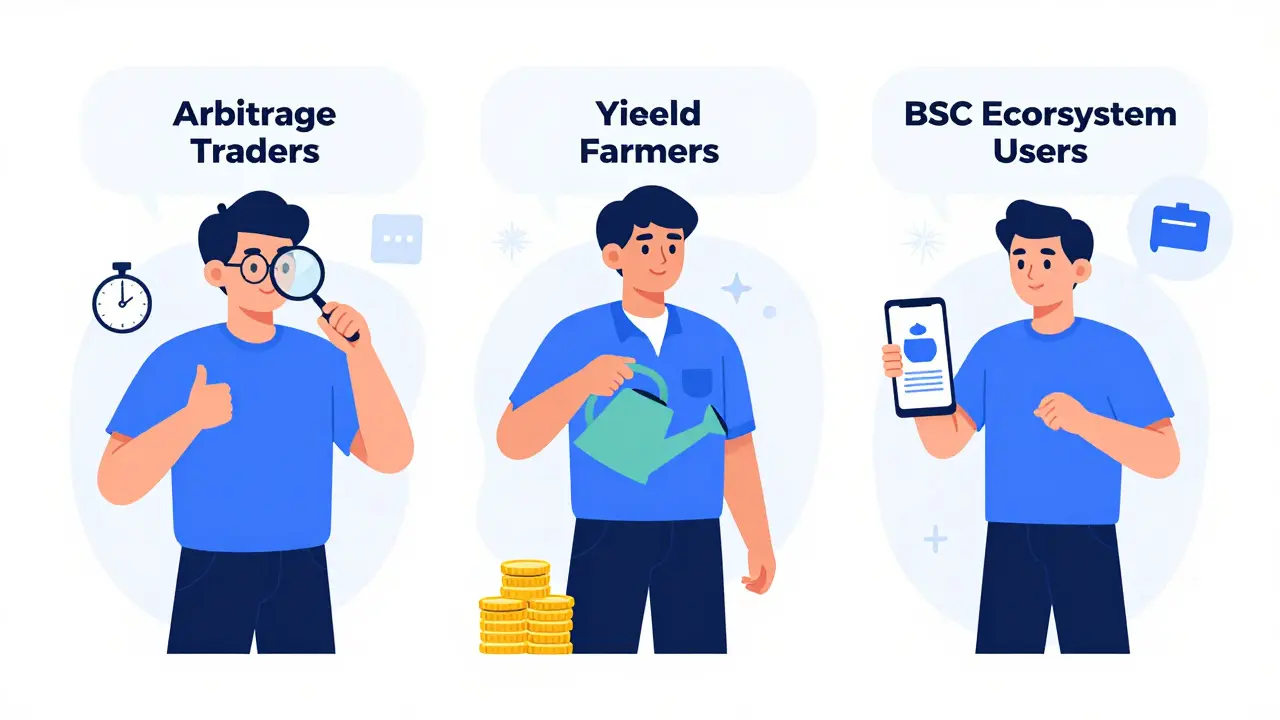
- Arbitrage Traders: People who exploit small price differences between stablecoins across different platforms. Speed and low fees are everything here.
- Yield Farmers: Users willing to provide liquidity to stablecoin pools to earn steady, albeit modest, returns in BNB or governance tokens.
- BSC Ecosystem Users: Those already holding BNB who want to manage their stablecoin exposure without bridging back to Ethereum.
If you are a beginner just trying to buy Bitcoin, stay away. Use a centralized exchange like Coinbase or Kraken. Ellipsis requires understanding wallets, gas fees, and slippage tolerance.
Final Verdict
Ellipsis Finance fills a specific niche. It is not the biggest fish in the DeFi pond, nor is it the safest harbor. It is a specialized tool for efficient stablecoin movement on Binance Smart Chain. The technical foundation is strong, thanks to its Curve heritage. However, the tokenomics story is complicated by the EPS-to-EPX migration, and the broader market sentiment remains cautious.
Use it for what it does best: cheap, fast stablecoin swaps. Do not expect life-changing gains from holding the governance token unless you believe in a massive resurgence of BSC-based DeFi dominance. Always do your own research, start with small amounts, and never invest money you cannot afford to lose.
What is the main difference between Ellipsis Finance and Curve Finance?
The primary difference is the blockchain network. Curve Finance operates on Ethereum, which offers high security but often comes with high gas fees. Ellipsis Finance is a fork of Curve built on Binance Smart Chain (BSC), providing much faster transactions and significantly lower fees, making it ideal for smaller stablecoin trades.
Do I need EPS or EPX to use Ellipsis Finance?
No, you do not need to hold EPS or EPX to swap tokens on the platform. You only need a compatible wallet (like MetaMask or Trust Wallet) connected to Binance Smart Chain and enough BNB to pay for gas fees. Holding the governance tokens is optional and primarily for those wanting to vote on proposals or earn a share of trading fees.
Why did Ellipsis migrate from EPS to EPX?
The migration was part of the Ellipsis 2.0 upgrade aimed at improving smart contract security, efficiency, and governance structure. The team believed EPX would offer better utility and value distribution. However, the transition caused confusion among users and fragmented liquidity, impacting the token's price performance.
Is Ellipsis Finance safe for large investments?
While Ellipsis uses audited smart contracts based on the reputable Curve Finance codebase, all DeFi platforms carry inherent risks, including smart contract vulnerabilities and impermanent loss. For very large investments, diversifying across multiple established protocols is recommended. Always verify the website URL to avoid phishing scams.
Can I trade Bitcoin or Ethereum on Ellipsis Finance?
Generally, no. Ellipsis specializes in stablecoin pairs (like USDT, USDC, BUSD, DAI). It is not designed for trading volatile assets like Bitcoin or Ethereum. For those assets, you should use general-purpose DEXs like Uniswap (on Ethereum) or PancakeSwap (on BSC).