
Egyptian Grand Mufti's Bitcoin Fatwa: Why Crypto Is Declared Haram

Imagine holding a digital asset that the world’s financial markets are racing to regulate, only to be told by one of Islam’s most respected authorities that touching it is religiously forbidden. This isn’t a hypothetical scenario for millions of Muslims in Egypt and beyond. In December 2017, Egyptian Grand Mufti Dr. Shawky Ibrahim Allam issued a definitive ruling through Dar Al-Ifta (the Fatwa House), declaring Bitcoin and all cryptocurrencies haram-strictly prohibited under Islamic law.
This wasn't just a casual opinion. It was a comprehensive legal and religious decree that banned buying, selling, leasing, or even subscribing to cryptocurrency services. For years, this fatwa has shaped how Egyptian Muslims interact with the digital economy. But why did such a high-ranking authority take such a hardline stance? And does this ruling still hold water in 2026, when crypto regulations have evolved globally?
The Core Reasoning Behind the Ban
To understand the ban, you have to look at the specific Islamic financial principles that were violated according to the ruling. The fatwa didn't just say "crypto is risky." It broke down exactly why Bitcoin fails the test of Sharia compliance.
The primary objection centers on the concept of gharar, which translates to uncertainty or ambiguity in contracts. Islamic finance requires clarity in transactions. You need to know what you are exchanging, its value, and its legitimacy. The Grand Mufti argued that Bitcoin lacks physical existence and cannot be exchanged in a tangible way. It exists entirely electronically, relying on an internet-based network without a central regulatory authority.
Here are the key technical objections cited in the 2017 fatwa:
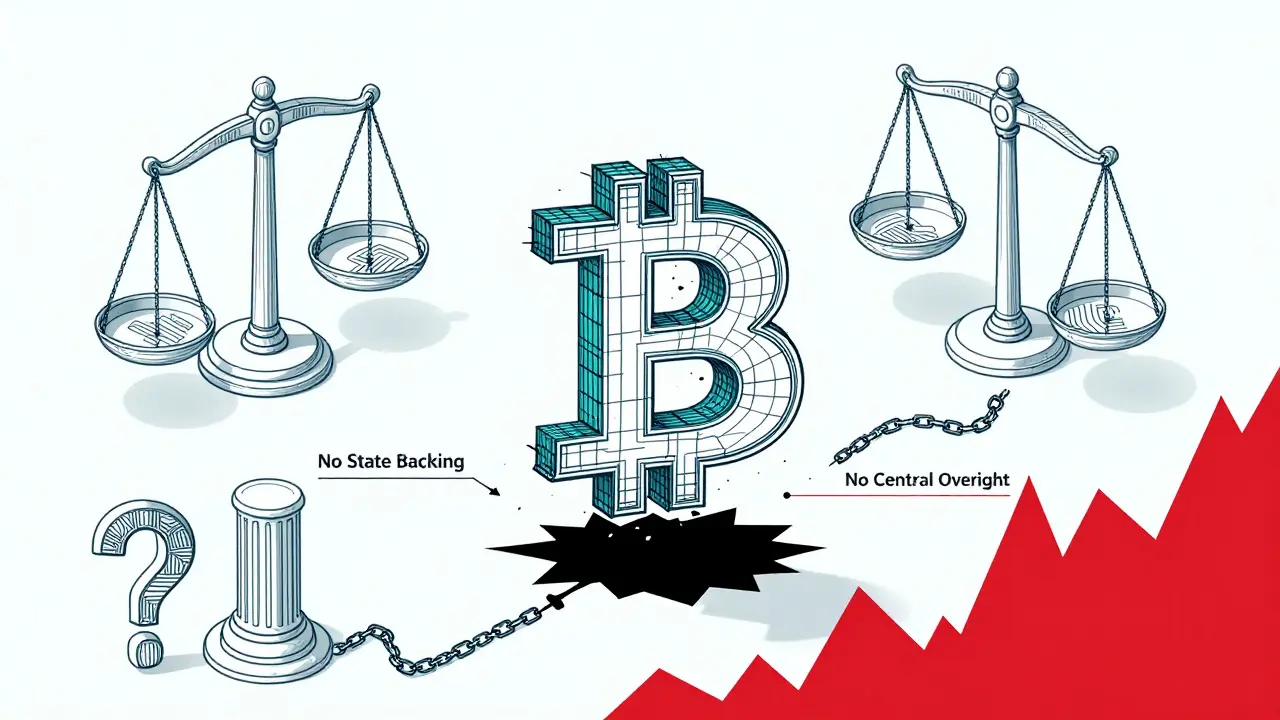
- Lack of State Backing: Bitcoin is not considered an accepted medium of exchange by relevant governmental authorities.
- Absence of Tangible Value: It has no physical form and relies solely on digital consensus, which scholars viewed as insufficient for property status (mal).
- Extreme Volatility: The rapid fluctuations in price create deception and harm, violating the principle of fairness in trade.
- No Central Oversight: Without a central bank or government body regulating it, there is no mechanism to protect consumers from fraud or collapse.
In essence, the ruling declared that because Bitcoin doesn't meet the traditional definitions of currency or property under Islamic jurisprudence, any transaction involving it is invalid and forbidden.
Security Concerns: A Major Factor
While theological arguments about uncertainty formed the backbone of the fatwa, security concerns played a surprisingly large role. The Egyptian authorities were deeply worried about national security and financial stability.
The fatwa explicitly highlighted Bitcoin's potential for misuse. It pointed out that decentralized currencies could be used to evade security authorities, execute illegal purposes, and facilitate money laundering. At the time, there was significant global attention on how extremist groups, including ISIS, and drug dealers were exploring cryptocurrencies to move funds anonymously.
Dr. Shawky Ibrahim Allam’s council emphasized that Bitcoin represents a "penetration for cybersecurity and protection" and a threat to "central financial systems and central banks." From their perspective, allowing citizens to use a currency that operates outside state control wasn't just a religious issue; it was a matter of public safety and economic sovereignty. They feared that without regulation, the technology would empower criminal networks rather than legitimate traders.
Not All Scholars Agree: The Divided Opinion
If you think the whole Muslim world follows the Egyptian Grand Mufti’s lead, you’d be mistaken. Islamic scholarship is diverse, and opinions on cryptocurrency vary significantly. While the Egyptian fatwa represents the most restrictive position among major authorities, other prominent scholars offer contrasting views.
On one side, you have figures like the late Sheikh Yusuf Al-Qaradaghi and the Syrian Islamic Council, who aligned with Egypt, citing similar concerns about gharar and lack of oversight. They argued that Bitcoin fails to qualify as legitimate property because it isn't backed by real assets.
However, progressive fintech researchers and Islamic finance experts challenge this view. Take Mufti Faraz Adam, for example. He argues that crypto-assets can indeed be deemed actual digital assets and mediums of exchange within their specific networks. His approach looks at the "after-effect" and utility of the asset. If a cryptocurrency has legal utility and lawful entitlement, he suggests classical scholars would consider it permissible.
This creates a stark methodological divide:
| Scholar/Authority | Ruling | Primary Reasoning |
|---|---|---|
| Egyptian Grand Mufti (Allam) | Haram (Forbidden) | Lack of state backing, high uncertainty (gharar), security risks, no tangible value. |
| Mufti Faraz Adam | Permissible (with conditions) | Functional utility, legal entitlement, potential for future universal acceptance if regulated. |
| Sheikh Al-Qaradaghi | Haram (Forbidden) | Speculative nature, alignment with capitalist credit markets rather than real assets. |
For Muslims following Mufti Adam’s guidance, the path is different. They can engage with cryptocurrencies provided they screen specific coins for Sharia compliance and pay zakat (Islamic tax) on their holdings, treating them as currency. This split leaves many investors confused about which authority to follow.
Practical Implications for Egyptian Muslims
So, what does this mean for someone living in Cairo or following Egyptian religious guidance? The implications are strict. If you adhere to the Grand Mufti’s fatwa, you must completely avoid all cryptocurrency activities.
This means:
- You cannot buy or sell Bitcoin, Ethereum, or any other altcoin.
- You cannot participate in mining operations.
- You cannot accept digital currencies as payment for goods or services.
- You cannot subscribe to platforms that facilitate these exchanges.
This prohibition limits financial opportunities. As the global economy increasingly integrates blockchain technology, those following this ruling are excluded from a growing sector. However, for believers, the spiritual cost of violating a clear fatwa outweighs potential financial gains. The ruling emphasizes avoiding harm (darar) and protecting one’s wealth from speculative loss.

Has Anything Changed Since 2017?
It is now 2026. Seven years have passed since the fatwa was issued. In that time, the crypto landscape has transformed. Governments worldwide have introduced regulatory frameworks. Central Bank Digital Currencies (CBDCs) are being tested. Major institutions have embraced blockchain.
Yet, the Egyptian Grand Mufti’s position remains unchanged. There have been no public announcements revising the 2017 decree. The broad language of the fatwa-covering "any and all uses of cryptocurrency"-suggests it applies to newer developments too, unless they fundamentally change the nature of the asset.
Some argue that CBDCs, which are centralized and regulated by governments, might address the original concerns about lack of oversight. However, the fatwa specifically targeted the *decentralized* nature of Bitcoin. Whether a state-backed digital currency would be permitted is a question for future scholarly debate, but for now, private cryptocurrencies remain firmly in the prohibited category under Egyptian religious law.
Navigating the Gray Area
If you are a Muslim investor trying to navigate this complex terrain, here is what you need to know. First, recognize that Islamic finance is not monolithic. Different countries and schools of thought interpret Sharia differently. What is haram in Egypt might be permissible elsewhere, depending on the local mufti or scholarly council you follow.
If you choose to follow the Egyptian ruling, your action plan is clear: stay away from crypto trading, mining, and related services. Focus on traditional investment avenues that are clearly compliant with Islamic principles, such as halal stocks, sukuk (Islamic bonds), or gold.
If you lean toward more progressive interpretations, like those of Mufti Adam, you must do your due diligence. Not all cryptos are created equal. You need to screen projects for speculative elements, ensure they serve a real utility, and calculate zakat correctly. This requires deeper knowledge and possibly consulting with a specialist in Islamic fintech.
Ultimately, the decision rests on which authority you trust and how you weigh the risks of uncertainty against the potential of new technology. The Egyptian fatwa serves as a cautionary tale, highlighting the tension between innovation and tradition in the modern financial world.
Frequently Asked Questions
Is Bitcoin haram in Egypt?
Yes. According to the 2017 fatwa issued by the Egyptian Grand Mufti Shawky Ibrahim Allam through Dar Al-Ifta, Bitcoin and all cryptocurrencies are declared haram (forbidden). This ruling prohibits buying, selling, mining, or using crypto for any transaction.
Why did the Egyptian Grand Mufti ban cryptocurrency?
The ban was based on several factors: the lack of state backing, high uncertainty (gharar) in value, absence of tangible assets, and significant security concerns regarding money laundering and use by extremist groups. The ruling also cited the lack of central regulatory authority as a critical flaw.
Do all Islamic scholars agree that crypto is haram?
No. While the Egyptian Grand Mufti and some other authorities like the Syrian Islamic Council prohibit crypto, scholars like Mufti Faraz Adam argue that certain cryptocurrencies can be permissible if they demonstrate legal utility and are properly screened for Sharia compliance.
Can I mine Bitcoin if I live in Egypt?
If you follow the ruling of the Egyptian Grand Mufti, then no. Mining is considered part of the cryptocurrency ecosystem and is therefore included in the prohibition. The fatwa bans all forms of engagement with digital currencies.
Has the fatwa changed since 2017?
As of 2026, there has been no official revision or retraction of the 2017 fatwa. The Egyptian Grand Mufti’s office maintains its original stance, despite global changes in cryptocurrency regulation and adoption.
What should Muslim investors do instead of crypto?
Muslims seeking Sharia-compliant investments often turn to traditional assets like gold, halal equities (stocks of companies that comply with Islamic finance principles), and sukuk (Islamic bonds). These options provide tangible value and avoid the uncertainty associated with cryptocurrencies.