
DeFi Lending vs Traditional Loans: Why Crypto Borrowing Wins in 2026
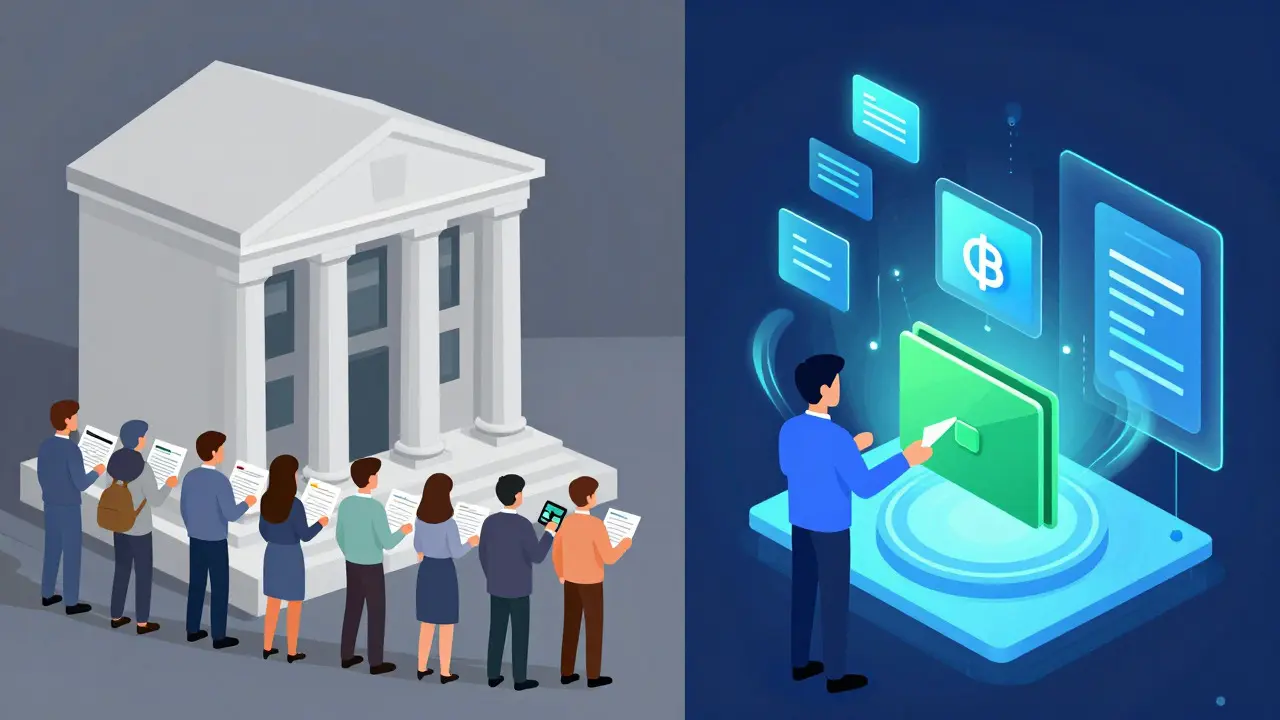
Imagine walking into a bank to get a loan. You fill out forms, wait weeks for approval, and hope your credit score is high enough. Now imagine getting that same loan instantly, without showing ID, using only code as the middleman. This isn't science fiction; it's DeFi lending, which is a decentralized financial system that allows users to lend and borrow cryptocurrencies without intermediaries like banks. As we move through 2026, more people are ditching traditional banks for these digital protocols. But why? Is it just hype, or does DeFi actually offer something better?
The short answer is yes. DeFi offers speed, access, and control that traditional banks simply can't match. However, it also comes with risks you won't find on a standard mortgage application. Let's break down exactly how DeFi lending works, why it beats traditional loans in specific areas, and what you need to watch out for.
Quick Summary / Key Takeaways
- No Middlemen: DeFi uses smart contracts instead of banks, removing human bias and delays.
- Global Access: Anyone with an internet connection can participate, regardless of location or credit history.
- Higher Yields: Lenders often earn significantly more interest than in traditional savings accounts due to direct peer-to-peer matching.
- Collateral-Only Model: Loans are secured by crypto assets, not personal credit scores, meaning no identity checks but higher collateral requirements.
- 24/7 Operation: The blockchain never sleeps, allowing instant borrowing and lending at any time.
How DeFi Lending Actually Works
To understand why DeFi is different, you first need to know how it operates. In traditional finance, a bank acts as the middleman. They take deposits from savers, pay them low interest, and lend that money to borrowers at high interest. The bank keeps the difference as profit. They also check your credit score, verify your income, and hold your funds in custody.
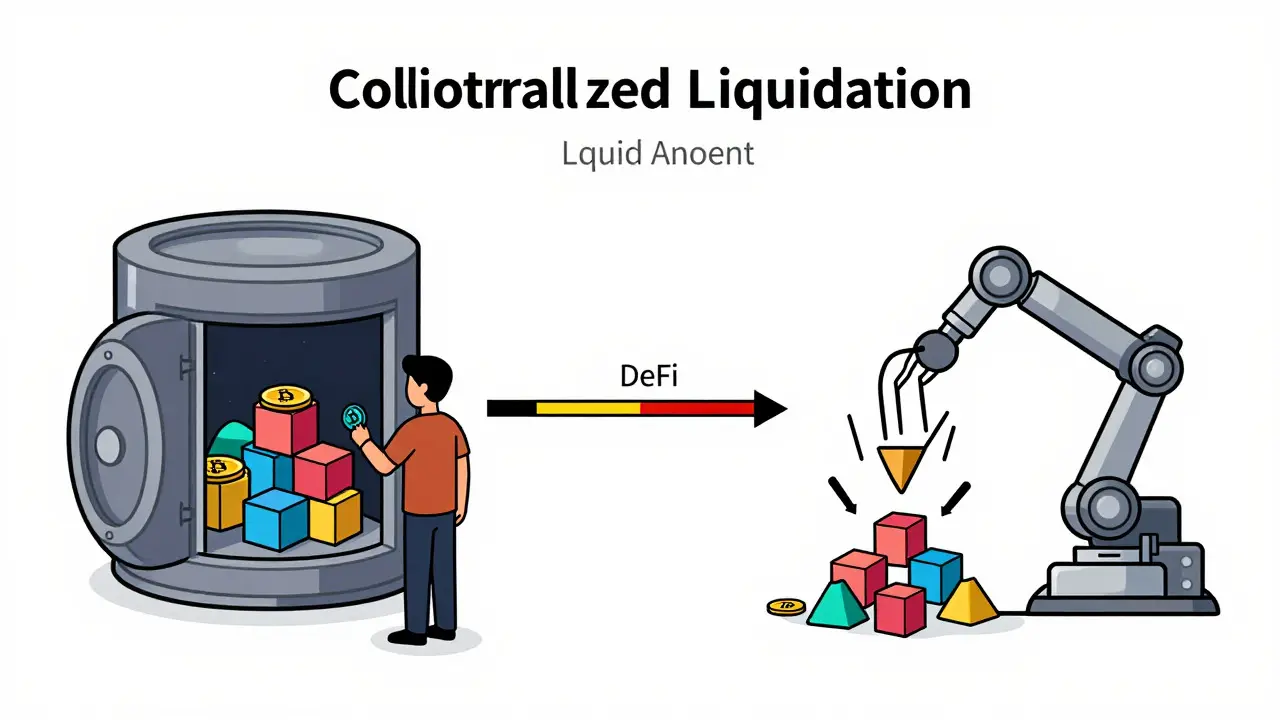
In Decentralized Finance (DeFi), this middleman is replaced by smart contracts-self-executing codes on a blockchain like Ethereum that automatically enforce loan terms. When you want to borrow, you don't apply. You deposit crypto collateral into a protocol like Aave or Compound. The smart contract locks your collateral and releases the loan amount immediately. If the value of your collateral drops too much, the code automatically sells it to repay the loan. No humans involved. No phone calls. Just math.
This automation creates a fundamental shift. You aren't trusting a bank manager; you're trusting the code. This brings total transparency because every transaction is recorded on the public ledger. You can see exactly where your money is going and who is borrowing it. Traditional banks operate in opaque silos; DeFi operates in open books.
Accessibility and Control: Your Money, Your Rules
One of the biggest frustrations with traditional banking is lack of control. Once you deposit money, the bank decides how to use it. They might lend it to a corporation, invest in bonds, or keep it in reserve. You have little say. In DeFi, you maintain non-custodial control. Your funds stay in your wallet until you explicitly interact with a smart contract. You decide when to lend, when to borrow, and when to withdraw.
Accessibility is another game-changer. Traditional banks require KYC (Know Your Customer) processes. You need an ID, proof of address, and a good credit history. If you live in a developing country with poor banking infrastructure, or if you've been unbanked due to past financial mistakes, traditional loans are often closed doors. DeFi doesn't care who you are. It only cares about your collateral. If you have $10,000 worth of Bitcoin, you can borrow against it whether you're in New York, Wellington, or Nairobi. This democratization of finance is perhaps DeFi's most powerful feature.
Furthermore, DeFi interfaces are flexible. Users can switch between different decentralized applications (dApps) instantly. If one platform offers lower fees or better rates, you move your funds there in minutes. Traditional banks lock you in with long-term contracts and switching costs. In DeFi, competition drives innovation because users vote with their wallets.

Yield and Returns: Earning More Than Banks Offer
Let's talk numbers. In 2026, traditional savings accounts and certificates of deposit (CDs) might offer modest returns, especially after inflation adjustments. DeFi lending pools often provide significantly higher Annual Percentage Yields (APY). Why? Because there's no bank taking a cut. The interest paid by borrowers goes directly to lenders, minus a small fee for protocol maintenance.
A study by the Bank for International Settlements highlighted that 'search for yield' is a primary driver for retail users entering DeFi. During periods of low interest rates in traditional markets, investors flock to DeFi platforms like Aave to maximize returns. For example, while a traditional savings account might offer 4% APY, stablecoin lending pools in DeFi could offer 8-12% or more, depending on market demand. This isn't guaranteed, as rates fluctuate based on supply and demand, but the potential upside is clear.
Beyond simple lending, DeFi enables advanced strategies like yield farming. Here, you lend your assets and then stake the receipt tokens in other protocols to earn additional rewards. It's complex, but it allows sophisticated users to compound their earnings in ways traditional banking simply doesn't permit. Traditional banks offer fixed products; DeFi offers modular financial building blocks.
Flexibility and Innovation: Flash Loans and Interoperability
Traditional loans are rigid. You get a mortgage, you pay it back over 30 years. You get a car loan, you pay it back over 5 years. DeFi introduces entirely new financial instruments. The most famous example is the flash loan. This allows you to borrow millions of dollars in crypto without any collateral, provided you repay it within the same blockchain transaction. It sounds impossible, but it's used by traders for arbitrage opportunities-buying low on one exchange and selling high on another instantly. While this requires technical skill, it shows the flexibility of DeFi coding.
Interoperability is another key advantage. DeFi protocols are built to work together. You can use a token borrowed from one platform as collateral in another, creating complex leverage strategies. Traditional financial products are siloed. Your bank account doesn't easily integrate with your investment portfolio or insurance policy. In DeFi, everything connects. This 'money Legos' approach allows developers to build new services on top of existing ones, fostering rapid innovation.
| Feature | DeFi Lending | Traditional Loans |
|---|---|---|
| Approval Time | Instant (minutes) | Days to Weeks |
| Credit Check | None (Collateral-based) | Required (FICO Score) |
| Identity Required | No (Anonymous) | Yes (KYC/AML) |
| Interest Rates | Variable (Market-driven) | Fixed or Variable (Bank-set) |
| Access | Global (Internet required) | Local/National (Bank account required) |
| Risk Management | Over-collateralization & Liquidation | Credit Scores & Legal Recourse |
Risks and Considerations: It's Not All Smooth Sailing
While DeFi offers superior efficiency and access, it's not risk-free. In fact, some risks are higher than in traditional banking. The biggest difference is the lack of recourse. If a bank makes a mistake, you can file a complaint. If a smart contract has a bug, your funds could be drained, and there's no customer service line to call. This is why auditing smart contracts is crucial. Platforms like Aave undergo rigorous security audits, but vulnerabilities still exist.
Volatility is another major factor. Since DeFi loans are collateralized by crypto, sudden price drops can trigger liquidations. If you borrow $1,000 against $1,500 worth of Bitcoin, and Bitcoin crashes 20%, the smart contract might sell your Bitcoin to cover the loan. You lose your collateral and owe nothing more, but you've lost your asset. Traditional loans are usually denominated in fiat currency, which is more stable, though inflation erodes purchasing power over time.
Regulatory uncertainty also looms. Traditional banks are heavily regulated by entities like the FDIC and OCC, offering deposit insurance up to $250,000. DeFi operates in a gray area. While this freedom is appealing, it means no government safety net. If a protocol fails, you're on your own. Users must do their own research (DYOR) and manage their risks carefully.
Who Should Use DeFi Lending?
DeFi isn't for everyone. If you value simplicity, stability, and government insurance, traditional banking remains the safer choice. However, DeFi is ideal for:
- Crypto Natives: Those already holding significant crypto assets who want liquidity without selling their holdings.
- Unbanked Individuals: People without access to traditional banking services or with poor credit histories.
- Yield Seekers: Investors looking for higher returns on stablecoins or major cryptocurrencies.
- Tech-Savvy Users: Individuals comfortable managing private keys, wallets, and interacting with dApps.
For entrepreneurs seeking capital for business expansion, traditional loans might still be better because they don't require upfront collateral. DeFi is primarily for leveraging existing assets, not funding new ventures from scratch. Understanding this distinction helps you choose the right tool for your financial goals.
Next Steps and Troubleshooting
If you're ready to try DeFi lending, start small. Set up a secure hardware wallet like Ledger or Trezor. Connect to a reputable platform like Aave or Compound. Deposit a small amount of stablecoins like USDC or DAI to test the interface. Monitor your health factor-the ratio of your collateral to your debt-to avoid liquidation. As you gain confidence, you can explore more complex strategies like yield farming or cross-margin borrowing.
Remember, DeFi is evolving rapidly. Stay informed about protocol updates, security patches, and regulatory changes. Join community forums and follow trusted analysts to keep your knowledge current. The goal is to harness the power of decentralized finance while mitigating its inherent risks.
Is DeFi lending safe compared to traditional banks?
DeFi lending carries different risks than traditional banks. While banks face operational and credit risks, DeFi faces smart contract bugs and volatility risks. Banks offer FDIC insurance, whereas DeFi relies on code security and over-collateralization. Neither is perfectly safe, but DeFi offers more control and transparency.
Do I need a credit score to get a DeFi loan?
No, DeFi loans are non-custodial and collateral-based. Your credit score is irrelevant. What matters is the value of the crypto assets you deposit as collateral. This makes DeFi accessible to anyone with sufficient assets, regardless of their financial history.
What happens if my collateral value drops?
If your collateral value drops below a certain threshold (the liquidation price), the smart contract will automatically sell your collateral to repay the loan. This protects lenders from losses but means borrowers can lose their assets if the market turns sharply against them.
Can I use DeFi for large purchases like a house?
Currently, DeFi is best suited for smaller, short-term loans or leveraging crypto assets. Large-scale real-world asset financing is emerging but not yet mainstream. For mortgages, traditional banks remain the standard due to legal frameworks and long-term stability needs.
Which DeFi lending platforms are best in 2026?
Leading platforms include Aave, Compound, and MakerDAO. These protocols have high Total Value Locked (TVL), strong security records, and active communities. Always check current audits and user reviews before committing funds, as the landscape changes quickly.