
Crypto Exchanges Restrictions for Russian Citizens: A 2026 Guide
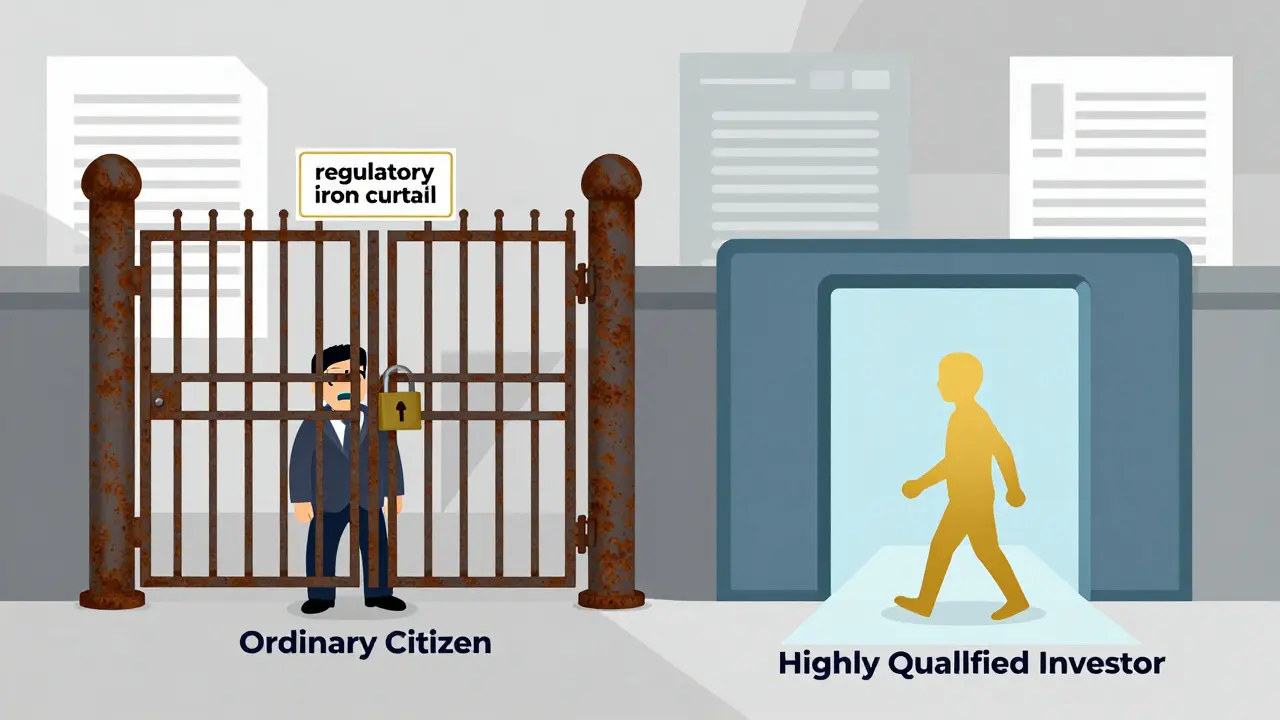
Buying Bitcoin or Ethereum used to be as easy as downloading an app and linking your bank card. For Russian citizens, that simplicity vanished overnight. Today, navigating the world of cryptocurrency is less about picking the right coin and more about surviving a regulatory minefield. The landscape has shifted from simple ambiguity to a harsh, dual-track system where ordinary users face severe limitations, while a tiny elite enjoys sanctioned access.
If you are trying to buy, sell, or hold crypto in Russia right now, you are likely dealing with frozen accounts, rejected identity verifications, or blocked bank transfers. This isn't just bad luck; it's by design. The Central Bank of Russia (CBR) and Western sanctions have created what experts call a 'regulatory iron curtain.' Understanding this environment is critical if you want to keep your assets safe and your accounts open.
The Legal Reality: Ownership vs. Usage
To understand why things are so difficult, we need to look at the foundation. In July 2020, Russia passed Law No. 259-FZ. This law legalized owning cryptocurrency but explicitly banned using it for domestic payments. It took effect in January 2021. So, legally, you can own Bitcoin. But you cannot use it to buy bread or pay rent within Russia.
This distinction matters because it sets the stage for everything that followed. After the invasion of Ukraine in February 2022, Western sanctions cut Russian entities off from SWIFT and traditional banking. The government responded not by opening up crypto for citizens, but by tightening control. They introduced the Experimental Legal Regime (ELR) in summer 2023. This allowed vetted companies to use digital currencies for foreign trade transactions only. It was a lifeline for businesses, but a dead end for retail investors.
Is it illegal to own crypto in Russia?
No, owning cryptocurrency is legal under Law No. 259-FZ. However, using it for domestic payments is prohibited, and accessing global exchanges is heavily restricted due to sanctions and local banking policies.
The "Highly Qualified Investor" Barrier
The most significant hurdle for average Russians is the classification of who gets to participate in the market. The Bank of Russia has consistently pushed for rules that limit crypto transactions to 'highly qualified investors.' The criteria for this status are steep: you need an investment portfolio worth at least 100 million rubles (approximately $1.1 million USD) or an annual income exceeding 50 million rubles (around $550,000 USD).
This creates a stark divide. If you meet these thresholds, you might find pathways through specialized financial institutions. If you don't-and most people don't-you are effectively excluded from legitimate, regulated channels. In May 2025, the regulator further tightened the screws by recommending that financial institutions cap their crypto exposure at just 1% of their capital. This means banks are actively avoiding crypto-related risks, making it harder for anyone outside the elite tier to transact.
| Investor Type | Requirements | Access Level |
|---|---|---|
| Ordinary Citizen | No specific wealth requirement | Restricted; high risk of account blocks |
| Highly Qualified Investor | Portfolio > 100M RUB or Income > 50M RUB/year | Limited access via specialized institutions |
| Vetted Companies (ELR) | Government approval for foreign trade | Allowed for international settlements only |
The Global Exchange Crackdown
You can't talk about restrictions without mentioning the platforms themselves. Major global exchanges like Binance and Coinbase have drastically changed their approach to Russian users. Following sanctions, these platforms implemented strict compliance measures.
Coinbase has reportedly frozen over 25,000 Russian accounts. Users frequently report sudden freezes without clear explanations. On Trustpilot, Coinbase holds a dismal 2.1 out of 5 rating from Russian users, based on over 1,400 reviews. The complaints are consistent: frozen funds, inability to withdraw, and poor customer support.
Binance fares slightly better but still presents major hurdles. Its rating among Russian users is 2.8 out of 5. The biggest pain point is identity verification. Previously, Binance offered basic accounts with minimal KYC (Know Your Customer) requirements. Now, they demand rigorous proof-of-address verification. Many Russian users find themselves stuck in a loop, unable to provide documents that satisfy the platform's enhanced security protocols. For accounts holding more than EUR 10,000, services are often limited entirely.
The Rise of Peer-to-Peer (P2P) Trading
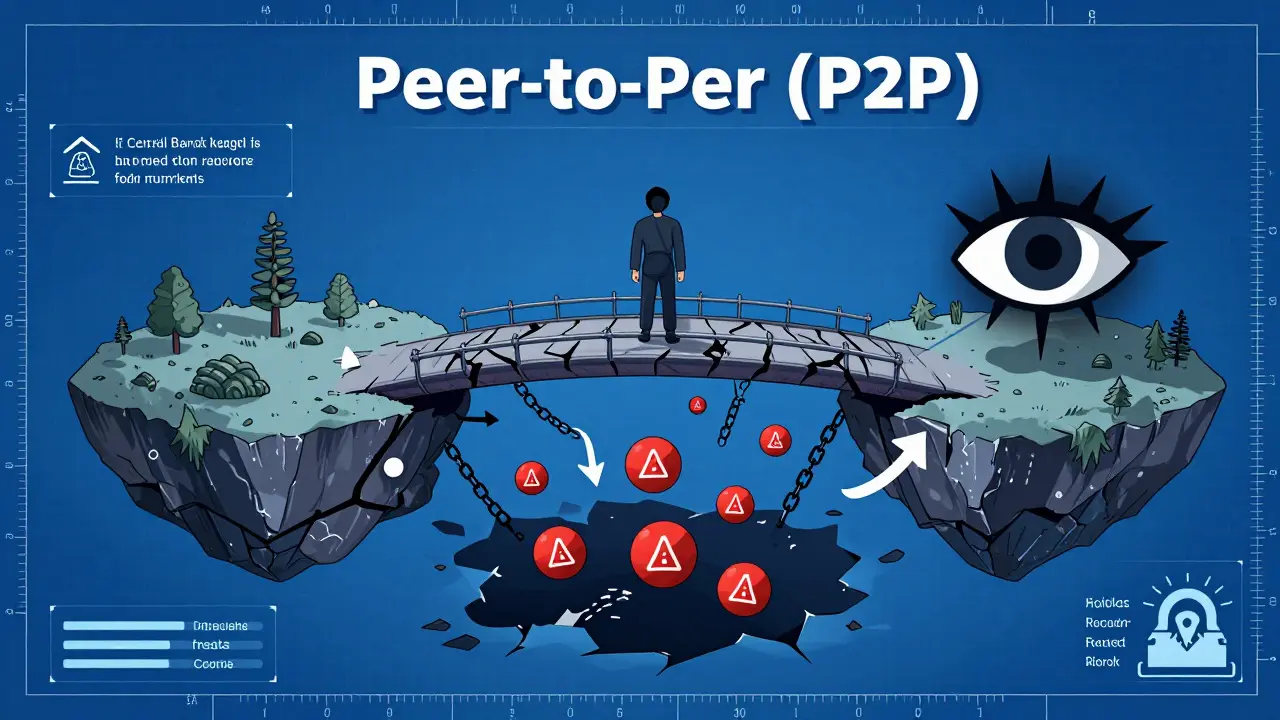
With direct exchange access closed, many Russian citizens turned to Peer-to-Peer (P2P) trading. Platforms like LocalBitcoins and Paxful became popular workarounds. P2P allows you to buy crypto directly from other individuals, usually paying via bank transfer or mobile payment apps.
However, this is not a safe haven. The Central Bank of Russia issued a warning in June 2023 stating that frequent small-scale P2P crypto trading could result in bank account blocks. Essentially, the CBR is monitoring your bank statements. If they see regular transfers to individuals labeled as 'crypto traders,' they may flag your account for suspicious activity. This effectively criminalizes casual crypto usage for ordinary citizens.
Data from Chainalysis shows that P2P trading volume in Russia grew by 217% between 2022 and 2025. While this indicates demand, it also highlights the desperation of users forced into underground channels. These markets lack consumer protection. Scams are rampant, and there is no recourse if a counterparty fails to deliver.
Sanctions Evasion and the "Dirty Crypto" Label
The situation is further complicated by international pressure. The European Union's 19th Sanctions Package specifically targets 'dirty Russian crypto' schemes used for sanctions evasion. This means that even if you manage to move money through offshore exchanges, you are under scrutiny.
U.S. Treasury officials have stated they are not overly worried about crypto undermining sanctions efforts. They note that laundering large amounts of money through digital wallets is expensive, time-consuming, and visible on the blockchain. Monitoring companies cooperate closely with law enforcement, using advanced tools to flag violations in real time. This transparency works against the user. You are not anonymous in the way you might think.
For the average citizen, this means that attempting to bypass sanctions or hide assets is incredibly risky. The 'financial aristocracy' mentioned earlier uses sophisticated structures to navigate these rules. Ordinary users do not have those resources.
Practical Challenges for Users
If you are trying to navigate this system, here is what you will likely encounter:
- Identity Verification Failures: A September 2025 survey found that 68% of Russian users reported issues with KYC procedures. Non-Russian ID documents are often required, which many citizens simply do not have.
- Sudden Account Freezes: 41% of respondents experienced unexpected freezes. There is often no warning, and recovery is slow or impossible.
- Fiat Off-Ramp Difficulties: 79% cited problems converting crypto back to rubles. Banks refuse to process incoming transfers from unknown crypto sources.
- Technical Barriers: Using offshore exchanges often requires Virtual Private Networks (VPNs). This adds another layer of complexity and potential legal risk depending on how strictly you adhere to local internet regulations.
Future Outlook: A Fragmented Market
Is there any hope for change? Some analysts predict a slight easing of restrictions, but the fundamental exclusionary framework remains. In October 2025, First Deputy Governor Vladimir Chistyukhin announced that banks would be allowed to operate in the crypto sector, but with strict capital limits. This is aimed at institutional players, not retail users.
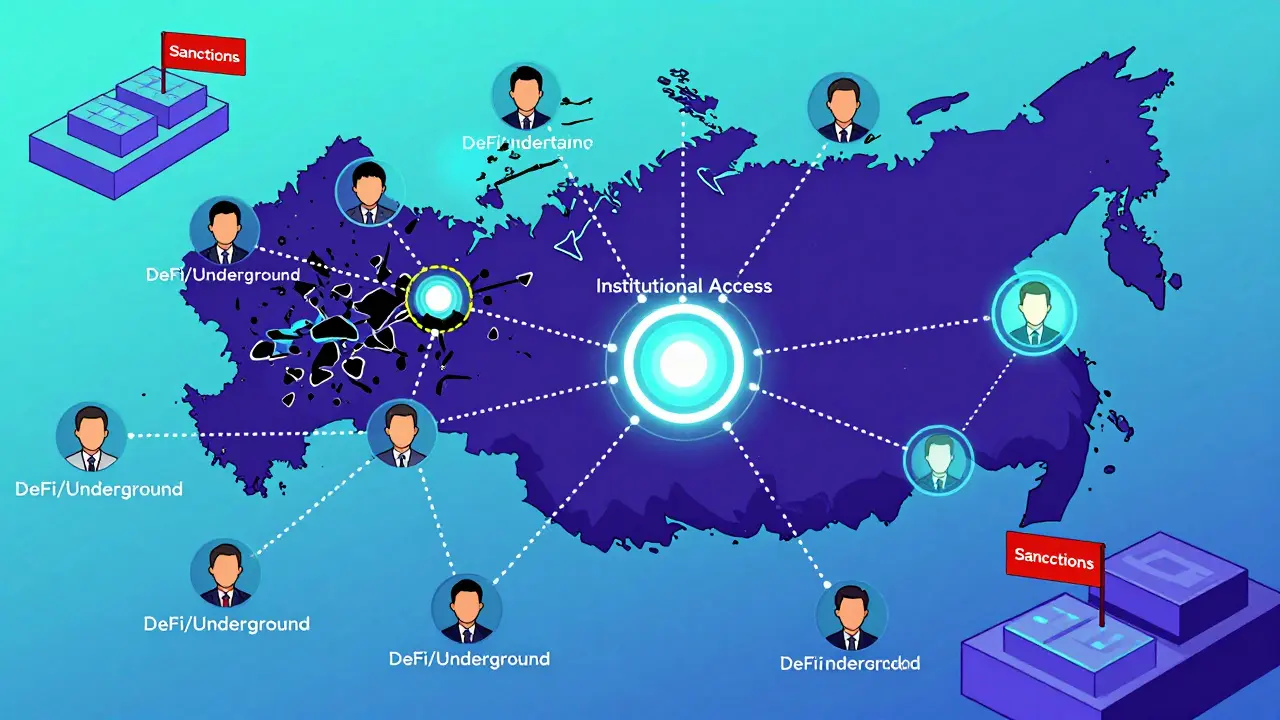
Bernstein analysts predict that Russia's crypto market will remain fragmented and underground until at least 2028. Legitimate participation will likely stay confined to the top 0.1% of wealthiest citizens. Meanwhile, ordinary citizens will increasingly turn to Decentralized Finance (DeFi) solutions. DeFi protocols are harder to regulate because they don't rely on centralized intermediaries. However, they come with their own risks, including smart contract vulnerabilities and lack of user support.
Chainalysis reports that 87% of Russian crypto transactions now occur outside regulated channels. This creates significant regulatory arbitrage opportunities but also increases systemic risks. The longer this bifurcation continues, the more unstable the ecosystem becomes for everyone involved.
Final Thoughts
Navigating crypto exchanges as a Russian citizen in 2026 is a high-stakes game. The rules are designed to exclude you unless you are wealthy enough to qualify as a 'highly qualified investor' or connected enough to operate within the Experimental Legal Regime. For the rest, the path is fraught with technical hurdles, legal risks, and financial uncertainty.
Your best defense is caution. Avoid large sums on P2P platforms, be prepared for account freezes, and understand that customer support from major exchanges is unlikely to help you. The system is not broken; it is working exactly as intended for its creators. Whether it serves the interests of Russian citizens is a different question entirely.
Why did Binance freeze my account?
Binance freezes accounts to comply with international sanctions and internal risk management policies. Common triggers include incomplete KYC verification, suspicious transaction patterns, or holding balances above certain thresholds without proper documentation.
Can I use P2P trading safely?
P2P trading carries significant risks. The Central Bank of Russia warns that frequent P2P transactions can lead to bank account blocks. Additionally, P2P platforms lack consumer protection, making you vulnerable to scams and non-delivery.
What is the Experimental Legal Regime (ELR)?
The ELR is a special permission granted to vetted companies to use digital currencies for foreign trade transactions. It does not apply to individual retail investors and is strictly monitored by the government.
How much money do I need to be a highly qualified investor?
You need an investment portfolio worth at least 100 million rubles or an annual income exceeding 50 million rubles to qualify as a highly qualified investor under current proposals by the Bank of Russia.
Will crypto restrictions ease in the future?
Analysts predict that the market will remain fragmented until at least 2028. While some institutional access may expand, retail restrictions are likely to persist due to ongoing sanctions and capital control measures.