
Crypto Asset Forfeiture in Nepal: Laws, Penalties & Enforcement
Crypto Penalty Calculator Nepal
Penalty Calculator for Crypto Violations
Select an offense type to view potential penalties under Nepali law
Potential Penalties
Select an offense type to view penalties
Ever wondered what happens to crypto wallets when Nepal’s authorities catch you breaking the law? The short answer: the state can seize the digital assets and treat them like any other illegal proceeds. Below is a plain‑English walk‑through of the legal backdrop, how forfeiture works, and what you need to know if you ever find yourself on the wrong side of Nepali crypto policy.
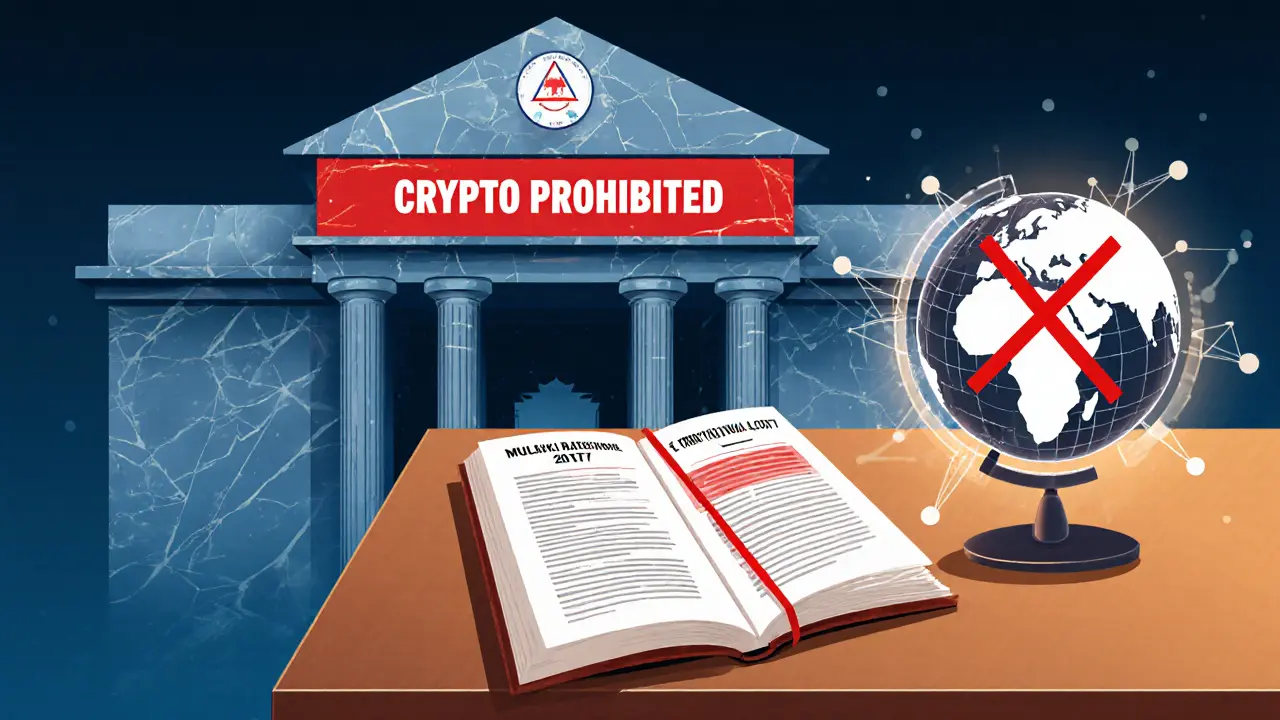
Legal backdrop: the absolute ban
Since 2017 the Muluki Criminal Code Act 2017 has defined cryptocurrency as any electronically created token, code, or virtual asset that can store value or be used for commercial purposes. Section 262(A) criminalises every activity that involves these assets - mining, trading, storing, even merely possessing them.
The Nepal Rastra Bank is the country’s central bank and the chief enforcer of the crypto ban. It regularly issues warnings that anyone caught dealing in crypto faces heavy fines, imprisonment, and the possibility of having their digital holdings confiscated.
Why the ban matters
Nepal’s concerns are three‑fold: the national currency (the Nepalese Rupee) isn’t recognised as a legal tender for crypto, the assets operate outside the banking system, and the government fears money laundering, tax evasion, and destabilisation of the financial system. The anti‑money laundering law covers a wide range of financial crimes, including crypto‑related offences, and provides the groundwork for seizure and forfeiture.
Enforcement tools: blocking, monitoring, and seizures
In 2021 the Nepal Telecommunication Authority blocked access to websites that facilitate crypto trading or mining. Since then, law‑enforcement agencies have been equipped to trace blockchain transactions, request wallet information from exchanges abroad, and coordinate with international partners to freeze assets before they cross the border.
crypto asset forfeiture Nepal: how the process works
When a person is charged with a crypto violation, the case is treated like any other financial‑crime prosecution. The steps typically follow these stages:
- Investigation and seizure: Police, often aided by the central bank, identify the wallet address linked to the suspect and issue a freeze order.
- Forensic analysis: Specialists map the transaction history, confirm the origin of funds, and document the illegal nature of the activity.
- Court order: A magistrate reviews the evidence and issues an asset‑forfeiture order, specifying that the crypto holdings must be surrendered to the state.
- Transfer to government treasury: The seized digital assets are transferred to a government‑controlled wallet. The state may later liquidate them, convert to NPR, or hold them as evidence.
- Disposition: Depending on the case outcome, the assets may be auctioned, used for public projects, or retained as part of the criminal‑proceeds fund.
Because Nepal lacks a dedicated crypto‑forfeiture statute, the above procedure borrows from the general asset forfeiture framework that applies to proceeds of crime, including money laundering, fraud, and drug trafficking. Courts treat crypto as a form of property, so the same legal standards apply.
Penalties you can expect
The combination of the Muluki Criminal Code and anti‑money‑laundering provisions results in steep consequences. Fines can reach up to NPR 10 million (about USD 80,000) and imprisonment up to ten years, depending on the severity and quantity involved.
| Offense | Maximum Fine (NPR) | Imprisonment (years) |
|---|---|---|
| Unauthorised crypto trading | 10,000,000 | 10 |
| Money laundering (general) | 15,000,000 | 15 |
| Bank fraud | 8,000,000 | 8 |
| Tax evasion (large scale) | 12,000,000 | 12 |
Notice the crypto‑specific fines are slightly lower than the broader money‑laundering penalties, but the imprisonment terms are equally harsh. The state can also impose additional charges for related offences such as illegal fundraising or fraud.

How Nepal’s approach stacks up against its neighbours
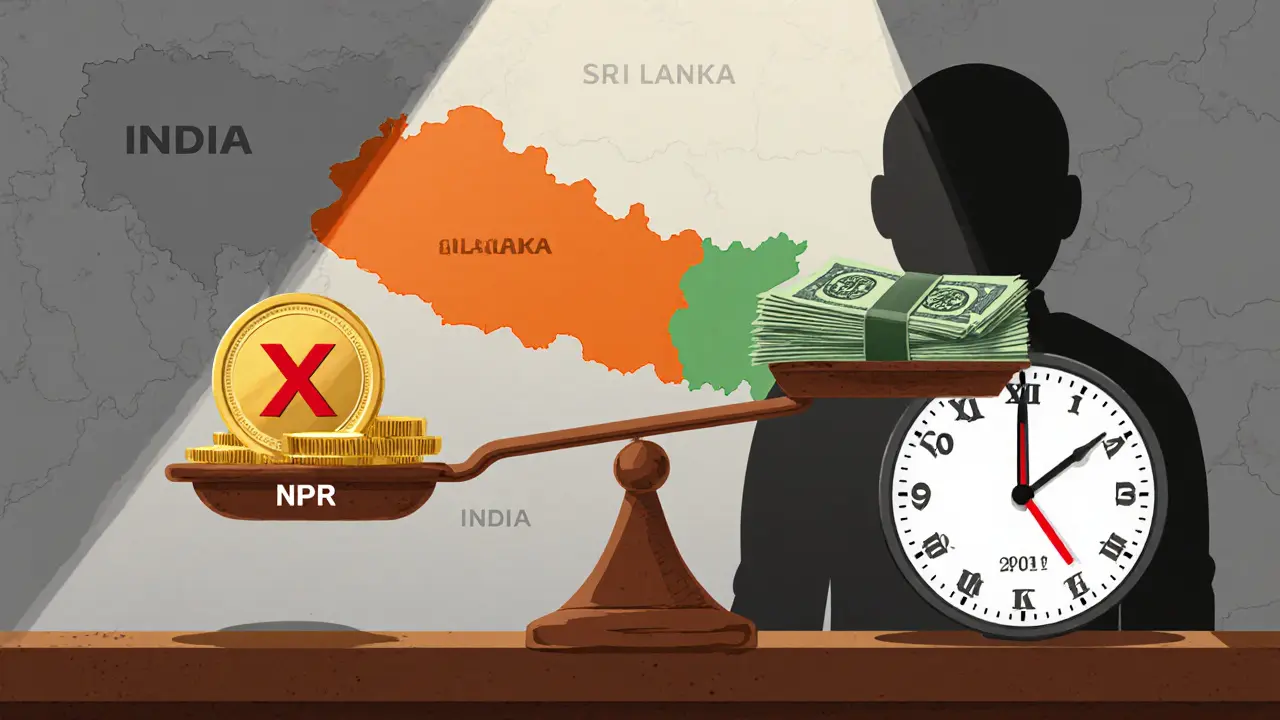
India, for instance, has moved from a blanket ban to a regulated framework that allows certain crypto activities under a licensing regime. Nepal, however, remains in the 12 % of emerging markets that still enforce a total prohibition. This isolation means that anyone caught with crypto assets faces a much steeper legal cliff than a trader in Bangalore or Colombo.
Practical implications for residents and businesses
If you live in Kathmandu or run a startup, the safest bet is to avoid any direct crypto involvement. Some organisations still use blockchain technology for supply‑chain tracking or health‑record management. Those applications, when they do not involve tokenised value transfer, are not classified as “cryptocurrency” under the current law. In practice, you should keep any blockchain projects strictly non‑financial and retain clear documentation to show compliance.
For expatriates or investors eyeing the Nepali market, relocating your crypto activities to a friendlier jurisdiction (e.g., Singapore or Malta) is advisable. Attempting to hide assets in offshore wallets rarely works; Nepalese authorities cooperate with international partners and can request wallet freezes through Mutual Legal Assistance Treaties.
Future outlook: will the ban soften?
As of October 2025 there are no concrete signals that the government plans to relax the prohibition. The central bank continues to issue public statements warning against crypto use, and recent enforcement actions (website blocks, seizures of mining equipment) show the policy is firmly in place. Until a new legislative amendment is announced, the risk of asset forfeiture remains high.
Key takeaways
- All crypto activities are illegal in Nepal under the Muluki Criminal Code.
- Asset forfeiture follows the general criminal‑proceeds framework; seized wallets become state property.
- Penalties include up to NPR 10 million in fines and up to ten years imprisonment.
- Neighbouring countries are moving toward regulation; Nepal stays in the minority with a total ban.
- For anyone considering crypto in Nepal, relocation or non‑financial blockchain use is the only safe path.
Can the Nepali government seize crypto held on foreign exchanges?
Yes. Through mutual legal assistance treaties, Nepali authorities can request foreign exchanges to freeze or hand over account information linked to a suspect’s wallet address. The seized assets are then subject to the same forfeiture order as locally held crypto.
Is there any legal way to use blockchain technology in Nepal?
Yes, but only for non‑financial use‑cases such as supply‑chain transparency, identity verification, or health‑record management. The key is that no token representing value is exchanged; otherwise it falls under the crypto ban.
What happens to a seized crypto wallet after the court order?
The wallet’s private keys are transferred to a government‑controlled wallet. The state may hold the assets as evidence, liquidate them on a regulated exchange, or auction them to recover the fine.
Do the penalties differ for individuals versus companies?
Both can face the same maximum fines and imprisonment for individuals. Companies, however, may also be subjected to corporate liability, including dissolution, loss of operating licences, and additional civil penalties.
Is there any appeal process after a forfeiture order?
Yes. Convicted parties can appeal to the High Court of Nepal within 30 days of the verdict. The appeal must address procedural errors or new evidence showing the assets were not linked to illegal activity.
22 Comments
The legal framework outlined indicates that possession of cryptocurrency in Nepal constitutes a criminal offence under the Muluki Criminal Code, and the forfeiture mechanism aligns with that applied to traditional illicit proceeds.
Indeed, the ban is unequivocal,; the central bank enforces it rigorously,; penalties are severe,; and the state retains the authority to seize digital assets,; leaving no room for ambiguity.
One might contemplate the metaphysical implications of a state laying claim to intangible code, yet the reality is rooted in legal precedent. The courts treat crypto as property, a notion that may appear paradoxical given its decentralized nature. However, property law does not discriminate between physical and digital assets when it comes to illicit gain. The investigative phase often involves blockchain forensics, a field that blends cryptography with traditional detective work. Specialists trace transaction histories, linking wallet addresses to suspect activity. Once sufficient evidence is gathered, a magistrate may issue a freeze order, effectively immobilising the assets. This freeze is not merely symbolic; it prevents the dispersion of funds across multiple wallets. The subsequent forensic analysis confirms the illicit origin, ensuring due process. After the court’s forfeiture order, the state assumes control of the private keys. These keys are transferred to a government‑controlled wallet, safeguarding the assets from tampering. The state then faces a strategic decision: liquidate the holdings on a regulated exchange, hold them as evidence, or auction them to recover fines. Each option carries its own set of risks and benefits, especially in a market as volatile as crypto. Moreover, the absence of a dedicated crypto‑forfeiture statute means authorities rely on general asset forfeiture provisions, which may lead to interpretive challenges. Critics argue that this legal ambiguity could be exploited, while proponents view it as a necessary deterrent. In any case, the enforcement apparatus is well‑equipped, leveraging both domestic law and international cooperation. Mutual legal assistance treaties enable Nepali authorities to request data from foreign exchanges, extending their reach beyond national borders. Finally, the prospect of appeal remains, though success is uncertain given the stringent evidentiary standards. Thus, the process, while complex, is methodical and designed to uphold the rule of law.
Whoa, talk about a drama alert! Nepal’s crypto crackdown feels like a plot twist straight out of a thriller, where the hero (or anti‑hero) gets their wallet frozen in a flash. It’s wild how the central bank pulls the strings like a puppet master, and every transaction is under the microscope.
When you consider the layers of surveillance, you can’t help but wonder if there’s a hidden agenda beyond mere financial regulation. The convergence of anti‑money‑laundering rhetoric with absolute bans suggests a deeper intent to control information flow. It feels as if every block in the chain is a potential choke point for power.
Sure, Nepal says it’s about protecting the economy, but let’s be honest – it’s also about showing who’s boss. The whole “we’ll seize your crypto” line is just a power move, and the draconian fines are the cherry on top.
It’s reassuring to see such thorough documentation of the process; knowledge is the best defense, and staying informed helps us navigate these tricky legal waters.
The state’s approach is a textbook example of overreach, stripping individuals of digital autonomy under the guise of legality. This sets a dangerous precedent for future asset control.
Never mess with Nepali crypto laws.
It is noteworthy that the legislative framework provides explicit authority for asset seizure, thereby ensuring procedural clarity in enforcement actions.
Hey folks, just a friendly heads‑up – if you’re thinking about dabbling in crypto while in Nepal, you might want to reconsider. The risk of a full‑blown legal showdown is real, and the government isn’t shy about using its power.
Meh, another ban. Guess the crypto hype is over there too.
For anyone looking to avoid trouble, the safest route is to keep crypto activities outside Nepal’s jurisdiction. Use reputable exchanges abroad and stay compliant with local AML statutes.
Great point about relocating assets; it’s a practical solution that many have successfully implemented without attracting legal attention.
The blanket prohibition reflects a broader nationalistic stance on financial sovereignty, and it’s unlikely to soften soon.
Understanding the procedural steps helps demystify the process and reduces anxiety for those who might inadvertently cross legal boundaries.
🔍💡 While the ban is strict, it’s fascinating to see how blockchain can still be leveraged for non‑financial use‑cases in Nepal. 🇳🇵🚀
😂 So you want to mine crypto in Nepal? Good luck with that – the government will probably turn your rig into a museum exhibit.
Let’s keep the conversation inclusive and focus on how we can support each other in navigating these complex regulations.
Interesting read! 😊 The cross‑border cooperation aspect is especially important for enforcement.
It is essential to approach this topic with both rigor and empathy, ensuring that stakeholders are well‑informed.
State overreach hurts all.