
Cross-Border Crypto Monitoring: How International Authorities Track Digital Assets
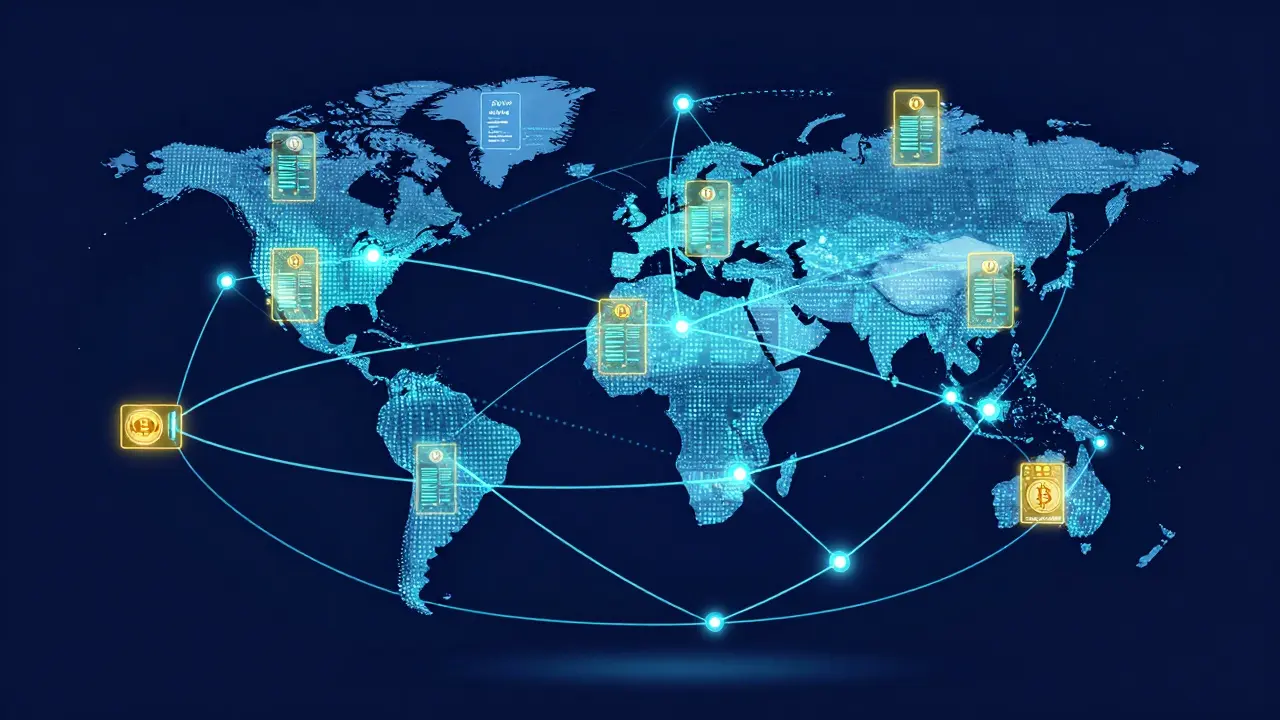
Moving money across borders used to mean dealing with banks, wire transfers, and days of waiting. Now, you can send millions in digital assets across the globe in seconds. While that speed is great for users, it is a nightmare for regulators. Global authorities are no longer just watching from the sidelines; they are building a massive, interconnected web to track exactly who is sending what, where, and why. If you think a private wallet is a ghost, you might be surprised by how much the cross-border crypto monitoring infrastructure has evolved by 2026.
| Region | Primary Framework | Key Focus | Approach |
|---|---|---|---|
| United States | Bank Secrecy Act (BSA) / FinCEN | AML/CFT & Sanctions | Enforcement-led / Threshold-based |
| European Union | MiCA | Market Integrity & Consumer Protection | Risk-averse / Comprehensive Licensing |
| Global | FATF Standards | Travel Rule Implementation | Standardized Inter-jurisdictional Guidelines |
The Invisible Net: How Monitoring Actually Works
International monitoring isn't about one single "global police force." Instead, it is a coordinated effort where different agencies share data and rules. In the US, the Financial Crimes Enforcement Network (also known as FinCEN) treats crypto businesses like traditional banks. This means if you run a crypto exchange, you aren't just a tech company-you are a financial institution under the Bank Secrecy Act.
But the real engine of cross-border tracking is the Travel Rule. Think of it as a digital passport for your transaction. When a transfer hits a certain threshold-specifically $3,000 in the US-Virtual Asset Service Providers (VASPs) must collect and share the sender's and receiver's personal details. They don't just send the coins; they send a data packet containing names, addresses, and account numbers. This ensures that when money moves from a wallet in New York to an exchange in Singapore, there is a paper trail that authorities can follow.
The War on Obfuscation: VPNs, Mixers, and Unhosted Wallets
Authorities are well aware that people try to hide their tracks. The use of VPNs to mask IP addresses is a common tactic to bypass geographical restrictions or KYC (Know Your Customer) checks. Regulators are fighting back by focusing on "on-ramps" and "off-ramps"-the points where crypto is converted back into cash. If you use a non-KYC instant exchange service to swap a sanctioned token for Bitcoin, you might feel invisible, but the patterns of those transfers often flag the activity to compliance software.
Then there are the "unhosted wallets"-wallets not held by an exchange. FinCEN has pushed for rules that require banks and money services to report and verify identities for transactions involving these private wallets. By classifying assets like Bitcoin and Ether as "monetary instruments," the government can apply the same strict record-keeping rules they use for stacks of cash.
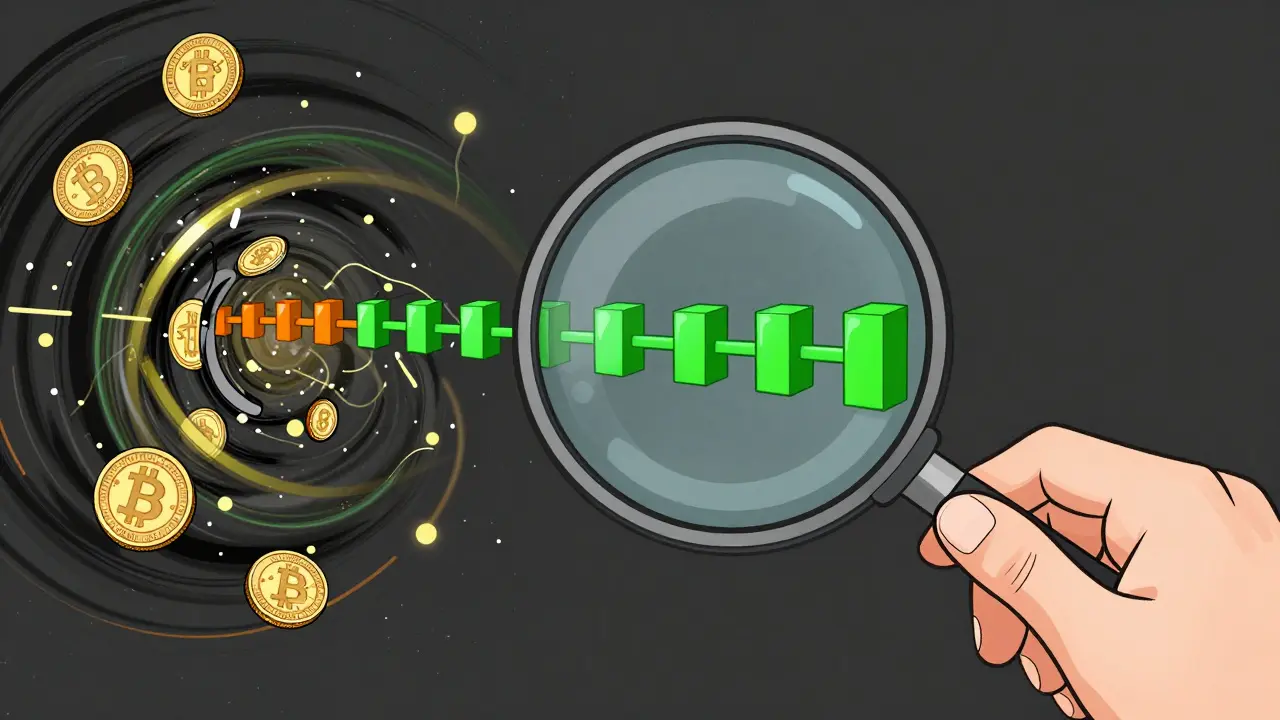
Sophisticated actors use "layering" or "mixing" services to scramble the trail of funds. However, blockchain analysis tools have become incredibly efficient at "de-mixing." By analyzing the timing and size of deposits and withdrawals, authorities can often reconstruct the flow of funds, proving that a "clean" wallet is actually linked to a sanctioned entity.
The Transatlantic Alliance: US and UK Cooperation
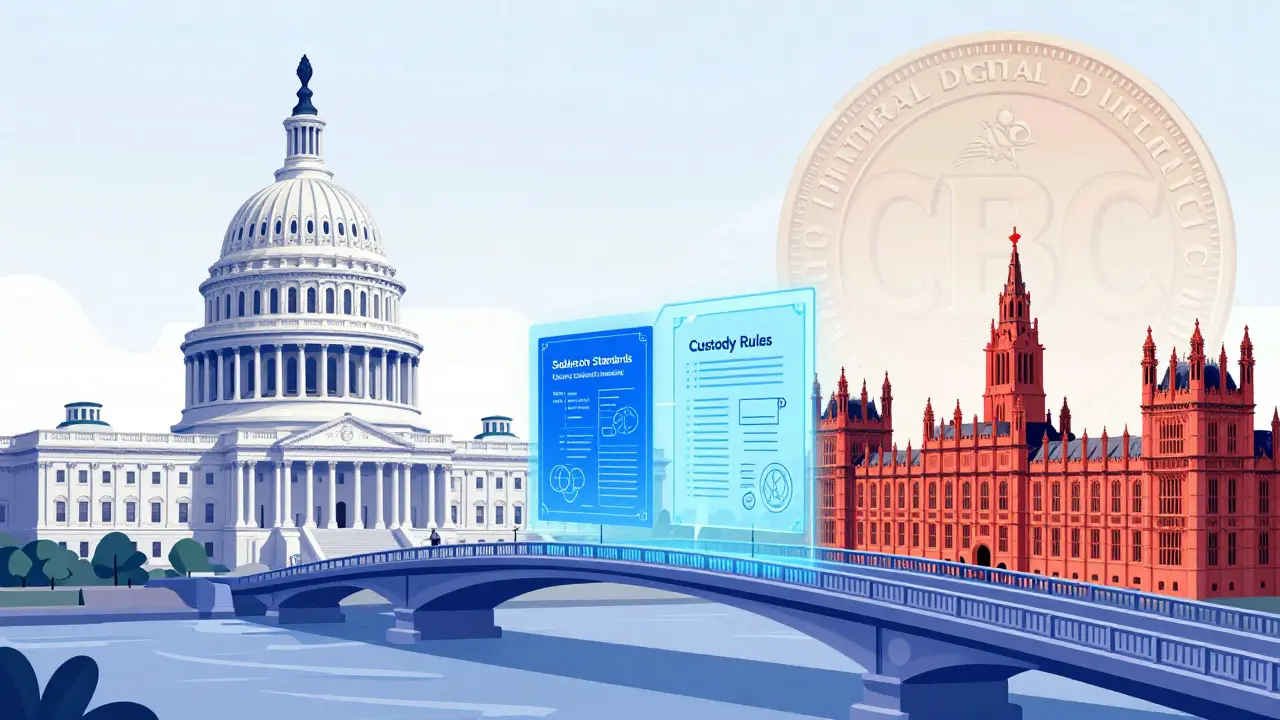
One of the biggest shifts in 2025 and 2026 is the UK-US Transatlantic Task Force. Instead of fighting over who has the best rules, the US and UK are aligning their standards on stablecoins, custody, and licensing. This is a strategic move. Because crypto is borderless, a gap in one country's laws is a loophole for the entire world. By syncing their approach, these two powerhouses are creating a template that other nations are likely to copy.
This cooperation focuses on several critical areas:
- Stablecoin Standards: Ensuring that digital coins pegged to the dollar or pound are backed by real assets and don't collapse and trigger a systemic crisis.
- Custody Rules: Defining who is responsible for the private keys and how those assets must be protected.
- Sanctions Enforcement: Sharing real-time data on "designated persons" to prevent sanctioned banks or individuals from using crypto to bypass trade embargoes.
The European Approach: MiCA and Risk Aversion
While the US often regulates through lawsuits and enforcement, the European Union took a different path with MiCA (Markets in Crypto-Assets). MiCA is a comprehensive set of rules that provides a clear license for providers to operate across the entire EU. It is generally more risk-averse than the UK or US models, placing a heavy emphasis on consumer protection and market stability.
Under MiCA, any licensed provider must have a robust financial crime control framework. They can't just "wing it" with AML; they need documented processes for enhanced due diligence. This means if you are a high-net-worth individual or a political figure, the level of scrutiny you face when moving crypto in Europe is significantly higher than for a retail user.
Practical Realities: How to Navigate Compliance
For businesses, the choice is simple: build your own compliance engine or partner with licensed providers. Building a system that tracks the Travel Rule across fifty different jurisdictions is expensive and technically grueling. Many firms now use "compliance-as-a-service" providers who handle the KYC and AML screening in the background.
If you're operating in this space, remember these rules of thumb:
- Due Diligence is Non-Negotiable: If you partner with a VASP, verify their AML audit history. If they get hit with a FinCEN penalty, your funds could be frozen along with theirs.
- Assume Transparency: Treat every transaction as if it's being watched. The combination of blockchain forensics and international data sharing makes true anonymity nearly impossible for large sums.
- Watch the Thresholds: Be aware of the specific dollar or euro limits that trigger reporting. Crossing a threshold without proper documentation is the fastest way to trigger a suspicious activity report (SAR).
The Road Ahead: Central Bank Digital Currencies (CBDCs)
The push for monitoring isn't just about stopping criminals; it's about preparing for the future. With over 90% of central banks exploring CBDCs, the era of "invisible money" is ending. A central bank digital currency is, by definition, a monitored currency. The frameworks being built today for Bitcoin and Ether are the prototypes for how governments will manage their own digital money tomorrow.
We are seeing a shift from "reactive" regulation (punishing people after the crime) to "proactive" regulation (building systems where the crime is harder to commit). As blockchain technology integrates with traditional financial oversight, the line between a crypto wallet and a bank account will continue to blur.
What is the Travel Rule in crypto monitoring?
The Travel Rule is a requirement derived from FATF standards that forces Virtual Asset Service Providers (VASPs) to share personally identifiable information (PII) of the sender and receiver for transactions over a certain amount. In the US, this threshold is typically $3,000. It effectively turns crypto transfers into a documented trail similar to how bank wires work.
Can authorities really track unhosted wallets?
Yes, although it is harder than tracking exchanges. Authorities use blockchain analysis tools to track the flow of funds. While the wallet itself might be anonymous, the moment those funds interact with a regulated exchange or a known service (an "off-ramp"), the identity of the user can be linked to the wallet address.
How does MiCA differ from US regulation?
MiCA (Markets in Crypto-Assets) is a comprehensive, codified regulatory framework for the entire EU, providing a single license for cross-border operation. The US approach is more fragmented, involving multiple agencies like the SEC, CFTC, and FinCEN, and often relies on enforcement actions (lawsuits) to establish rules rather than a single overarching piece of legislation.
Why is the UK-US Transatlantic Task Force important?
This task force is critical because it aligns the two largest financial markets in the world. By agreeing on standards for stablecoins and custody, they prevent "regulatory arbitrage," where companies move to whichever country has the weakest rules. It sets a global benchmark that other nations are likely to follow.
Do VPNs protect users from crypto monitoring?
VPNs hide your IP address and location, which can help bypass simple geographical blocks. However, they do not hide the on-chain transaction data. If the funds move through a regulated exchange or a service with KYC, the VPN becomes irrelevant because the identity is already linked to the transaction.
18 Comments
Just admit it, this is all about the transition to CBDCs so they can track every single cent you spend in real time. The "crime fighting" angle is just a cover for total financial surveillance. Once they kill the on-ramps, you're just a number in their system.
It is honestly hilarious that people still think VPNs are a magic shield in 2026. The chain is public. The metadata is there. If you're moving significant volume, you're already flagged by the time you even think about an off-ramp. Simple as that.
Imagine thinking a mixer is going to save you when Chainalysis has basically turned the blockchain into a glass house. Good luck with that.
Told you this would happen. they just want us all in a digital cage where they can flip a switch and erase your savings if you say the wrong thing on the internet. the whole system is rigged and these "frameworks" are just the bars of the cell.
One must ponder if the pursuit of absolute transparency is not, in itself, a violation of the fundamental human right to privacy. 🙄 We are sacrificing the soul of decentralized finance at the altar of state control. It is a tragedy of the highest order. 🏛️
For anyone actually managing a business here, don't sleep on the Travel Rule. The $3,000 threshold is a tripwire. If you're seeing a pattern of transactions just under that limit, that's a huge red flag for regulators and you need to document it immediately to avoid a SAR filing.
thanks for the breakdown. sounds like it's just better to stay compliant from the start so there's no stress later
Its an absolute disgrace that we're letting these globalist FATF standards dictate how we handle our money in the US of A because we need to put america first and stop letting the EU with their MiCA nonsense tell us how to regulate our own digital economy and we should be using our military and economic power to ensure the dollar remains the only relevant standard without taking orders from some bureaucrat in Brussels who has never run a business in his life!
Oh please, as if the US and UK "aligning" is anything other than a coordinated attempt to keep the hegemon status. They're just making sure the exit doors are locked before the rest of the world figures out how to actually use privacy coins. It's so predictable it's almost boring.
Privacy is a social construct anyway. If you have nothing to hide, the monitoring is just a safety net for the collective good.
Sure, because the government is famously great at keeping data secure and not leaking it to every hacker with a laptop. Great plan.
Actually, I think this is a great way to bring more mainstream people into crypto! When the rules are clear and there's a safety net, people who were scared of the "wild west" side of things will finally feel comfortable jumping in. It's a win-win for everyone in the long run!
This is just a slow-motion train wreck of the entire concept of decentralization. Absolutely devastating.
Honestly just use a hardware wallet and don't be a weirdo about it lol. Most people don't even move enough to trigger these rules anyway.
I want to know more about the de-mixing tools mentioned. If the timing and size analysis is that effective, then the concept of a 'privacy coin' is basically a myth at this point.
Keep learning and stay curious! 🚀 The tech is evolving, but so is the law. Just make sure you're using a licensed VASP if you're doing big moves! 💎🙌
Hope evryone can just get along and find a middle ground betwen privacy and security. Its tough but possibl if we try.
It's really important to remember that every country is just trying to figure this out as they go along. We're all basically in a giant global experiment right now. I think if we stay open to communication and help each other understand how these different systems like MiCA and the BSA work, we can create a financial future that is both safe and free for everyone, regardless of where they were born or how much money they have in their digital wallets. It might take a few more years of trial and error, but the goal of a transparent yet fair system is something we can all get behind if we just keep talking it through.