
Countries Moving Away from Fiat to Digital Currency: CBDCs vs Crypto in 2026
Physical cash is disappearing from our pockets, but no country has actually banned it yet. As of May 2026, the global financial system is undergoing a quiet revolution. Governments aren't just watching cryptocurrencydecentralized digital assets like Bitcoin that operate independently of central banks; they are building their own digital versions of money. This shift isn't about replacing your wallet with a sci-fi chip-it's about modernizing how value moves across borders and within communities.
The big question on everyone's mind is simple: Are countries moving away from fiat currencygovernment-issued money not backed by a physical commodity like gold to embrace digital alternatives? The short answer is no, not completely. But the longer answer is fascinating. We are seeing a split path emerge. On one side, you have Central Bank Digital Currencies (CBDCs), which are state-controlled digital dollars, euros, or yuan. On the other, you have nations experimenting with decentralized crypto as legal tender. Neither path has resulted in a total abandonment of physical cash, but both are changing how we think about money forever.
The Rise of Central Bank Digital Currencies (CBDCs)
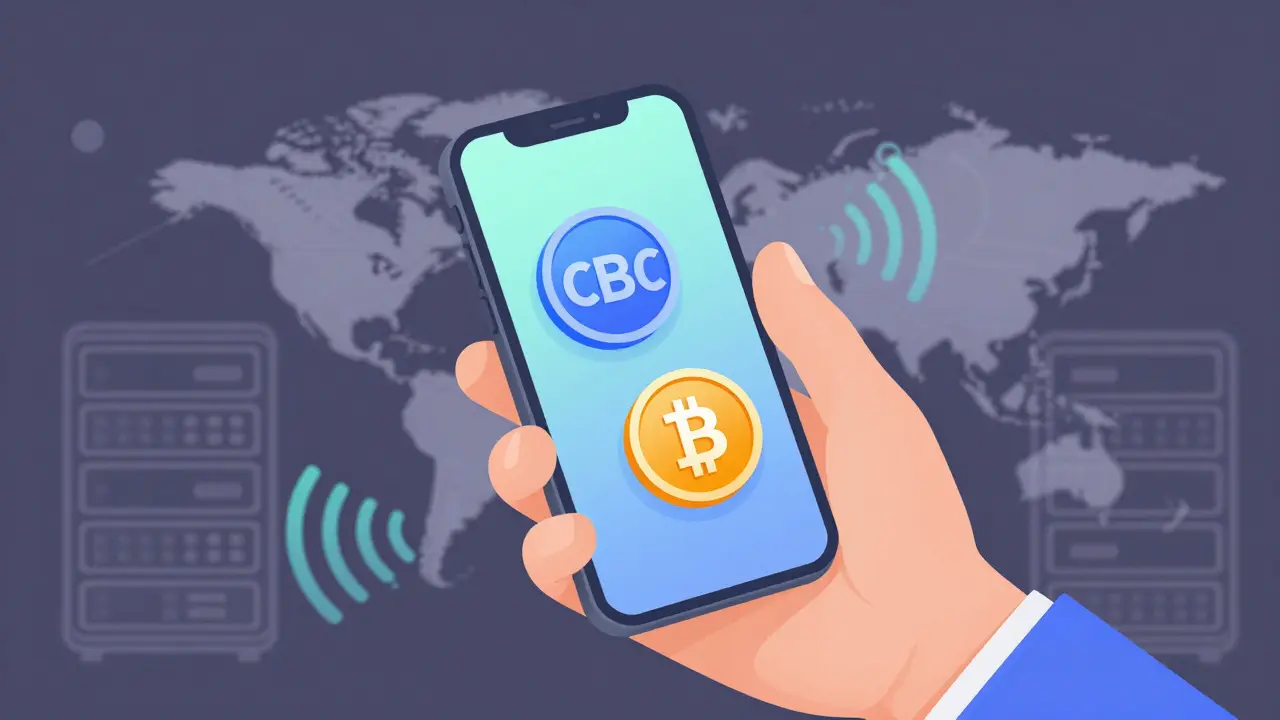
When people talk about governments entering the digital currency space, they are usually talking about CBDCs. These are direct liabilities of the central bank, meaning they are as safe as cash but exist only in digital form. Unlike private cryptocurrencies, CBDCs are centralized, regulated, and designed to work seamlessly with existing banking infrastructure.
The Bahamas was the first to cross the finish line. In October 2020, they launched the Sand Dollarthe world's first fully operational central bank digital currency. It wasn't just a pilot program; it was a live system used by everyday citizens. What made the Sand Dollar special was its offline functionality. Using Near Field Communication (NFC) technology, people could tap phones together to send money even without an internet connection. This was crucial for remote islands like Exuma, where traditional banking access was limited. By Q3 2025, the Sand Dollar had achieved a staggering 98.7% population coverage, with 94% of users reporting high satisfaction.
Nigeria followed suit in October 2021 with the e-Naira, becoming the first African nation to implement a CBDC. However, the experience there tells a different story. While the technology supports 10,000 transactions per second, user adoption hit a wall. A survey by Stears Business in August 2025 revealed that 68% of Nigerian users were frustrated by technical issues and limited merchant acceptance. Only 43.2% of the population actively uses the e-Naira, despite the country having higher smartphone penetration than the Bahamas. This highlights a key lesson: technology alone doesn't drive adoption; trust and usability do.
Then there is China. The People's Republic of China has been running the largest CBDC experiment in history with the digital yuan (e-CNY)China's state-backed digital currency currently in large-scale pilot phase. As of Q3 2025, it was active in 26 regions and had processed over ¥1.8 trillion (approximately $250 billion USD) in transactions. Yet, despite this massive volume, China hasn't rolled it out nationwide as a replacement for cash. Instead, it coexists with physical yuan and commercial bank deposits. The digital yuan supports offline hardware wallets compliant with PBOC Standard 2.0, showing a focus on security and accessibility even in areas with poor connectivity.
Cryptocurrency as Legal Tender: The El Salvador Experiment
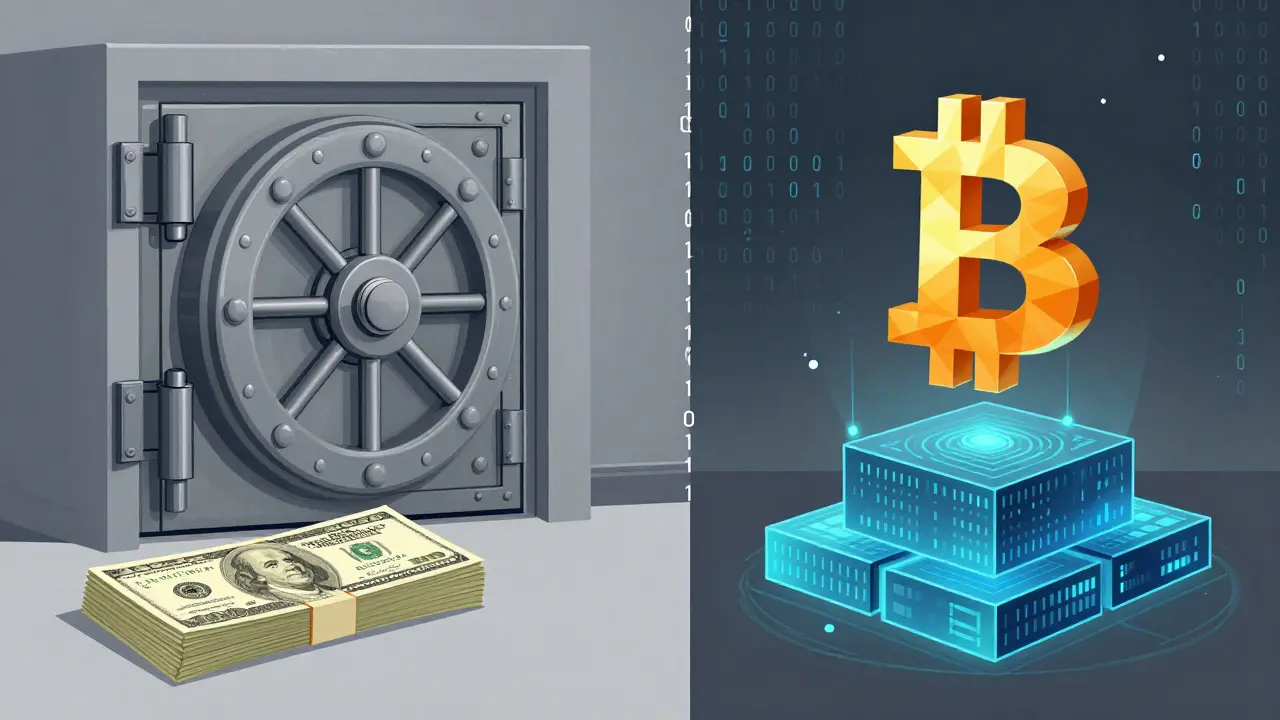
If CBDCs represent the government tightening control over money, then El Salvador represents the opposite extreme. In September 2021, El Salvador enacted the Bitcoin Law, making Bitcointhe world's first decentralized cryptocurrency, often referred to as digital gold legal tender alongside the US dollar. No other country has fully embraced this model. The Central African Republic attempted a similar move in 2022, but the initiative went dormant by 2023 due to pressure from the International Monetary Fund (IMF).
So, how is it working in El Salvador? The reality is mixed. According to the Salvadoran Central Reserve Bank's Q2 2025 report, physical US dollars still dominate, representing 87% of all transactions. Bitcoin usage remains niche. An AmericasBarometer survey from October 2025 found that only 38% of citizens regularly use the government's Chivo wallet. Many users complain about volatility. One local resident noted on Reddit in late 2025 that prices would change between placing an order and completing payment due to network congestion and price swings. For daily purchases like coffee or bus fare, Bitcoin's instability makes it less practical than the stable US dollar or a predictable CBDC.
Why Countries Are Building Digital Money
You might wonder why governments are investing billions into digital currencies when physical cash works fine. The drivers are complex, but three main factors stand out: financial inclusion, payment efficiency, and monetary sovereignty.
Financial inclusion is the most cited reason. The Bank for International Settlements (BIS) reported in 2025 that 76% of surveyed central banks consider financial inclusion their primary driver. In many developing nations, millions of people lack access to traditional bank accounts. A CBDC can lower the barrier to entry. If you have a basic smartphone, you can hold a bank account equivalent. The success of the Sand Dollar in the Bahamas proves this point. It brought banking services to unbanked populations in remote areas without requiring them to travel to distant branches.
Payment efficiency is another major factor. Cross-border payments using traditional systems like SWIFT can take days and incur high fees. CBDCs promise near-instant settlement at a fraction of the cost. Projects like mBridge, a collaboration between several central banks including Hong Kong and Thailand, are testing how CBDCs can streamline international trade. Meanwhile, domestic transactions become cheaper too. Merchants save on credit card processing fees, and consumers get faster refunds.
Finally, there is the issue of monetary sovereignty. With the rise of private stablecoins (like USDC or USDT) and foreign cryptocurrencies, governments fear losing control over their monetary policy. If everyone starts using a US-based stablecoin instead of their local currency, the central bank loses the ability to manage inflation and stimulate the economy during crises. Launching a CBDC allows governments to compete with private digital money and retain oversight of their financial systems.
The Challenges of Going Digital
Transitioning to a digital-first monetary system isn't without risks. Experts warn of several significant hurdles that could derail these initiatives if not handled carefully.
One major concern is "bank disintermediation." Dr. Eswar Prasad from Cornell University warned in May 2025 that CBDCs could cause panic during financial crises. If people believe commercial banks are failing, they might rush to convert their deposits into risk-free CBDCs held directly at the central bank. Simulations suggest this could lead to a deposit flight of 15-25% from commercial banks, destabilizing the entire lending system. To prevent this, many central banks are considering limits on how much CBDC an individual can hold.
Privacy is another battleground. CBDCs give governments unprecedented visibility into transaction data. Unlike cash, which is anonymous, every digital transaction leaves a trace. While proponents argue this helps fight money laundering and tax evasion, critics worry about surveillance. The Eastern Caribbean Central Bank addressed this by designing DCash with quantum-resistant lattice-based cryptography and enhanced anonymity features, though this comes at the cost of slower transaction speeds (3.8 seconds compared to the Bahamas' 1.2 seconds). Balancing transparency for regulators with privacy for citizens remains a delicate tightrope walk.
Technical infrastructure is also a hurdle. Not every country has the robust internet connectivity or power grid needed to support a fully digital economy. Jamaica's JAM-DEX, launched in 2022, uses a hybrid model combining centralized ledger management with decentralized validation nodes to achieve 2.5-second finality. This approach aims to balance speed and reliability. However, in regions with frequent power outages or poor mobile coverage, reliance on digital-only systems can exclude vulnerable populations. This is why the BIS projects that physical cash will remain available in all jurisdictions through 2030 and beyond.
| Currency | Type | Launch Year | Key Feature | Adoption Rate (2025) |
|---|---|---|---|---|
| Sand Dollar | CBDC | 2020 | Offline NFC capability | 98.7% coverage |
| e-Naira | CBDC | 2021 | Two-tier distribution | 43.2% usage |
| Digital Yuan | CBDC | Pilot since 2020 | Massive scale, offline wallets | Large-scale pilot (26 regions) |
| Bitcoin | Cryptocurrency | Legal tender 2021 | Decentralized, volatile | 13% of transactions (El Salvador) |
| JAM-DEX | CBDC | 2022 | Hybrid ledger model | High integration approval |
The Future Landscape: Hybrid Systems
Looking ahead to 2030 and beyond, the consensus among financial institutions is clear: we won't see a total ban on cash anytime soon. Instead, we will see hybrid monetary systems. Physical cash will remain for small transactions and as a backup during emergencies. CBDCs will handle bulk of retail payments, especially for online commerce and cross-border settlements. And cryptocurrencies will likely continue to serve as speculative assets or niche payment methods in specific communities.
The European Central Bank entered a 30-month testing phase for the digital euro in November 2024, involving 30,000 test users across 19 Eurozone countries. India expanded its Digital Rupee pilot to 10 million users by September 2025, targeting a full rollout by late 2026. These developments show that major economies are moving cautiously but steadily toward digitalization.
For the average person, this means your financial life will become more digital. You'll likely have a digital wallet provided by your bank or government app. Transactions will be faster and cheaper. But you'll also need to be more mindful of digital security and privacy settings. The era of anonymous cash is fading, replaced by transparent, efficient, and increasingly interconnected digital ledgers.
Has any country completely banned physical cash?
No. As of May 2026, no nation has completely abandoned physical fiat currency. While some countries like Sweden are heavily cashless, physical notes and coins remain legal tender everywhere. Most experts predict cash will remain available through at least 2040 to ensure financial inclusion.
What is the difference between a CBDC and Bitcoin?
A CBDC (Central Bank Digital Currency) is issued and controlled by a government's central bank, making it centralized and stable. Bitcoin is a decentralized cryptocurrency with no single authority controlling it, leading to price volatility. CBDCs are designed for everyday payments, while Bitcoin is often treated as a store of value or speculative asset.
Which country has the most successful CBDC?
The Bahamas is widely considered to have the most successful implementation with its Sand Dollar. It achieved 98.7% population coverage and high user satisfaction due to its offline functionality and strong focus on financial inclusion in remote areas.
Is Bitcoin legal tender in El Salvador working?
It has seen limited success. While Bitcoin is legal tender, the US dollar still dominates daily transactions (87%). Only about 38% of citizens regularly use the government's Chivo wallet, citing volatility and technical issues as barriers.
Will CBDCs replace my bank account?
Not necessarily. Most CBDC designs include safeguards to prevent "bank disintermediation," such as limits on how much digital currency an individual can hold. They are intended to complement, not replace, commercial banking services.