
CEX vs DEX: Geographic Crypto Restriction Comparison
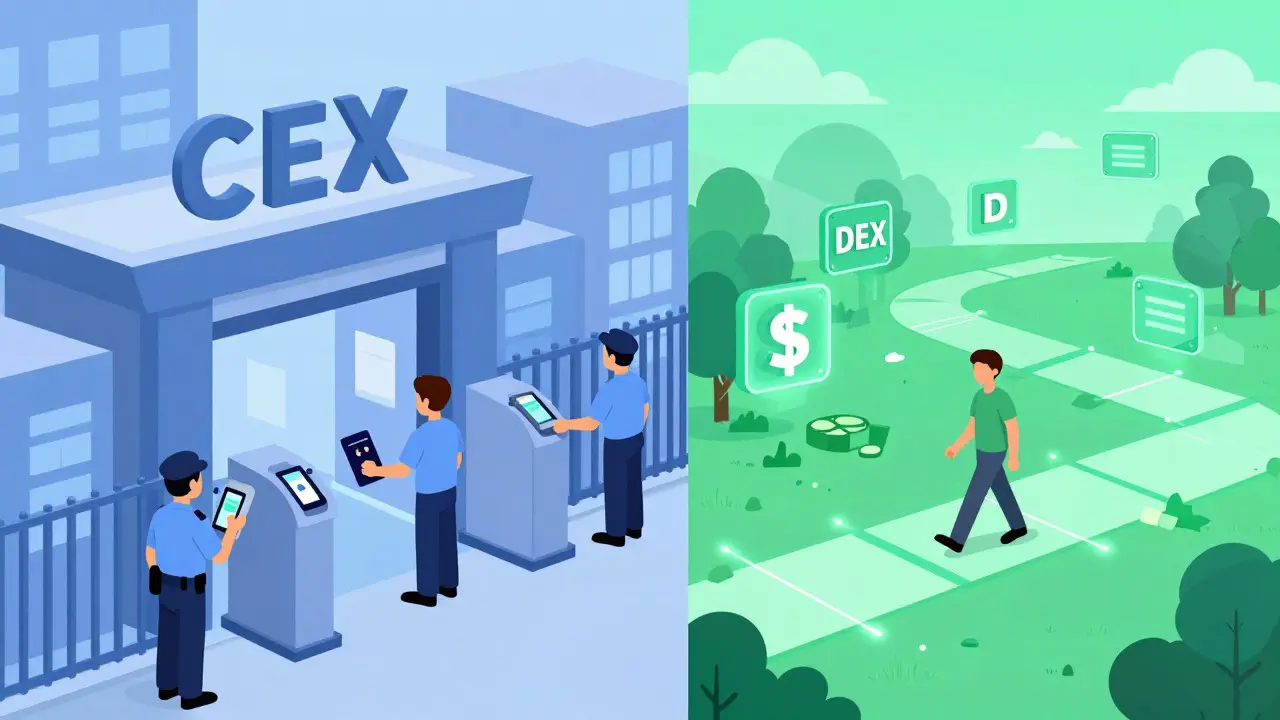
Imagine trying to buy a specific stock on a major exchange only to find out your country isn't on the list. Now imagine doing the same trade on a decentralized protocol where no one asks for your passport. This is the core friction between Centralized Exchanges and platforms that operate under traditional financial regulatory frameworks requiring local licenses and identity verification. As of 2026, the landscape of global crypto access has shifted dramatically. While Decentralized Exchanges still offer borderless trading for many, regulators are tightening the net. Understanding how these two models handle geographic restrictions is no longer just a technical curiosity; it's a survival guide for anyone holding digital assets across borders.
The Regulatory Patchwork of Centralized Platforms
Centralized Exchanges (CEX) act as intermediaries, much like traditional banks or stock brokers. Because they hold custody of user funds, they fall squarely under the radar of financial authorities in every jurisdiction they touch. This means if you want to use a major CEX in New Zealand, the United States, or Singapore, the platform must obtain specific licenses for each region. The result? A fragmented map of availability. A feature available in London might be blocked in Dubai, while a derivative product accessible in Tokyo could be invisible to users in Australia.
The primary tool CEXs use to enforce these boundaries is Know Your Customer (KYC) procedures. Before you can withdraw significant amounts or access certain markets, you must upload government-issued ID and proof of address. This process isn't just bureaucratic red tape; it's the mechanism that allows exchanges to filter out users from restricted jurisdictions. If your IP address suggests you're in a sanctioned country, or your ID shows a residence in a high-risk zone, the account gets flagged. For traders who value privacy or live in regions with unstable banking infrastructure, this creates a hard ceiling on what they can do.
How Decentralized Exchanges Bypass Borders
In contrast, Decentralized Exchanges (DEX) operate through smart contracts on public blockchains. There is no central office to raid, no CEO to subpoena, and no customer support line to call. To trade on a leading DEX, you simply connect a crypto wallet. No name, no email, no passport required. This design inherently resists geographic restriction because the code executes the same way whether you're in Wellington or Warsaw.
The technology behind this accessibility is the Automated Market Maker (AMM) model. Unlike CEXs that match buyers and sellers in an order book, AMMs allow you to swap tokens against a liquidity pool funded by other users. Since the transaction happens peer-to-peer via code, there is no intermediary to check your location. However, this freedom comes with a catch: most DEXs don't support fiat currencies directly. You need to already own cryptocurrency to participate. For someone in a region with strict capital controls, getting onto-chain in the first place can be the hardest hurdle, not the trading itself.

The Closing Gap: Regulators Targeting DeFi
For years, DEXs existed in a regulatory gray area. But that era is ending. By mid-2026, we are seeing a clear trend where regulators are demanding that even decentralized protocols implement some form of geographic filtering. How? Through Layer 2 solutions and token gating. Some newer protocols now require users to stake a specific governance token or complete a lightweight verification step to access advanced features. While not as intrusive as full KYC, these measures create soft barriers that can exclude users from certain regions if those regions ban the underlying asset class.
Furthermore, the concept of "travel rule" compliance is spreading from CEXs to DeFi. Authorities are pressuring stablecoin issuers and major DEX aggregators to track fund flows. If you move large sums of value from a sanctioned entity, even through a DEX, the trail is becoming harder to hide. This doesn't mean DEXs are dead ends, but the days of total anonymity are fading. Users must now understand that "decentralized" does not always mean "unregulated."
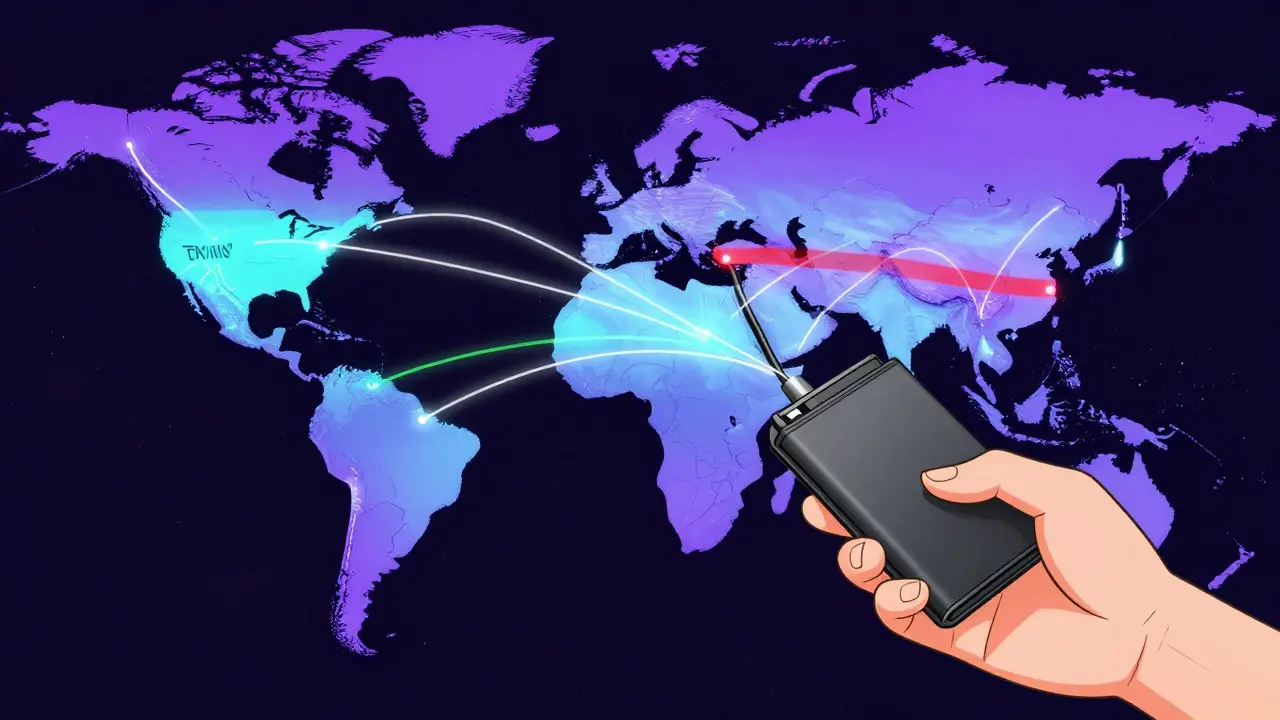
Comparing Access Mechanisms and User Experience
To visualize the differences, let's look at how a user in a restricted jurisdiction experiences both platforms. The table below highlights the key operational distinctions that impact geographic access.
| Feature | Centralized Exchange (CEX) | Decentralized Exchange (DEX) |
|---|---|---|
| Identity Verification | Mandatory (KYC/KYB) | None (Wallet Connect) |
| Fiat On-Ramp | Direct Bank Integration | Indirect (Third-party P2P) |
| Geographic Blocking Method | IP Filtering + License Compliance | Token Gating / Smart Contract Logic |
| Regulatory Status | Licensed & Supervised | Emerging Compliance Requirements |
| User Control | Platform Custody | Self-Custody (Seed Phrase) |
Notice the shift in control. With a CEX, the platform decides who gets in. With a DEX, the code decides, but the code is increasingly being updated to reflect legal changes. For example, if a country bans a specific stablecoin, a DEX might delist it globally, effectively restricting access for everyone, including those in friendly jurisdictions. This global effect of local laws is a new dynamic that didn't exist five years ago.
Practical Strategies for Global Traders
If you find yourself navigating these restrictions, here are practical steps to maintain flexibility without breaking the law:
- Diversify Your Entry Points: Don't rely solely on one CEX for fiat deposits. Use multiple regional platforms or Peer-to-Peer (P2P) markets to get onto-chain. This reduces dependency on any single license.
- Master Self-Custody: Learn to manage hardware wallets and seed phrases securely. When you hold your own keys, no exchange can freeze your assets due to a sudden regulatory change in their home country.
- Monitor Token Gating: Before using a new DEX, check if it requires specific NFTs or staking positions to trade. These are often proxies for geographic or compliance filters.
- Understand Local Law: Just because a DEX is accessible doesn't mean it's legal where you live. Check local tax obligations and asset classification rules. Ignorance is rarely a defense in court.
The future of crypto access lies in a hybrid model. We are moving toward "permissioned decentralization," where you keep your keys but agree to minimal compliance checks to access institutional-grade liquidity. Until then, the gap between CEX convenience and DEX freedom remains the defining challenge for global crypto users.
Are DEXs completely free from geographic restrictions?
Not entirely. While most DEXs don't require KYC, they can restrict access through token gating or delisting assets banned by major regulators. Additionally, getting onto-chain may require using third-party services that have their own geographic limits.
Why do CEXs require KYC for geographic filtering?
CEXs are licensed entities. To maintain their licenses, they must prove they aren't serving customers in unlicensed or sanctioned jurisdictions. KYC provides the legal proof needed to satisfy auditors and regulators in their home countries.
Can I use a VPN to bypass CEX restrictions?
Technically yes, but it carries risk. Many CEXs detect VPN usage and may freeze accounts or close them for non-compliance. It is safer to use a DEX or a P2P market if your region is restricted, rather than risking a frozen CEX balance.
What is token gating in the context of DEXs?
Token gating is a method where a DEX requires users to hold a specific token or NFT to access certain pools or features. This allows projects to create soft barriers that can be adjusted based on regulatory pressure without changing the core protocol code.
Which is better for users in countries with strict capital controls?
DEXs are generally better for trading once you have crypto, as they avoid bank integrations. However, the initial on-ramp is difficult. A combination of P2P exchanges to get crypto and DEXs to trade offers the most resilience against capital controls.