
Central Banks on Digital vs Fiat Currency: The 2026 Reality Check
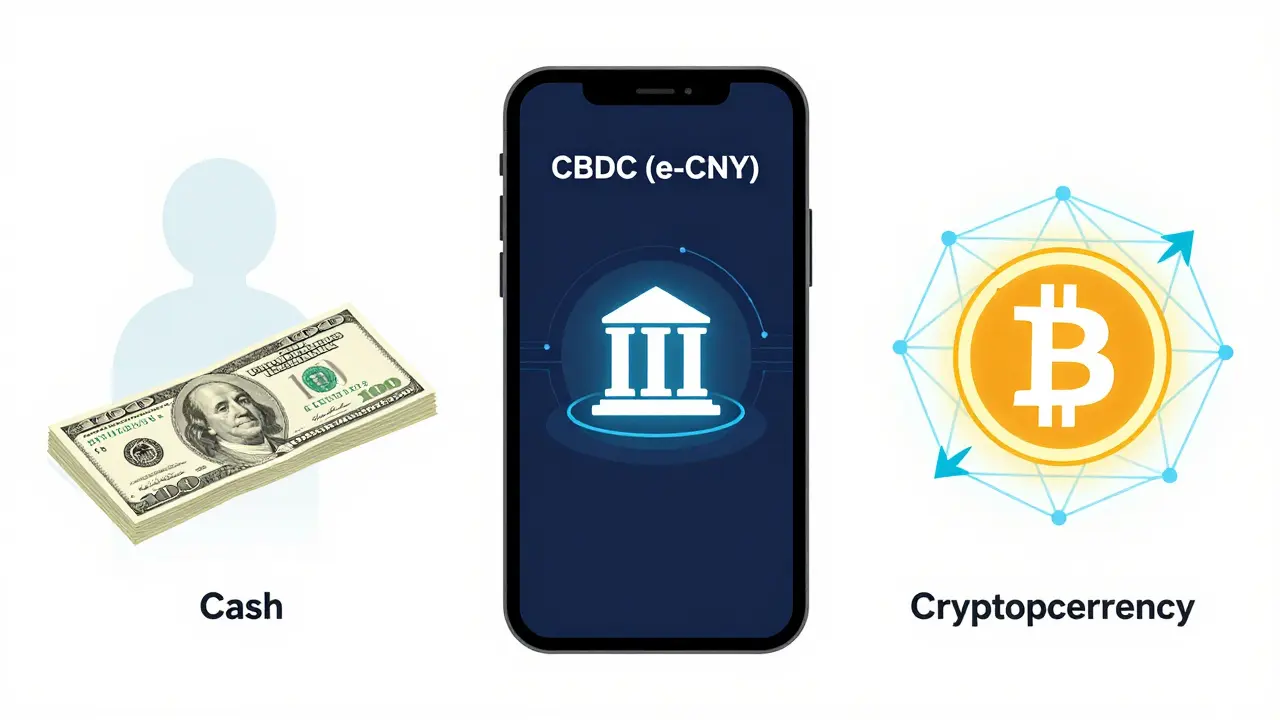
Money is changing shape right under our feet. For decades, the idea of cash was simple: paper bills and metal coins backed by government decree. But as physical transactions vanish into thin air, central banks are facing a tough choice. Do they let private tech giants and decentralized cryptocurrencies take over, or do they issue their own Central Bank Digital Currency (CBDC), which is a digital form of sovereign fiat currency issued directly by a nation's central bank? As of mid-2026, the answer is becoming clear. Central banks aren't just watching; they are building.
The landscape has shifted dramatically since the early days of Bitcoin hype. Today, it’s not about whether digital money will replace fiat-it already is in many ways. The real question is who controls it. With 130 countries exploring CBDCs and several having launched them, the race to digitize national currencies is the biggest financial experiment in history. This isn't theoretical anymore. It’s happening now, with real wallets, real transactions, and real policy implications for your daily life.
The Core Difference: Control vs. Chaos
To understand why central banks are moving fast, you have to look at what they fear most: losing control. Traditional fiat currency, such as the US Dollar or Euro, derives its value from government authority and economic stability. It is legal tender, meaning you cannot refuse it for debts. A CBDC keeps this exact same status but strips away the physical component. It is a one-to-one digital twin of the cash in your wallet.
Cryptocurrencies like Bitcoin operate differently. They are decentralized, meaning no single entity controls them. Their value fluctuates wildly based on market demand. In contrast, a CBDC is centralized. The issuing government maintains full regulatory oversight. They can track the flow of funds, manage interest rates directly, and even censor specific transactions if necessary. According to research from the Corporate Finance Institute, this distinction is critical: "Most traditional cryptocurrencies are decentralized... CBDCs, on the other hand, are centralized with the issuing government maintaining the ability to manage and control the digital currency."
This control is both the strength and the weakness of CBDCs. For policymakers, it means they can prevent capital flight and maintain monetary sovereignty. For users, it raises serious questions about privacy. When every transaction is recorded on a ledger accessible to the state, anonymity disappears.
Who Is Winning the Race?
If you want to see where this is heading, look at China. The People's Bank of China (PBOC) didn't wait around. They launched the Digital Yuan (e-CNY), a retail CBDC pilot program that began in April 2020. By June 2024, it had processed over 1.8 trillion yuan ($250 billion) across 260 million personal wallets. That is massive scale. In pilot cities, e-CNY handled 15% of all retail payments by Q2 2024. The integration with super-apps like WeChat and Alipay made adoption seamless for millions of people.
Other nations are following suit, though at different speeds. Nigeria launched the eNaira in October 2021, and The Bahamas introduced the Sand Dollar shortly after. However, success varies. While China leverages its existing digital infrastructure, countries with lower banking penetration face hurdles. The Bank for International Settlements (BIS) noted that in developing nations, reaching customers who lack smartphones or reliable internet remains a significant challenge.
| Feature | Fiat Cash | CBDC (e.g., e-CNY) | Cryptocurrency (e.g., Bitcoin) |
|---|---|---|---|
| Issuer | Central Bank | Central Bank | Decentralized Network |
| Value Stability | High (inflation-linked) | High (pegged 1:1) | Low (highly volatile) |
| Privacy | High (anonymous) | Low (traceable) | Medium (pseudonymous) |
| Transaction Speed | Instant (physical) | Fast (~50k TPS for e-CNY) | Variable (Bitcoin ~7 TPS) |
| Regulatory Oversight | Indirect | Direct & Full | None |
The Privacy Paradox
Let’s talk about the elephant in the room: surveillance. One of the biggest complaints from users and civil liberty advocates is the loss of financial privacy. In Sweden’s e-krona pilot, concerns were raised about the central bank having real-time visibility into every purchase. On Reddit’s r/CBDC community, users frequently debate this trade-off. One user, u/DigitalRightsAdvocate, pointed out: "The transaction tracking capabilities... raise serious civil liberty questions-central banks shouldn't have real-time visibility into every purchase."
Trustpilot reviews for CBDC-related services reflect this tension. While users praise faster settlement times (4.3/5 stars) and lower costs (4.1/5), they rate privacy concerns poorly (2.7/5). This is a fundamental shift from cash, which offers complete anonymity. If you buy coffee with cash, no one knows. With a CBDC, the state potentially does.
However, proponents argue that CBDCs can be designed with privacy safeguards. The European Central Bank (ECB) has emphasized that the Digital Euro must protect user data while preventing illicit activities. The balance between security and privacy is the tightrope central banks are trying to walk. Fail here, and public trust evaporates.
Why Not Just Use Crypto?
You might wonder, why bother with CBDCs when we have Bitcoin or stablecoins like USDT? The short answer is volatility and risk. Bitcoin’s price swings are too extreme for everyday commerce. Imagine trying to pay rent when the value of your payment method drops 10% overnight. Stablecoins offer stability, but they are often backed by commercial entities, not governments. This introduces counterparty risk-if the company behind the stablecoin fails, your money could vanish.
CBDCs eliminate this risk. They are liabilities of the central bank, making them as safe as cash. Furthermore, they enable programmability. In August 2024, China launched features allowing the government to set spending parameters for subsidies. Citizens received consumption vouchers that could only be spent on specific goods, achieving a 92% redemption rate. This level of targeted fiscal policy is impossible with cash or unregulated crypto.
However, this programmability is also scary. Who decides what you can spend your money on? These are the ethical dilemmas that keep policymakers up at night.
Implementation Hurdles
Building a national digital currency is not easy. It requires massive infrastructure investment. China spent $2.1 billion between 2017 and 2023 on its Digital Yuan ecosystem. Merchants needed updated devices (Android 7.0+ or iOS 13+) to accept payments. Technical glitches happen too. In 2024, China’s e-CNY experienced 12 downtime incidents affecting 8.7 million users. For a system meant to be more reliable than traditional banking, these outages are embarrassing.
User adoption also varies by age. Data from the PBOC shows that 78% of users aged 18-45 mastered e-CNY within 15 minutes. Only 32% of users over 65 achieved proficiency without help. This digital divide is a major barrier. In Nigeria, a World Bank survey found that digital literacy barriers affected 63% of potential users in rural areas. Without education and access, CBDCs risk excluding the very people they aim to include.
The Future Landscape: 2026 and Beyond
We are standing at an inflection point. Global cash transactions fell from 38% in 2020 to 22% in 2025. Digital payments now dominate. The Atlantic Council projects that 46 countries will have fully launched CBDCs by 2027, representing 68% of global GDP. Emerging markets like India are leading the charge. India’s Digital Rupee reached 310 million users by September 2025, significantly reducing cash dependency.
In the West, caution prevails. The Federal Reserve remains hesitant, stating a U.S. CBDC would only proceed if there is a clear policy case and congressional authorization. Janet Yellen highlighted unresolved challenges regarding privacy and the dual banking system. Meanwhile, the FedNow service processes billions in instant payments, serving as a bridge technology. The EU’s Digital Euro Act took effect in January 2025, setting strict rules for implementation.
The battle lines are drawn. Central banks view CBDCs as essential tools for maintaining monetary sovereignty in a digital age. They see cryptocurrencies as threats to financial stability. But the public holds the final vote. Adoption will depend on whether citizens trust these new systems enough to hand over their financial data. Until then, cash may linger longer than expected, clinging to its last bastions of privacy.
Is a CBDC the same as Bitcoin?
No. Bitcoin is a decentralized cryptocurrency with no central authority, high volatility, and pseudonymous transactions. A CBDC is a centralized digital version of fiat currency, issued by a central bank, pegged 1:1 to the national currency, and fully traceable by the government.
Will CBDCs replace physical cash?
Eventually, yes, but not immediately. Many central banks plan to keep cash in circulation for those who prefer it. However, as digital infrastructure improves and cash usage declines, physical notes may become obsolete over the next decade.
Are CBDCs safe?
From a financial perspective, yes. Since they are backed by the central bank, they carry no credit risk, unlike bank deposits or stablecoins. However, cybersecurity risks exist, and technical outages can occur, as seen in early pilots.
How do CBDCs affect privacy?
CBDCs generally offer less privacy than cash. Transactions are recorded on a ledger, giving authorities potential visibility into spending habits. Design choices vary by country, with some aiming for greater anonymity and others prioritizing transparency for anti-money laundering purposes.
Which countries have launched CBDCs?
As of late 2025, countries including Nigeria (eNaira), The Bahamas (Sand Dollar), Eastern Caribbean states (DCash), China (Digital Yuan), and India (Digital Rupee) have active retail CBDC programs. Many others are in advanced pilot stages.