
BNU Airdrop by ByteNext: How It Worked and What Happened After
Back in July 2025, over 1,000 people won 25 $BNU tokens each from ByteNext’s official airdrop. It sounded like a simple win: join a few social channels, follow a tweet, and get free crypto. But here’s the truth most people didn’t see until later - the airdrop was the peak of the project, and everything after it went quiet.
What Was the ByteNext BNU Airdrop?
The ByteNext team ran a single, timed airdrop between July 3 and July 8, 2025. They gave out exactly 25,000 $BNU tokens - that’s 25 tokens to each of 1,000 winners. No more, no less. It wasn’t a mass giveaway. It was targeted. The goal? To build a small but active community for their NFT platform, AvatarArt, which let artists turn digital art into NFTs on the Binance Smart Chain. To enter, you had to complete five steps:- Add $BNU to your CoinMarketCap watchlist using the official token page
- Follow both @Bytenextio and @zeusc_ventures on Twitter
- Join the official Telegram group (t.me/ByteNextOfficial) and the announcement channel (t.me/ByteNextAnnouncement)
- Retweet the campaign post and tag at least five followers
- Have a Binance Smart Chain (BSC) wallet ready to receive tokens
What Was $BNU Actually Used For?
The $BNU token wasn’t just a giveaway. It had real functions inside the AvatarArt platform:- Pay fees - Artists paid $BNU to list or sell NFTs
- Buy ad space - You could spend $BNU to promote your artwork in virtual 3D galleries
- Pay artists - When someone bought your NFT, part of the sale went to you in $BNU
- Stake and farm - Lock $BNU with NFTs to earn more tokens
- Vote - Holders could vote on which NFTs got featured
- Govern - Token owners could propose and vote on platform changes
Why Did It Fail?
Here’s the hard part: the airdrop worked - but the platform didn’t. By January 2026, $BNU is effectively dead. No major exchange lists it. Binance shows zero trading volume. Coinbase reports a 24-hour volume of just $6.36. CoinGecko says the token hasn’t traded in 15 days. The price? Around $0.000540 - down 99.9% from its all-time high of $0.000741. The total market cap? Just $120,584. That’s less than what a single successful NFT collection might earn in a day. The project’s website (bytenext.io) still loads. The Twitter account @bytenextio hasn’t posted since August 2025. The Telegram group has 2,100 members - but only 3-4 messages per week, mostly bots. The GitHub repo hasn’t been updated since June 2025. The airdrop brought in users. But those users didn’t stick. Why? Because the platform never delivered. No new features. No artist onboarding. No marketing. No updates. Just silence.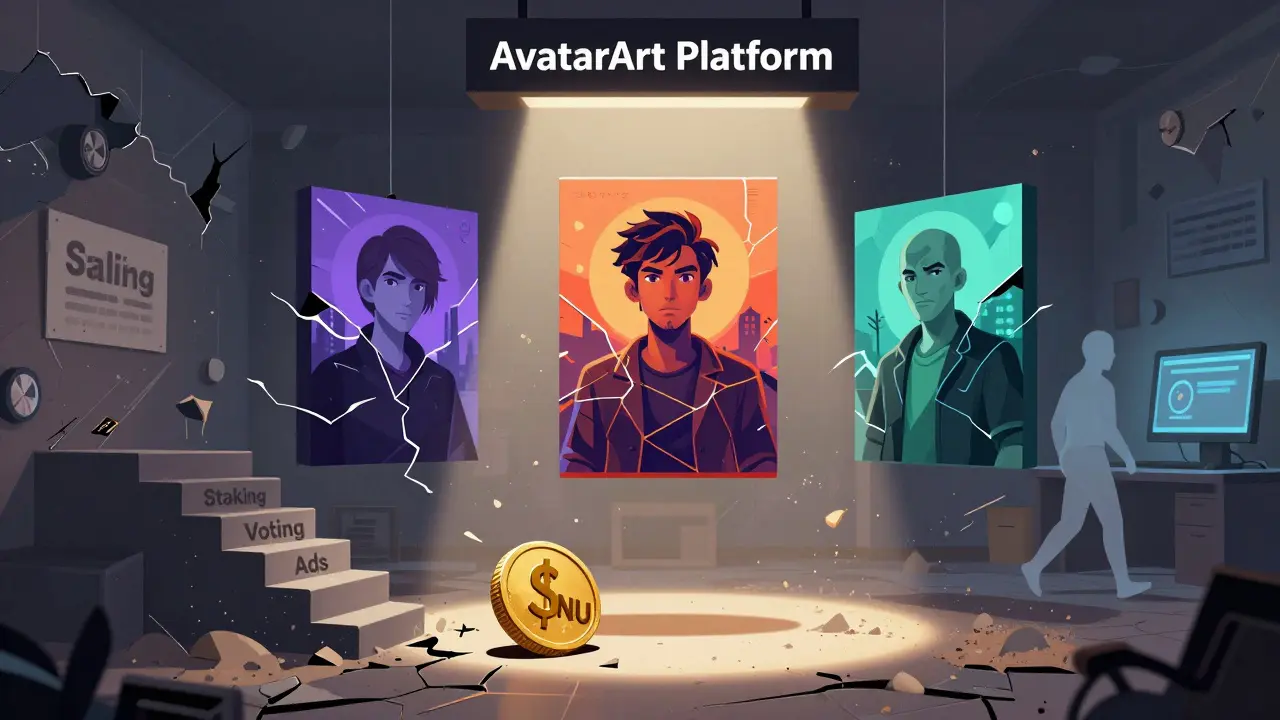
What Happened to the Airdrop Winners?
The 1,000 winners got their 25 $BNU tokens. That’s $0.0135 worth at today’s price. Not life-changing. Not even coffee money. Some tried to sell. But there’s nowhere to sell. No DEX has liquidity for $BNU. No centralized exchange lists it. The only way to trade it now is through peer-to-peer OTC deals - and even those are rare. Most winners either forgot about it or deleted their wallets. A few still hold it, hoping for a revival. But there’s no signal. No team announcement. No roadmap update. Nothing.Was the Airdrop a Scam?
No. Not technically. The team delivered on the airdrop. Tokens were sent. Rules were followed. No one stole money. But it was a classic case of community building without product building. They spent energy on getting users in - not keeping them. Airdrops are meant to be the start, not the end. But here, the end came before the beginning. Compare this to successful NFT platforms like OpenSea or Blur. They didn’t just give away tokens. They built tools artists loved. They added features. They listened. They grew. ByteNext gave away tokens. Then vanished.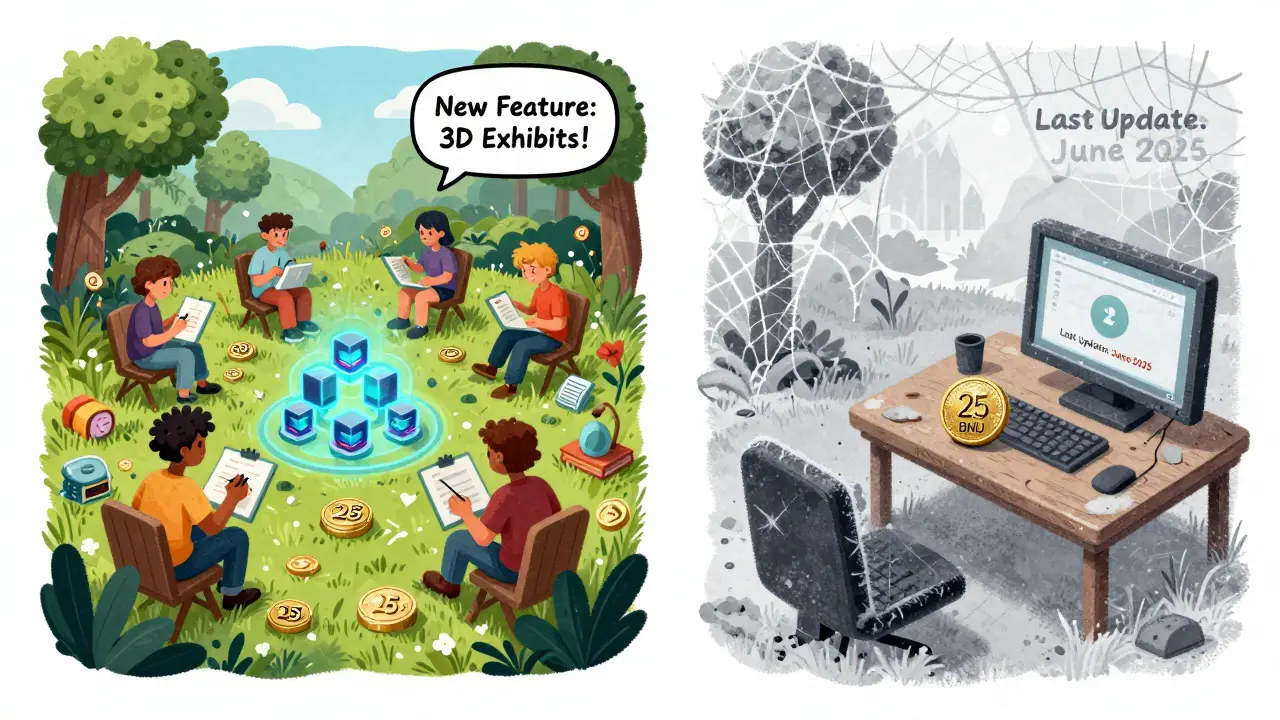
What Can You Learn From This?
If you’re thinking about joining a future airdrop, here’s what to check:- Does the project have a working product? Can you actually use the platform? Or is it just a landing page?
- Is there active development? Check GitHub. Are commits happening? Are issues being closed?
- Who’s behind it? Are the team members doxxed? Do they have track records?
- Is there real demand? Are artists using it? Are people talking about it outside of Telegram?
- What’s the token utility? Is it just a governance token? Or does it power something real?
Is There Any Hope for BNU?
Technically, yes. The code exists. The concept - a decentralized art marketplace - still makes sense. But hope isn’t a strategy. Unless the team comes back with:- A public roadmap with deadlines
- Real artist partnerships
- Marketing campaigns
- Exchange listings
Final Thoughts
The ByteNext BNU airdrop was a well-executed distribution. But it was also a cautionary tale. Crypto projects don’t fail because they give away tokens. They fail because they forget why they gave them out. If you want to build something lasting, start with users - but never stop serving them. The airdrop is over. The experiment is done. And the results? Quiet.Was the ByteNext BNU airdrop real?
Yes, the airdrop was real. Between July 3 and July 8, 2025, ByteNext distributed exactly 25,000 $BNU tokens to 1,000 winners who completed five required tasks. Tokens were sent to BSC wallets on July 30, 2025. The distribution was verified through CoinMarketCap and public blockchain records.
Can I still claim BNU tokens from the airdrop?
No. The airdrop ended on July 8, 2025. Winners were selected and paid out by July 30, 2025. There is no active claim portal, and ByteNext has not announced any new airdrop campaigns. Any website or Telegram channel offering to give you BNU tokens now is likely a scam.
What is $BNU used for today?
As of January 2026, $BNU has no active use. The AvatarArt NFT marketplace is inactive. No trades occur on the platform. No staking, voting, or advertising features are operational. The token exists only as a blockchain record with no liquidity or utility. Its value is nearly zero.
Where can I trade $BNU?
You cannot trade $BNU on any major exchange. Binance, Coinbase, KuCoin, and others do not list it. Decentralized exchanges like PancakeSwap have no liquidity pools for $BNU. The only possible trades are peer-to-peer, but these are extremely rare and risky. Most holders are stuck with tokens they cannot sell.
Why did ByteNext disappear?
There’s no official explanation. But the signs are clear: no code updates since June 2025, no social media activity since August 2025, and zero trading volume. The team likely ran out of funding or lost interest. The airdrop was a one-time tactic to generate buzz - but without a working product, the project collapsed.
Is it worth holding $BNU tokens?
Only if you’re holding it as a curiosity. At $0.000540 per token, 25 tokens are worth less than a cent. Even if the project returned tomorrow, recovery would take years - if it happens at all. The risk of losing everything far outweighs any potential upside. Most financial advisors would say to cut your losses and move on.
20 Comments
bro the airdrop was the whole point. they got their 1000 users, paid out the tokens, and vanished. no one cared about the platform because it was never real. just another crypto ghost story.
I swear if I see one more "this wasn't a scam" take I'm gonna scream. It's not a scam if they delivered on the promise? Bro, the promise was a platform. They gave out tokens like confetti and then lit the whole damn building on fire. That's not entrepreneurship. That's arson with a whitepaper.
The real tragedy isn't the lost tokens. It's the artists who believed this could be their chance. Someone spent weeks making digital art thinking they'd get paid in $BNU. Now their work is just a ghost in a dead blockchain. That's the human cost.
This is a textbook case of misaligned incentives. The team optimized for airdrop participation, not platform engagement. The token had utility on paper, but zero network effects. Without active users creating demand, the token is just a static ledger entry. No magic here.
I am truly saddened by this outcome. The vision of a decentralized art marketplace is noble and timely. Yet, the execution was tragically incomplete. One cannot build a cathedral with only the foundation. The community was invited to the ceremony, but the building was never constructed.
I got my 25 BNU and I still have them. Not because I think they'll rise, but because I want to see if they ever come back. Like keeping a dead pet's collar. Maybe one day the team will wake up and say "oops, we forgot you guys." Until then, it's my little crypto memorial.
this was all a psyop from the start. the team was funded by a whale who wanted to dump on retail. they used the airdrop to create fake demand, then quietly sold everything before the platform even launched. look at the wallet addresses - 90% of the tokens were moved to one address within 72 hours of distribution. this was never about art
eh i got my 25 tokens. it's like finding a free coffee coupon in your hoodie pocket. cool that it existed, but you didn't need it anyway. just glad i didn't pay anything. crypto's like that sometimes - free stuff that vanishes. no big loss.
you all are missing the point. this wasn't a failure - it was a filter. the people who stayed after the airdrop? the ones who still hold it? they're the real degens. the rest of you? you're just noise. the team didn't fail - they found their tribe. and the tribe is tiny, loyal, and weirdly committed to a dead token. respect.
i still believe in the idea. decentralized art marketplaces are the future. this team just got lost in the hype. if someone picks this up and rebuilds it with real devs and real artists? it could be huge. don't bury the concept because of bad execution.
i think the real lesson here is that airdrops are like dating apps - everyone shows up for the free stuff, but nobody stays unless there's real connection. the platform needed to feel alive, not just exist on a server.
you think this is bad wait till you see the next one where they airdrop to 10k people and then disappear with 500k in usdt. this is just the warmup. the real scams are coming and theyre gonna be slicker. dont cry when your wallet is empty again
i remember when i thought this was gonna be the next opensea. i even made a whole series of digital sketches hoping to sell them. the silence after july was worse than any crash. you don't realize how much you invest emotionally until it's gone.
so they gave away tokens... and then did nothing. like a guy who buys you dinner on the first date and then ghosts you. "oh i just wanted to see if you'd show up." well honey, i showed up. now where's my NFT?
this is why i don't trust any project without a VC backer. if it's not funded by a billion-dollar fund, it's a hobby project with a whitepaper. they didn't fail - they were never meant to succeed. this was a vanity project disguised as innovation.
sometimes the most honest thing a project can do is disappear quietly. at least they didn't pump and dump. they just... stopped. no drama, no rugpull, no fake announcements. just silence. maybe that's the most ethical outcome? not all stories need a happy ending.
to everyone who held onto those tokens - i see you. i know it hurts. i know you kept checking the price, hoping for a miracle. you didn't lose money. you lost hope. and that's the real cost. don't let this make you cynical. the next project you believe in? fight for it. don't just wait for a free token.
you know what's worse than a failed project? the people who still defend it like it's a religious text. "but the vision!" "but the utility!" the utility is gone. the vision is dead. stop romanticizing failure. it's not wisdom. it's denial.
Always verify the team's track record before participating in any airdrop. Look at their past projects, GitHub activity, and public communications. If the team is anonymous or has no history of delivering, treat the airdrop as entertainment - not investment.
I still have my 25 BNU. Not because I think it'll recover. But because I like the idea that somewhere, a tiny piece of a dream still exists on the blockchain. Even if no one else remembers it.