Binance Restricted Countries: Complete 2026 Trading List and Guide
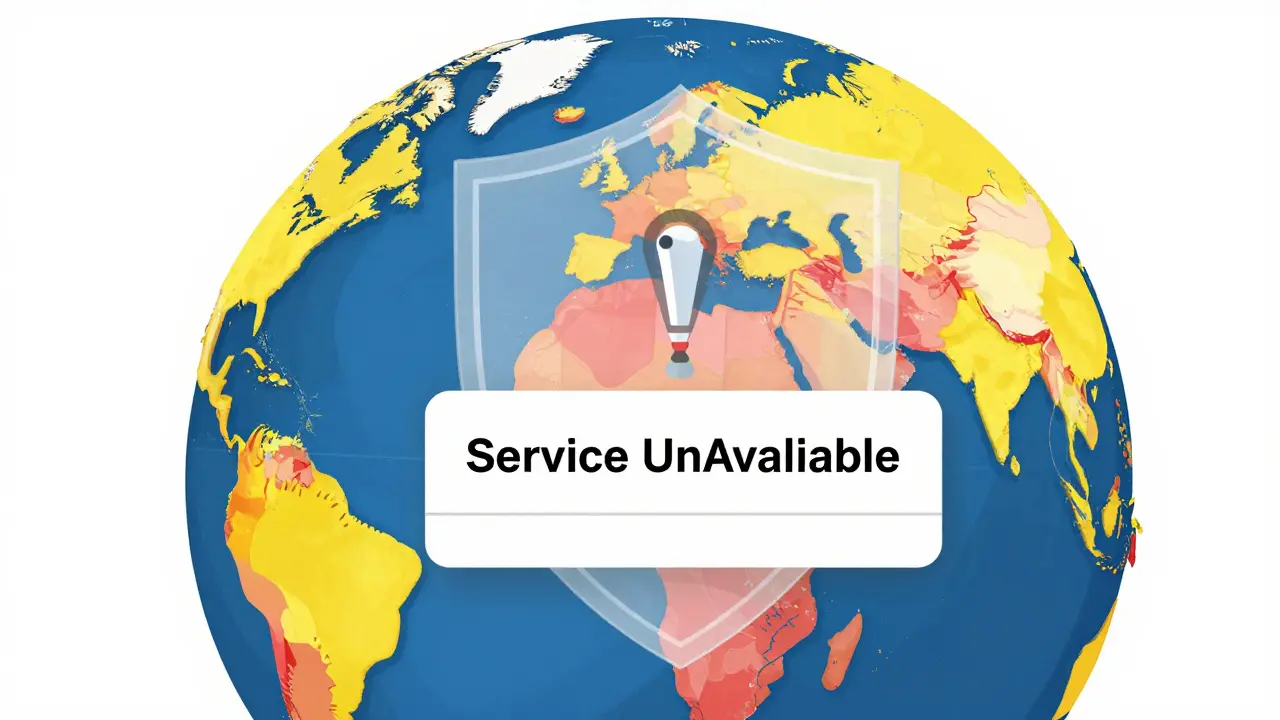
Trying to open a Binance is the world's largest cryptocurrency exchange by trading volume, providing a platform for buying, selling, and trading a wide array of digital assets. Also known as Binance Exchange, it operates under a complex web of global laws that change almost weekly. only to find your region is blocked? You aren't alone. As governments scramble to regulate the wild west of crypto, Binance has had to draw hard lines in the sand to avoid billion-dollar fines.
If you're seeing a "service unavailable in your region" message, it's not a glitch. It's a calculated move by the exchange to comply with local laws or international sanctions. Whether you're in a country with a total ban or just a restriction on specific tools like futures trading, understanding where you stand is the only way to keep your funds safe. Let's break down exactly who is restricted and why.
Quick Summary of Restrictions
- Total Bans: Includes countries under international sanctions (like North Korea) and those with strict national bans (like China).
- Partial Restrictions: Many countries allow spot trading but ban high-leverage products like Futures.
- Regional Alternatives: Some markets have dedicated versions, such as Binance.US for the United States.
- Regulatory Shifts: European markets are heavily influenced by MiCA (Markets in Crypto-Assets) regulations.
The Complete List of Restricted Countries
Binance doesn't just have one "ban list." Restrictions are tiered based on the severity of the legal risk. Depending on where you live, you might be completely blocked or just unable to use certain features.
Category 1: International Sanctions (Complete Bans)
These are the "hard blocks." If you are located in these regions, you cannot open an account or use any services. These restrictions are usually driven by OFAC (Office of Foreign Assets Control) or UN sanctions to prevent money laundering and terrorism financing.
- Cuba
- Iran
- North Korea (DPRK)
- Syria
- Crimea region of Ukraine
- Non-government-controlled areas of Ukraine
Category 2: National Digital Asset Bans
In these countries, the local government has decided that cryptocurrency is simply not allowed. Whether it's a religious decree or a central bank ruling, the result is the same: Binance is off-limits.
- China: A comprehensive ban on trading and mining since 2021.
- Afghanistan: Ban enforced by Taliban decree since 2022.
- Algeria & Tunisia: Long-standing bans on digital asset trading.
- Egypt & Iraq: Central bank rulings prohibiting crypto operations.
- Others: Bangladesh, Bolivia, Kuwait, Morocco, Nepal, and North Macedonia.
Category 3: Partial Restrictions and Market Exits
This is the "gray zone." In these regions, Binance may have exited the market entirely due to a lack of licenses or limited its services to stay legal. This is often the result of friction with local regulators like the FCA in the UK or the SEC in the US.
| Country | Status | Primary Reason | Alternative/Note |
|---|---|---|---|
| United States | Exited (Main Site) | SEC Regulations | Use Binance.US |
| United Kingdom | Limited | FCA Restrictions | No derivatives/lending |
| Canada | Exited | OSC Regulatory Issues | Funds migrated out |
| Nigeria | Suspended | SEC/Government Ban | Naira transactions blocked |
| Netherlands | Exited | AFM Fines | Complete market exit |
Service-Specific Limitations: Not All Products Are Equal
Just because you can log in doesn't mean you have access to everything. Binance splits its products into "Spot," "Futures," and "Web3" categories, each with its own set of rules.
The Futures Trading Ban
Derivatives and leverage are high-risk. Consequently, Binance Futures is banned in over 40 countries. This includes almost the entire European Union due to the MiCA framework, as well as Australia, New Zealand, and Canada. If you're in Germany or France, you can likely buy Bitcoin (Spot), but you can't bet on its future price using leverage.
The Web3 Wallet Restrictions
The Web3 Wallet, which allows users to interact with decentralized apps, has its own restrictions. As of late 2025, users in Singapore, Thailand, and Malaysia face limitations due to local SEC and MAS requirements. This creates a fragmented experience where your account is active, but your wallet features are greyed out.
Why Is This Happening? The Regulatory War
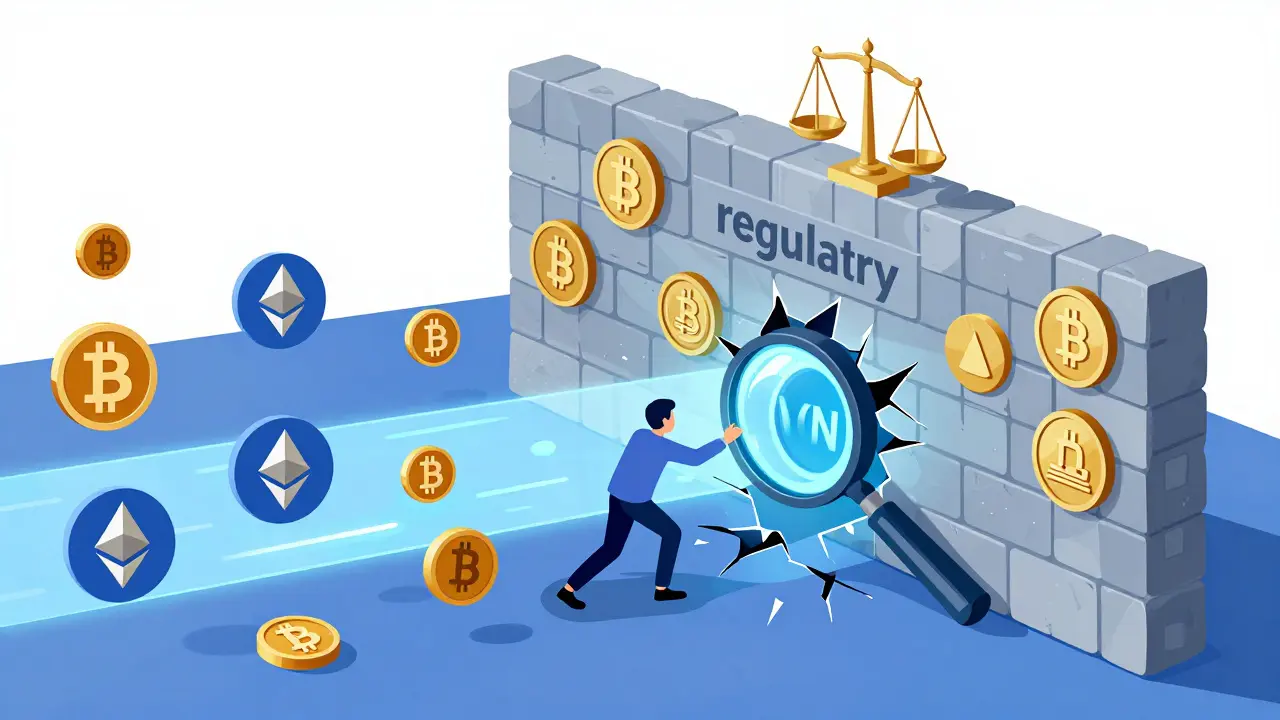
Why is Binance suddenly leaving countries it once dominated? It comes down to a fundamental clash between the borderless nature of blockchain and the territorial nature of law. Regulators are primarily worried about AML (Anti-Money Laundering) and KYC (Know Your Customer) protocols.
For example, in Canada, Binance faced a CAD$6 million fine because it failed to verify a massive percentage of high-risk transactions. When a company handles billions of dollars, governments want to know exactly who owns the money. This is why we're seeing a shift toward "regional entities" like Binance Japan or Binance Middle East. By creating local companies, Binance can follow local laws without risking the entire global operation.
The implementation of the FATF Travel Rule has also forced Binance to cut ties with jurisdictions that can't provide enough data on who is sending and receiving crypto. This isn't just a "Binance problem"-it's a systemic shift in how the industry operates.
Dealing with Account Freezes and "Gray Zones"
If you live in a country that isn't explicitly banned but isn't fully supported-a "gray zone"-you are at risk of sudden account freezes. Users in places like Serbia and Bosnia have reported losing access to their accounts without warning. This usually happens when Binance's geolocation system flags an IP address or a SIM card from a restricted region.
A word of warning on VPNs: Many people try to bypass these restrictions using a VPN. While it might let you see the website, it rarely works for trading. Binance uses triangulation-combining your IP, GPS, and SIM card data-to find your true location. If you trigger a security flag by jumping from New York to Tokyo in five minutes, you're likely to trigger a mandatory video KYC check or a permanent account lock.
How to Protect Your Assets in a Restricted Region
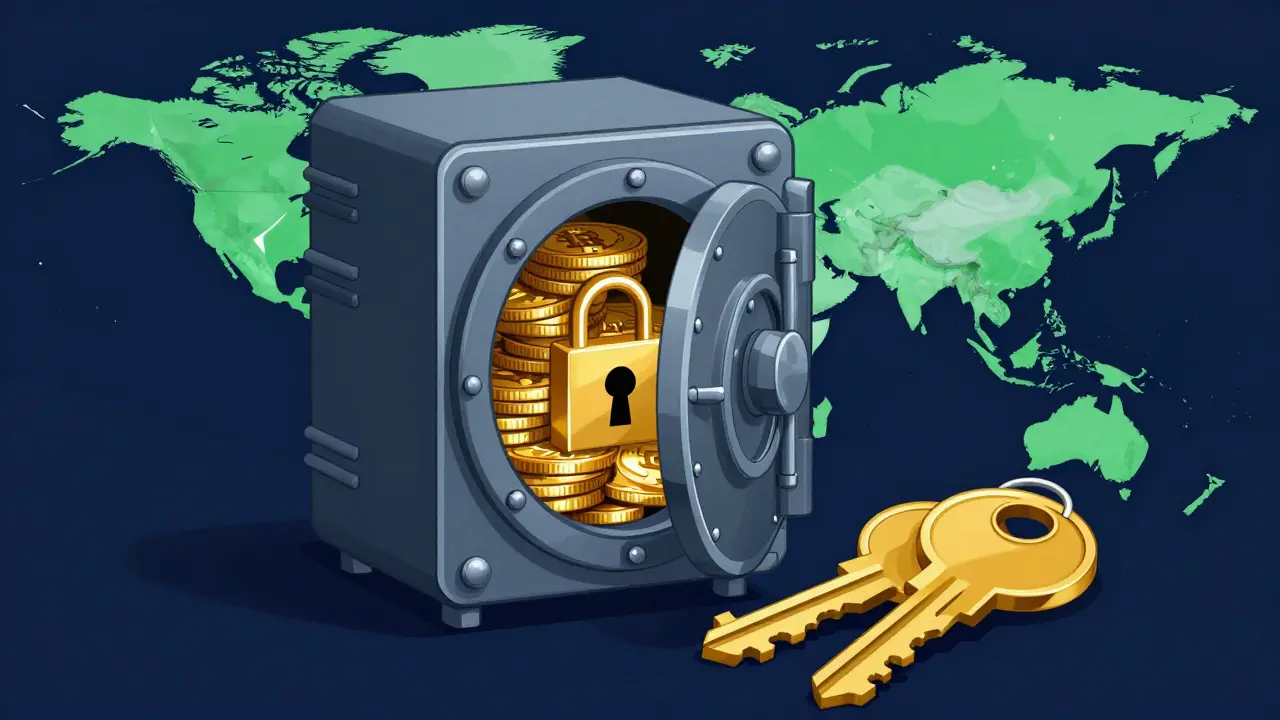
If you suspect your country is moving toward a ban, don't wait for the "Account Terminated" email. The best way to secure your crypto is to move it off centralized exchanges entirely.
- Use Non-Custodial Wallets: Move your funds to a hardware wallet (like Ledger or Trezor) or a software wallet where you own the private keys.
- Diversify Your Exchanges: If you must use an exchange, don't keep everything in one place. Use regional competitors like Coinbase in the US or Bitso in Latin America.
- Keep Documentation Ready: If you are in a high-risk jurisdiction (like Turkey or Vietnam), expect a longer KYC process. Have your passport and proof of address scanned and ready to avoid delays.
- Monitor Local News: Regulators usually give a few weeks' notice before a full ban. Watch for announcements from your central bank or financial authority.
Can I use a VPN to access Binance from a restricted country?
While a VPN might bypass the initial landing page block, it is highly risky. Binance uses advanced geolocation (GPS and SIM triangulation) to detect your actual location. If caught, your account may be frozen, and you may be required to undergo a strict video KYC process to prove your residency. Most users report that VPNs do not work for actual trading activities.
What happens to my funds if Binance exits my country?
Usually, Binance provides a window (ranging from a few weeks to a few months) for users to withdraw their funds. For example, during the Canada and Netherlands exits, users were notified to move their assets to an external wallet or another exchange. If you miss this window, your funds may become locked until you can provide proof of residency in a supported region.
Is Binance.US the same as the global Binance site?
No. Binance.US is a separate legal entity designed specifically to comply with US laws. It has a much smaller selection of coins, different fee structures, and strictly excludes residents of certain states, such as New York. You cannot simply transfer a global account to a US account; you must go through a separate registration process.
Why can't I trade Futures in Europe?
This is primarily due to the MiCA (Markets in Crypto-Assets) regulations. EU member states have very strict rules regarding derivatives and leverage trading to protect retail investors from extreme volatility. Binance has disabled these features in the EU to avoid massive regulatory fines and potential license revocations.
Which countries are completely banned from all Binance services?
Countries under heavy international sanctions-including North Korea, Iran, Syria, and Cuba-are completely banned. Additionally, countries with national crypto bans, such as China and Afghanistan, are restricted from using the platform.
22 Comments
The move toward regional entities is basically the only way these big exchanges survive the current regulatory climate. It's all about ring-fencing risk so one lawsuit in the US doesn't tank the entire global operation.
man this is wild. i tried to set up a spot account but the KYC was a total nightmare with the liveness check glitching out... i think the regulatory friction is making the onbording UX totaly garbage for us in the states
CEXs are so mid. Just use a DEX. :)
The mention of Canada is spot on. The OSC didn't just suggest an exit; they essentially forced it by making the compliance costs prohibitive for a platform that refused to play by their specific local rules.
Definitely get a hardware wallet ASAP! 🛡️ It is the only way to actually sleep at night knowing your coins aren't just numbers on someone else's screen! 🚀✨
Oh look, another guide telling us to move money to a Ledger while the exchange just keeps changing the rules every Tuesday. Truly revolutionary advice.
The sheer audacity of these corporate entities to pretend they care about "consumer protection" while they basically gambled with retail funds for years is just poetic. A facade of compliance to soothe the masses.
It is quite fascinating how we allow ourselves to be tethered to these digital landlords who can evict us based on where our physical body happens to be located on a map. We are merely tenants in a world we think we own.
This is the tragedy of our era! We dreamed of a borderless financial utopia and instead we got gated communities managed by lawyers in expensive suits! It's an absolute heartbreak to see the vision of decentralization get strangled by red tape!
imagine thinking a vpn actually works for kyc these days... cute
The tension between national sovereignty and decentralized protocols is an inevitable clash of ideologies. We are witnessing the friction of two incompatible systems trying to coexist.
just use a non custodial wallet for your long term holds it saves so much stress
The legal distinctions between the global site and the US entity are very clear for anyone who actually reads the terms of service which most people do not do
This is super helpful!!! Thanks for laying it all out so clearly!!! I feel much safer now!!!
I appreciate the detailed breakdown of the restrictions. It provides a necessary level of clarity for those of us monitoring these trends from a distance.
The obsession with KYC is just a thinly veiled attempt to kill the privacy aspect of crypto. Why do they need to know my blood type to trade a meme coin
its okay if u got locked out just try contacting suport though they take forevver
BRO the slippage on Binance.US is a total joke compared to the global spot markets! Like actually unplayable! My portfolio is bleeding out because of these regional splits!
I wonder if there are other exchanges that are easier to use for people in the gray zones.
Sure, keep your funds on a centralized exchange and see how that works out for you when the "maintenance" window becomes a permanent ban. Classic.
Too much reading for something that basically says "you're blocked if you're in a bad place"
It's definitely a bit overwhelming for new traders, but following the advice to diversify across a few platforms is a great way to stay safe.