
AXL INU New Year's Eve Airdrop: Is It Real or a Scam? (2026 Guide)
You’ve likely seen the posts. They promise free AXL INU tokens for participating in a "New Year’s Eve airdrop." The timing is suspicious, especially since we are already in mid-2026. If you are holding these unsolicited tokens in your wallet right now, you might be tempted to click that link to "claim" them. Stop. Before you connect your wallet to any site promising an AXL INU payout, you need to understand what is actually happening behind the scenes.
This isn’t just another hype cycle. Based on data from late 2025 and early 2026, the so-called AXL INU New Year’s Eve airdrop is widely recognized by security experts as a coordinated phishing campaign. This guide breaks down why this event is dangerous, how the scam works, and exactly what steps you should take to protect your digital assets.
The Truth About AXL INU and Its Market Status
To understand why this airdrop is a red flag, we first need to look at the token itself. Axl Inu (AXL) is a cryptocurrency that ranks #6907 on CoinMarketCap. As of recent updates, it has a market capitalization of roughly $773 USD. Yes, you read that correctly-less than a thousand dollars for the entire project. With a total supply of over 70 billion tokens, the price per token hovers around $0.00000006976.
Here is the critical detail: the 24-hour trading volume is often reported as $0 USD. When a token has zero liquidity and no active trading, it cannot support a legitimate airdrop mechanism that requires gas fees, smart contract interactions, or actual value distribution. Dr. David Gerard, author of 'Attack of the 50 Foot Blockchain,' noted in his October 2024 analysis that tokens with sustained zero trading volume typically indicate either complete abandonment or deliberate manipulation. In the case of AXL INU, the lack of activity suggests the latter.
| Metric | Value | Risk Indicator |
|---|---|---|
| Market Cap | $773.33 | Extremely Low |
| 24h Volume | $0 USD | No Liquidity |
| Total Supply | 70.35 Billion | Inflationary Risk |
| Holders | 98,650 | Suspicious Distribution |
| All-Time High | $0.5529 (May 2023) | -100% Decline |
The discrepancy between the high number of holders (nearly 100,000) and the near-zero market cap is a classic sign of "wallet stuffing." Scammers distribute small amounts of tokens to thousands of wallets to create the illusion of widespread adoption. This tricks users into thinking the project is popular, making them more likely to trust subsequent announcements like a fake airdrop.
Confusion with Axelar Network (AXL)
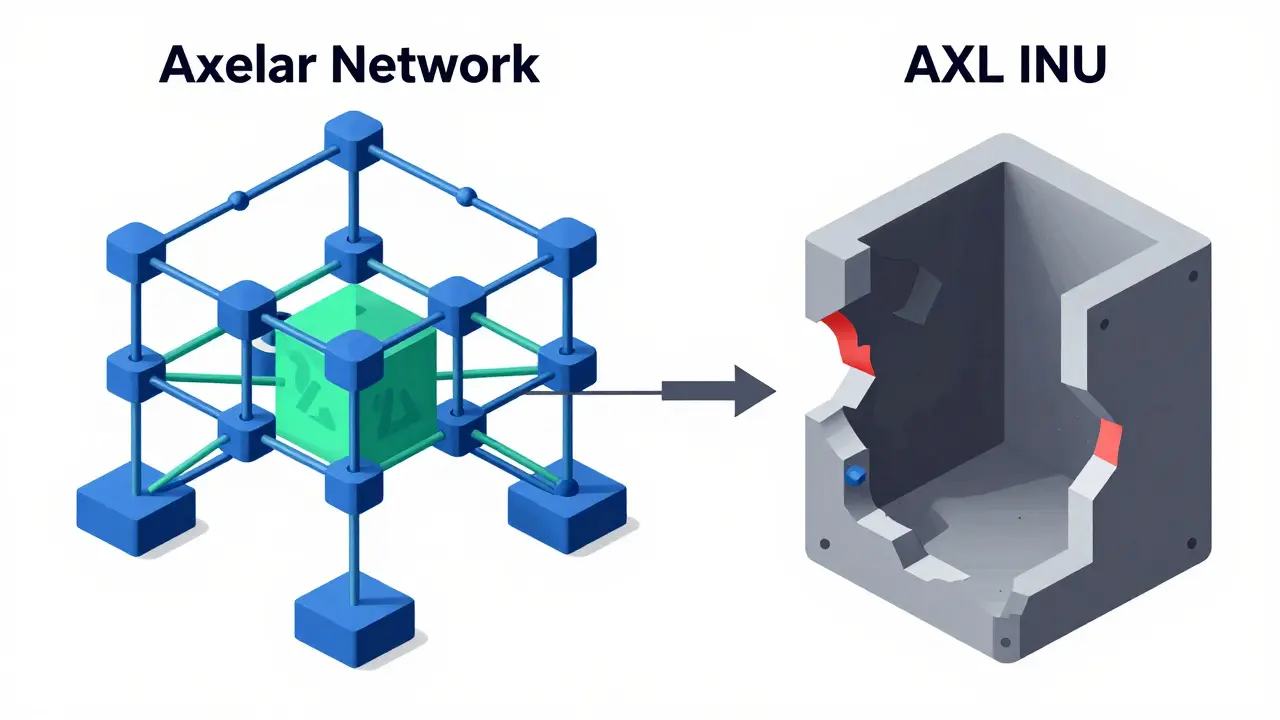
A major reason this scam persists is confusion with a completely different, legitimate project: Axelar Network. Both projects use the ticker symbol AXL. However, they are unrelated. Axelar Network is a cross-chain communication protocol founded by Illia Polosukhin, Eugene Pustovoit, and Kevin Sekniqi. It was officially listed on Binance in March 2024 and has real utility, partnerships, and development activity.
In June 2025, reports mentioned "Axel (AXL): 4.09 M USD, just 1.3% dilution," referring to token unlocks for the legitimate Axelar Network. Scammers exploited this news, mixing up the names to lend credibility to the fake AXL INU airdrop. Always check the contract address. Axl Inu’s smart contract is 0x25b2...3cc0e0, which shows minimal genuine activity compared to the robust infrastructure of Axelar Network.
How the Phishing Campaign Works
The "New Year’s Eve airdrop" is not a reward; it is a trap. Here is the step-by-step process used by attackers:
- Unsolicited Tokens: You wake up to find AXL tokens in your wallet. You didn’t buy them. This is wallet stuffing.
- Social Media Noise: Bots post about the "New Year’s Eve Airdrop" on Twitter, Telegram, and Reddit, creating false urgency.
- Phishing Sites: Users are directed to domains like
axl-inu-airdrop.liveoraxl-nye-airdrop.xyz. These sites were registered in October 2025 via Russian hosting providers. - Wallet Connection: The site asks you to connect your wallet to "claim" the tokens. This seems harmless because you are only connecting, not sending funds yet.
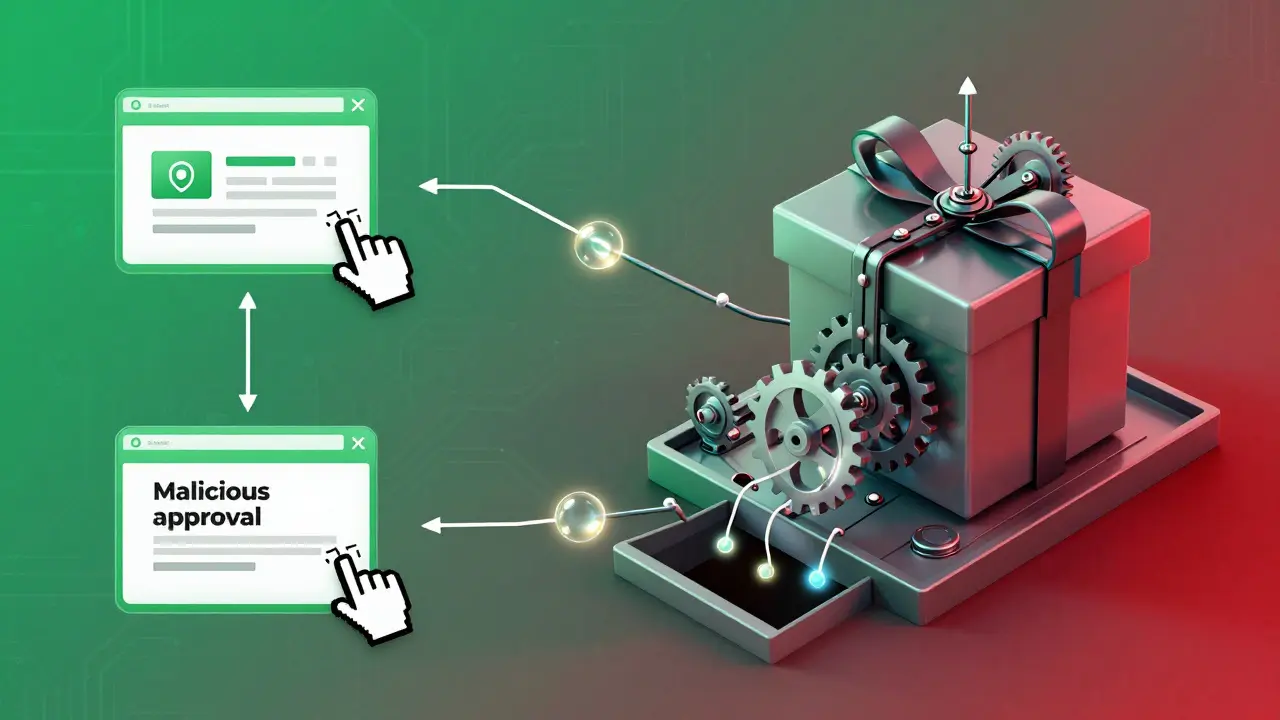
- Malicious Approval: The final step requests an "unlimited allowance" for the AXL token. Once you approve this, the scammers can drain any other valuable assets in your wallet that interact with the same chain, or they may trick you into signing a transaction that sends your ETH/SOL/BTC to their address.
CertiK’s security analysis in October 2025 identified these specific sites as "high-risk phishing operations" with 100% code similarity to previous successful scams. Chainalysis forensics showed that at least 127 wallets approved malicious contracts related to this campaign, resulting in over $3,800 in stolen funds within days.
Why You Should Ignore Unsolicited Airdrops
Legitimate projects do not send random tokens to strangers and then ask for private keys or unlimited approvals to claim rewards. If an airdrop sounds too good to be true, it almost certainly is. The Blockchain Transparency Institute categorized AXL INU as a "high-risk token" in its Q3 2025 report due to this exact pattern.
User feedback supports this warning. On Reddit, a thread titled "Beware of AXL INU scam alert" received 147 upvotes, with users documenting losses after interacting with fake airdrop websites. Trustpilot reviews for "Axl Inu" include warnings such as: "Received random AXL tokens then saw posts about 'New Year's Eve airdrop' - tried to claim but website asked for private key."
Steps to Protect Your Wallet Right Now
If you have received AXL INU tokens, follow these steps immediately to secure your account:
- Do Not Connect: Never connect your main wallet to unknown airdrop sites. Use a burner wallet if you must investigate.
- Revoke Permissions: If you have already connected your wallet to an AXL INU site, go to
revoke.cashor use your wallet’s built-in revocation tool to remove any allowances granted to the AXL contract address. - Move Assets: Transfer your valuable assets (ETH, BTC, SOL) to a new, clean wallet. Do not leave them in a wallet that has interacted with malicious contracts.
- Check for Malware: Scan your device for malware. Some phishing sites attempt to install keyloggers when you visit them.
- Ignore DMs: Support teams will never message you first on Telegram or Discord. Block and report accounts promoting the AXL INU airdrop.
Regulatory Scrutiny and Future Outlook
The landscape for low-cap meme coins is tightening. The SEC’s Enforcement Division issued a public warning in October 2025 specifically targeting "tokens with zero verifiable trading activity promoting fictional airdrop events." Additionally, Binance added AXL INU to its "high-risk monitoring list," with potential delisting scheduled if trading volume did not improve. While delisting doesn’t stop the scam, it signals that major exchanges recognize the threat.
CipherTrace’s 2024 Holiday Fraud Report noted that scam activity increases by 34.7% during holiday seasons. The "New Year’s Eve" theme is deliberately chosen to exploit this trend. As we move further into 2026, expect similar tactics to resurface with new token names. Vigilance is your best defense.
Is the AXL INU New Year's Eve airdrop real?
No, it is a confirmed phishing scam. Security firms like CertiK and Chainalysis have identified the associated websites as malicious. The token itself has zero trading volume and is considered high-risk.
What should I do if I received AXL INU tokens in my wallet?
Do not interact with them. Do not try to sell them on unverified platforms. Revoke any permissions you may have granted to the AXL contract address using tools like revoke.cash, and consider moving your other assets to a new wallet.
Is AXL INU the same as Axelar Network?
No. They share the ticker AXL but are completely different projects. Axelar Network is a legitimate cross-chain protocol listed on Binance. AXL INU is a low-cap meme coin with no utility and significant scam associations.
Can I lose money just by receiving an airdrop?
You won't lose money simply by having the tokens appear in your wallet. However, you risk losing all your funds if you connect your wallet to a phishing site to "claim" or "swap" the tokens. The danger lies in the interaction, not the receipt.
How do I revoke token approvals safely?
Use trusted services like revoke.cash or the revocation feature within MetaMask or other major wallets. Connect your wallet to the service, find the AXL INU contract address, and click "Revoke." This prevents scammers from draining your assets later.
18 Comments
Typical American incompetence. You people can't even secure your own digital wallets, let alone understand basic market mechanics. It's pathetic that you fall for these obvious traps while the rest of the world is building actual infrastructure. Wake up.
The illusion of value is a construct we impose upon ourselves to feel safe in a chaotic void. This 'airdrop' is merely a mirror reflecting our collective greed and desperation for validation through arbitrary numbers on a screen. We are all just dancing for scraps in a digital coliseum built by ghosts.
I've seen this before. Weak hands always get rekt. If you can't handle the volatility, stay out of crypto. It's not rocket science, it's survival of the fittest. Stop whining about scams and start learning how to verify contracts yourself.
You're all missing the bigger picture. The scam isn't the token, it's the belief system itself. I don't care what the experts say. I hold my bags because suffering builds character. Your fear is palpable and frankly, exhausting to read about here.
Hey folks! Just wanted to chime in with some perspective from across the pond :). In Europe, we tend to be a bit more skeptical of unsolicited gifts, especially when they come wrapped in such flashy packaging. Stay safe out there!
It is truly disheartening to witness the sheer lack of due diligence prevalent among the retail investor demographic. The concept of 'wallet stuffing' should be elementary knowledge for anyone claiming to participate in decentralized finance. One must question the cognitive capacity of those who engage with such blatantly malicious smart contracts without prior verification.
Boring. Another scam alert. Can we talk about something interesting?
Let's remember to be kind to ourselves. Mistakes happen. Learning is a journey. Take a breath and secure your assets.
Great article! Everyone needs to check their approvals. Use revoke.cash! It saves so much hassle later. Keep your keys safe! 🚀🔐
I noticed several of you have connected your wallets to unverified sites recently. Have you considered the implications for your personal data security? It is quite concerning to see such lax practices. 😬
just saying its easy to slip up when you are tired or distracted. i always double check urls now. no big deal if you miss one but good to know for next time
We need to stop blaming victims and start holding platforms accountable. These scammers exploit psychological triggers designed to bypass rational thought. It is a systemic issue, not just individual failure.
If you want to learn more about contract verification, I can share some resources. It is not as hard as it looks once you get the hang of it. Happy to help anyone who asks.
The audacity of these perpetrators is staggering; they exploit the fundamental trust mechanisms of blockchain technology. One must remain vigilant against such egregious violations of digital sovereignty. The legal ramifications should be severe.
They are testing us. The government wants you to use CBDCs so they can track every penny. This scam is a distraction to make you hate crypto so you accept the digital leash. Wake up sheeple.
Don't let them win! Fight back by educating others. Spread the word aggressively. We will crush these scammers together! 💪
I am disgusted by the number of people still falling for this. It is morally reprehensible to ignore clear warnings. Do better. Educate yourselves instead of asking for handouts.
While I appreciate the detailed breakdown provided in the original post, it is important to consider the broader context of regulatory oversight and the potential long-term implications for consumer protection within the cryptocurrency sector, which remains largely unregulated and fraught with inherent risks that necessitate a cautious approach from all participants involved in such transactions.